
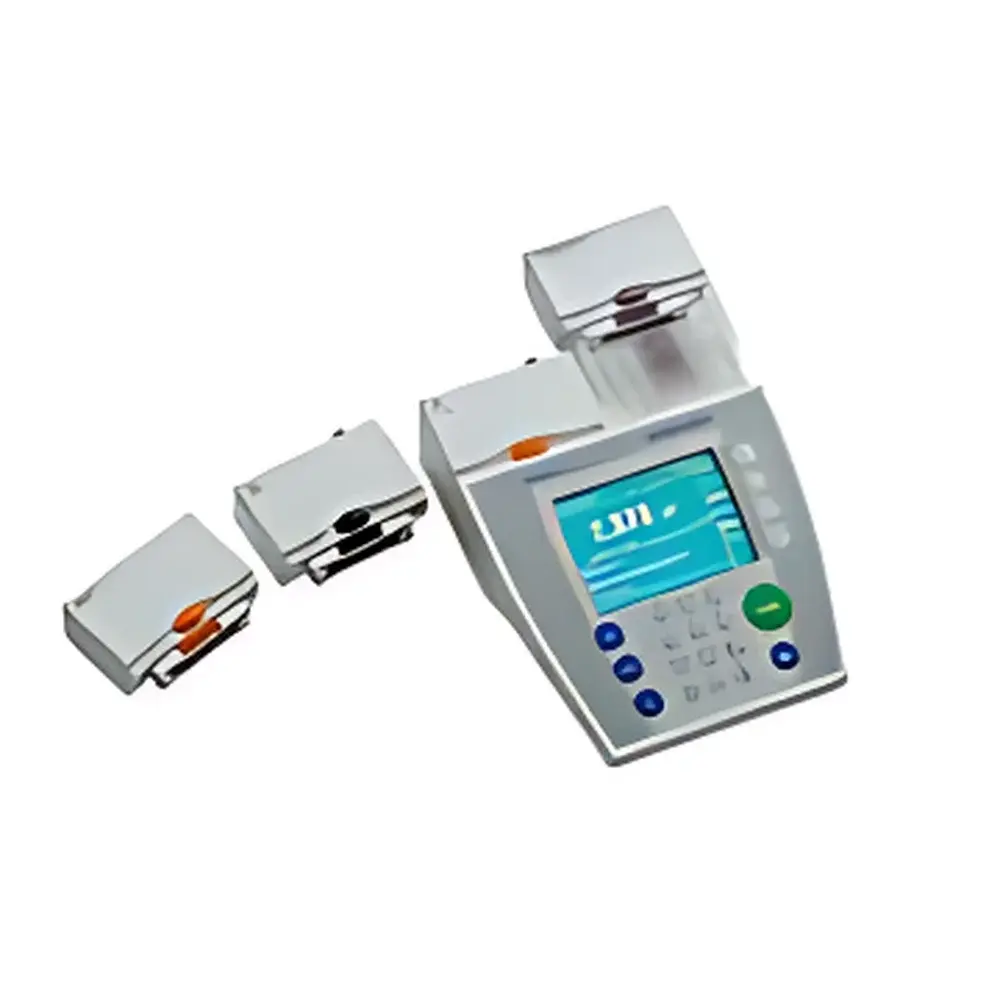
METTLER TOLEDO SevenMulti S40K/S40/S40N ORP Meter
| Brand | METTLER TOLEDO |
|---|---|
| Origin | Switzerland |
| Model | S40K / S40 / S40N (SevenMulti Platform) |
| Application | Laboratory-grade ORP and pH/mV/Conductivity/Ion Concentration Measurement |
| pH Range | –2.000 to 20.000 |
| pH Resolution | 0.001 / 0.01 / 0.1 (user-selectable) |
| pH Accuracy (relative) | ±0.002 |
| mV/ORP Range | –2000.0 to +2000.0 mV |
| mV Resolution | 0.1 mV |
| mV Accuracy | ±0.1 mV |
| Temperature Range | –30.0 to 130.0 °C |
| Temperature Resolution | 0.1 °C |
| Temperature Accuracy | ±0.1 °C |
| Display | Monochrome LCD |
| Power Supply | External AC adapter |
Overview
The METTLER TOLEDO SevenMulti S40K, S40, and S40N are modular, high-precision benchtop meters engineered for rigorous electrochemical analysis in regulated laboratory environments. Built on the proven SevenMulti platform, these instruments deliver traceable, reproducible measurements of oxidation-reduction potential (ORP), pH, mV, conductivity, and ion concentration—enabling comprehensive water quality assessment, process validation, and R&D applications across pharmaceutical, environmental, food & beverage, and academic laboratories. The core measurement principle for ORP relies on potentiometric detection using a noble-metal reference electrode (e.g., Pt or Au) paired with a stable reference system (Ag/AgCl or calomel), measuring the open-circuit potential difference relative to a defined reference scale (e.g., Standard Hydrogen Electrode, SHE). All models comply with fundamental electrochemical metrology standards and support GLP/GMP-aligned workflows through integrated audit trail functionality, user management, and secure data handling.
Key Features
- Modular architecture: S40K includes pH module and Inlab Expert Pro electrode; S40 includes pH module without electrode; S40N is base unit only—enabling flexible configuration based on application scope and budget.
- Three endpoint detection modes: Automatic (dynamic slope-based), manual (user-triggered), and time-controlled—ensuring consistent, operator-independent result acquisition.
- Advanced electrode diagnostics: Real-time evaluation of electrode slope (%), zero potential (mV), drift rate (mV/h), and response time (t95)—providing objective pass/fail criteria per ISO 17025 and USP guidelines.
- Intelligent calibration: Up to 5-point linear or segmented calibration; auto-buffer recognition for 8 pre-programmed buffer sets; customizable temperature-compensated buffer groups for non-standard media.
- Ergonomic design: Integrated Seven Electrode Stand enables hands-free operation, optimal probe immersion depth control, and cable strain relief—reducing mechanical stress on sensitive glass or solid-state electrodes.
- Regulatory-ready firmware: Supports 21 CFR Part 11-compliant electronic signatures, role-based access control, and tamper-evident data logging when used with LabX software.
Sample Compatibility & Compliance
The S40 series accommodates standard BNC and DIN-style pH/ORP electrodes—including refillable, gel-filled, and solid-state variants—as well as conductivity and ion-selective sensors via optional modules. It is validated for aqueous samples across wide ionic strength ranges (0.001–1 M), including low-conductivity ultrapure water, aggressive industrial effluents, and buffered biological media. All units are CE-marked and manufactured under ISO 9001-certified processes at METTLER TOLEDO’s Swiss production facilities. Device firmware and documentation align with ISO/IEC 17025:2017 requirements for calibration laboratories, and support full traceability to NIST-traceable reference standards. For pharmaceutical QC, the system satisfies USP , , and EP 2.2.47 specifications for pH and redox potential measurement.
Software & Data Management
LabX PC software serves as the central hub for method deployment, instrument control, and compliant data archiving. It enables automated report generation with embedded metadata (operator ID, timestamp, calibration history, electrode diagnostics), encrypted database storage, and configurable export formats (CSV, PDF, XML) for LIMS integration. Audit trails record all critical events—including parameter changes, calibration actions, and result modifications—with immutable timestamps and user attribution. Optional LabX Direct integration allows direct connection to METTLER TOLEDO balances and titrators for multi-instrument workflows. Data integrity is reinforced via password-protected user levels, electronic signature enforcement, and automatic backup to network drives or cloud repositories meeting HIPAA and GDPR retention policies.
Applications
- Pharmaceutical water systems: Monitoring ORP in purified water (PW) and water-for-injection (WFI) loops per FDA guidance and EU GMP Annex 1.
- Environmental testing: Field-deployable lab verification of redox potential in soil leachates, wastewater influent/effluent, and sediment pore water.
- Food safety QA: Verification of sanitizer efficacy (e.g., chlorine dioxide, ozone) through real-time ORP trending during CIP cycles.
- Academic research: Kinetic studies of redox reactions, corrosion inhibition screening, and enzyme activity assays requiring precise mV stability.
- Chemical manufacturing: In-process control of electroplating baths, bleach concentration, and peroxide decomposition rates.
FAQ
What distinguishes the S40K, S40, and S40N configurations?
The S40K is a fully equipped system with pH module and Inlab Expert Pro electrode; the S40 includes the pH module but no electrode; the S40N is the bare instrument platform—requiring separate purchase of modules and sensors.
Does the S40 series support GLP-compliant calibration records?
Yes—each calibration event is timestamped, attributed to a user account, and stored with electrode identification, buffer IDs, measured values, and acceptance criteria—fully retrievable via LabX audit trail.
Can ORP measurements be temperature-compensated?
ORP is intrinsically temperature-dependent; while no universal compensation algorithm applies, the instrument logs temperature synchronously with each reading and supports user-defined correction tables per ASTM D1129.
Is the LCD display readable under glovebox or hood lighting conditions?
The monochrome LCD features high-contrast segment rendering and adjustable backlight intensity—optimized for use in controlled environments including laminar flow hoods and inert-atmosphere gloveboxes.
How frequently should electrode diagnostics be performed?
Per ISO 17025, electrode performance verification is required before each analytical sequence and after any maintenance event; the SevenMulti’s automated diagnostics provide quantitative pass/fail output aligned with internal SOPs.
Related Products



