
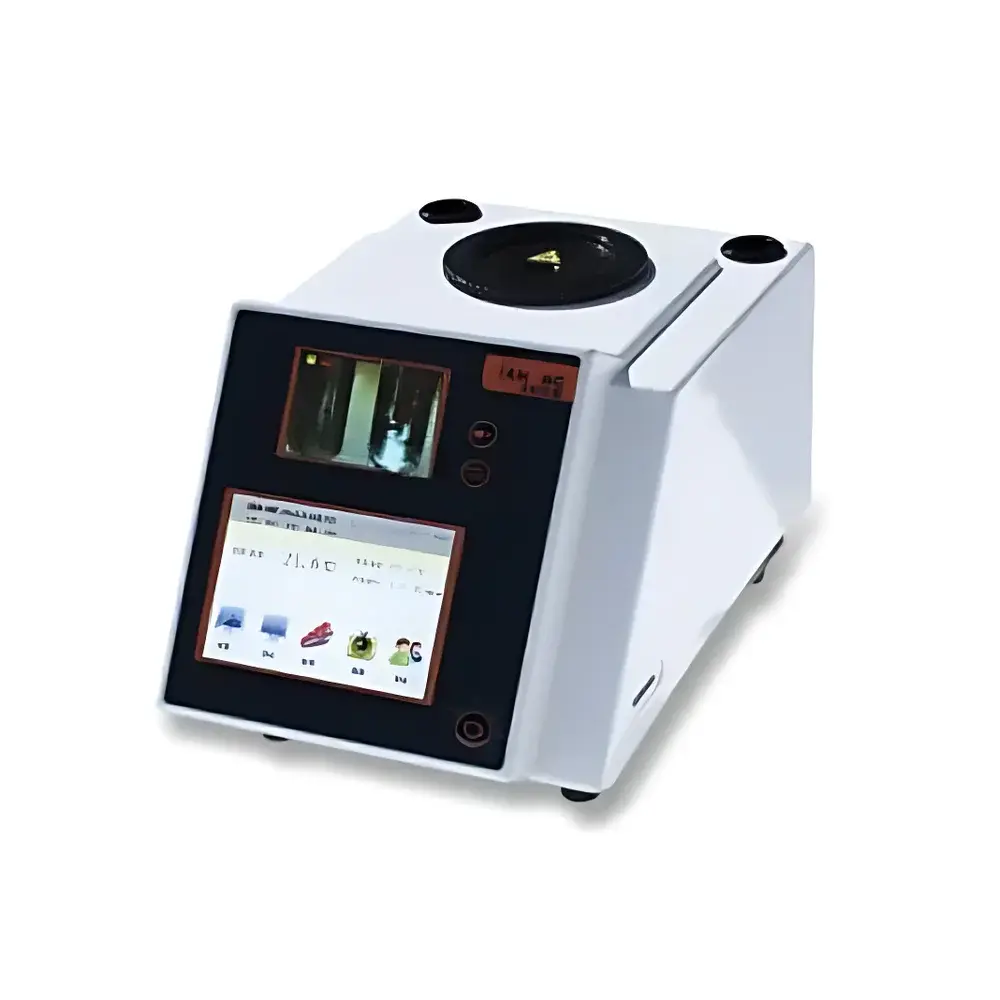
Truelab Y70 Fully Automated Video-Based Fat Melting Point Apparatus
| Brand | Truelab |
|---|---|
| Origin | Shanghai, China |
| Model | Y70 |
| Temperature Range | 0–100 °C |
| Heating Rate | 0.1–10 °C/min |
| Temperature Repeatability | ±0.1 °C (at 0.1 °C/min) |
| Temperature Accuracy | ±0.3 °C (up to 100 °C) |
| Capillary Dimensions | OD 1.4 mm, ID 1.0 mm, L 100 mm (dual-open) |
| Sample Capacity | 2 samples per run |
| Temperature Resolution | 0.1 °C |
| Compliance | SNT 0801.5–1999, GB/T 24892–2010, GB/T 12766–2008 |
Overview
The Truelab Y70 Fully Automated Video-Based Fat Melting Point Apparatus is a precision thermal analysis instrument engineered for the objective, reproducible determination of melting behavior in edible fats, waxes, cocoa butter analogs, and other lipid-based materials. It operates on the principle of real-time optical monitoring of solid-to-liquid phase transition under precisely controlled linear heating conditions—complying with standardized capillary tube methodology defined in international food and industrial fat testing protocols. Unlike manual or semi-automated systems relying on visual endpoint estimation, the Y70 integrates high-resolution digital imaging with synchronized thermal profiling to capture dynamic morphological changes (e.g., meniscus movement, shrinkage, collapse, and liquefaction onset) across two parallel capillary channels. This video-based detection architecture eliminates observer bias, ensures traceable endpoint assignment, and supports retrospective validation of melt onset—critical for QC laboratories operating under GLP or ISO/IEC 17025 frameworks.
Key Features
- Fully automated dual-channel measurement: Simultaneous analysis of two independent samples using standardized 1.4 mm OD × 1.0 mm ID × 100 mm dual-open capillaries.
- PID-controlled water bath heating system with platinum resistance temperature sensor (Pt100), delivering stable ramp rates from 0.1 to 10 °C/min and temperature resolution of 0.1 °C.
- Integrated HD digital optical sensor array with real-time video capture at adjustable frame rates; all recordings stored internally on an 8 GB SD card with automatic low-space alerts.
- Intelligent melt-point recognition algorithm: Automatically identifies initial melt (onset), clear point (complete liquefaction), and intermediate stages (e.g., slumping, meniscus drop) based on pixel-intensity gradient analysis.
- TFT full-color graphical interface (4.3″) with intuitive parameter configuration, live preview window, and playback controls—including variable-speed replay (0.5× to 2×) for detailed kinetic observation.
- Comprehensive user management: Supports up to 10 operator accounts with password protection, audit-trail enabled session logging, and timestamped result export.
Sample Compatibility & Compliance
The Y70 is optimized for routine analysis of refined and unrefined vegetable oils, animal fats, hydrogenated oils, margarines, shortening, cocoa butter, and synthetic waxes. Its capillary geometry and thermal profile align with requirements specified in SNT 0801.5–1999 (Inspection Standards for Imported/Exported Animal and Vegetable Oils), GB/T 24892–2010 (Determination of Melting Point of Edible Fats by Capillary Tube Method), and GB/T 12766–2008 (Vegetable Oil—Specifications). The borosilicate glass water bath vessel prevents mineral deposition and corrosion, ensuring long-term thermal uniformity and ease of maintenance. Ambient operation is validated between 5–35 °C; no external cooling is required—the unit employs passive air-cooling for rapid cooldown between runs.
Software & Data Management
The bundled Windows-compatible software provides full instrument control via USB, RS232, or Ethernet interfaces. It enables method-driven workflows with customizable heating profiles, pass/fail criteria, and report templates compliant with internal QA documentation standards. All raw thermal data (time vs. temperature), annotated video segments, and algorithm-determined melt points are saved in a structured binary format with embedded metadata (operator ID, date/time, capillary ID, calibration status). Export options include PDF reports (with embedded thumbnails), CSV time-series logs, and MP4 clips. The system supports 21 CFR Part 11–compatible electronic signatures when deployed in regulated environments, provided network authentication and role-based access controls are implemented at the host OS level.
Applications
- Quality control of edible oil refining processes (e.g., winterization verification, crystallization profile consistency).
- Formulation development for confectionery fats and cocoa butter equivalents requiring precise polymorphic stability assessment.
- Regulatory compliance testing for import/export certification of palm oil, coconut oil, lard, and tallow.
- Research into fat crystallization kinetics, polymorph transitions (e.g., β′ to β), and nucleation inhibition effects.
- Method transfer and validation studies supporting AOAC, ISO, or Codex Alimentarius reference methods.
FAQ
What capillary specifications are supported?
The Y70 accepts standard dual-open capillaries with outer diameter 1.4 mm, inner diameter 1.0 mm, and length 100 mm—fully compatible with GB/T 24892–2010 and SNT 0801.5–1999.
Is external calibration required?
The integrated Pt100 sensor is factory-calibrated against NIST-traceable references; users may perform periodic verification using certified melting point standards (e.g., pure stearic acid, palmitic acid) without hardware adjustment.
Can video recordings be exported for third-party review?
Yes—recordings are stored as MP4 files on the removable SD card and can be transferred for offline analysis or regulatory submission.
Does the system support multi-user environments with audit trails?
Yes—10 distinct user accounts are configurable, each with encrypted login credentials and session-level activity logging including method parameters, results, and timestamps.
What is the typical cooldown time between consecutive runs?
From 100 °C to 30 °C, passive air-cooling requires approximately 12–15 minutes; pre-cooling to target start temperature is not required due to programmable ramp initiation.



