
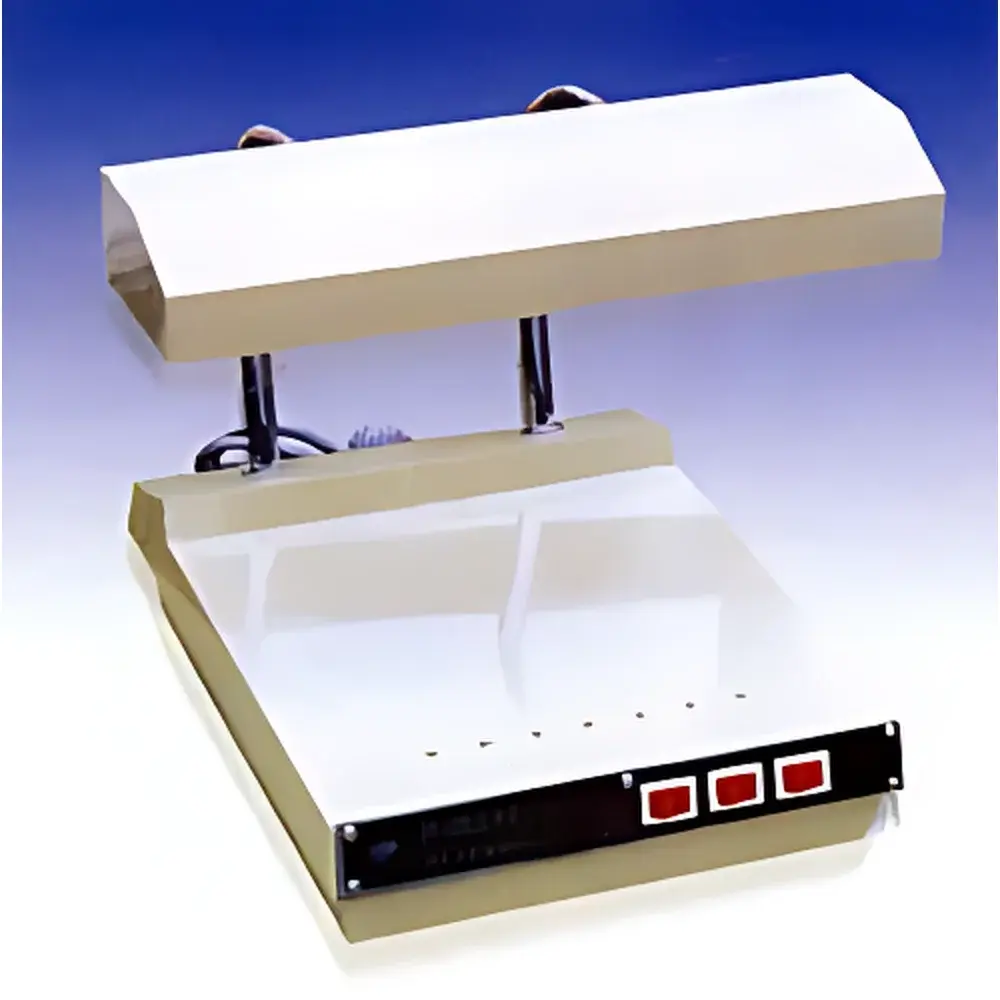
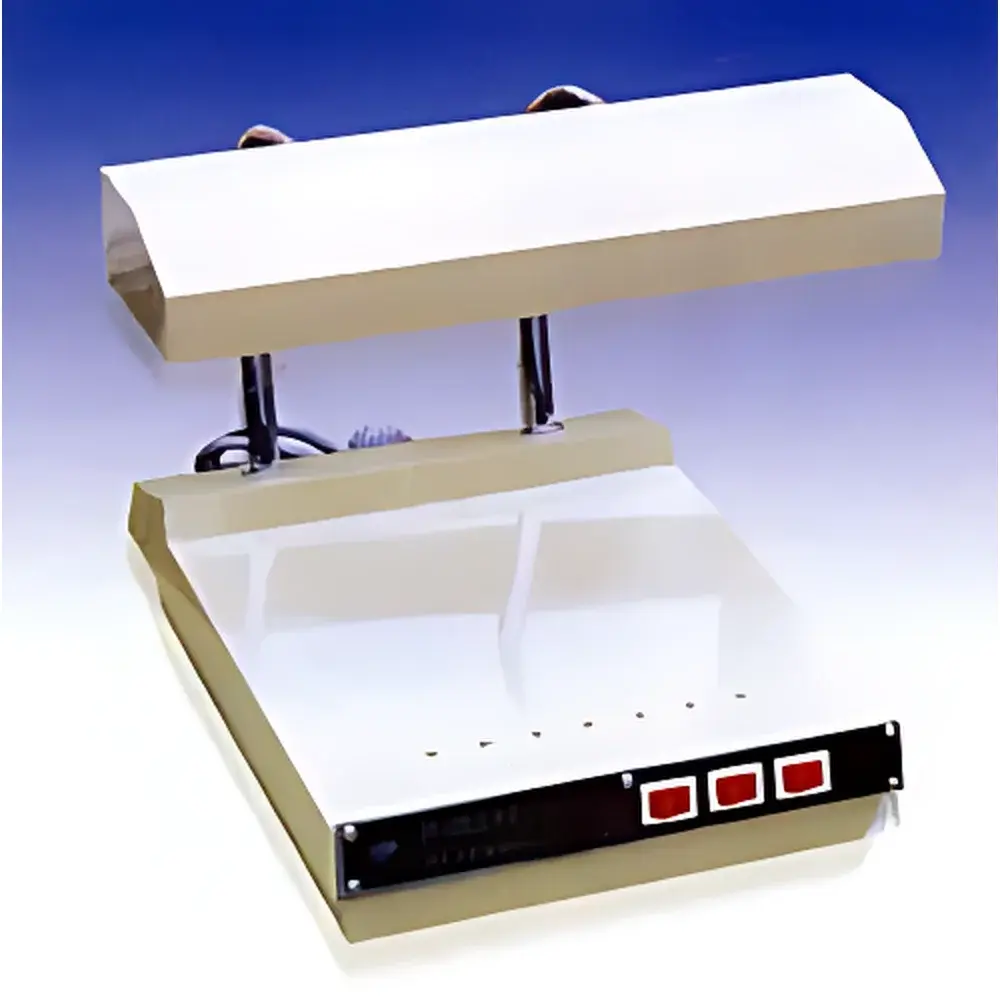
Truelab ZF-1 Dual-Wavelength Portable UV Transilluminator (254 nm & 365 nm)
| Brand | Truelab |
|---|---|
| Origin | Shanghai, China |
| Model | ZF-1 |
| Wavelengths | 254 nm and 365 nm |
| Type | Portable (handheld) |
| Wavelength Configuration | Dual-band UV |
| Compliance | CE-marked for laboratory use |
| Power Supply | AC 220 V ±10%, 50 Hz |
| Operating Temperature | 10–40 °C |
| Relative Humidity | ≤80% RH (non-condensing) |
| Safety Features | UV-blocking acrylic shield, automatic shutoff timer (optional), thermal protection circuit |
| Certifications | ISO 9001 manufacturing quality system |
| Intended Use | Non-clinical laboratory fluorescence visualization and documentation |
Overview
The Truelab ZF-1 Dual-Wavelength Portable UV Transilluminator is an entry-level, benchtop-compatible ultraviolet illumination system engineered for rapid, on-demand fluorescence excitation in molecular biology, pharmaceutical QC, and materials science laboratories. It operates on the principle of ultraviolet-induced fluorescence—where target analytes containing aromatic moieties or conjugated systems absorb incident UV photons at 254 nm (short-wave, high-energy) or 365 nm (long-wave, lower-energy), then re-emit visible light at longer wavelengths detectable by human vision or digital imaging systems. Unlike mercury-vapor transilluminators requiring warm-up time, the ZF-1 integrates cold-cathode fluorescent lamp (CCFL) technology with optimized phosphor-coated tubes (ZSZ-6-A for 254 nm; ZSZ-6-B for 365 nm), enabling instantaneous activation and stable output over extended periods. Its compact, lightweight chassis supports both horizontal gel viewing and vertical handheld inspection modes—making it suitable for routine DNA/RNA gel documentation, TLC plate analysis, forensic trace detection, and field-deployable screening tasks.
Key Features
- Dual-band UV emission: Independent 254 nm (sterilization-grade, nucleic acid absorption peak) and 365 nm (low-autofluorescence, safer for prolonged exposure) channels with mechanical wavelength selection
- Instant-on operation: No preheating required; full spectral output achieved within <1 second of power application
- Optimized optical path: Integrated interference-type bandpass filters suppress visible light leakage (>99.9% rejection), ensuring high signal-to-noise ratio during ethidium bromide, SYBR® Safe, or fluorescein-based detection
- Thermally stable design: Aluminum heat-sink frame and low-power CCFL tubes minimize radiant heating—critical for preserving gel integrity during extended visualization
- Portable form factor: Weighing under 2.8 kg with integrated handle and foldable base; compatible with standard electrophoresis rigs and darkroom workstations
- User-configurable safety: Optional timer-based auto-shutoff (1–60 min), removable UV-blocking acrylic shield (OD ≥4 at 254 nm), and status LED indicators for active wavelength selection
Sample Compatibility & Compliance
The ZF-1 supports standard agarose and polyacrylamide gels (up to 15 × 15 cm), TLC plates (silica gel 60 F254 and aluminum-backed cellulose), paper chromatography strips, and solid-phase forensic substrates. It complies with IEC 61010-1:2010 for electrical safety in laboratory equipment and meets EN 62471 photobiological safety classification for UV hazard (Exempt Group for 365 nm; Risk Group 2 for 254 nm—requiring mandatory eye/skin protection per ANSI Z136.1). While not intended for clinical diagnostics, its performance aligns with common practice guidelines in ISO/IEC 17025-accredited labs for qualitative fluorescence assessment. Documentation includes full traceable calibration records for irradiance output (measured per ASTM E2581–17 using NIST-traceable UV radiometer) and filter transmission profiles.
Software & Data Management
As a hardware-only visualization tool, the ZF-1 does not include embedded software or onboard storage. However, it is fully interoperable with third-party imaging platforms—including GelDoc™ systems, smartphone-based gel documentation apps (e.g., ImageLab Mobile, GelAnalyzer), and microscope-mounted CCD cameras—via standardized C-mount adapters (M25.5 × 0.75 thread). All UV exposure parameters (wavelength, duration, distance) are manually recorded in lab notebooks or LIMS-compatible electronic logbooks. For GLP/GMP environments, users may integrate the device into audit-trail workflows using external time-stamped video capture or barcode-scanned usage logs compliant with FDA 21 CFR Part 11 requirements when paired with validated software.
Applications
- Molecular biology: Rapid post-electrophoresis DNA/RNA band localization, PCR product verification, and plasmid restriction digest analysis
- Pharmaceutical QA: Thin-layer chromatography (TLC) spot identification per USP , assay of fluorescent impurities in APIs, and stability-indicating method development
- Food safety: Detection of aflatoxin B1 (exhibits strong blue fluorescence at 365 nm), adulteration screening in honey and edible oils, and mycotoxin-contaminated grain inspection
- Materials science: Characterization of fluorescent dyes in polymer matrices, UV-curable resin curing validation, and carbon nanotube dispersion homogeneity assessment
- Forensics: Latent fingerprint development using cyanoacrylate fuming + rhodamine 6G staining, counterfeit document examination, and ink differentiation via differential fluorescence lifetimes
- Geoscience & archaeology: Mineralogical mapping of calcite, fluorite, and scheelite in rock thin sections; authentication of ceramic glazes and ancient pigment binders
FAQ
What safety precautions are required when operating the ZF-1?
UV radiation at 254 nm poses acute risks to corneal epithelium and skin epidermis. ANSI Z136.1 mandates Class II laser safety goggles with OD ≥4 at 254 nm and opaque face shields during open-chamber use. The 365 nm channel requires ANSI Z87.1-rated polycarbonate eyewear.
Can the ZF-1 be used for quantitative densitometry?
No. The ZF-1 provides qualitative fluorescence excitation only. Quantitative analysis requires calibrated imaging systems with linear-response sensors and background-subtracted intensity calibration curves.
Is the unit compatible with ethidium bromide alternatives such as SYBR® Gold?
Yes. Both 254 nm and 365 nm excitation bands effectively activate SYBR® Gold, GelRed™, and GelGreen™—though optimal sensitivity is achieved at 302 nm, which is not supported by this model.
Does the ZF-1 require periodic lamp replacement or recalibration?
CCFL tubes exhibit gradual lumen depreciation (~15% over 5,000 hours). Annual irradiance verification using a NIST-traceable UV meter is recommended per ISO/IEC 17025 Clause 6.4. Lamp replacement kits (ZSZ-6-A/B) are available directly from Truelab.
Can the device be powered via USB or battery pack?
No. The ZF-1 requires stable 220 V AC input and lacks DC conversion circuitry. Portable operation must be performed using a certified pure-sine-wave inverter with ≥300 W continuous rating.
Related Products





