
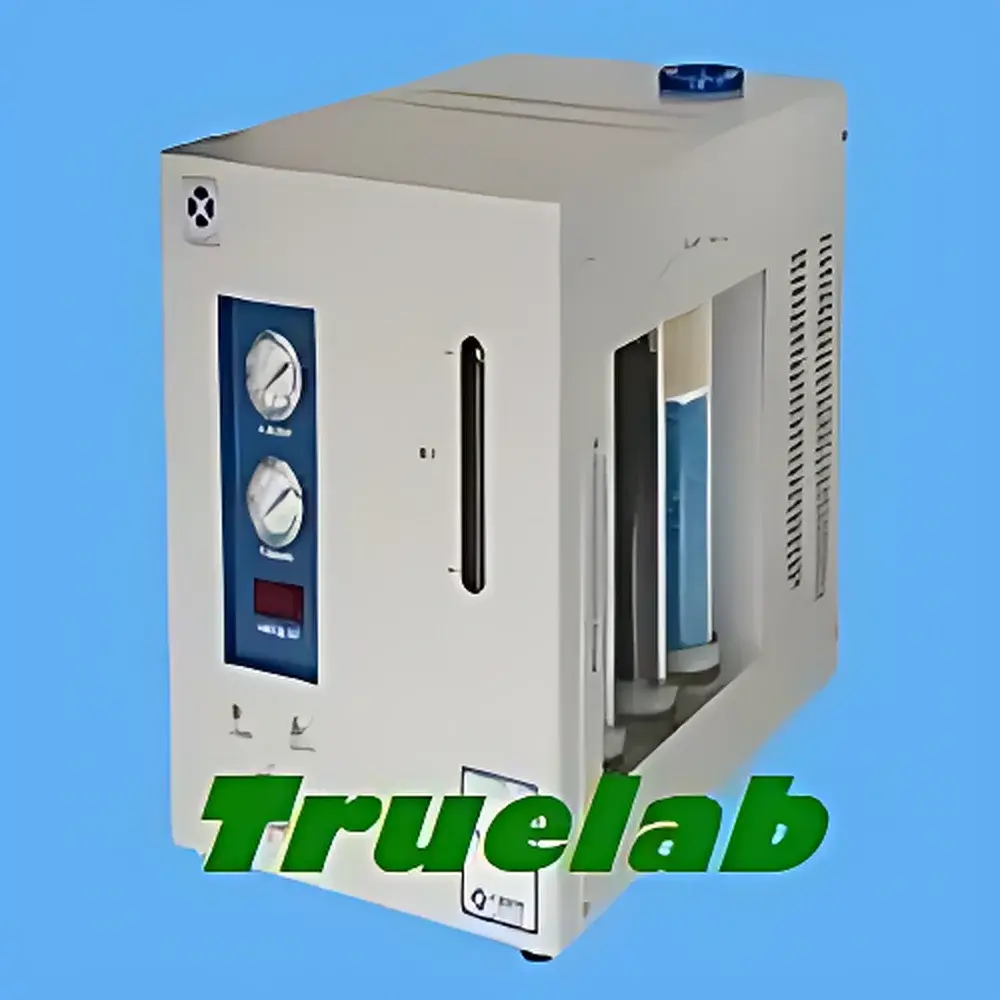
XiYou XYAH-300 Integrated Hydrogen & Air Gas Generator
| Brand | XiYou |
|---|---|
| Origin | Shanghai, China |
| Model | XYAH-300 |
| Compressor Type | Domestic Diaphragm Compressor |
| Hydrogen Purity | 99.999% |
| Hydrogen Flow Rate | 0–300 mL/min |
| Output Pressure | 0–0.5 MPa (factory-set at 0.4 MPa) |
| Design | Integrated Monoblock |
| Air Filtration | Dual-stage pressure regulation + triple-stage filtration |
| H₂ Filtration | Triple-stage purification |
| Electrolyte System | Aqueous KOH-based alkaline electrolysis |
| Safety Features | Automatic anti-alkaline-backflow, overpressure relief valve, leak-tight gas path |
| Compliance | Designed for ISO/IEC 17025-compliant labs, compatible with GLP/GMP workflows requiring traceable gas supply |
Overview
The XiYou XYAH-300 Integrated Hydrogen & Air Gas Generator is an engineered solution for laboratories requiring on-demand, high-purity hydrogen and instrument-grade air—without reliance on high-pressure cylinders. It employs membrane-separated alkaline electrolysis (KOH aqueous solution) to generate hydrogen via water decomposition at the cathode, while compressed ambient air is conditioned through a dedicated dual-stage pressure regulation and triple-stage filtration system. The integrated monoblock architecture consolidates both gas generation modules—including electrolytic cell, diaphragm compressor, drying columns, and safety interlocks—into a single compact footprint (< 380 × 320 × 650 mm), minimizing spatial demand in regulated analytical environments. This design eliminates cylinder handling, hydrostatic testing logistics, and associated regulatory documentation burdens, supporting continuous operation in GC-FID, GC-TCD, and laboratory air supply applications where stability, purity, and operational continuity are critical.
Key Features
- Stable hydrogen output at ≤ 300 mL/min with real-time flow control and factory-calibrated pressure setpoint of 0.4 MPa (adjustable up to 0.5 MPa), ensuring compatibility with standard capillary GC inlets and detector requirements.
- Triple-stage hydrogen purification comprising particulate removal, moisture adsorption (desiccant cartridge), and trace oxygen/metal scavenging—delivering consistent 99.999% purity (≤ 0.1 ppm O₂, ≤ 0.1 ppm H₂O, ≤ 0.05 ppm total hydrocarbons).
- Instrument air subsystem featuring two-stage pressure stabilization and three-stage filtration (coalescing filter, activated carbon, and ultra-low particulate membrane), producing oil-free, dry air meeting ASTM D6300 and ISO 8573-1 Class 2:2:2 specifications.
- Cylindrical alkaline electrolytic cell with patented anti-alkaline-backflow geometry, preventing KOH migration into gas lines during shutdown or pressure transients—extending catalyst life and eliminating maintenance-induced downtime.
- Integrated safety architecture including mechanical overpressure relief valves (set at 0.55 MPa), automatic shutdown on electrolyte level deviation or temperature anomaly, and leak-tested stainless-steel/NBR gas pathways compliant with EN 13445 pressure equipment directives.
Sample Compatibility & Compliance
The XYAH-300 is validated for use with gas chromatography systems requiring carrier or fuel gas (e.g., Agilent 7890/8890, Thermo ISQ, Shimadzu GC-2030), as well as standalone air supply for FTIR purge, particle counters, and environmental test chambers. Its gas output meets USP residual solvent method requirements for hydrogen purity in pharmaceutical QC labs and satisfies ISO/IEC 17025 clause 5.9.1 for traceable, auditable gas sourcing. While not certified to UL/CSA standards, its electrical design adheres to IEC 61010-1:2010 for laboratory equipment safety; full compliance documentation—including calibration certificates, pressure vessel declarations, and filtration validation reports—is provided upon request for internal QA review or external audit preparation.
Software & Data Management
The generator operates via embedded microcontroller logic with front-panel LED indicators for status (Ready/Standby/Fault), electrolyte level, and pressure feedback. No proprietary software or USB/RS-232 interface is included; however, analog 0–5 VDC outputs for hydrogen flow and system pressure are available for integration into centralized lab monitoring systems (e.g., LabVantage, Siemens Desigo). All operational logs—including runtime hours, electrolyte top-up intervals, and fault event timestamps—are stored in non-volatile memory and retrievable via service mode diagnostics. Audit trails comply with ALCOA+ principles when paired with laboratory information management systems (LIMS) that support manual entry of generator ID, maintenance dates, and calibration records per FDA 21 CFR Part 11 Annex 11 guidance.
Applications
- Hydrogen fuel gas for flame ionization detectors (FID) in routine GC analysis of petrochemicals, environmental samples, and food volatiles.
- Carrier gas alternative in TCD and PID configurations where helium scarcity or cost necessitates hydrogen substitution (with appropriate column and detector compatibility verification).
- Dedicated instrument air source for GC pneumatic controls, autosampler actuators, and detector cooling systems—eliminating cross-contamination risks from shared central air lines.
- Support gas for hydrogenation reactors, electrochemical cells, and glovebox purging in synthetic chemistry and materials science labs operating under inert atmosphere protocols.
- Backup or primary gas supply in GLP-regulated stability chambers and dissolution testers requiring documented, uninterrupted air/hydrogen delivery.
FAQ
What electrolyte is used, and how often does it require replenishment?
The unit uses a 25–30% aqueous potassium hydroxide (KOH) solution. Under typical usage (200 mL/min H₂, 8 h/day), electrolyte top-up is required every 3–4 months; a low-level indicator alerts users 72 hours prior to depletion.
Can the hydrogen output pressure be adjusted beyond the factory setting?
Yes—the pressure regulator is field-adjustable from 0 to 0.5 MPa using the rear-mounted precision screw; recalibration of downstream pressure sensors is not required.
Is this generator suitable for use with mass spectrometry systems?
No. The XYAH-300 is not designed for ultra-high-purity hydrogen required by GC-MS interfaces (e.g., < 0.01 ppm hydrocarbons); it is intended for FID/TCD-grade applications only.
Does the unit meet CE marking requirements?
It complies with the essential health and safety requirements of the EU Machinery Directive 2006/42/EC and Electromagnetic Compatibility Directive 2014/30/EU; however, CE marking is not affixed as the manufacturer does not hold an EU Authorized Representative.
What is the expected service life of the electrolytic cell?
Rated for ≥ 8,000 operating hours under nominal load; performance decay is linear and predictable, with < 5% flow reduction observed after 5 years of continuous use when maintained per XiYou’s Technical Bulletin TB-HG-02.



