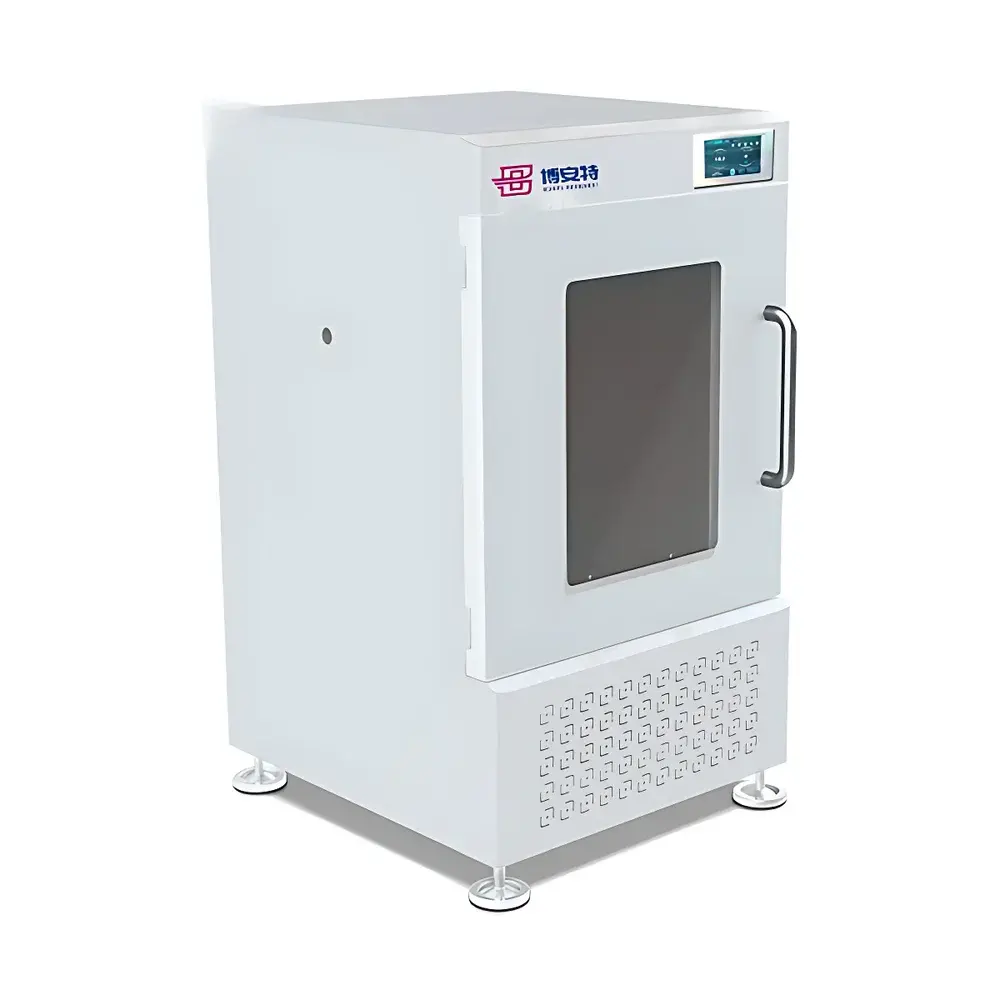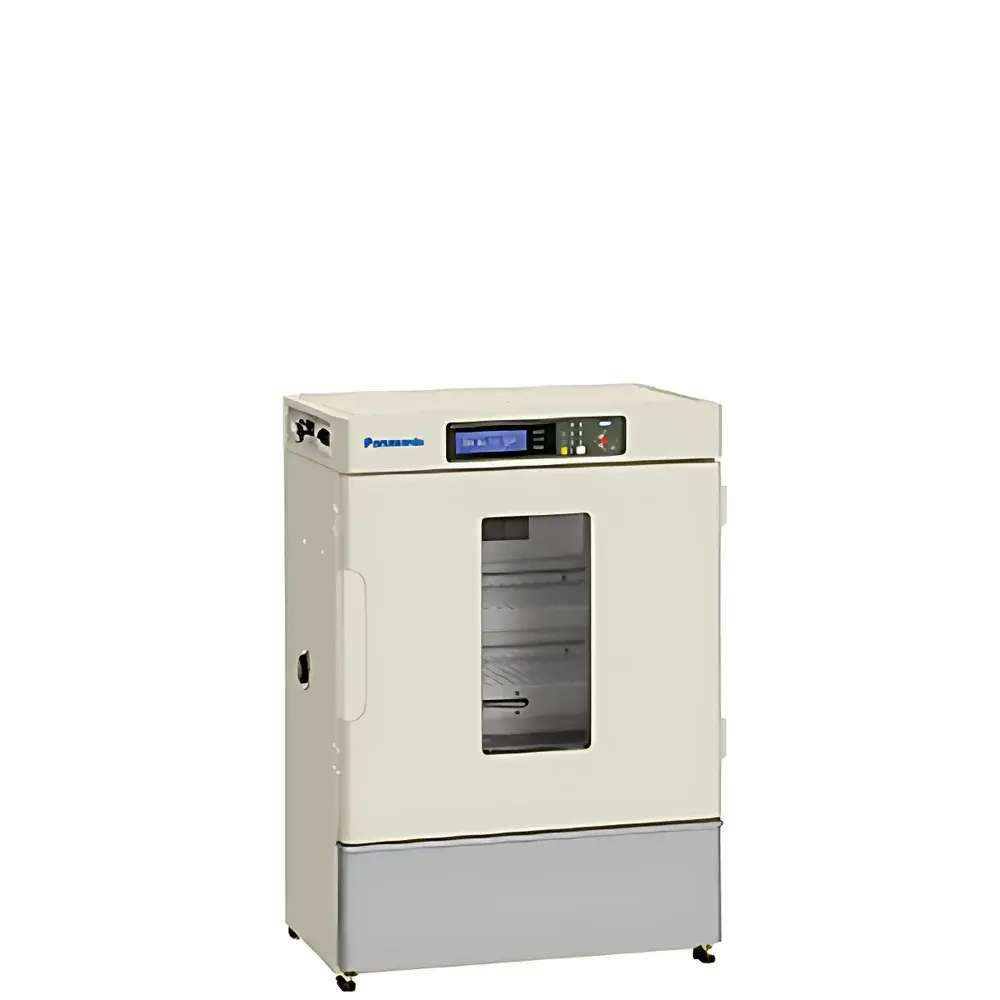
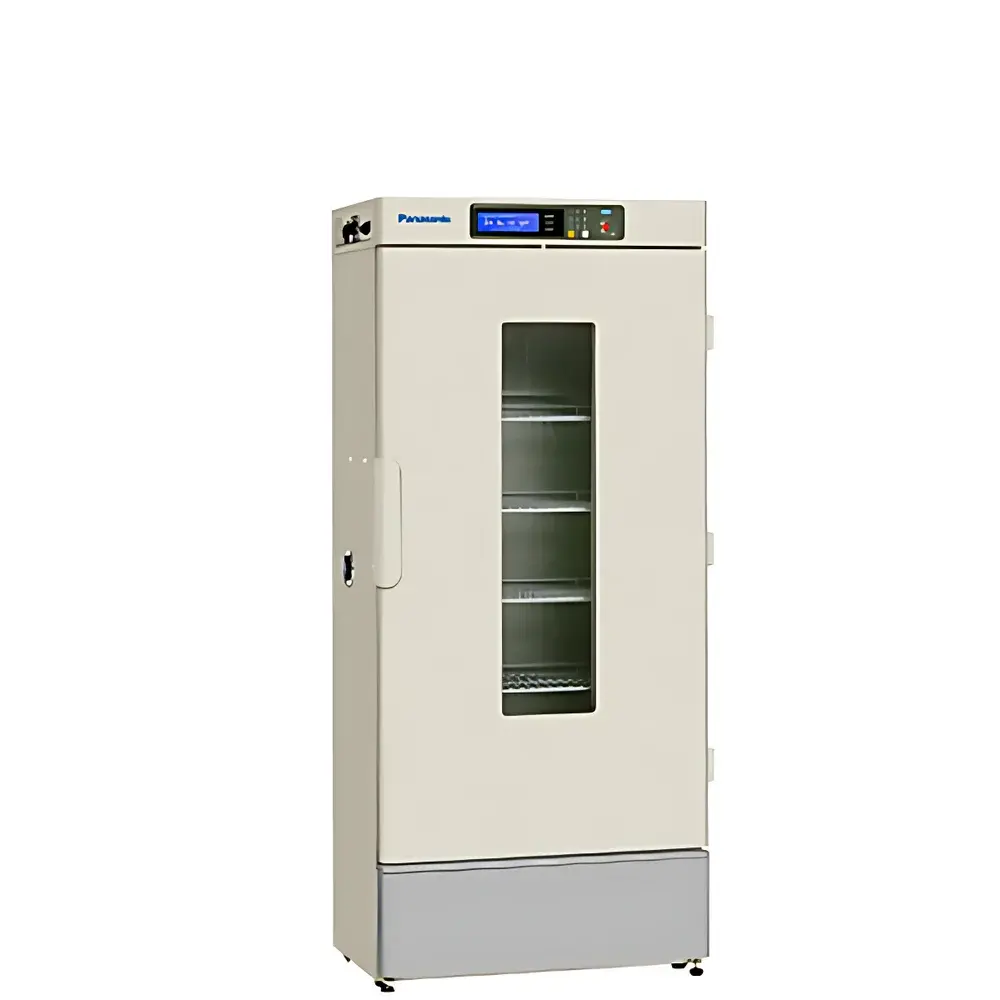
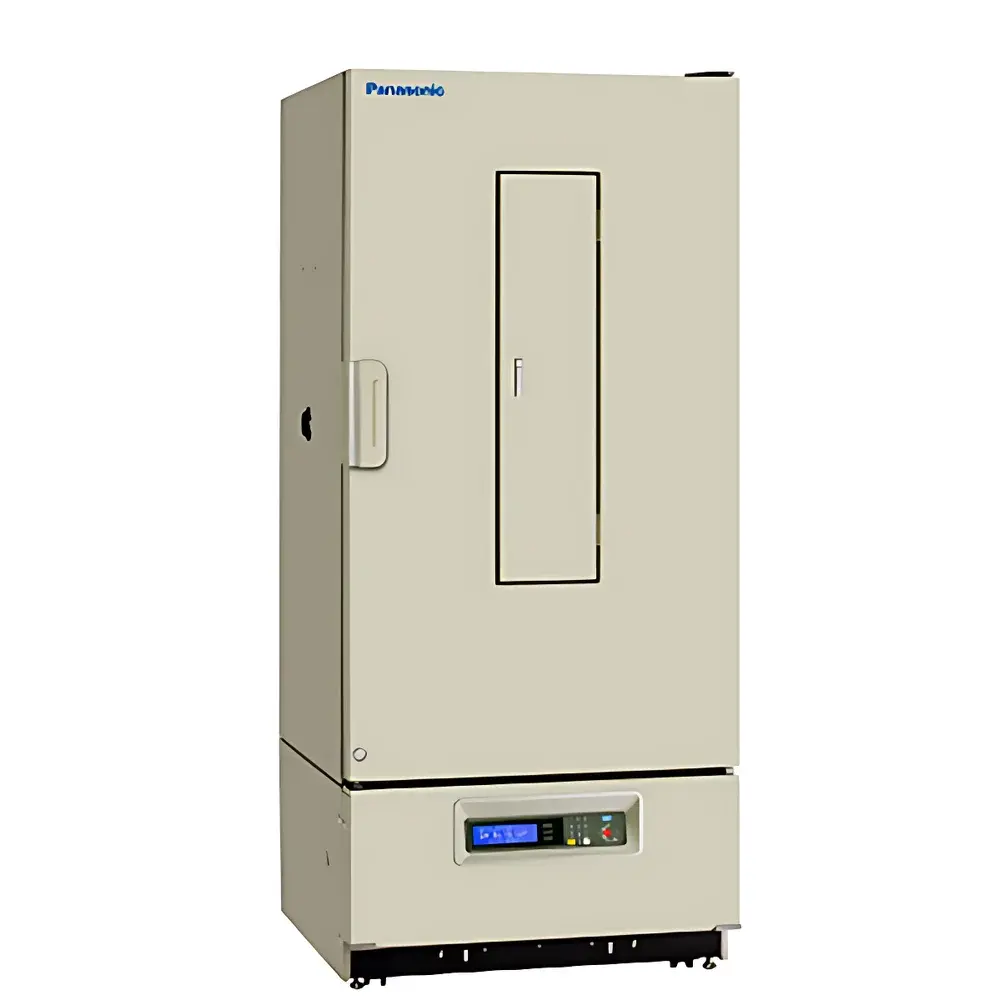
Panasonic MIR-154 / MIR-254 / MIR-554 Low-Temperature Biochemical Incubators
| Brand | Panasonic (formerly Sanyo) |
|---|---|
| Origin | Japan |
| Model(s) | MIR-154, MIR-254, MIR-554 |
| Temperature Range | −10 °C to +60 °C (ambient 5–35 °C, no load) |
| External Dimensions (W×D×H) | 700×580×1018 mm (MIR-154) / 700×580×1618 mm (MIR-254) / 800×832×1810 mm (MIR-554) |
| Internal Volume | 123 L / 238 L / 406 L |
| Temperature Uniformity | ±0.2 °C (PID heating mode, 50 °C setpoint) / ±1.5 °C (compressor ON-OFF mode, 5 °C setpoint) / ±0.5 °C (37 °C setpoint) |
| Power Consumption | 130 W / 190 W / 285 W (220 V, 50 Hz) |
| Refrigeration System | Hermetically sealed compressor (150 W / 250 W / 250 W output) |
| Insulation | In-situ rigid polyurethane foam (3-layer / 5-layer construction) |
| Control System | Microprocessor-based PID temperature control with key-lock digital interface, 12-step/98-cycle programmability, 10-program memory |
| Lighting | One 15 W fluorescent lamp (operational range: setpoint +5 °C to 50 °C) |
| Safety | Adjustable high/low temperature deviation alarm (±1–5 °C), thermal cut-off protection, audible/visual alert |
Overview
The Panasonic MIR-154, MIR-254, and MIR-554 Low-Temperature Biochemical Incubators are precision-engineered environmental chambers designed for stable, reproducible temperature control across a wide operational range of −10 °C to +60 °C. Developed from the legacy Sanyo platform and manufactured in Japan, these units employ dual-mode thermal regulation—microprocessor-driven PID-controlled heating combined with hermetically sealed compressor-based cooling—to maintain stringent thermal uniformity under variable ambient conditions (5–35 °C). The incubators are constructed with high-density rigid polyurethane insulation applied via in-situ foaming, ensuring low thermal leakage and energy-efficient operation. Their architecture supports both static and dynamic experimental workflows, including long-term microbial cultivation, accelerated stability testing of pharmaceuticals and electronics, seed germination studies, and food spoilage modeling—applications requiring consistent cold-to-moderate thermal environments without humidity control.
Key Features
- Microprocessor-based PID temperature control system with adjustable deviation alarms (±1 °C to ±5 °C) and independent thermal cut-off protection
- Programmable operation with up to 10 stored protocols; each protocol supports 12 sequential steps and up to 98 cycles for complex multi-phase experiments
- Dual operating modes: 24-hour real-time clock scheduling and elapsed-time countdown timer for flexible experimental timing
- Automatic defrost cycle integrated into refrigeration system to prevent ice accumulation and ensure uninterrupted temperature stability
- Three-tier observation window (triple-pane glass) on MIR-254 and MIR-554 models; single-pane coated steel door on MIR-154 for optimized thermal integrity
- Stainless steel interior chamber and powder-coated steel exterior provide corrosion resistance and ease of decontamination
- Adjustable wire shelving (enamel-coated steel) with tool-free height positioning for optimal sample arrangement and airflow distribution
- Onboard data logging capability with automatic save-and-recover functionality for critical temperature history during power interruptions
Sample Compatibility & Compliance
These incubators accommodate standard laboratory vessels—including Petri dishes, flasks, multiwell plates, and test tubes—within their stainless steel chambers. The MIR series meets fundamental requirements for GLP-compliant laboratories performing non-humidified stability studies per ICH Q1A(R2) and ISO 17025-accredited testing protocols. While not certified for FDA 21 CFR Part 11 compliance out-of-the-box, the microprocessor control system supports audit-trail-ready configurations when integrated with validated external data acquisition software. Units comply with JIS Z 8806 (temperature uniformity testing methods) and IEC 61000-6-3 (EMC emissions standards). All models are CE-marked and conform to RoHS Directive 2011/65/EU for hazardous substance restrictions.
Software & Data Management
The MIR series operates via an embedded microcontroller with a key-locked digital interface, eliminating reliance on external PCs or proprietary software. Temperature setpoints, program sequences, alarm thresholds, and runtime logs are configured directly through the front-panel keypad and LCD display. All parameter changes are timestamped and retained in non-volatile memory. For integration into centralized lab management systems, optional RS-232 or analog 4–20 mA output modules (sold separately) enable connection to SCADA platforms or LIMS. Data export requires manual transcription or third-party serial logging tools—no native USB or Ethernet connectivity is provided. The system supports manual calibration offset entry for traceable instrument adjustment per ISO/IEC 17025 Clause 6.5.2.
Applications
- Low-temperature microbial culture (e.g., Pseudomonas, Lactobacillus) and psychrophilic enzyme activity assays
- Accelerated shelf-life testing of food products, batteries, and polymer components under controlled thermal stress
- Plant seed germination and early-stage growth studies requiring precise chilling or thermoperiod regimes
- Quality control of biologics and excipients during cold-chain validation and transport simulation
- Environmental simulation for electronic component reliability testing (e.g., JEDEC JESD22-A119)
- Pre-incubation conditioning of samples prior to downstream analysis (e.g., PCR setup, ELISA plate equilibration)
FAQ
What is the minimum ambient temperature required for stable operation at −10 °C?
The unit requires an ambient environment between +5 °C and +35 °C. Operation below +5 °C ambient may impair compressor efficiency and extend cooldown time; sustained sub-5 °C ambient is not recommended.
Can the fluorescent lamp be disabled independently of temperature control?
Yes—the lighting function is programmable and can be toggled on/off per step within any defined protocol, or deactivated entirely via system menu settings.
Is humidity control available as a factory option?
No. The MIR series is strictly a temperature-controlled biochemical incubator without integrated humidification or dehumidification subsystems.
What maintenance intervals are recommended for the refrigeration system?
Panasonic recommends annual inspection of condenser coil cleanliness and refrigerant pressure verification by authorized service personnel. Compressor oil replacement is not user-serviceable and occurs only during major overhaul.
Are spare parts such as shelves and door gaskets available through global distribution channels?
Yes—original equipment manufacturer (OEM) spare parts, including enamel-coated shelves, triple-glass door assemblies, and silicone door seals, are stocked by Panasonic’s international scientific equipment distributors and carry full traceability documentation.