
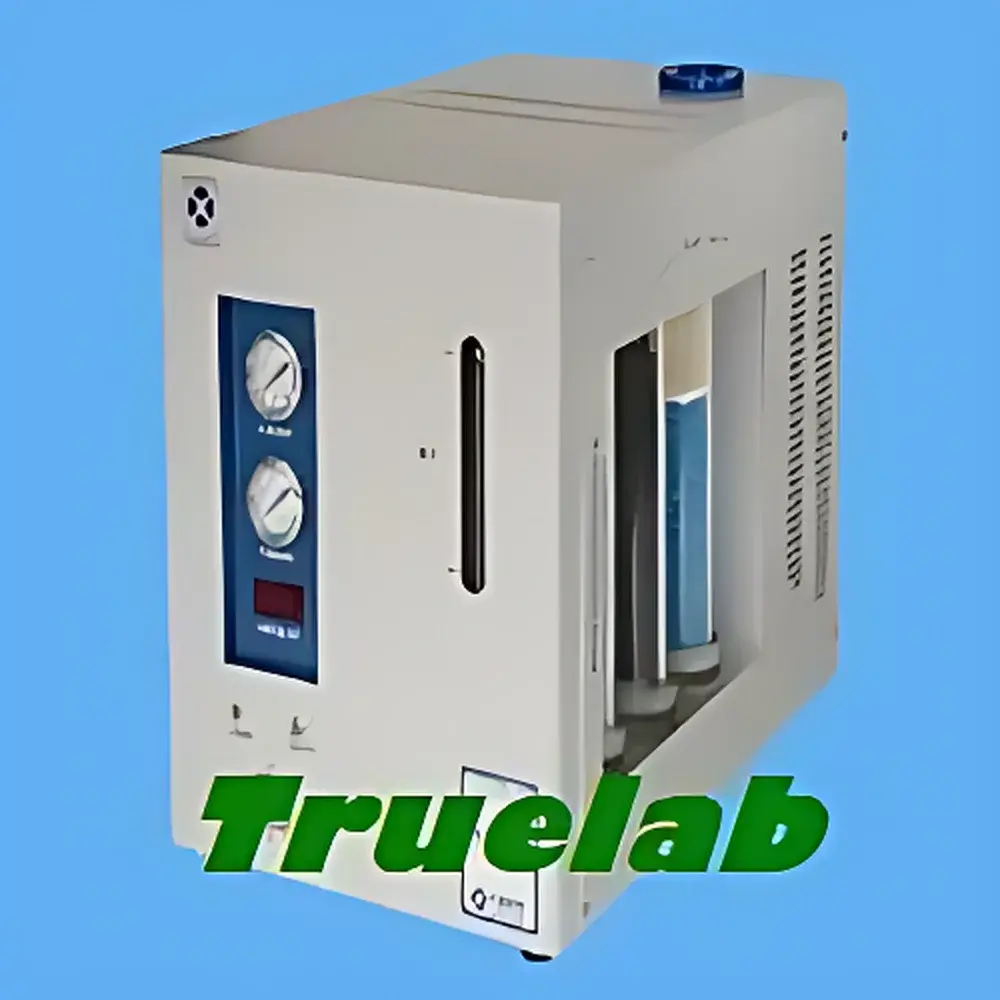
XiYou XYAH-300G Integrated Hydrogen-Air Gas Generator
| Brand | XiYou |
|---|---|
| Origin | Shanghai, China |
| Model | XYAH-300G (Equipped with Domestic Compressor) |
| Hydrogen Purity | ≥99.999% |
| Hydrogen Flow Rate | 0–300 mL/min |
| Air Flow Rate | 0–2000 mL/min |
| Air Output Pressure | 0–0.5 MPa (Factory-Set at 0.4 MPa) |
| Design | Integrated Monoblock Architecture |
| Filtration | Triple-Stage Hydrogen Filtration |
| Electrolyte System | Aqueous KOH-Based Alkaline Electrolysis |
| Safety Features | Automatic Anti-Backflow Alkali Protection |
| Compliance | Designed for GLP-compliant laboratory environments |
Overview
The XiYou XYAH-300G Integrated Hydrogen-Air Gas Generator is an engineered solution for laboratories requiring on-demand, high-purity hydrogen and instrument-grade air—both critical for gas chromatography (GC) applications including flame ionization detection (FID), thermal conductivity detection (TCD), and nitrogen-phosphorus detection (NPD). Unlike conventional gas cylinder systems, this generator employs alkaline electrolysis of aqueous potassium hydroxide (KOH) to produce hydrogen via a cylindrical electrolytic cell architecture. Oxygen byproduct is safely vented, while hydrogen undergoes triple-stage purification—including catalytic deoxygenation, desiccant drying, and sub-micron particulate filtration—to achieve ≥99.999% purity (total hydrocarbons <0.1 ppm, moisture <1 ppm, oxygen <0.1 ppm). Simultaneously, the integrated air generation module draws ambient air, compresses it using a domestically manufactured oil-free diaphragm compressor, and conditions it through dual-stage pressure regulation and triple-stage filtration (coalescing, activated carbon, and ultra-low particulate retention), delivering air compliant with ISO 8573-1 Class 1 specifications for particle count, oil aerosol, and water content. The monoblock design eliminates inter-unit tubing, reducing dead volume, leak potential, and footprint—making it suitable for benchtop deployment in QC labs, academic research facilities, and regulated pharmaceutical environments.
Key Features
- Integrated dual-gas architecture: Simultaneous, independent control of hydrogen and air output within a single chassis.
- Cylindrical alkaline electrolyzer: Optimized electrode surface area and electrolyte circulation ensure stable H₂ production across full flow range (0–300 mL/min) with minimal maintenance intervals.
- Automatic anti-backflow alkali protection: Patented fluid management prevents KOH migration into gas lines during shutdown or pressure transients.
- Redundant safety architecture: Independent overpressure relief valves on both hydrogen and air circuits; real-time pressure monitoring with automatic shutdown at preset thresholds (0.5 MPa for air; 0.35 MPa for H₂).
- Stable pressure delivery: Air output features two-stage precision regulators; hydrogen line incorporates back-pressure regulation to maintain consistent flow under variable downstream demand.
- Low operational cost: Eliminates cylinder rental, delivery logistics, and associated safety audits; estimated payback period under typical GC usage is <18 months versus bulk gas supply.
Sample Compatibility & Compliance
The XYAH-300G is validated for use with all major GC platforms requiring ultra-high-purity hydrogen as fuel or carrier gas (e.g., Agilent 7890/8890, Thermo Scientific TRACE 1300/1600, Shimadzu GC-2030) and instrument air for detector operation and pneumatic actuators. Its gas quality profile satisfies ASTM D6299 guidelines for GC system performance verification and aligns with ISO/IEC 17025 method validation prerequisites. While not certified to UL/CSA or CE for hazardous location use, its design conforms to general electrical safety standards IEC 61010-1 and includes IP20-rated enclosure protection. For GMP-regulated labs, audit-ready operation logs (via optional RS232/USB interface) support 21 CFR Part 11-aligned data integrity practices when paired with validated LIMS integration.
Software & Data Management
The generator operates via front-panel membrane keypad with LED status indicators for power, electrolyzer temperature, pressure states, and filter life. Optional digital interface (RS232 or USB) enables remote monitoring of real-time H₂ flow, air pressure, electrolyte level, and system fault codes. Logged parameters—including cumulative runtime, total H₂ volume generated, and alarm history—are exportable as CSV for trend analysis and preventive maintenance scheduling. Firmware supports user-defined setpoints for auto-shutdown during extended idle periods and configurable pressure hold modes to minimize cycling wear on the compressor and electrolyzer.
Applications
- GC-FID fuel gas supply: Stable 300 mL/min H₂ at ≤0.3 MPa ensures optimal flame stability and linear response across wide concentration ranges.
- GC-TCD reference gas: High-purity hydrogen minimizes baseline drift and thermal noise in thermal conductivity cells.
- Laboratory air for detector support: 2000 mL/min at 0.4 MPa meets air demand for multiple FID units or automated sample introduction systems (e.g., PAL autosamplers).
- Hydrogenation reaction support: Low-flow, high-purity H₂ delivery for small-scale catalytic screening in synthetic chemistry labs.
- Educational instrumentation: Safe, transparent electrolysis demonstration platform with visible electrolyte reservoir and pressure gauges.
FAQ
What electrolyte does the XYAH-300G require, and how often must it be replenished?
The unit uses 30% w/w aqueous potassium hydroxide (KOH); typical replenishment interval is every 6–8 months under continuous operation at 250 mL/min H₂ output.
Can the hydrogen and air outputs be used simultaneously for separate instruments?
Yes—dual independent outlets with isolation valves allow concurrent connection to distinct GC systems or auxiliary equipment without cross-contamination risk.
Is the air output suitable for LC-MS nitrogen generator feed gas?
No—the XYAH-300G produces instrument air only; it does not generate nitrogen and lacks the dew point or particulate control required for LC-MS purge or nebulizer gas.
Does the unit meet FDA 21 CFR Part 11 requirements for electronic records?
The base configuration does not include audit-trail or electronic signature functionality; however, time-stamped event logs exported via serial interface may be incorporated into validated third-party data management systems meeting Part 11 criteria.
What is the expected service life of the electrolytic cell?
Rated for ≥15,000 hours of operation under recommended maintenance; field data indicates median operational lifespan exceeding 8 years with quarterly filter replacement and annual KOH refresh.



