
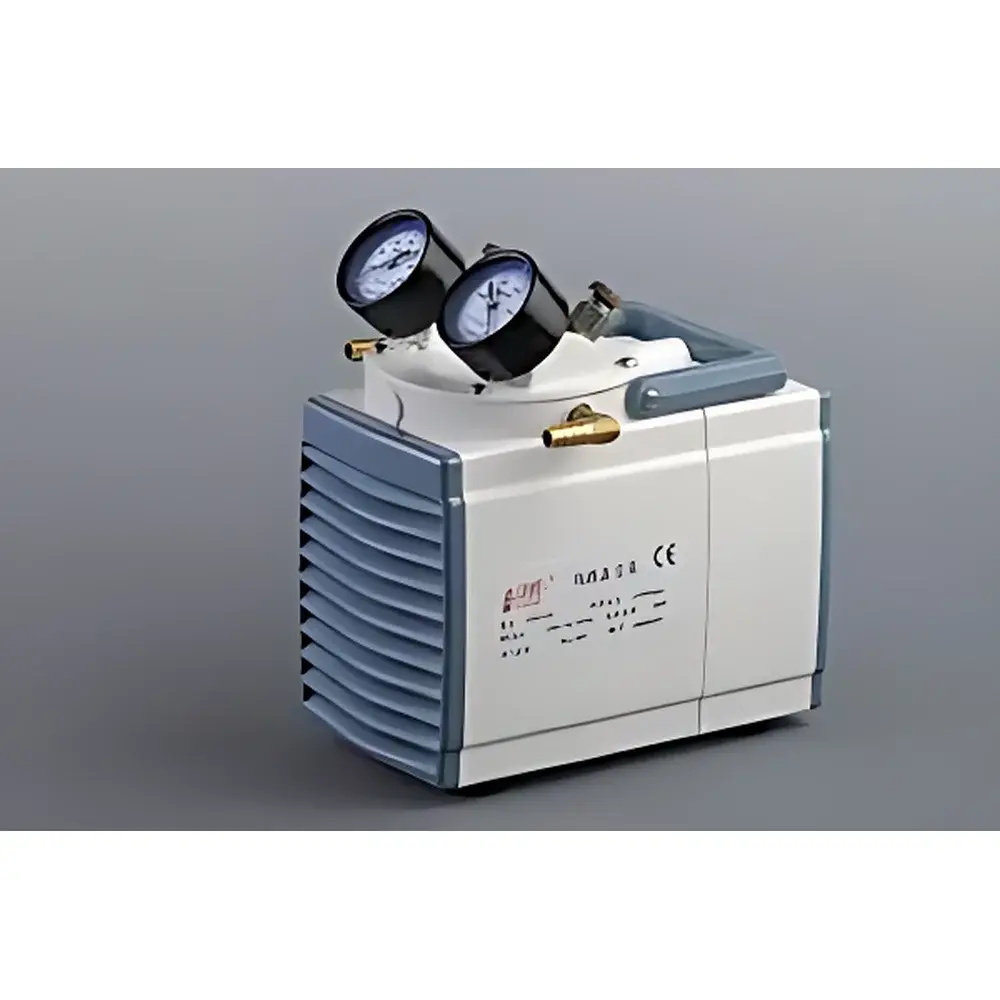
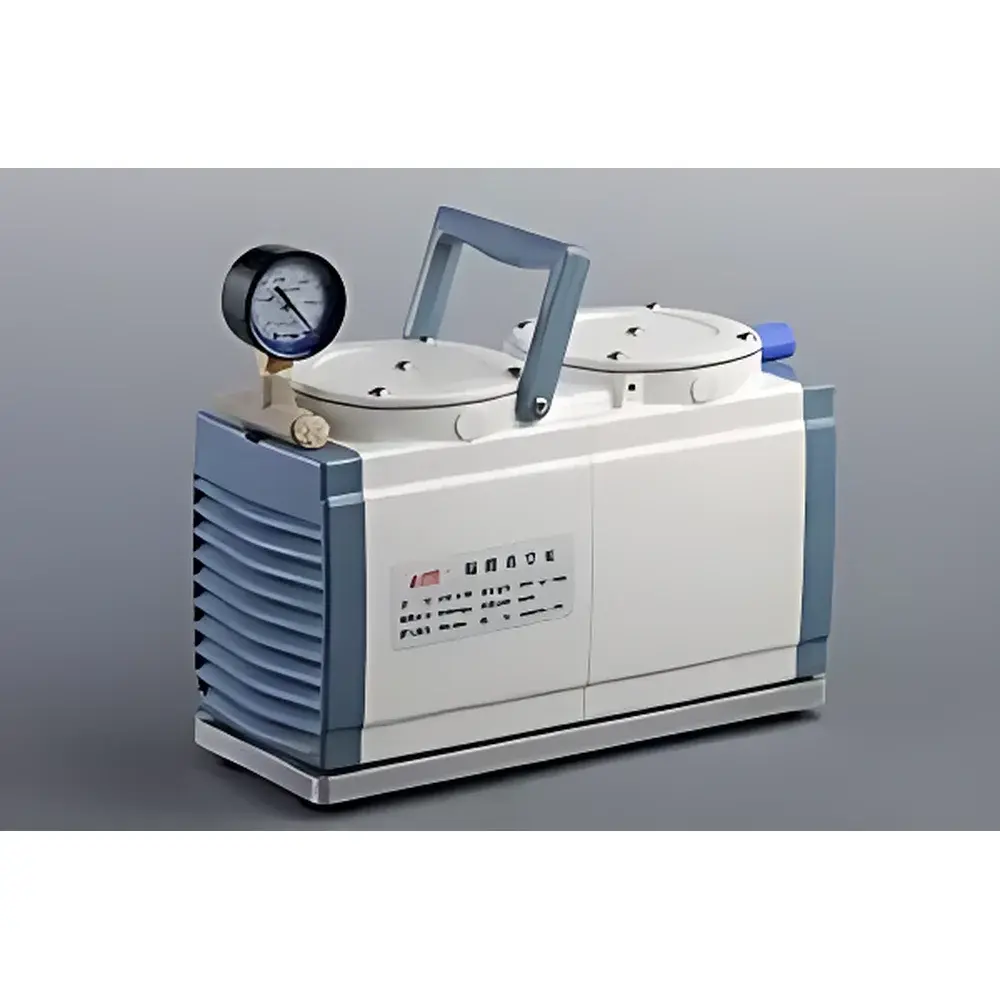
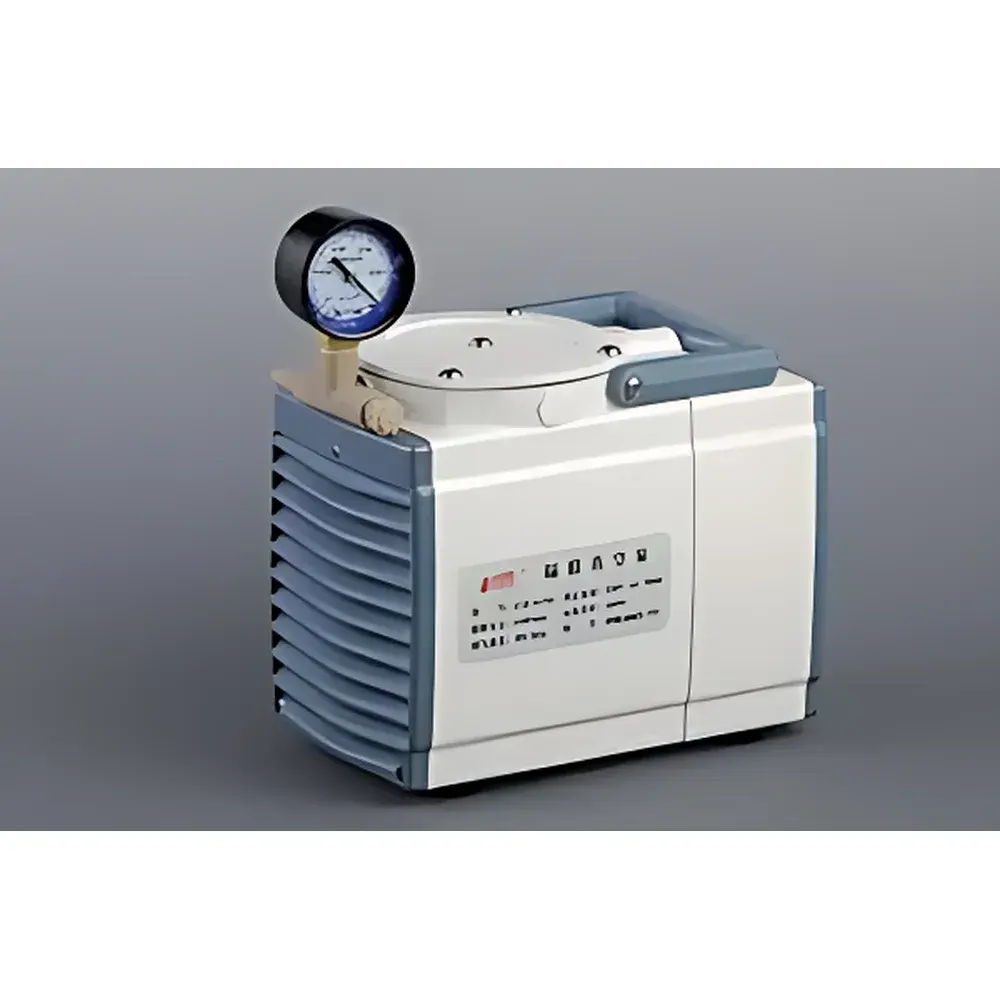
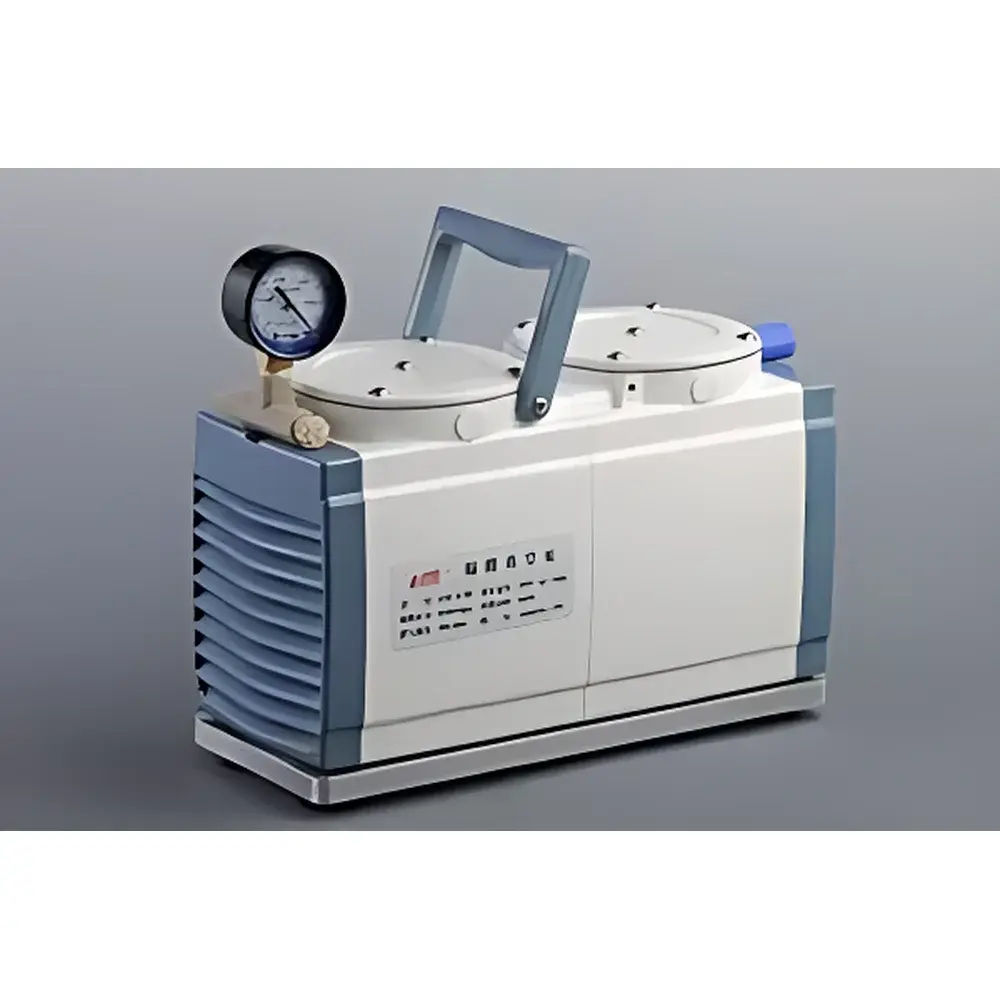
JINTENG GM-0.33A / GM-0.33B / GM-0.5A Diaphragm Vacuum Pump
| Brand | JINTENG |
|---|---|
| Origin | Tianjin, China |
| Pump Type | Oil-Free Diaphragm Vacuum Pump |
| Ultimate Vacuum | 50–200 mbar (depending on model) |
| Flow Rate | 20–30 L/min |
| Motor Power | Not specified |
| Dimensions (L×W×H) | 450 × 200 × 300 mm |
| Weight | 10.8 kg |
| Pressure Regulation | Adjustable vacuum/positive pressure output |
| Cooling | Integrated self-cooling exhaust system |
| Membrane Material | Fluoroelastomer (FKM) |
| Mounting | Four suction-cup feet + top carry handle |
| Compliance | Designed for GLP-compliant lab environments |
Overview
The JINTENG GM-0.33A, GM-0.33B, and GM-0.5A series are compact, oil-free diaphragm vacuum pumps engineered for precision laboratory applications requiring clean, contamination-free vacuum generation. Unlike rotary vane or piston-based systems, these pumps operate without lubricating oil—eliminating hydrocarbon backstreaming, solvent degradation, or particulate emission into sensitive sample streams. The core principle relies on reciprocating fluorocarbon-elastomer (FKM) diaphragms driven by an eccentric cam mechanism, producing consistent volumetric displacement while maintaining zero mechanical contact between moving parts. This design ensures thermal stability, minimal wear, and long-term repeatability—critical for applications such as solvent filtration, rotary evaporation, vacuum drying, and inert gas purging in analytical sample preparation workflows.
Key Features
- Oil-free operation with FKM diaphragms offering superior chemical resistance to organic solvents, acids, and bases—enabling safe use with acetonitrile, methanol, chloroform, and dilute HCl/HNO₃.
- Self-cooling exhaust architecture permits continuous 24/7 operation without thermal throttling or duty-cycle limitations—validated under ambient temperatures up to 40 °C.
- Adjustable vacuum regulation via integrated pressure control valve, supporting stable setpoints across the full operational range (50–200 mbar ultimate vacuum).
- Modular dual-head configuration available (GM-0.33B & GM-0.50B) for enhanced flow redundancy and improved vacuum ramp rates during high-load filtration cycles.
- Positive-pressure capability (up to 40 psi / 275 kPa) on GM-0.5A and GM-1.0A models enables dual-mode functionality—serving both vacuum aspiration and inert gas pressurization tasks without requiring separate compressors.
- Low-noise enclosure (<52 dB(A)) and vibration-damped mounting feet ensure compatibility with sensitive instrumentation (e.g., balances, spectrometers) located in shared lab benches.
Sample Compatibility & Compliance
These pumps are routinely deployed in workflows compliant with USP , ISO 17025, and FDA 21 CFR Part 11–governed environments where trace hydrocarbon interference must be excluded. Their dry, non-lubricated compression chamber meets ASTM E2912 requirements for “non-contaminating vacuum sources” in pharmaceutical residual solvent analysis. The internal filtration media (activated carbon + sintered stainless steel pre-filter) retains particulates >5 µm and adsorbs volatile organics upstream of the diaphragm—extending service life and preserving vacuum integrity during extended filtration of colloidal suspensions or activated charcoal slurries. All models conform to IEC 61000-6-3 (EMC emissions) and IEC 61000-6-2 (immunity) standards.
Software & Data Management
While the GM-series operates as a standalone analog device, its pressure-regulated output integrates seamlessly with third-party digital vacuum controllers (e.g., Vacuubrand VACUU·SELECT, KNF N840.3T) via 0–10 V or 4–20 mA feedback loops. When paired with validated lab information management systems (LIMS), pump runtime logs, pressure setpoint history, and maintenance intervals can be captured through external PLC interfaces—supporting audit-ready GLP/GMP documentation per Annex 11 requirements. Optional analog output modules enable real-time vacuum trending in LabChart or LabVIEW environments.
Applications
- Solvent filtration using 0.22 µm PTFE or nylon membranes in HPLC mobile phase preparation.
- Vacuum-assisted degassing of aqueous buffers prior to cell culture media sterilization.
- Rotary evaporation of thermally labile compounds (e.g., terpenes, oligonucleotides) under controlled sub-atmospheric conditions.
- Positive-pressure purging of glove boxes and Schlenk lines with nitrogen or argon.
- Automated solid-phase extraction (SPE) manifolds requiring precise, pulse-free vacuum gradients.
- Lyophilizer primary drying stage support where low-moisture vapor loads demand stable, oil-free vacuum integrity.
FAQ
What is the maximum continuous operating temperature for the GM-series pumps?
Ambient operating temperature range is 5–40 °C; internal diaphragm surface temperature remains below 65 °C during sustained operation at rated flow.
Can these pumps handle corrosive vapors such as HCl or HF?
FKM diaphragms resist dilute aqueous HCl (<10%) and HNO₃ (<5%), but HF exposure is not recommended; optional Hastelloy-coated valves are available for aggressive halogen chemistry.
Is the GM-0.5A suitable for vacuum oven applications?
Yes—its 30 L/min flow rate and 200 mbar ultimate vacuum meet ASTM D2879 specifications for vacuum drying ovens up to 50 L chamber volume.
Do these pumps require scheduled oil changes or lubrication?
No—being fully oil-free, they eliminate routine lubricant maintenance; only periodic inspection of inlet filters and diaphragm visual integrity is required every 6 months.
How is vacuum stability maintained during variable load conditions?
The pressure-regulating valve provides closed-loop proportional control, compensating for dynamic impedance changes typical in filter clogging or condenser icing scenarios.



