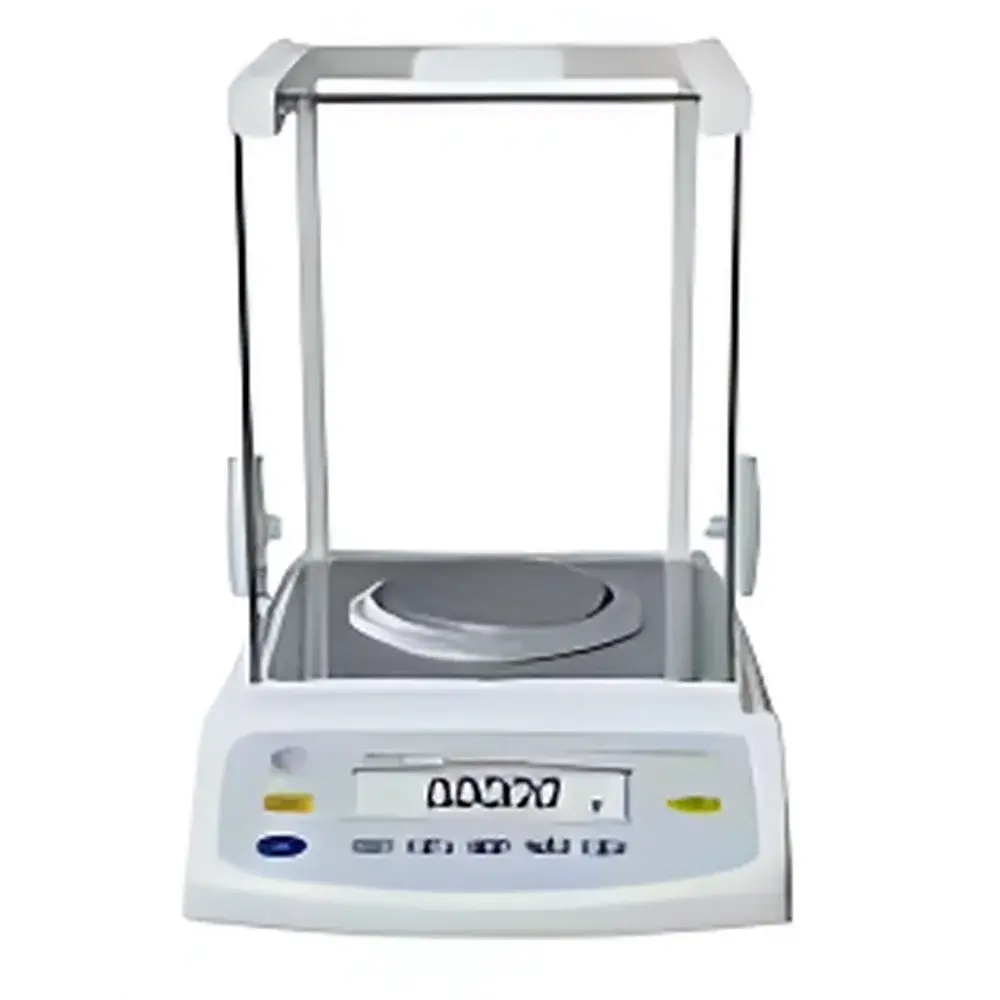
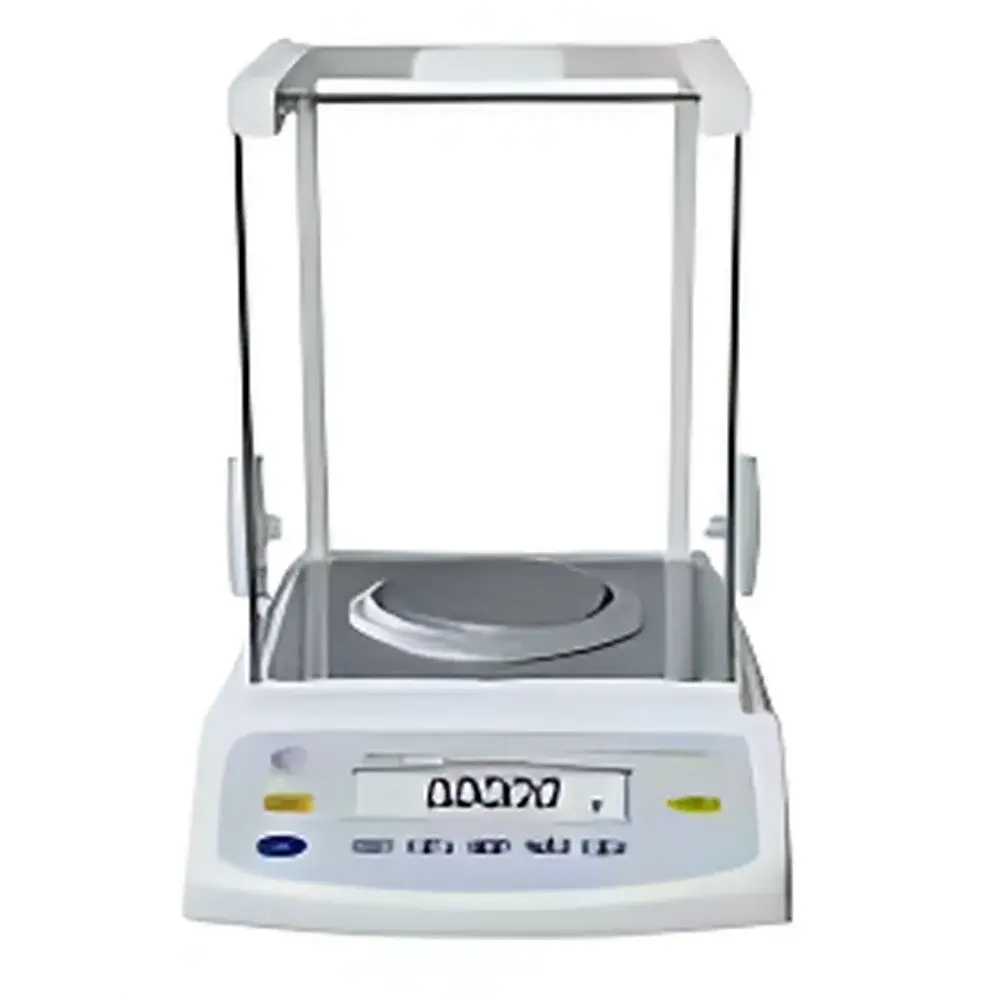
Sartorius BSA124S-CW Advanced Analytical Balance with Internal Calibration
| Brand | Sartorius |
|---|---|
| Model | BSA124S-CW |
| Origin | Germany |
| Type | Analytical Balance |
| Max Capacity | 120 g |
| Readability | 0.1 mg |
| Repeatability | 1 mg |
| Calibration | Motorized Internal Calibration |
| Display | Backlit LCD (15 mm digit height) |
| Weighing Pan Diameter | Ø 90 mm |
| Interface | RS232 bidirectional |
| Compliance | ISO/GLP-compliant data output (with optional YDP03-0CE printer or PC connection) |
| Built-in Applications | Percentage weighing, net weight summation, animal/dynamic weighing, unit conversion, arithmetic functions (×, ÷) |
Overview
The Sartorius BSA124S-CW is a high-precision analytical balance engineered for routine laboratory applications requiring trace-level mass measurement accuracy and long-term stability. Based on electromagnetic force compensation (EMFC) technology, it delivers consistent, drift-resistant performance across variable ambient conditions—including minor fluctuations in temperature, air currents, and vibration. With a readability of 0.1 mg and a maximum capacity of 120 g, the BSA124S-CW meets the metrological requirements for quantitative gravimetric analysis, standard preparation, titrant dispensing verification, and quality control testing in pharmaceutical, chemical, and academic laboratories. Its internal calibration system—driven by a motorized, built-in reference mass—eliminates manual handling of external weights and ensures traceable, repeatable recalibration without interrupting workflow.
Key Features
- Motorized internal calibration (CW designation): One-touch initiation of full-range calibration with automatic temperature-compensated adjustment.
- Advanced digital filtering algorithm: Adaptive response optimization reduces settling time while maintaining resolution and minimizing environmental interference.
- Ergonomic design: Large backlit LCD display with 15 mm high characters; integrated bubble level adjacent to the screen for rapid leveling verification.
- Intuitive user interface: Context-sensitive English prompts and icon-based navigation simplify parameter configuration and application selection.
- Robust mechanical architecture: Stainless steel weighing pan (Ø 90 mm), draft shield-compatible enclosure, and reinforced base for enhanced stability on standard lab benches.
- Comprehensive built-in applications: Percentage weighing, net weight accumulation, dynamic/animal weighing mode, unit conversion (g, mg, oz, ct, etc.), and basic arithmetic operations (multiplication/division).
Sample Compatibility & Compliance
The BSA124S-CW supports a wide range of sample types—from powders and granules to small-volume liquids in tared containers—when used with appropriate draft shields (sold separately). Its compact footprint and low-profile design facilitate integration into fume hoods and laminar flow cabinets. The balance conforms to international metrological standards including OIML R76-1 (Class I) and EN 45501. While not pre-certified for regulatory submission, its data output architecture supports ISO/IEC 17025, GLP, and GMP environments when paired with validated peripherals: the optional YDP03-0CE thermal printer enables direct generation of audit-ready calibration reports, and RS232 connectivity allows secure, timestamped data transfer to LIMS or ELN systems under 21 CFR Part 11-compliant configurations (when implemented with appropriate software controls).
Software & Data Management
Data integrity is maintained through bidirectional RS232 communication, supporting both ASCII and Sartorius-specific protocols. Raw weight values, timestamps, operator IDs (via configurable login), and calibration event logs can be exported in structured text format. When connected to a certified printer, the balance automatically appends calibration status, internal reference mass ID, ambient temperature at time of calibration, and system self-test results to each printed record—fulfilling minimum documentation requirements for ISO 17025 Clause 7.7 and EU Annex 11-aligned workflows. No proprietary software installation is required for basic data capture; however, Sartorius LabX Lite (freely available) extends functionality with customizable report templates, statistical process control (SPC) charts, and electronic signature support.
Applications
- Preparation and verification of reference standards and working solutions in QC labs.
- Gravimetric analysis of active pharmaceutical ingredients (APIs) per USP <41> and EP 2.1.6.
- Weighing of catalysts, reagents, and microsamples in synthetic chemistry workflows.
- Calibration of volumetric glassware using density-corrected mass-to-volume conversion.
- Stability-indicating assays requiring high-resolution mass tracking over time (e.g., desiccation studies, hygroscopicity evaluation).
- Teaching laboratories: Demonstrating metrological principles, uncertainty propagation, and calibration hierarchy in analytical science curricula.
FAQ
What does “CW” signify in the model number BSA124S-CW?
The “CW” suffix denotes motorized internal calibration—indicating the balance includes an integrated, electromechanically actuated calibration mass and fully automated calibration sequence.
Is the BSA124S-CW compliant with ISO/IEC 17025 for accredited testing laboratories?
Yes—when operated with documented procedures, regular interval verification, and traceable calibration records (e.g., via YDP03-0CE printer), it satisfies clause 6.4.10 (Equipment Verification) and 6.5.2 (Measurement Traceability) requirements.
Can this balance be connected to a laboratory information management system (LIMS)?
Yes—through its RS232 port and standardized ASCII output, it integrates with most LIMS platforms using middleware or native serial drivers; validation documentation is available upon request.
Does the BSA124S-CW require external calibration weights for routine use?
No—its internal calibration system eliminates the need for external weights during daily operation; external verification with Class E2 or better weights is recommended annually or per internal SOP.
What is the typical warm-up time before achieving full specification performance?
Sartorius specifies 30 minutes at stable ambient temperature (20 ± 2 °C); however, stable 0.1 mg readings are typically achieved within 15 minutes under controlled lab conditions.