
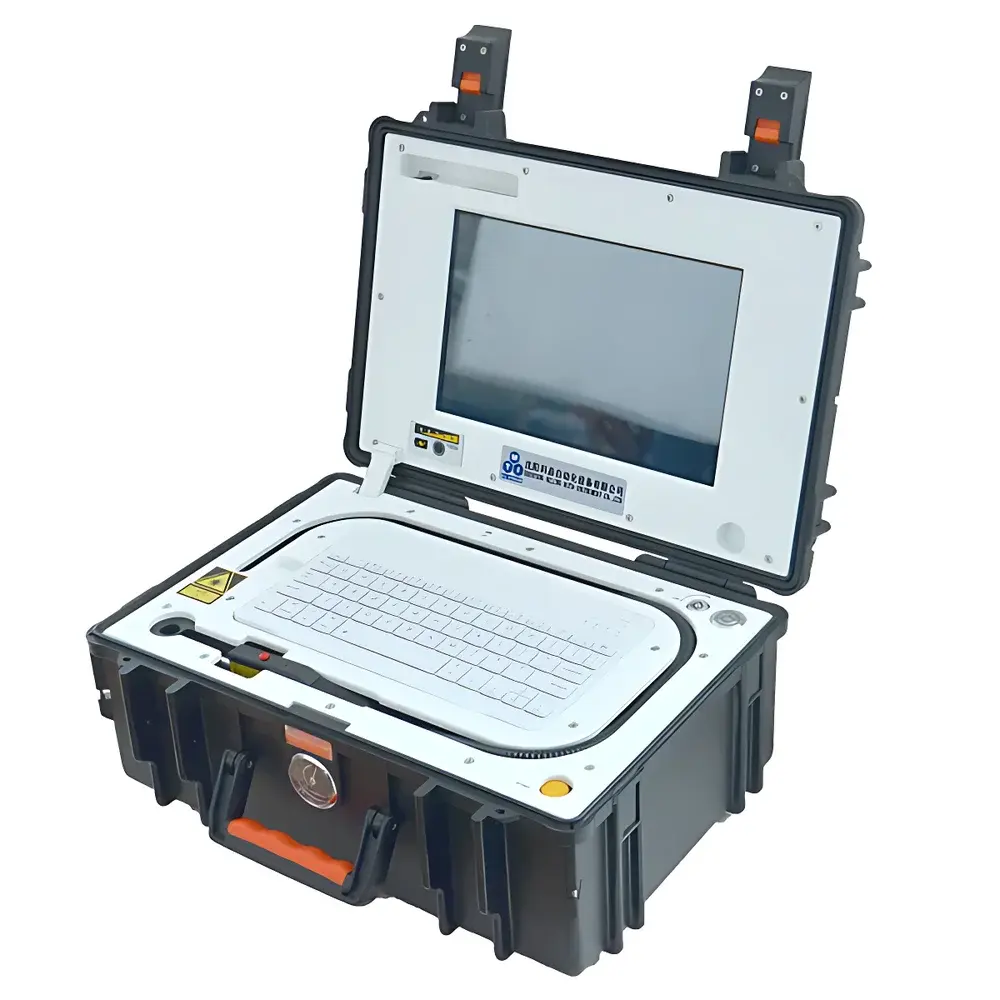
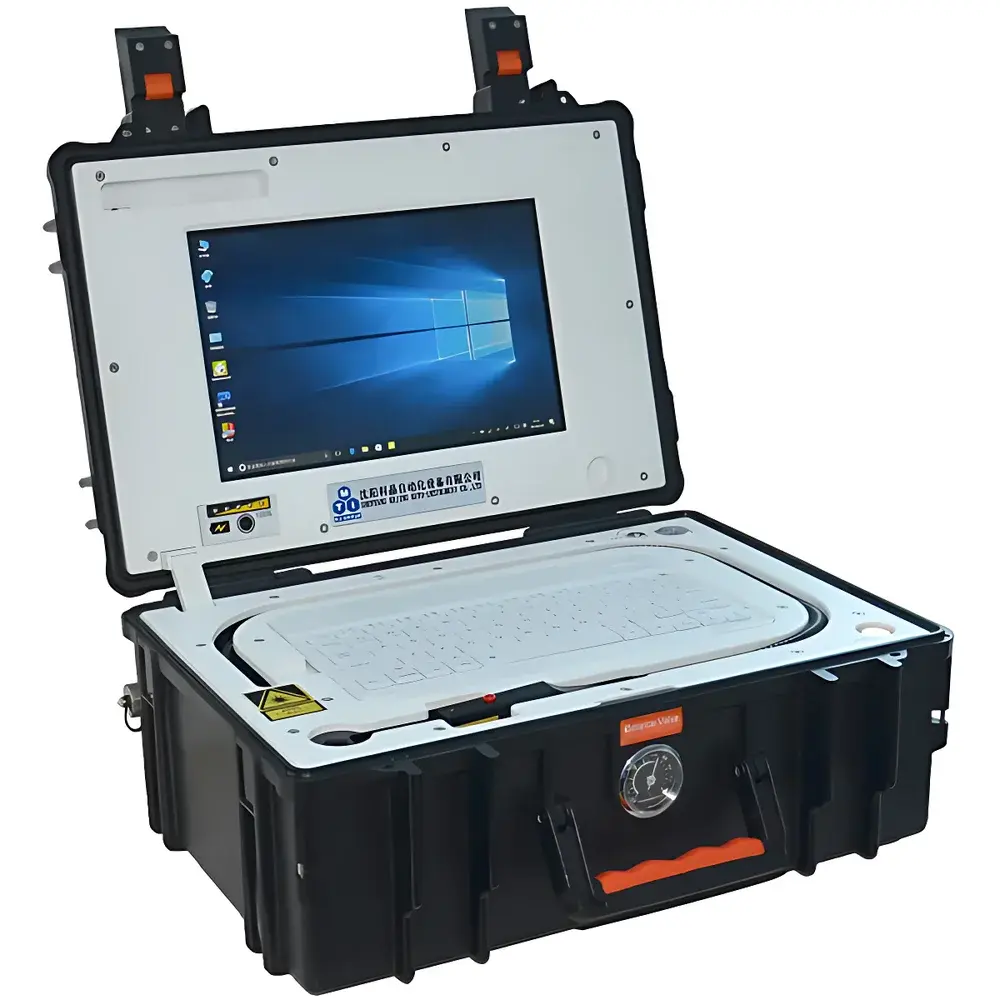
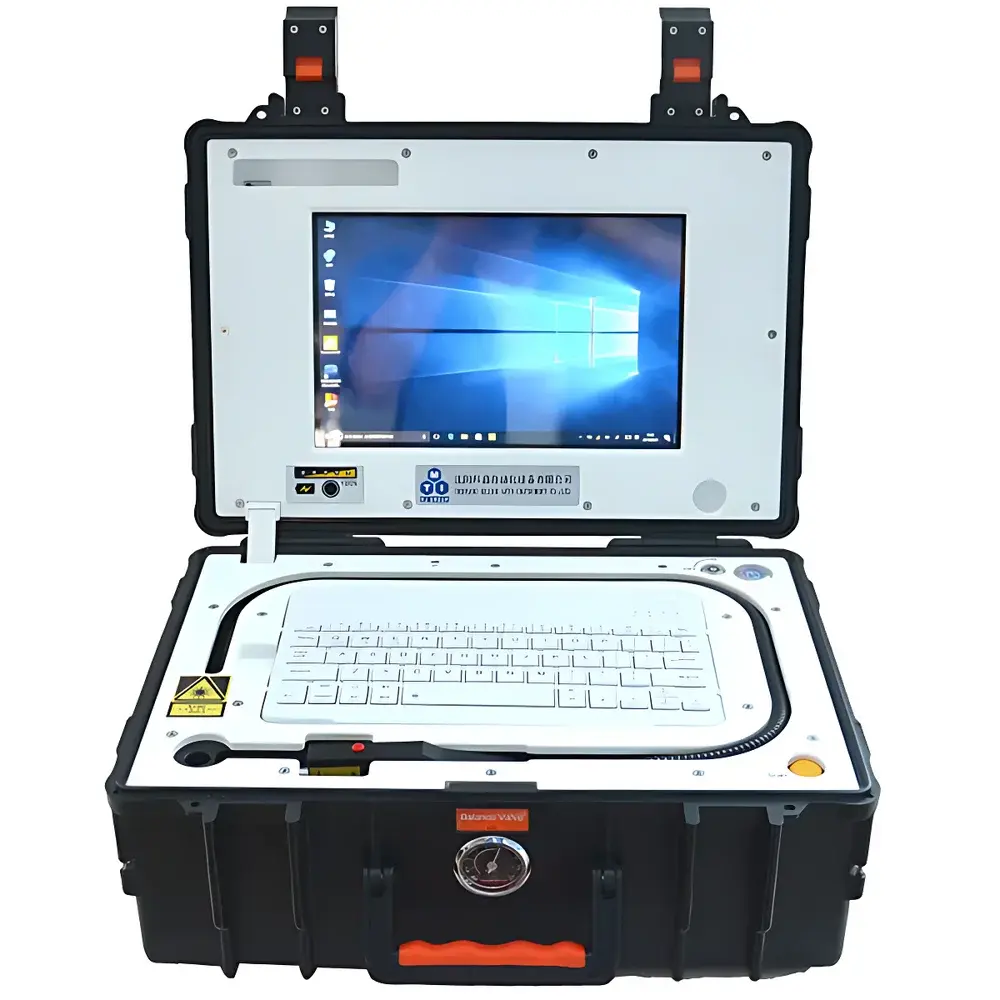
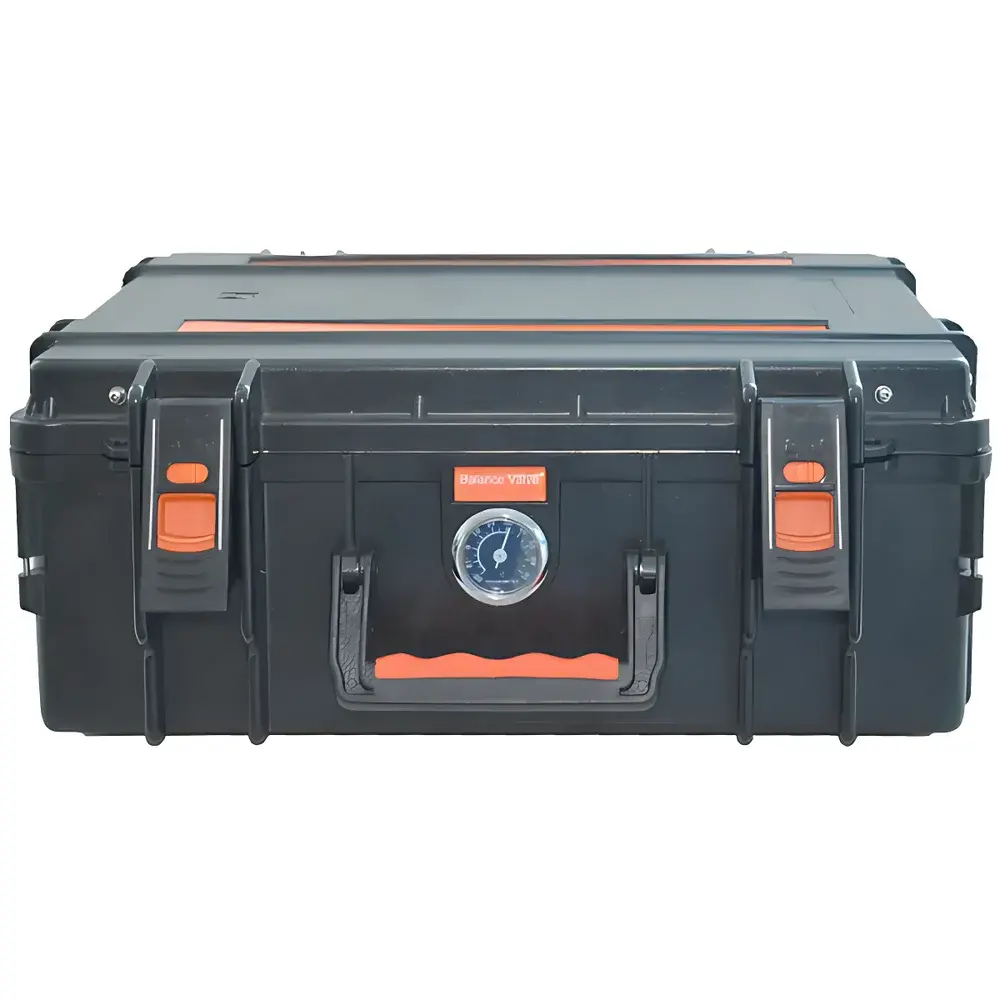
KJ GROUP SSR-3000 Portable Raman Spectrometer
| Brand | KJ GROUP |
|---|---|
| Origin | Liaoning, China |
| Manufacturer Type | Authorized Distributor |
| Product Category | Domestic |
| Model | SSR-3000 |
| Instrument Type | Portable / Handheld Raman Spectrometer |
| Spectral Range | 180–3300 cm⁻¹ |
| Spectral Resolution | 9 cm⁻¹ |
| Signal-to-Noise Ratio | 400:1 @ 100 ms integration time |
| Excitation Wavelength | 785 ± 0.5 nm |
| Laser Linewidth | < 0.06 nm |
| Output Power | 0–500 mW (digitally adjustable) |
| Integration Time | 10 ms – 20 min |
| Weight | < 4 kg |
| Dimensions | 370 × 270 × 120 mm |
| Power Supply | External AC 100–240 V, 50/60 Hz |
| Internal Battery | 12 V, 8000 mAh Li-ion (laptop-grade) |
Overview
The KJ GROUP SSR-3000 Portable Raman Spectrometer is an industrial-grade, field-deployable analytical instrument engineered for rapid, non-destructive molecular identification across diverse operational environments. Based on spontaneous Raman scattering principles, the system utilizes a stabilized 785 nm diode laser to excite vibrational modes in sample molecules, generating fingerprint-like spectral signatures between 180 and 3300 cm⁻¹. Its optical architecture incorporates high-efficiency volume phase holographic (VPH) gratings and back-illuminated CCD detection to maximize photon collection efficiency and minimize fluorescence interference—critical for analysis of pigments, pharmaceuticals, polymers, and biological matrices. Designed for mission-critical field use, the SSR-3000 features IP65-rated enclosure compliance, shock-absorbing elastomeric housing, and MIL-STD-810G-aligned mechanical robustness against vibration, dust, moisture, and incidental impact.
Key Features
- 785 nm Excitation Source: Digitally tunable laser with 20,000 hours ensures spectral fidelity, low fluorescence background, and compatibility with thermally sensitive or highly fluorescent samples.
- Real-Time Operational Readiness: No warm-up required; full spectral acquisition initiates within seconds of power-on due to active thermal stabilization of optical components and laser diode.
- One-Touch Analytical Workflow: Integrated embedded OS and touchscreen interface support direct operation without external PC; includes onboard spectral preprocessing (cosmic ray removal, baseline correction, normalization) and real-time peak matching.
- Non-Contact & Non-Invasive Sampling: Optimized optical focusing permits direct measurement through transparent barriers including plastic packaging, glass vials, and polymer films—enabling hygienic, contamination-free screening.
- Field-Optimized Power Architecture: Dual-power mode: AC mains input (100–240 V) for lab continuity and rechargeable 12 V / 8000 mAh Li-ion battery supporting > 4 hours of continuous operation under typical 1-s acquisition duty cycle.
Sample Compatibility & Compliance
The SSR-3000 accommodates solid, liquid, gel, and powder specimens via interchangeable sampling modules—including a standard solid sample holder, dual-use liquid cuvette set, and optional fiber-coupled probe for remote or confined-space analysis. It meets ISO/IEC 17025:2017 requirements for analytical instrument verification when operated within validated protocols. While not pre-certified for regulated GxP environments, its data output structure supports audit-trail-capable software extensions compliant with FDA 21 CFR Part 11 (when deployed with qualified third-party LIMS or cloud analytics platforms). The instrument adheres to IEC 61000-6-3 (EMC emissions) and IEC 61000-6-2 (immunity) standards for industrial equipment.
Software & Data Management
The SSR-3000 ships with KJ-SpectraSuite™, a domain-optimized application suite offering multi-layered spectral library management. Preloaded libraries cover > 1,200 reference spectra across pharmaceutical APIs, illicit substances, food adulterants (e.g., melamine, Sudan dyes), gemological materials (corundum, jadeite, synthetic diamonds), and geological minerals. All libraries are structured using ASTM E1840-compliant metadata tagging (chemical class, CAS number, physical state, measurement conditions). Cloud synchronization enables over-the-air library updates, collaborative spectral annotation, and secure web-based result review via HTTPS-enabled dashboard. Raw spectral data exports in standardized JCAMP-DX (.jdx) and ASCII formats ensure interoperability with third-party chemometric tools (e.g., MATLAB, Unscrambler X, Python SciPy).
Applications
- Forensic & Security Screening: Identification of explosives (TNT, PETN), precursors, and hazardous chemicals in customs, border control, and first-responder scenarios.
- Pharmaceutical Quality Control: Verification of raw material identity, counterfeit drug detection, and excipient profiling per USP and Ph. Eur. 2.2.48 guidelines.
- Cultural Heritage Analysis: In situ pigment mapping and binder characterization on manuscripts, frescoes, and archaeological ceramics without sampling.
- Agricultural & Food Safety: Rapid quantification of pesticide residues (e.g., chlorpyrifos), veterinary drug markers (e.g., sulfonamides), and unauthorized colorants in produce, dairy, and meat products.
- Materials Science Fieldwork: On-site phase identification in battery cathodes, catalyst formulations, and 2D nanomaterials during process development or failure analysis.
FAQ
Is the SSR-3000 suitable for quantitative analysis?
Yes—when calibrated with NIST-traceable standards and operated under controlled environmental conditions (temperature stability ±2°C, humidity < 60% RH), it supports semi-quantitative concentration estimation with RSD < 8% for repeat measurements of homogeneous samples.
Can spectral libraries be customized for proprietary compounds?
Absolutely. KJ GROUP provides SDK documentation and spectral import utilities enabling customers to build, validate, and deploy custom libraries aligned with internal quality specifications or regulatory submission requirements.
What maintenance is required for long-term field reliability?
No routine optical alignment is needed. Recommended annual verification includes laser power calibration using NIST-traceable photodiode sensors and spectral resolution validation with neon-argon emission lines.
Does the device support remote diagnostics or firmware updates?
Yes—via embedded Ethernet/Wi-Fi module. Firmware updates, log retrieval, and diagnostic telemetry are accessible through secure SSH or HTTPS API endpoints, compatible with enterprise MDM platforms.
Is training provided for method development and spectral interpretation?
KJ GROUP offers certified instructor-led workshops covering fundamental Raman theory, library curation best practices, multivariate outlier detection, and GLP-compliant reporting workflows—delivered onsite or via virtual lab sessions.



