
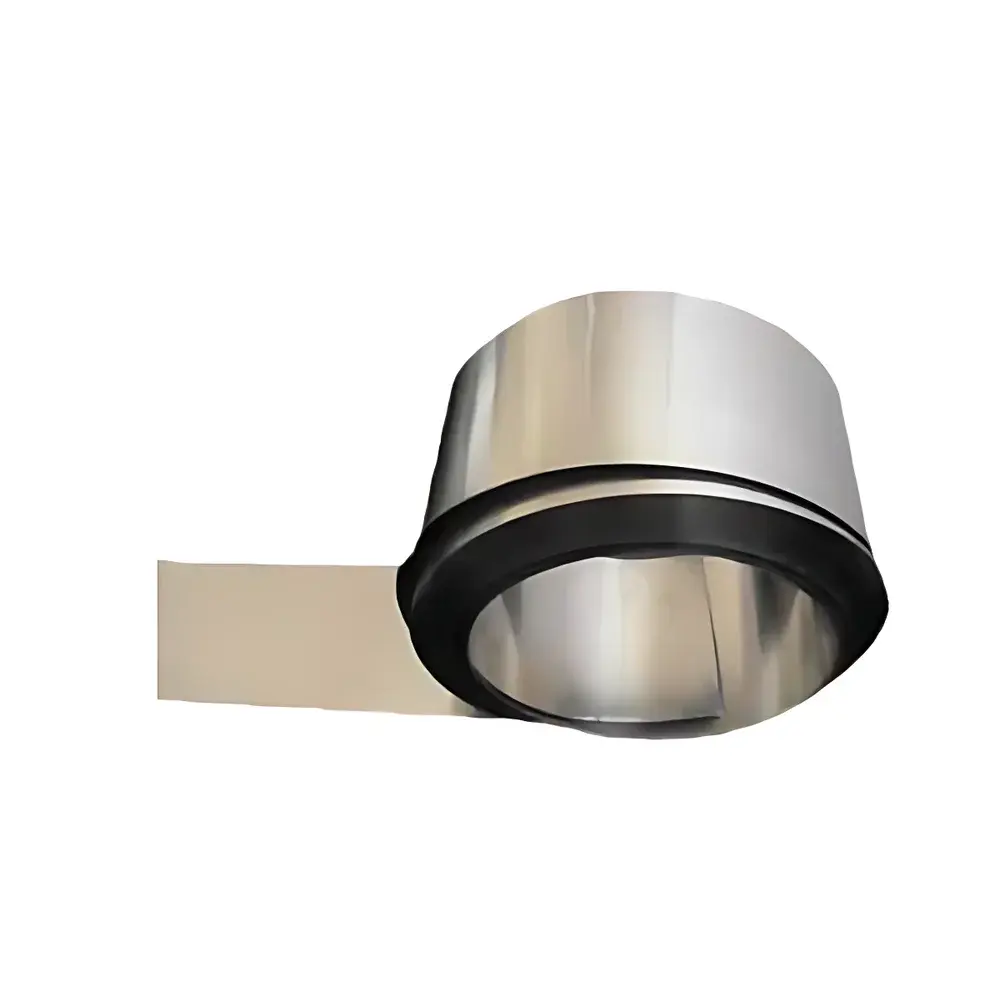
Nickel Foil for Graphene Synthesis – KJ GROUP High-Purity Nickel Foil (Model: Ni-Foil-0.025mm)
| Brand | KJ GROUP |
|---|---|
| Purity | >99.9% |
| Thickness | 0.025 mm |
| Width | 150 mm |
| Length | 5000 mm |
| Resistivity | 6.97 μΩ·cm (at 20 °C) |
| Density | 8.9 g/cm³ (at 25 °C) |
| Melting Point | 1453 °C |
| Boiling Point | 2732 °C |
| Net Weight | 200 g |
Overview
KJ GROUP Nickel Foil (Model: Ni-Foil-0.025mm) is a high-purity, precision-rolled metallic substrate engineered specifically for catalytic chemical vapor deposition (CVD) of monolayer and few-layer graphene. Fabricated from electrolytically refined nickel with guaranteed purity exceeding 99.9%, this foil exhibits tightly controlled dimensional tolerances and uniform microstructural homogeneity—critical prerequisites for reproducible graphene nucleation, lateral growth, and domain continuity. Its low residual impurity profile minimizes catalytic poisoning and carbon segregation anomalies during high-temperature CVD annealing (typically 900–1000 °C under H2/CH4 atmospheres), enabling consistent transfer-free or polymer-assisted transfer processes. The foil’s intrinsic thermal stability, combined with its well-characterized electrical resistivity and surface energy, supports rigorous process qualification in academic labs and pilot-scale R&D facilities pursuing graphene-based electronics, transparent conductive films, and heterostructure device integration.
Key Features
- Ultra-High Purity: Minimum 99.9% Ni (metals basis), verified by GDMS (Glow Discharge Mass Spectrometry); trace oxygen, sulfur, and carbon content strictly controlled to avoid graphitic defect formation.
- Precision Dimensional Consistency: Nominal thickness of 25 µm (±1.5 µm tolerance), width of 150 mm (±0.3 mm), and continuous length of 5 m—enabling uniform heating profiles and scalable roll-to-roll CVD compatibility.
- Optimized Surface Morphology: Cold-rolled and vacuum-annealed to achieve low surface roughness (Ra < 0.15 µm) and minimized grain boundary density—facilitating uniform graphene coverage and reducing nucleation site heterogeneity.
- Thermophysical Reliability: Fully characterized thermal expansion coefficient (13.4 × 10⁻⁶ K−1), specific heat (0.44 J/g·K at 25 °C), and thermal conductivity (90.9 W/m·K at 25 °C), supporting accurate thermal modeling in reactor design.
- Traceable Metrology: Each production lot includes certified test reports documenting resistivity, density, tensile strength (≥180 MPa), and Vickers hardness (HV 85–105), aligned with ASTM B160 and ISO 6507 standards.
Sample Compatibility & Compliance
This nickel foil is compatible with standard quartz tube CVD reactors, cold-wall systems, and atmospheric-pressure or low-pressure configurations. It meets material requirements for ISO/IEC 17025-accredited laboratories performing graphene process development. While not a finished device subject to regulatory clearance, the foil conforms to RoHS Directive 2011/65/EU (lead, cadmium, mercury, hexavalent chromium, PBB, PBDE limits) and REACH SVHC screening criteria. Certificate of Analysis (CoA) and Material Safety Data Sheet (MSDS) are supplied with each shipment. For GLP-compliant workflows, batch-specific traceability—including melt number, rolling pass history, and annealing parameters—is retained for ≥5 years.
Software & Data Management
As a consumable substrate material, KJ GROUP Nickel Foil does not incorporate embedded firmware or proprietary software. However, it is fully interoperable with common thin-film characterization and process documentation platforms, including Thermo Fisher Scientific’s iSolution, Bruker’s NanoScope Analysis, and open-source tools such as Gwyddion and ImageJ for post-growth AFM/Raman mapping correlation. Lab inventory management systems (e.g., LabVantage, Quartzy) recognize the foil via standardized UN/LOCODE-compliant product identifiers and support barcode-driven lot tracking, expiration logging (recommended shelf life: 24 months under dry nitrogen storage), and audit-ready usage records.
Applications
- Catalytic CVD synthesis of large-area graphene on Ni substrates, followed by selective etching (e.g., FeCl3/HCl or ammonium persulfate) for transfer onto SiO2/Si, PET, or flexible substrates.
- Template-assisted growth of vertically aligned graphene nanoribbons and hybrid metal-graphene interconnects.
- Reference substrate for calibrating Raman intensity ratios (2D/G, D/G) and evaluating layer count uniformity across wafer-scale domains.
- Electrode base material in electrochemical exfoliation studies and solid-state battery anode prototyping (e.g., Ni–graphene composites).
- High-temperature diffusion barrier testing in MEMS packaging and thin-film metallization research.
FAQ
Is this nickel foil suitable for ultra-high-vacuum (UHV) CVD systems?
Yes—its low outgassing rate (<1×10⁻⁹ mbar·L/s·cm² after 2-hour bakeout at 200 °C) and minimal volatile residue meet UHV-compatible material specifications per ASTM E595.
Can I request custom thicknesses or surface treatments (e.g., electropolished or oxide-free)?
KJ GROUP offers OEM customization including thicknesses from 10 µm to 100 µm, double-sided electropolishing (Ra < 0.05 µm), and inert-gas packaging with oxygen scavengers—subject to minimum order quantities.
What is the recommended cleaning protocol prior to CVD loading?
Standard procedure: sequential ultrasonication in acetone (10 min), isopropanol (10 min), and DI water (5 min), followed by N2 blow-dry and in-situ H2 annealing (30 min at 500 °C) inside the reactor.
Does the foil exhibit directional grain anisotropy affecting graphene orientation?
Yes—cold-rolling induces a preferred (111) texture; users should orient the foil consistently relative to gas flow and heating zones to minimize azimuthal variation in graphene domain alignment.



