
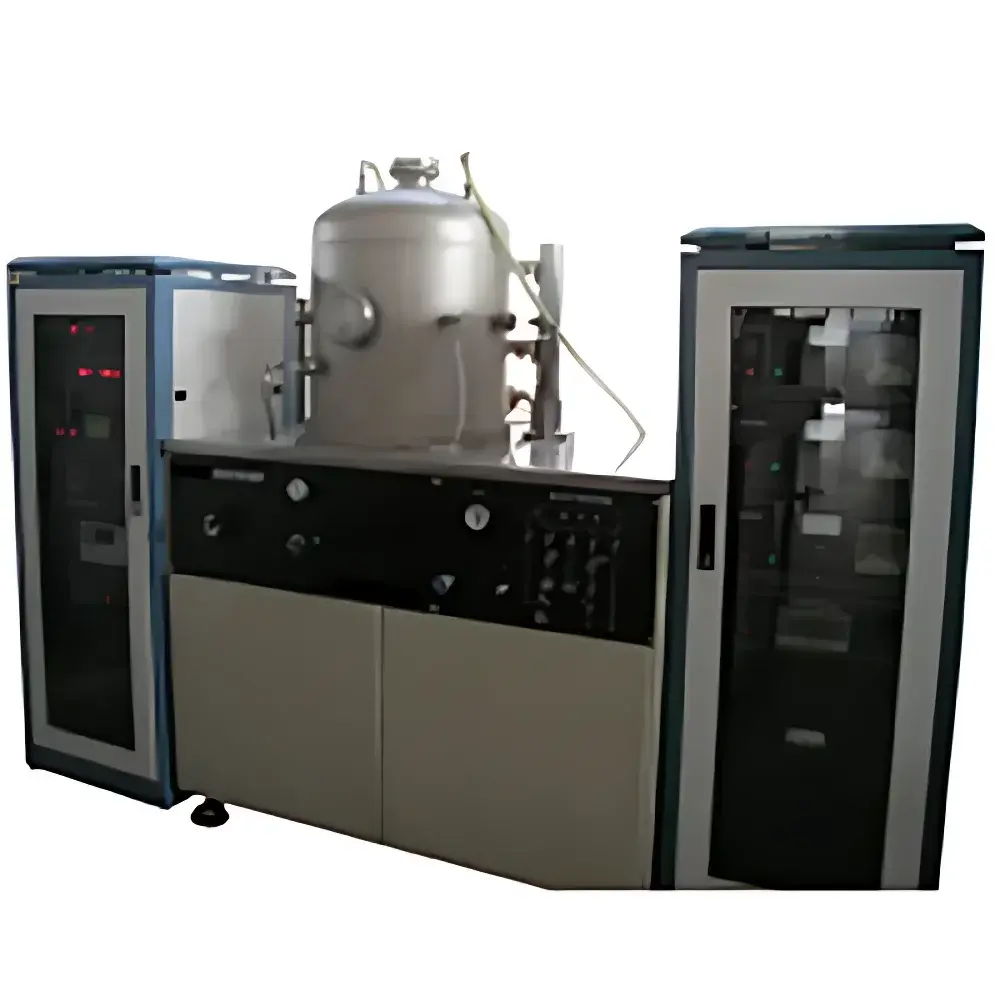
GSL-QHRL-X Vacuum Brazing Furnace by KJ Group (Shenyang Kejing)
| Brand | KJ Group (Shenyang Kejing) |
|---|---|
| Origin | Liaoning, China |
| Manufacturer Type | Authorized Distributor |
| Region of Manufacture | Domestic (PRC) |
| Model | GSL-QHRL-X |
| Pricing | Upon Request |
| Ultimate Vacuum | ≤6.67×10⁻⁵ Pa (after bake-out) |
| Leak Rate | ≤5.0×10⁻⁷ Pa·L/s |
| Pump-Down Time | ≤45 min to 6.6×10⁻⁴ Pa after N₂ purge |
| Operating Temperature Range | 100–2300 °C |
| Chamber Orientation | Vertical or Horizontal |
| Chamber Diameter | Ø200–Ø2000 mm (customizable) |
| Heating Zones | Single to Multi-Zone (1–3+ zones) |
| Heating Elements | W, Mo, Ta, Graphite (high-temp) |
| Insulation | Multi-layer metal radiation shield, graphite cylinder, carbon felt, or water-cooled jacket |
| Cooling System | Integrated closed-loop chiller (deionized water, ≤25 °C, 0.25–0.4 MPa, ≥12 L/min) |
| Atmosphere Control | High-purity N₂ or Ar (≥99.99%) via external cylinder with φ10 mm dual-ferrule fitting & regulator |
| Power Supply | AC 380 V, 50 Hz, ±6% tolerance, grounding resistance <2 Ω |
| Footprint | 2000 mm × 2000 mm, load capacity ≥1000 kg |
| Exhaust | Mandatory external ducted ventilation |
Overview
The GSL-QHRL-X Vacuum Brazing Furnace is a high-precision, programmable high-vacuum thermal processing system engineered for controlled atmosphere brazing, high-temperature annealing, and vacuum sintering in R&D and pilot-scale production environments. Designed around a robust stainless steel double-wall vacuum chamber with integrated water-cooled flanges and all-metal sealing, the furnace operates under ultra-high vacuum conditions—achieving ≤6.67×10⁻⁵ Pa after standard bake-out procedures—enabling oxide-free joining of refractory metals, ceramics, and advanced composites. Its modular architecture supports both vertical and horizontal chamber configurations, with customizable internal diameters ranging from Ø200 mm to Ø2000 mm to accommodate diverse part geometries and batch sizes. Temperature uniformity across the hot zone is maintained through multi-zone resistive heating (1–3+ independently controlled zones), utilizing high-stability elements such as tungsten, molybdenum, tantalum, or graphite—selected per operational temperature envelope (100–2300 °C). The system’s thermal insulation employs either multi-layer metal radiation shields, graphite cylinders, carbon felt, or actively water-cooled jackets, ensuring energy efficiency and thermal stability during extended dwell cycles.
Key Features
- Ultra-high vacuum capability: ≤6.67×10⁻⁵ Pa ultimate pressure (post-bake-out), verified per ISO 20483 and ASTM E1574 standards
- Low-leakage vacuum integrity: System leak rate ≤5.0×10⁻⁷ Pa·L/s, validated using helium mass spectrometry (per ISO 10715)
- Rapid pump-down performance: Reaches 6.6×10⁻⁴ Pa within 45 minutes following dry nitrogen backfill and re-evacuation
- Multi-zone programmable temperature control: Independent PID loops for each heating zone, supporting ramp/soak profiles with ±1 °C thermal uniformity over ±25 mm axial zone length
- Configurable chamber orientation and dimensions: Factory-customized vertical/horizontal layout and Ø200–Ø2000 mm internal diameter to match user workflow and part handling requirements
- Integrated closed-loop cooling: Self-contained chiller unit with deionized water circulation (≤25 °C, ≥12 L/min at 0.25–0.4 MPa), eliminating dependency on facility water infrastructure
- Gas compatibility: Dual-gas inlet manifold for high-purity N₂ or Ar (≥99.99%), equipped with standardized φ10 mm dual-ferrule fittings and pressure regulation
Sample Compatibility & Compliance
The GSL-QHRL-X accommodates a broad spectrum of materials requiring contamination-sensitive thermal treatment—including Ti-6Al-4V aerospace alloys, SiC and Al₂O₃ ceramics, tungsten-copper composites, and rare-earth permanent magnets. Its all-metal vacuum path (no organic seals in hot zone), low-outgassing insulation, and bake-out capability ensure compliance with ASTM F805 (vacuum furnace qualification) and ISO 14644-1 Class 5 cleanroom-equivalent particulate control during operation. The system meets electromagnetic compatibility (EMC) requirements per IEC 61000-6-3 and safety standards per IEC 61000-6-2. For regulated industries, optional audit-trail-enabled software modules support 21 CFR Part 11-compliant electronic records and signature workflows when integrated with validated data acquisition systems.
Software & Data Management
Equipped with a dedicated industrial PLC-based controller and optional PC-integrated supervisory software, the furnace supports full-cycle recipe management, real-time parameter logging (temperature, pressure, power, gas flow), and alarm history archiving. Data export is available in CSV and XML formats compatible with LIMS and MES platforms. Optional features include remote monitoring via Ethernet/IP or Modbus TCP, event-triggered snapshot capture, and automated calibration log generation. All system firmware adheres to IEC 62443-3-3 cybersecurity guidelines for industrial control systems.
Applications
- Vacuum brazing of heat exchangers, turbine blades, and sensor housings using active metal or Cu-based filler alloys
- High-purity annealing of Nb-Ti superconducting wires and MgB₂ thin films
- Pressureless sintering of WC-Co cemented carbides and UHTC (ultra-high-temperature ceramic) components
- Graphitization and high-temperature purification of carbon nanomaterials
- Diffusion bonding of dissimilar metals (e.g., stainless steel to Inconel®) without interfacial oxidation
- Thermal cycling validation of space-grade electronic packaging under simulated orbital vacuum conditions
FAQ
What vacuum pumping configuration is included with the standard GSL-QHRL-X system?
The base configuration includes a turbomolecular pump backed by a dry scroll vacuum pump, compliant with ISO 10436 and capable of achieving the specified ultimate vacuum and leak-rate performance.
Can the furnace be configured for inert-gas partial pressure control during heating cycles?
Yes—optional mass flow controllers (MFCs) and capacitance manometers enable dynamic partial pressure regulation up to 1000 Pa, supporting controlled carburizing, nitriding, or reactive brazing protocols.
Is third-party IQ/OQ/PQ documentation available for GMP-regulated facilities?
KJ Group provides factory-verified Installation Qualification (IQ) and Operational Qualification (OQ) templates; Performance Qualification (PQ) execution requires site-specific thermocouple mapping and vacuum integrity testing conducted by certified field engineers.
What maintenance intervals are recommended for the heating elements and insulation assembly?
Tungsten and molybdenum elements require visual inspection every 200 operating hours above 1600 °C; graphite components are inspected every 100 hours above 2000 °C. Multi-layer metal shields should be cleaned and re-tensioned annually per ISO 20483 Annex D.
Does the system support integration with existing plant SCADA or MES infrastructure?
Yes—native Modbus TCP and OPC UA server options are available for seamless interoperability with Siemens Desigo, Rockwell FactoryTalk, or Emerson DeltaV environments.



