
VGB-2 Polycarbonate Glove Box by KJ GROUP
| Brand | KJ GROUP |
|---|---|
| Origin | Liaoning, China |
| Manufacturer Type | Authorized Distributor |
| Origin Category | Domestic |
| Model | VGB-2 |
| Pricing | Upon Request |
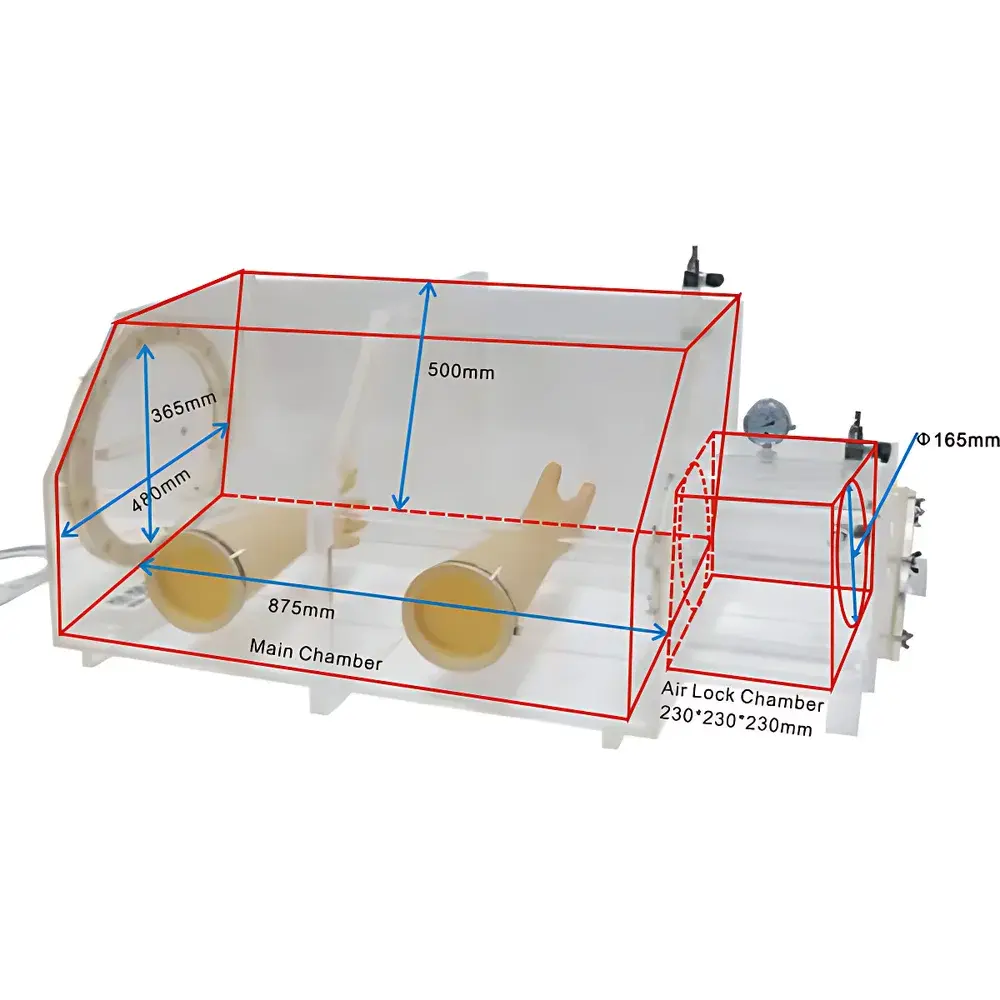
| Chamber Dimensions (Main) | 875 × 480 × 500 mm |
| Antechamber Dimensions | 230 × 230 × 230 mm |
| Main Chamber Vacuum Limit | ≤500 Torr |
| Antechamber Vacuum Limit | ≤100 Torr |
| Max Positive Pressure | 1.1 atm |
| Humidity Control Range | >15% RH (with optional gas purification system and N₂ generator, 99.999% purity) |
| Certified | CE |
| Weight | 21 kg |
| Standard Accessories | 2 pairs of elastomeric gloves (1 pair pre-installed) |
| Optional Accessories | Vacuum pump, digital vacuum gauge, humidity controller, nitrogen generator, oxygen scrubber, moisture scrubber |
Overview
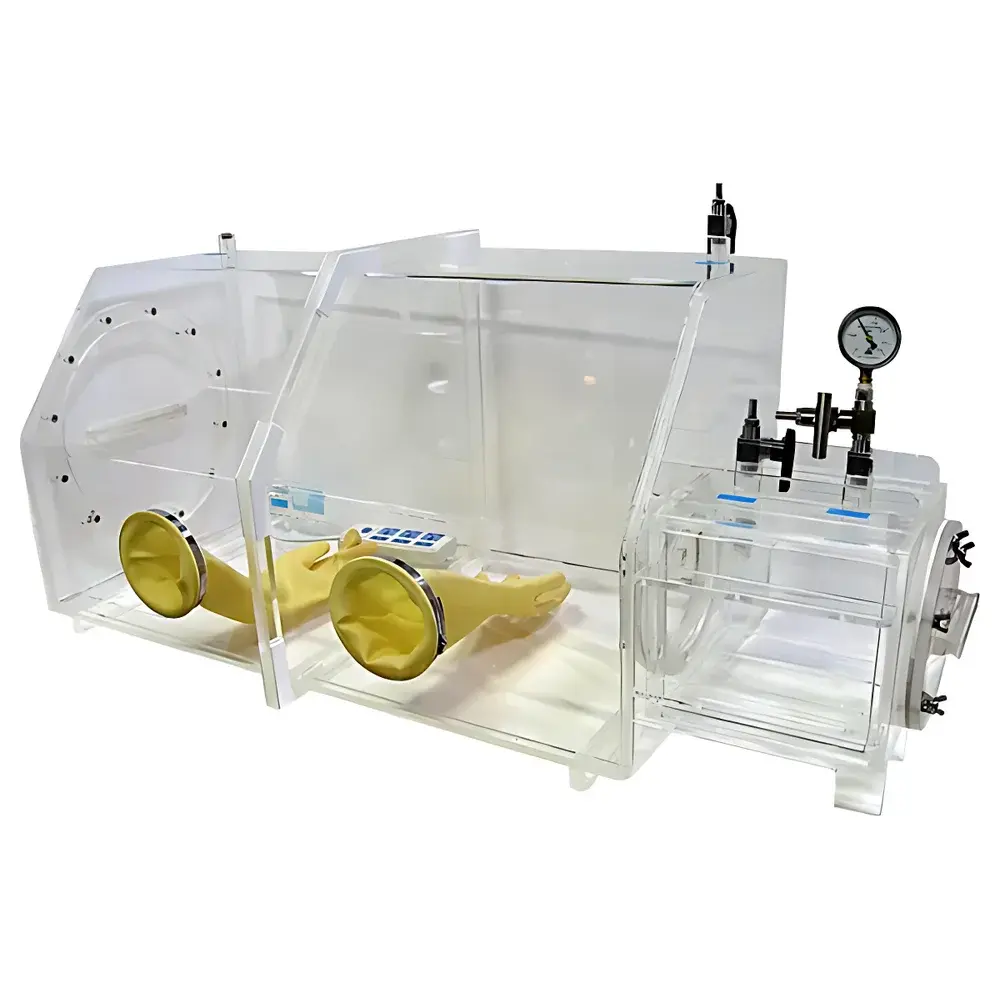
The VGB-2 Polycarbonate Glove Box is an entry-level inert atmosphere workstation engineered for laboratories requiring cost-effective, transparent, and chemically resistant containment during air-sensitive operations. Constructed entirely from high-impact polycarbonate—distinct from acrylic or standard glass—the chamber offers superior optical clarity, mechanical toughness, and broad chemical resistance to common organic solvents, weak acids, and alkaline solutions. Unlike stainless-steel glove boxes, the VGB-2 leverages its transparent architecture to enable real-time visual monitoring of sample handling, reaction progression, and equipment status without compromising operator safety or environmental integrity. Its operational principle relies on positive-pressure inert gas purging (typically nitrogen or argon), with manual or semi-automated pressure regulation via integrated ball valves and a mechanical pressure gauge. The system supports both static purge and dynamic flow modes, making it suitable for applications where strict O₂/H₂O exclusion is not required but ambient isolation remains critical.
Key Features
- Monolithic polycarbonate construction ensures full visibility, impact resistance, and compatibility with moderate corrosive reagents—ideal for teaching labs, preliminary R&D, and quality control workflows.
- Dual-chamber design comprising a main work area (875 × 480 × 500 mm) and a compact antechamber (230 × 230 × 230 mm) enables safe sample transfer while minimizing gas consumption and cross-contamination risk.
- Integrated electrical feedthrough with internal power strip (IEC 320 C13 outlet) allows direct operation of benchtop instruments—including balances, pipettes, and small reactors—without external cable routing.
- Four standardized ISO-KF 25-compatible ball valves provide flexible connectivity for vacuum lines, gas inlets, exhaust ports, and optional sensor integration (e.g., digital vacuum gauges or hygrometers).
- CE-marked compliance confirms adherence to EU Machinery Directive 2006/42/EC and Low Voltage Directive 2014/35/EU, supporting lab-wide regulatory alignment in academic and industrial settings.
Sample Compatibility & Compliance
The VGB-2 accommodates solid, liquid, and powder samples up to 20 cm in height within the main chamber. Its polycarbonate body resists degradation from ethanol, acetone, THF, and dilute HCl/NaOH—though prolonged exposure to chlorinated solvents or strong oxidizers (e.g., concentrated nitric acid) is not recommended. While not rated for Class I explosion-proof use or ultra-high-purity (15% RH minimum), aligning with ASTM D6343 and ISO 8502-9 moisture assessment protocols.
Software & Data Management
The VGB-2 operates as a hardware-only platform with no embedded firmware or proprietary software. All monitoring and control are manual: pressure is observed via analog mechanical gauge; gas flow is regulated via calibrated needle valves; vacuum level is verified using optional external digital gauges (e.g., capacitance manometers or Pirani sensors). For laboratories requiring audit-ready records, third-party data loggers can be connected to optional analog outputs (0–10 V or 4–20 mA) when paired with compatible humidity or pressure transmitters. This architecture supports 21 CFR Part 11-compliant electronic record systems when deployed with validated external instrumentation and procedural documentation—consistent with GMP-aligned material staging practices.
Applications
- Electrode fabrication for lithium-ion and solid-state batteries under nitrogen-rich atmospheres
- Handling of pyrophoric reagents (e.g., alkyl lithiums, Grignard precursors) during synthetic chemistry screening
- Preparation and storage of moisture-sensitive standards for analytical calibration (e.g., Karl Fischer titration)
- Controlled-atmosphere cell culture setup prior to sterile transfer into biosafety cabinets
- Encapsulation of OLED materials and perovskite thin films during pre-annealing stages
- Teaching demonstrations of inert-gas manipulation techniques in undergraduate physical chemistry laboratories
FAQ
Can the VGB-2 achieve oxygen levels below 10 ppm?
No. The VGB-2 is not equipped with continuous O₂/H₂O analyzers or catalytic purification loops. It is designed for gross inerting—not ultralow contamination control.
Is the polycarbonate chamber autoclavable?
No. Polycarbonate softens above 120 °C and degrades under saturated steam. Sterilization must be performed using ethanol wipe-down or UV-C irradiation (254 nm, ≥30 min exposure).
What vacuum pump specifications are recommended for optimal antechamber evacuation?
A two-stage rotary vane pump with ultimate vacuum ≤10⁻² mbar and pumping speed ≥4 m³/h is advised to achieve ≤100 Torr within 90 seconds.
Does the CE marking include EMC or RoHS directives?
CE marking covers mechanical safety and low-voltage compliance only. EMC and RoHS declarations are available upon request with test reports from accredited EU Notified Bodies.
Can custom port configurations be ordered?
Yes. KJ GROUP offers OEM port drilling (M4–M12 tapped holes) and feedthrough customization (electrical, pneumatic, optical) under non-standard order terms.



