
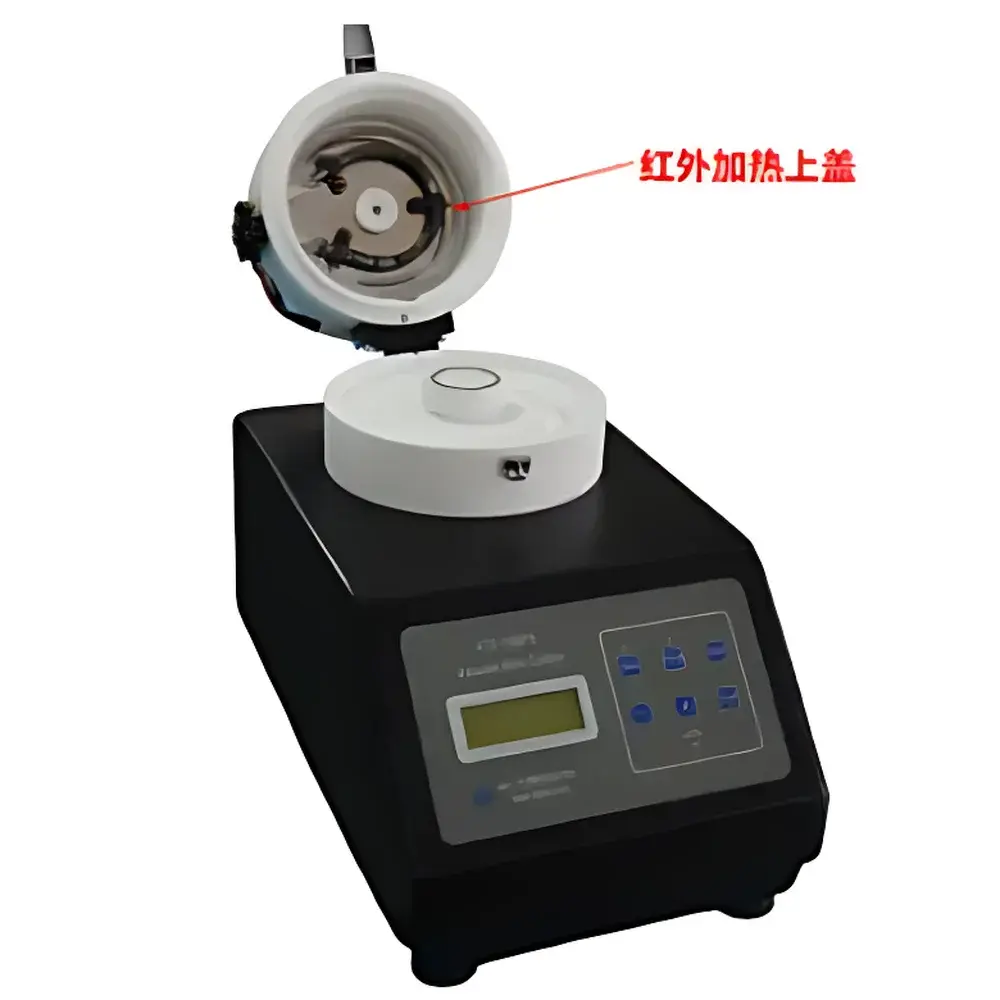
KJ GROUP VTC-100PA-II Heated Vacuum Spin Coater
| Brand | KJ GROUP |
|---|---|
| Origin | Liaoning, China |
| Manufacturer Type | Direct Manufacturer |
| Model | VTC-100PA-II |
| Vacuum Level | –0.08 MPa |
| Max. Spin Speed | 10,000 rpm |
| Speed Stability | ±1% |
| Speed Ramp Range | 100–2,000 rpm/step |
| Program Storage | 12 programs × 6 stages each |
| Spin Time per Stage | 0–60 s |
| Heating Range | Ambient to 200 °C |
| Heating Accuracy | ±2 °C |
| Heating Power | 1000 W |
| Chamber Material | Polypropylene (PP) |
| Chuck Material | PTFE (Ø19 mm & Ø60 mm) |
| Motor | 24 V DC brushless |
| Vacuum Pump | Oil-free dual-piston, ≥70 L/min |
| Dimensions (W×D×H) | 450 × 340 × 280 mm |
| Weight | 20 kg |
| Power Input | AC 220 V, 50 Hz, 10 A (host + heater) |
| Safety | Lid-interlock deceleration, inert gas compatibility (N₂/Ar), centering jig, chemical-resistant construction |
Overview
The KJ GROUP VTC-100PA-II Heated Vacuum Spin Coater is an engineered platform for precision thin-film deposition via controlled rotational fluid dynamics under vacuum and thermal regulation. Based on the principle of centrifugal force-driven solvent evaporation and solute redistribution, this instrument enables reproducible, uniform film formation on flat substrates—critical for photolithography, optical coating, perovskite solar cell fabrication, and functional polymer layer development. Unlike atmospheric spin coaters, the integrated vacuum chamber (–0.08 MPa) suppresses bubble nucleation and solvent boiling, minimizing pinholes and dewetting—especially vital when processing volatile or high-viscosity precursors (e.g., metal-organic frameworks, quantum dot inks, or acidic/basic sol-gel solutions). The independent carbon-fiber heating system (ambient to 200 °C, ±2 °C accuracy) allows precise thermal control during spinning, enabling solvent annealing, pre-bake steps, or viscosity modulation without cross-talk with rotational parameters.
Key Features
- Vacuum-assisted substrate fixation using dual PTFE vacuum chucks (Ø19 mm and Ø60 mm), ensuring secure, non-damaging adhesion for silicon wafers, glass slides, quartz substrates, and flexible films.
- 24 V DC brushless motor delivering stable rotation from 500 to 10,000 rpm with ±1% speed stability and programmable acceleration/deceleration (100–2,000 rpm/step), minimizing edge-thinning and radial non-uniformity.
- 12-user-programmable protocols, each supporting up to six sequential stages—enabling multi-step processes such as ramped spin, dwell, thermal hold, and controlled deceleration.
- Chemically resistant polypropylene (PP) chamber housing and PTFE-coated components ensure long-term compatibility with aggressive chemistries including HF-based etchants, concentrated HNO₃, KOH solutions, and organic solvents (e.g., DMF, chlorobenzene).
- Inert atmosphere capability: Sealed chamber accepts N₂ or Ar purge lines (via standard 6 mm barbed fittings), permitting oxygen/moisture-sensitive depositions—essential for air-sensitive perovskites or low-work-function metal oxides.
- Integrated safety architecture: Lid-open interlock triggers immediate deceleration; centering jig ensures <±0.2 mm radial alignment to suppress vibration-induced thickness variation; oil-free dual-piston vacuum pump eliminates hydrocarbon contamination and simplifies lab maintenance.
Sample Compatibility & Compliance
The VTC-100PA-II accommodates rigid and semi-rigid planar substrates up to Ø60 mm, including Si/SiO₂ wafers, ITO/glass, sapphire, PET, and metal foils. Its modular chuck design supports rapid tooling changeover without recalibration. The system complies with general laboratory safety standards (IEC 61010-1) and meets material compatibility requirements outlined in ASTM D1730 (coating uniformity assessment) and ISO 15184 (film thickness measurement by ellipsometry-ready surface preparation). While not certified for GMP manufacturing, its programmable parameter logging, repeatable thermal-spin coupling, and inert-gas interface make it suitable for GLP-aligned R&D workflows—including DOE studies for film thickness vs. spin speed/temperature/vacuum profiles.
Software & Data Management
Operation is managed via a dedicated PCB-based microcontroller with LCM (Liquid Crystal Module) display and tactile keypad interface—designed for reliability, electromagnetic immunity, and minimal firmware dependency. All 12 programs are stored in non-volatile memory with timestamp-independent retention. Parameter sets include stage-specific rpm, duration, acceleration rate, and (independently) heater setpoint. No external PC or proprietary software is required; however, process logs (start time, program ID, final rpm, max temperature) can be manually recorded for audit trails. For labs requiring 21 CFR Part 11 compliance, optional RS-232 or USB-to-serial adapters enable integration with third-party LabArchives or ELN systems for electronic signature-capable data capture.
Applications
- Photolithographic resist coating (SU-8, AZ series) with reduced void formation under vacuum.
- Perovskite precursor film deposition for optoelectronic devices, where O₂/H₂O exclusion during spin-casting improves crystallinity.
- Antireflective and hard-coat polymer layers on optical lenses and laser components.
- Functional nanomaterial dispersions (graphene oxide, MXenes, conductive polymers) requiring solvent-controlled drying kinetics.
- R&D-scale fabrication of solid-state electrolyte films for thin-film batteries.
- Surface modification of biosensor substrates using self-assembled monolayers (SAMs) under controlled thermal-vacuum conditions.
FAQ
What vacuum level does the system achieve, and how is it maintained?
The integrated oil-free dual-piston pump achieves and sustains –0.08 MPa (–80 kPa) gauge pressure. A built-in vacuum sensor provides real-time feedback, and the chamber seal integrity is verified via O-ring compression on the PP lid interface.
Can the heating and spinning functions operate simultaneously?
Yes—the heater (carbon-fiber element, 1000 W) and motor are electrically isolated and independently controlled. Thermal equilibrium is reached prior to spin initiation, and temperature remains stable within ±2 °C throughout rotation.
Is the system compatible with standard cleanroom environments?
Yes. The unit emits no oil vapor or particulates, features static-dissipative PP housing, and operates below 55 dB(A) at 1 m—meeting ISO Class 5 ambient noise thresholds for shared lab spaces.
How is substrate centering ensured for high-speed operation?
A mechanical centering jig with four adjustable locating pins ensures sub-millimeter radial alignment before vacuum activation—reducing imbalance-induced vibration even at 10,000 rpm.
What maintenance is required for long-term reliability?
Routine tasks include O-ring inspection every 6 months, PTFE chuck cleaning with IPA, and vacuum pump filter replacement per manufacturer’s 500-hour service interval. No motor brushes or lubrication points require servicing.



