
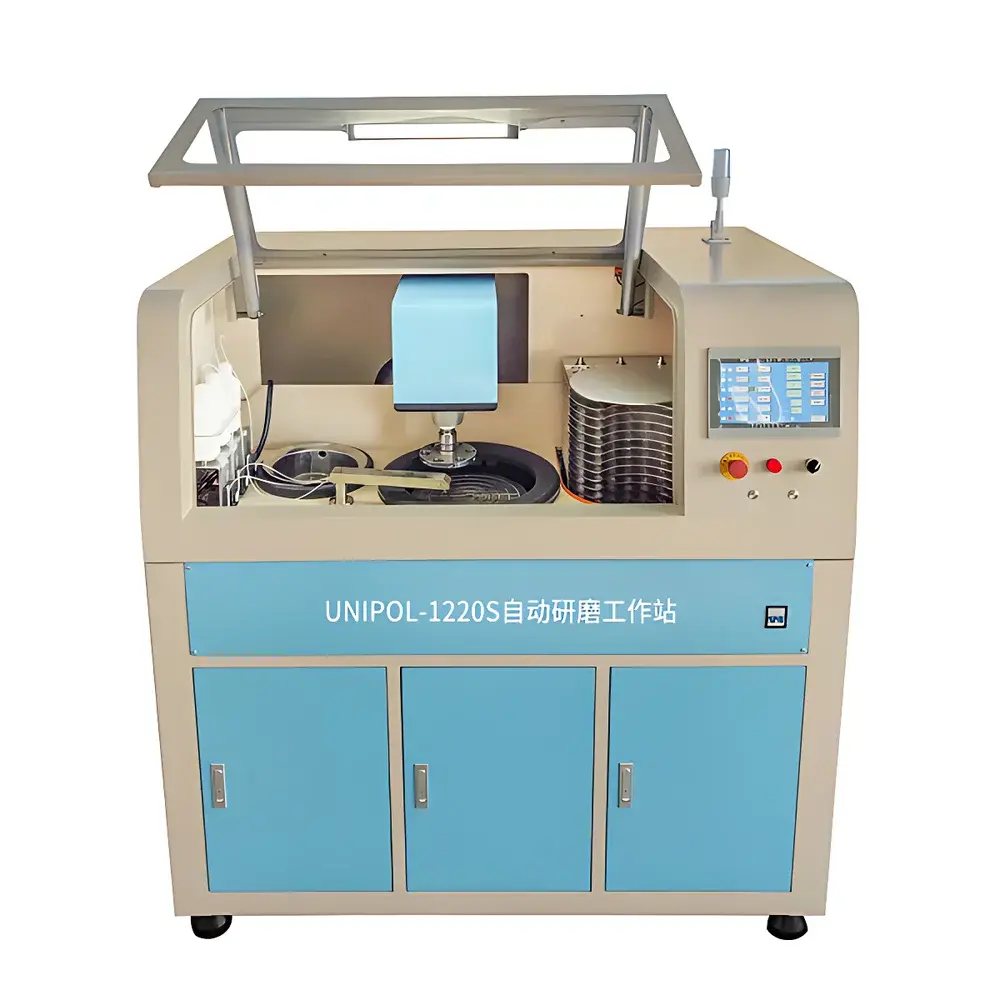
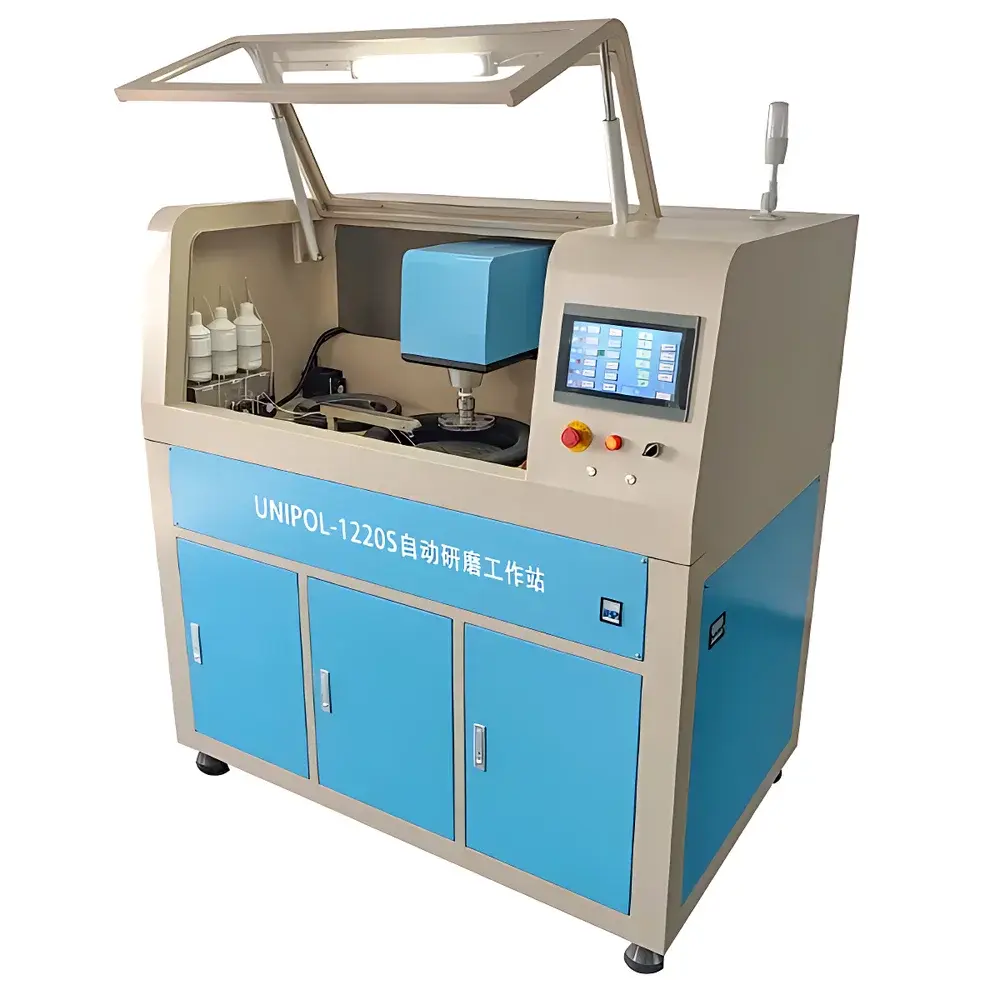
KJ GROUP UNIPOL-1220S Automated Grinding and Polishing Workstation
| Brand | KJ GROUP |
|---|---|
| Origin | Liaoning, China |
| Manufacturer Type | Authorized Distributor |
| Product Category | Domestic |
| Model | UNIPOL-1220S |
| Dimensions (L×W×H) | 1600 × 1002 × 1688 mm |
| Number of Grinding Plates | 1 |
| Plate Diameter | 300 mm |
| Rotational Speed Range | 20–378 rpm |
| Maximum Applied Load | 30 kg |
Overview
The KJ GROUP UNIPOL-1220S Automated Grinding and Polishing Workstation is an integrated sample preparation system engineered for precision, repeatability, and operator safety in metallurgical, geological, ceramic, and microelectronics laboratories. It implements a sequential, closed-loop process based on controlled mechanical abrasion—combining rotational grinding, timed polishing, multi-stage slurry delivery, and ultrasonic-assisted cleaning within a single platform. Unlike manual or semi-automated systems, the UNIPOL-1220S employs programmable motion control, vacuum-based disc retention, and load-regulated pressure application to ensure uniform material removal rates and surface finish consistency across batches. Its architecture supports ISO 14971 risk management principles and aligns with GLP-compliant documentation workflows through traceable parameter logging and recipe-based execution.
Key Features
- Full-process automation: Integrated grinding → ultrasonic cleaning → polishing → final rinse sequence executed under a single program launch.
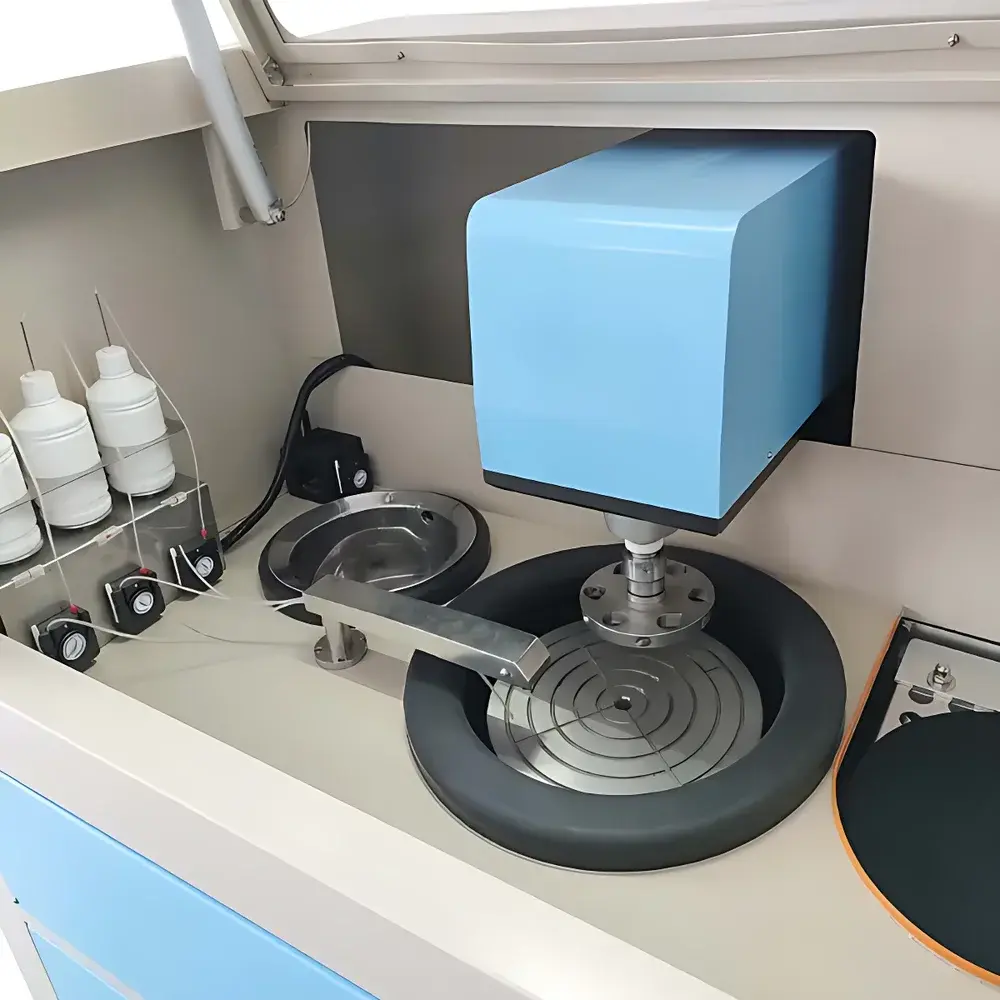
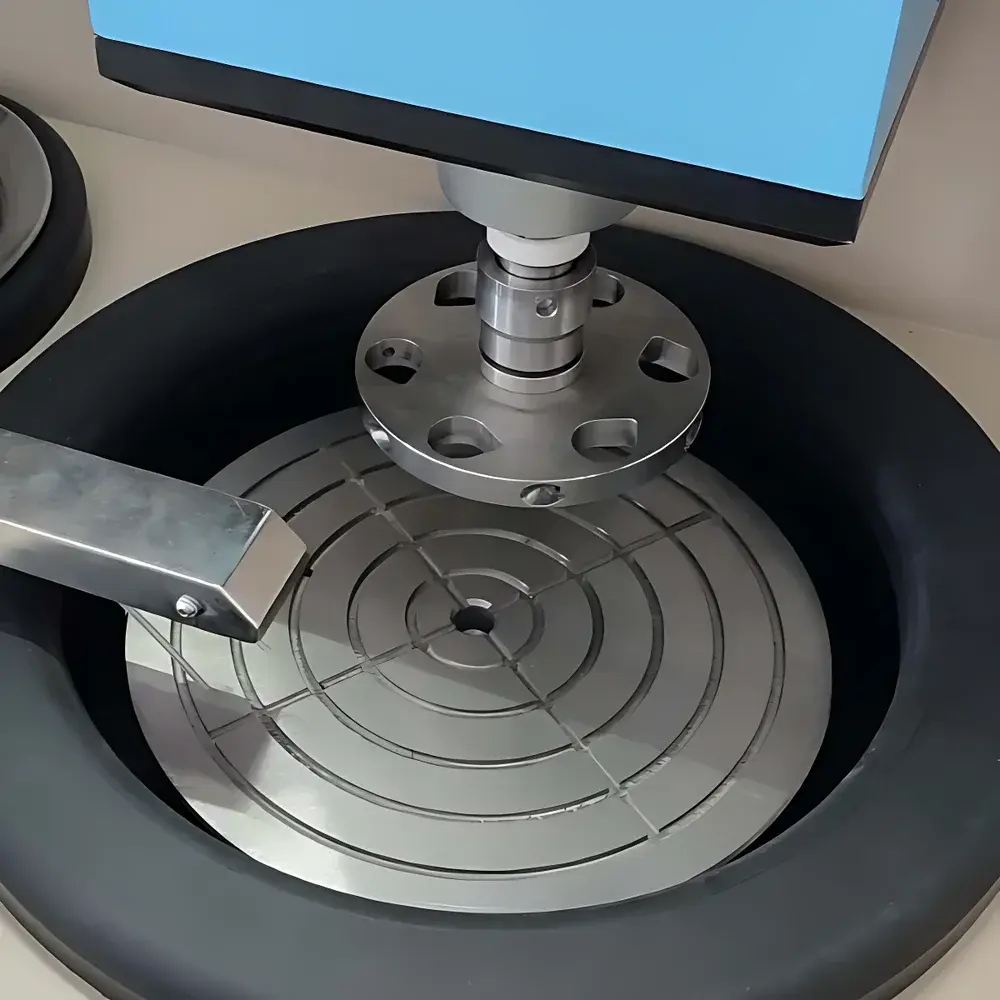
- Vacuum-adhesive 300 mm lower platen ensures secure, bubble-free mounting of abrasive papers and polishing cloths; compatible with standard φ300 mm consumables per ASTM E3, ISO 15510, and GB/T 13298.
- Adjustable mechanical loading system with digital force calibration: 0–30 kg range, reproducible within ±0.5 kg, enabling optimization for soft metals (e.g., aluminum alloys), hard ceramics (e.g., SiC, Al2O3), and brittle semiconductors (e.g., GaN wafers).
- Three independent peristaltic pumps deliver abrasive slurries (e.g., diamond suspension, alumina, colloidal silica) at calibrated flow rates; optional expansion to six channels supports multi-step chemical-mechanical planarization (CMP) protocols.
- Touchscreen human-machine interface (HMI) with embedded Linux OS: supports recipe creation, parameter archiving, real-time monitoring of RPM, pressure, time, and fluid level status.
- Ultrasonic cleaning module (40 kHz) paired with programmable water-fill/drain cycles and level-sensing float switches prevents cross-contamination between processing stages.
- Robust steel enclosure with powder-coated finish and retractable dust shield meets IP54 ingress protection standards for laboratory environments.
Sample Compatibility & Compliance
The UNIPOL-1220S accommodates specimens up to 160 mm in diameter (mounted in hot-pressed resin or cold-mount epoxy) and is validated for use with ferrous/non-ferrous metals, oxide/nitride ceramics, geological thin sections, PCB substrates, and compound semiconductor wafers. All operational parameters—including rotational speed (20–378 rpm), dwell time (0.1–99.9 min), pressure ramp profiles, and slurry dispensing intervals—are configurable to conform with ASTM E3-22 (Preparation of Metallographic Specimens), ISO 15510 (Metallographic Preparation), and USP (Analytical Instrument Qualification). The system’s firmware supports audit-trail generation for GLP/GMP-regulated labs, with timestamped logs exportable via USB or Ethernet.
Software & Data Management
The onboard control software provides a hierarchical user access structure (Operator, Technician, Administrator) with password-protected settings modification. Up to 16 complete grinding-polishing recipes—including disc type, grit progression, pressure profile, rotation direction (CW/CCW), and cleaning cycle parameters—can be stored and recalled. Each executed run generates a CSV-formatted report containing start/stop timestamps, actual vs. setpoint values (RPM, load, slurry volume), and error codes (e.g., low fluid, vacuum loss, timeout). Data integrity complies with FDA 21 CFR Part 11 requirements when used with external network authentication and electronic signature modules.
Applications
- Metallographic specimen preparation for optical microscopy and SEM imaging, including phase contrast analysis of duplex stainless steels and grain boundary characterization in titanium alloys.
- Planarization of sintered ceramic compacts prior to XRD or dilatometry testing.
- Sectioning and polishing of rock core samples for petrographic analysis under polarized light.
- Surface conditioning of power electronics substrates (e.g., SiC MOSFET dies) to eliminate subsurface damage before TEM lamella extraction.
- Quality control of brazed joints and additive-manufactured metal parts where interfacial porosity and intermetallic formation must be quantified.
FAQ
Does the UNIPOL-1220S support automatic disc更换 during a multi-step protocol?
Yes—vacuum-actuated disc indexing enables fully automated switching among up to 16 pre-loaded φ300 mm abrasive or polishing media, with programmable dwell time and pressure per step.
Can the system be integrated into a lab-wide LIMS or MES environment?
It supports Modbus TCP communication for real-time status polling and basic command initiation; full bi-directional integration requires optional OPC UA gateway configuration.
Is the ultrasonic cleaning module adjustable for frequency or power?
The transducer operates at a fixed 40 kHz resonance frequency with adjustable duration (0–10 min) and fill-volume thresholds; amplitude modulation is not implemented.
What maintenance routines are recommended for long-term reliability?
Daily vacuum line inspection, weekly slurry pump tubing replacement, quarterly calibration of load cell and RPM sensor against NIST-traceable references, and annual bearing lubrication per OEM service manual.
Are consumables such as grinding discs and polishing cloths supplied by KJ GROUP?
KJ GROUP offers certified φ300 mm consumables—including silicon carbide papers (P80–P2500), diamond-impregnated pads (15–0.25 µm), and synthetic polishing cloths—but third-party ISO-compliant alternatives may be used if vacuum adhesion performance is verified.



