
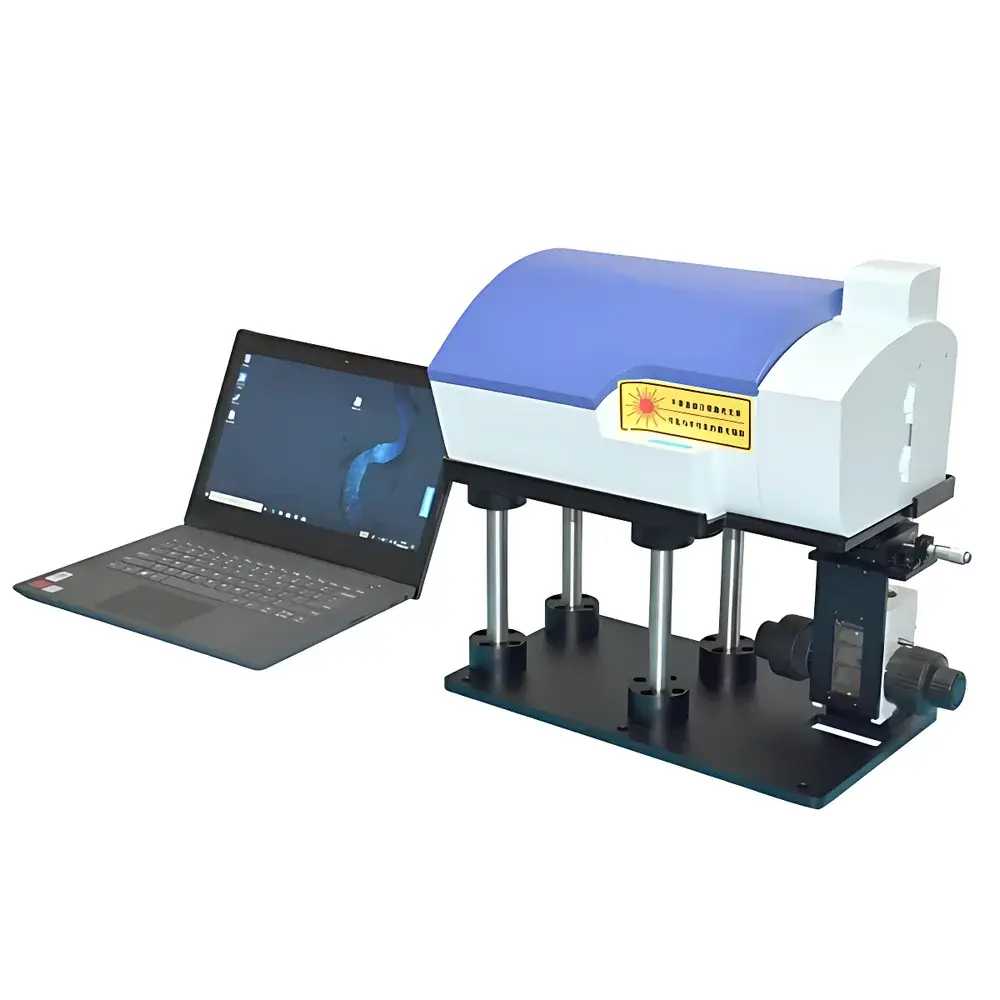
KJ GROUP Finder Insight Portable Raman Spectrometer
| Brand | KJ GROUP |
|---|---|
| Origin | Liaoning, China |
| Manufacturer Type | Authorized Distributor |
| Country of Origin | China |
| Model | Finder Insight |
| Price | Upon Request |
| Laser Wavelengths | 785 nm (>350 mW) & 532 nm (>100 mW), both 0–100% linearly adjustable |
| Spectral Range | 150–4400 cm⁻¹ (model-dependent) |
| Spectral Resolution | ≤6 cm⁻¹ @ 914.8 nm (FI785), ≤8 cm⁻¹ @ 914.8 nm (FI785WH), ≤8 cm⁻¹ @ 585 nm (FI532WH), ≤12 cm⁻¹ @ 585 nm (FI532W) |
| Detector | TE-cooled linear CCD array (1024×122 or 2048×122 pixels |
| operating temperature | −15 °C (±0.1 °C) from ambient |
| Digital Resolution | 16-bit |
| Integration Time | 5 ms – 65,535 ms |
| Data Interface | USB 2.0 & 100 Mbit Ethernet |
| Power | 12–24 V DC @ 2 A / 100–240 V AC, 50–60 Hz / Internal Li-ion battery (12,400 mAh, >4 h field operation) |
| Dimensions | 38 cm × 25 cm × 18 cm |
| Weight | 5.3 kg |
| Operating Temperature | 0–30 °C |
| Storage Temperature | −20–55 °C |
| Relative Humidity | <80% non-condensing |
| Accessories | Integrated microscope video monitoring, standard liquid cell |
Overview
The KJ GROUP Finder Insight Portable Raman Spectrometer is an engineered solution for field-deployable molecular identification and structural analysis based on inelastic light scattering (Raman effect). Designed around a free-space optical architecture with high-stability diode lasers and deep-TE-cooled CCD detection, the system delivers laboratory-grade spectral fidelity in a ruggedized, battery-operated platform. Its core measurement principle relies on monochromatic excitation—either at 785 nm (optimized for fluorescence suppression in organic and biological matrices) or 532 nm (enhanced sensitivity for inorganic and resonant compounds)—followed by high-throughput dispersion and photon-counting detection across configurable spectral windows (150–4400 cm⁻¹). The instrument’s compact footprint, integrated dark-sample chamber, and real-time video-assisted micro-positioning enable direct analysis of solids, powders, gels, and liquids without sample preparation—making it suitable for forensic trace evidence examination, hazardous material screening, pharmaceutical raw material verification, and academic field spectroscopy.
Key Features
- Field-Ready Portability: Weighing 5.3 kg with integrated 12,400 mAh rechargeable Li-ion battery, the Finder Insight operates continuously for >4 hours without external power—ideal for mobile labs, crime scene units, and emergency response vehicles.
- Dual-Laser Flexibility: Interchangeable 785 nm (>350 mW) and 532 nm (>100 mW) laser modules with linear 0–100% intensity control allow optimization for fluorescence mitigation or resonance enhancement depending on sample chemistry.
- Micro-Raman Capability: Built-in coaxial video microscope with real-time sample viewing and precise XYZ stage positioning enables targeted analysis of sub-millimeter features—e.g., drug crystals, pigment particles, or contaminant inclusions—without physical contact.
- Dark-Chamber Sample Compartment: Enclosed, light-tight sample cavity eliminates ambient interference during low-signal measurements, supporting quantitative analysis of weak Raman scatterers under controlled conditions.
- High-Fidelity Detection: TE-cooled linear CCD arrays (1024×122 or 2048×122 pixels) operate at −15 °C ±0.1 °C, ensuring low dark current and high signal-to-noise ratio across integration times from 5 ms to 65.5 s.
- Robust Data Acquisition: Dual data interfaces—USB 2.0 and 100 Mbit Ethernet—support synchronized triggering, remote operation, and integration into larger analytical workflows or networked lab environments.
Sample Compatibility & Compliance
The Finder Insight accommodates diverse physical forms: bulk solids, tablets, films, fibers, powders, suspensions, and liquids (via supplied cuvette holder). Its modular design supports optional accessories including fiber-optic probes, temperature-controlled stages, and gas-tight cells for specialized applications. While not certified to ISO/IEC 17025 for accredited testing, the system meets general requirements for qualitative and semi-quantitative Raman analysis per ASTM E1840 (Standard Guide for Raman Shift Standards) and USP (Raman Spectroscopy). Software audit trails, user access controls, and electronic signature support in RamanDBs align with GLP and GMP documentation expectations for regulated environments. All firmware and calibration files are timestamped and version-controlled to support traceability in forensic or QA/QC reporting.
Software & Data Management
RamanScan provides intuitive acquisition control, real-time spectral preview, and baseline correction using asymmetric least squares (ALS) and polynomial fitting. RamanDBs—the optional spectral library management suite—supports creation, curation, and statistical matching (Pearson correlation, Euclidean distance, PLS-DA) against custom or commercial reference libraries (e.g., KnowItAll®, SDBS). Both applications run natively on Windows 10/11 and store metadata (laser power, integration time, grating position, detector temperature) with every spectrum. Export formats include ASCII (.txt), JCAMP-DX (.jdx), and CSV for third-party chemometric tools (MATLAB, Python scikit-learn, Unscrambler). All software modules comply with FDA 21 CFR Part 11 requirements when configured with role-based login, electronic signatures, and immutable audit logs.
Applications
- Forensic science: Identification of illicit drugs, explosives precursors, inks, and counterfeit documents at crime scenes or border checkpoints.
- Pharmaceutical QA/QC: Rapid verification of active pharmaceutical ingredients (APIs), excipients, and polymorphic forms without dissolution or derivatization.
- Materials science: Characterization of carbon allotropes (graphene, CNTs), catalysts, pigments, and semiconductor thin films in situ or in gloveboxes.
- Environmental monitoring: On-site detection of hydrocarbon contaminants in soil/water, microplastics identification, and pesticide residue screening in agricultural produce.
- Academic research: Teaching spectroscopy fundamentals, developing new spectral algorithms, or conducting field-based geochemical or biological surveys.
FAQ
What laser safety class does the Finder Insight meet?
The 785 nm and 532 nm laser modules are Class 3B per IEC 60825-1:2014; full compliance documentation—including interlock schematics and beam path labeling—is provided with each unit.
Can the instrument be calibrated using NIST-traceable standards?
Yes—pre-installed calibration routines support polystyrene (1003 cm⁻¹), silicon (520.7 cm⁻¹), and cyclohexane (2847 cm⁻¹) references; users may import custom calibration files verified against NIST SRM 2241 or equivalent.
Is remote operation supported over Ethernet?
Yes—TCP/IP communication protocol enables full command-and-control via Python API or LabVIEW drivers; real-time spectral streaming and parameter adjustment are available without latency.
Does the system support time-resolved or kinetic measurements?
Yes—programmable trigger sequences allow automated multi-integration acquisitions with millisecond-level timing resolution, enabling reaction monitoring or photostability studies.
What maintenance is required for long-term stability?
No routine optical alignment is needed; periodic verification of laser wavelength accuracy and detector dark current (using built-in diagnostics) is recommended every 6 months under continuous use.



