
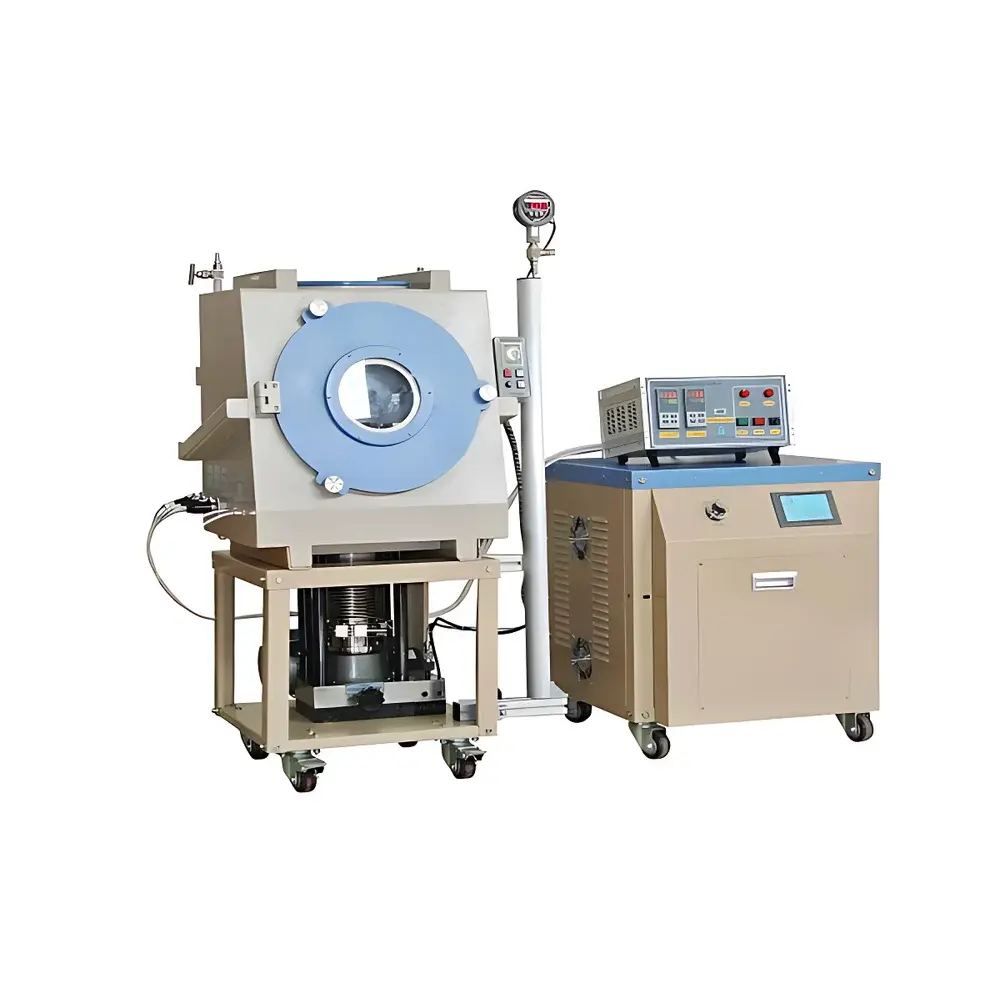
KJ GROUP VHP-5T-4 Electric Vacuum Hot Press System (Max. 500°C, 40 T Force)
| Brand | KJ GROUP |
|---|---|
| Origin | Liaoning, China |
| Manufacturer Type | Authorized Distributor |
| Country of Origin | China |
| Model | VHP-5T-4 |
| Price | Upon Request |
| Heating Platform Size | 135 mm × 135 mm |
| Max. Operating Temperature | 500 °C |
| Max. Applied Force | 40 T (400 kN) |
| Vacuum Level | ≤1 × 10⁻³ Torr |
| Temperature Control Accuracy | ±1 °C |
| Heating Rate | <10 °C/min |
| Pressure Control Resolution | ±0.01 MPa |
| Chamber Dimensions (W×D×H) | 372 mm × 420 mm × 480 mm |
| Observation Window Diameter | 150 mm |
| Power Supply | AC 208–240 V, 50/60 Hz |
| Total Power Consumption | 2500 W |
| Cooling Water Flow Requirement | >15 L/min (for operation >200 °C) |
Overview
The KJ GROUP VHP-5T-4 Electric Vacuum Hot Press System is an engineered solution for high-precision thermal bonding and thin-film transfer under controlled vacuum and elevated temperature conditions. Designed around a dual-zone resistive heating architecture with integrated electric hydraulic actuation, the system operates on the principle of simultaneous uniaxial pressure application and uniform thermal diffusion within a sealed, evacuated chamber. Its core functionality supports solid-state interfacial joining—particularly critical in microelectronics packaging, MEMS fabrication, and 2D material heterostructure assembly—where atomic-level contact, minimal interfacial void formation, and thermal stability are essential. The system achieves reproducible consolidation at temperatures up to 500 °C while maintaining vacuum integrity down to 1 × 10⁻³ Torr, thereby suppressing oxidation, inhibiting volatile outgassing, and enabling clean interface formation without flux or intermediate layers.
Key Features
- Dual independent PID-controlled heating zones with 30-segment programmable ramp-soak profiles, each equipped with over-temperature and thermocouple break protection.
- High-strength alloy steel heating platens (135 mm × 135 mm), rated for continuous operation at 500 °C; embedded 1000 W heating elements ensure rapid thermal response.
- Integrated water-cooling channels on platen surfaces—activated during high-temperature cycles (>200 °C) with minimum flow rate of 15 L/min—to enable controlled cooldown rates and prevent thermal shock to bonded substrates.
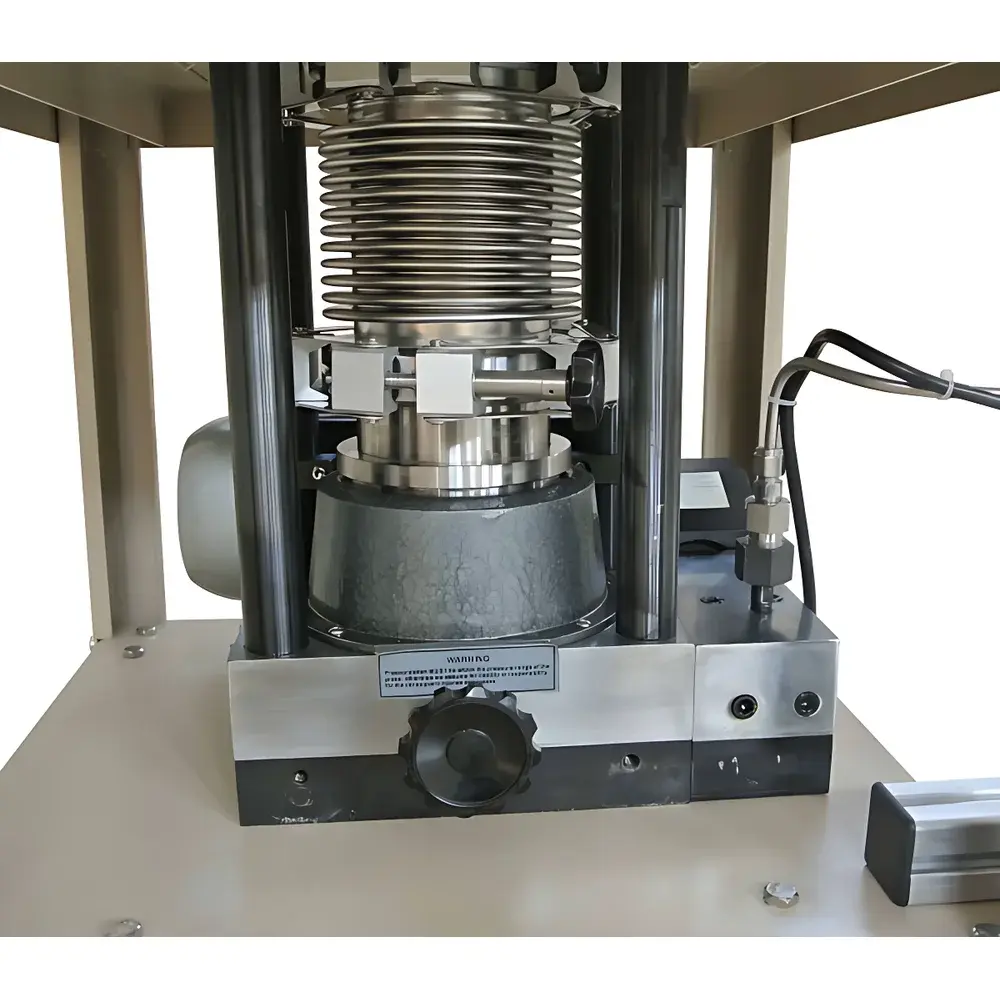
- 40-ton (400 kN) electric hydraulic press mechanism fully housed inside the vacuum chamber, delivering force with ±0.01 MPa resolution and auto-hold functionality upon reaching setpoint.
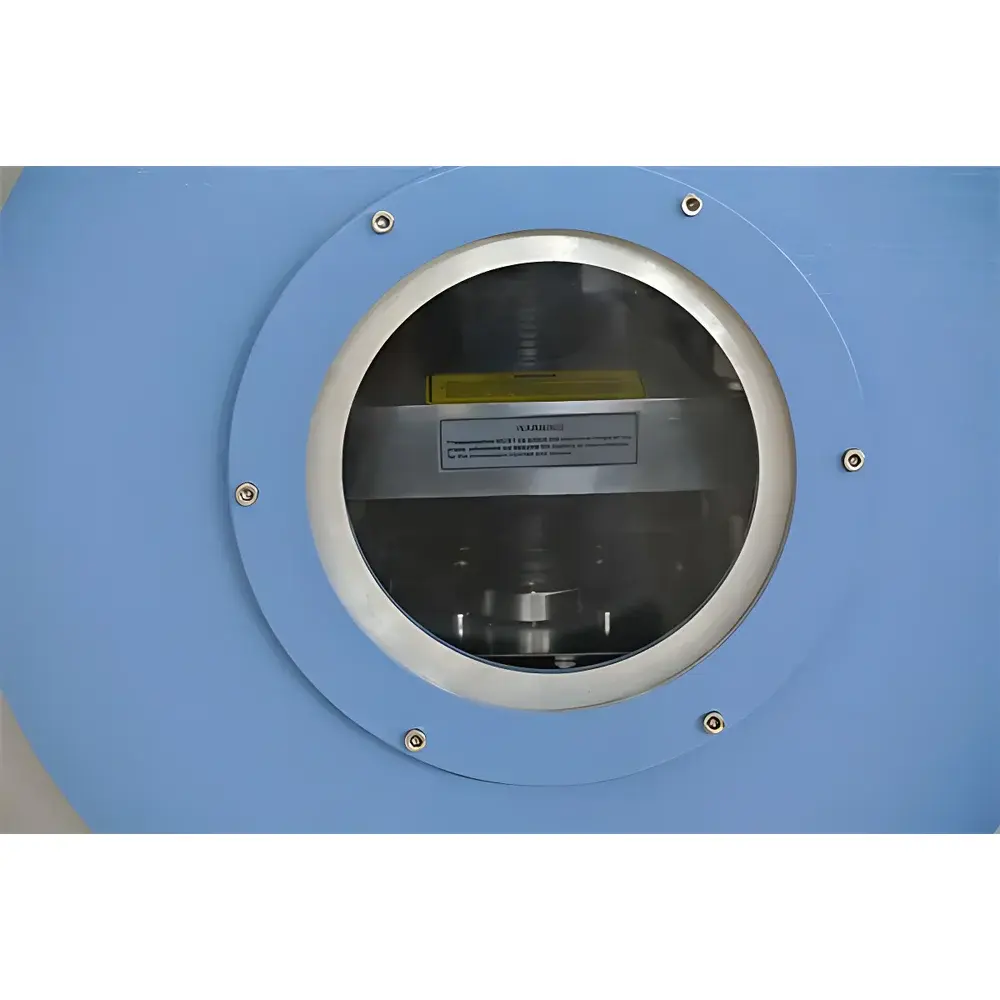
- Stainless-steel 304 vacuum chamber (372 mm × 420 mm × 480 mm) reinforced with structural ribs to maintain dimensional stability under full vacuum; includes a Ø150 mm borosilicate observation window with anti-reflective coating.
- High-sensitivity capacitance manometer mounted directly on chamber wall for real-time vacuum monitoring and data logging compatibility.
- RS-232/USB interface enables bidirectional communication with PC-based control software for temperature curve import/export, event logging, and parameter synchronization.
Sample Compatibility & Compliance
The VHP-5T-4 accommodates substrates up to 100 mm × 100 mm in footprint and up to 15 mm total stack height (adjustable gap between platens). It is routinely deployed for Si/SiO₂, GaAs, sapphire, quartz, and flexible polymer substrate bonding; compatible with metal foil interlayers (e.g., Au, Ti, Ni), glass frits, and direct oxide-to-oxide fusion protocols. The system conforms to general laboratory safety standards per IEC 61010-1 and incorporates redundant hardware interlocks—including vacuum-pressure correlation logic and emergency venting—to prevent unsafe operational states. While not certified to ISO 17025 or ASTM F2627 (standard for wafer bonding equipment qualification), its thermal uniformity (<±3 °C across platen surface, verified per ASTM E220), pressure repeatability (CV <0.8% over 50 cycles), and vacuum stability meet baseline requirements for GLP-compliant process development labs.
Software & Data Management
The included Windows-compatible control suite provides full configuration access to all thermal and mechanical parameters. Users may define multi-step heating/pressurization sequences, assign dwell times, configure alarm thresholds, and export timestamped CSV files containing temperature, pressure, vacuum level, and elapsed time. Audit-trail functionality records operator ID, parameter changes, and system events—supporting internal documentation needs aligned with FDA 21 CFR Part 11 principles (though electronic signature validation is not natively implemented). Raw data streams can be redirected via TCP/IP to third-party SCADA or LIMS platforms using Modbus RTU over serial emulation.
Applications
- Direct bonding of silicon wafers for SOI and MEMS cavity encapsulation
- Transfer printing of CVD-grown graphene and TMDC monolayers onto target substrates
- Thermocompression bonding of Cu-Cu or Cu-Ag interconnects in advanced packaging
- Consolidation of ceramic-polymer laminates for flexible hybrid electronics
- Activation-free bonding of LiNbO₃ and fused silica for photonic device integration
- Processing of thermoset prepregs and metal-matrix composites in R&D prototyping
FAQ
What is the maximum recommended sample thickness for reliable thermal uniformity?
For optimal temperature homogeneity across the platen surface, total stack height should not exceed 12 mm—accounting for fixture, spacers, and substrate warpage.
Is nitrogen purging supported as an alternative to high vacuum?
Yes—the chamber features a dedicated gas inlet port compatible with regulated N₂ or Ar backfilling to 1 atm; vacuum evacuation remains required prior to heating.
Can the system operate continuously at 500 °C?
Continuous operation at maximum temperature is permissible for up to 4 hours per cycle; extended runs require thermal soak validation per user-defined process qualification protocol.
Does the pressure readout reflect absolute or gauge pressure?
The digital display shows applied force converted to engineering pressure (MPa) based on effective platen area; it is calibrated to represent net compressive stress on the sample.
Are replacement heating elements and O-rings available as service parts?
Yes—KJ GROUP supplies OEM-certified spare kits including Kanthal A1 heating rods, Viton® FFKM chamber seals, and Type K thermocouples with NIST-traceable calibration certificates.



