
KJ GROUP GSL-1700X-80VTQ Vertical Quenching Furnace (1700°C)
| Brand | KJ GROUP |
|---|---|
| Origin | Anhui, China |
| Manufacturer Type | Authorized Distributor |
| Product Origin | Domestic (China) |
| Model | GSL-1700X-80VTQ |
| Price | Upon Request |
| Power Supply | AC 220 V, 50/60 Hz, 4 kW |
| Max. Operating Temperature | 1700 °C (<1 h), Continuous Range: 800–1650 °C |
| Heating Zone Length | 200 mm |
| Uniform Zone | 65 mm (±5 °C) |
| Heating Rate | ≤5 °C/min above 1200 °C |
| Temperature Control Accuracy | ±1 °C |
| Vacuum Level | 5×10⁻² torr (mechanical pump) |
| Tube Material | 99.8% Al₂O₃ ceramic |
| Tube Dimensions | ID 74 mm, OD 80 mm, L 850 mm |
| Heating Element | Four U-shaped MoSi₂ rods (rated to 1800 °C) |
| Chamber Structure | Dual-layer stainless steel with 1800 °C-grade high-purity alumina fiber insulation |
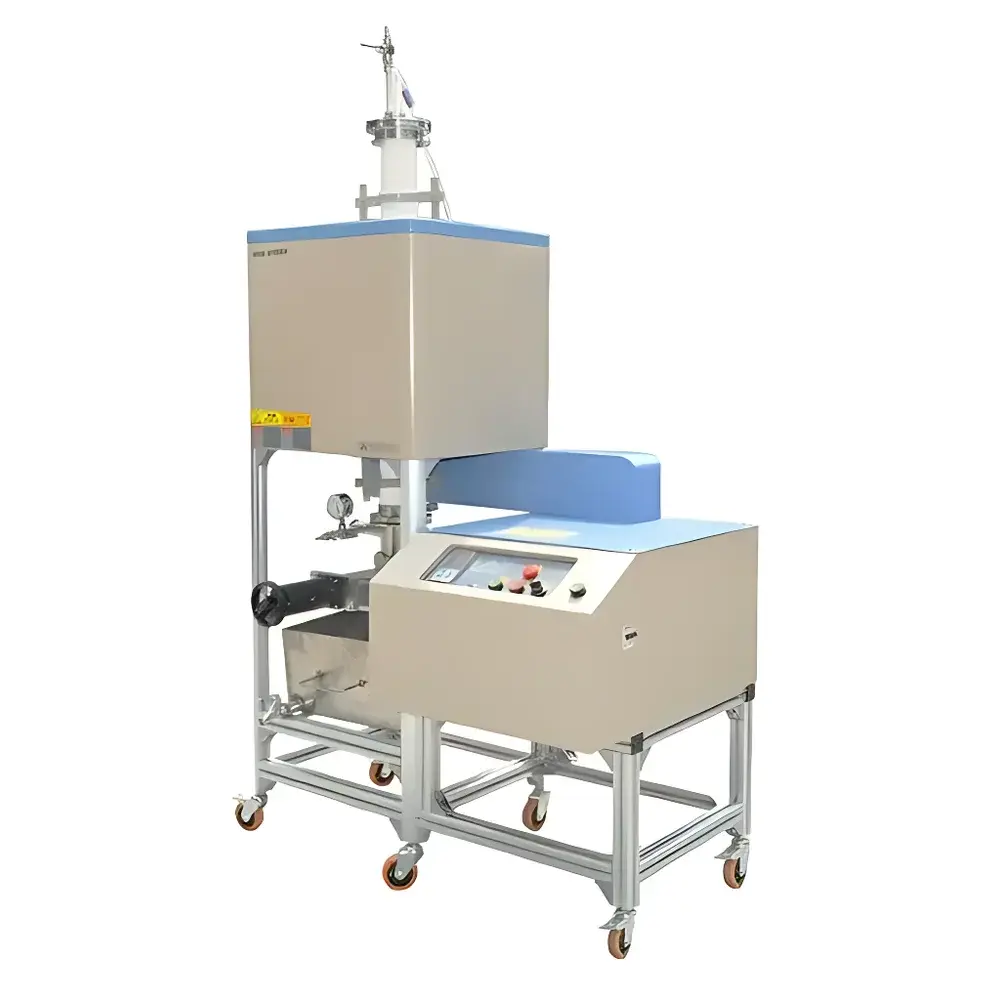
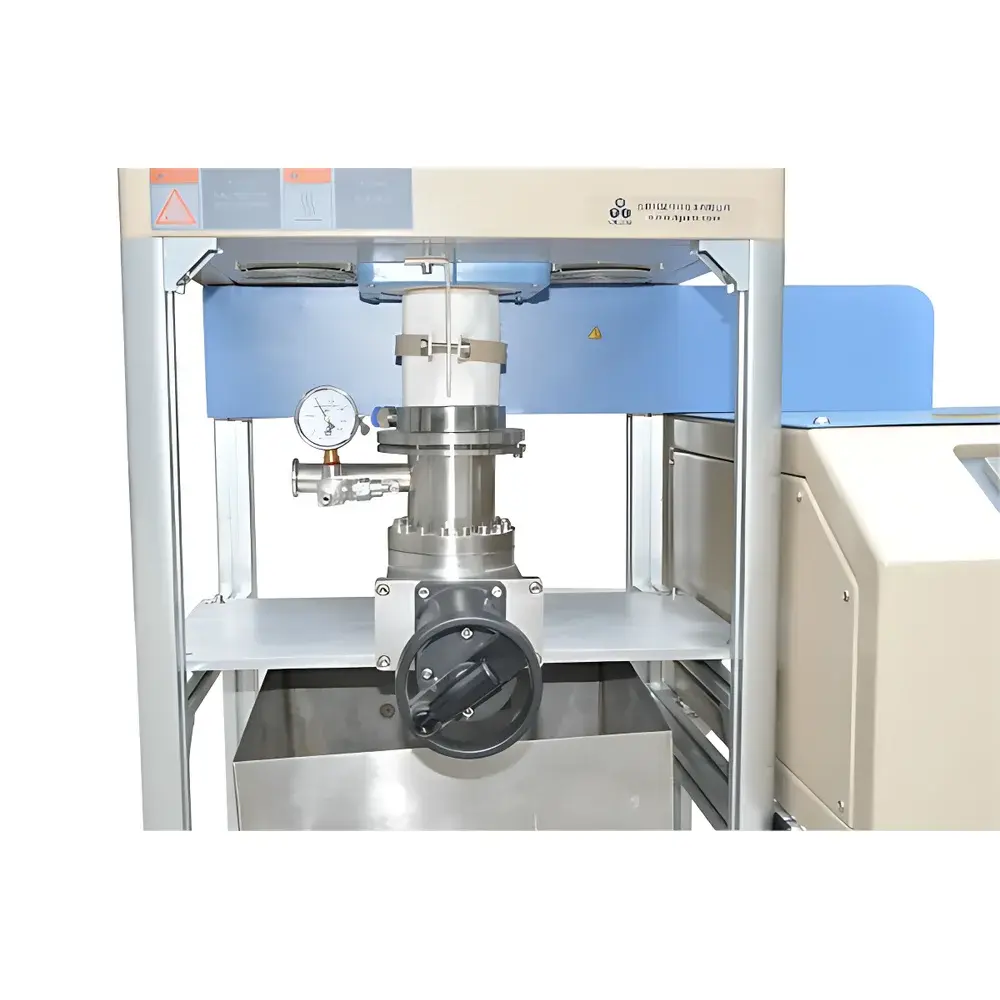
| Cooling System | Bottom-mounted quench tank (water/oil compatible) |
| Control System | Independent PID controller with 30-segment programmable ramp/soak profile, RS485 interface, over-temperature alarm |
| Certifications | CE certified |
| Overall Dimensions | 1080 × 650 × 1500 mm |
| Net Weight | 190 kg |
Overview
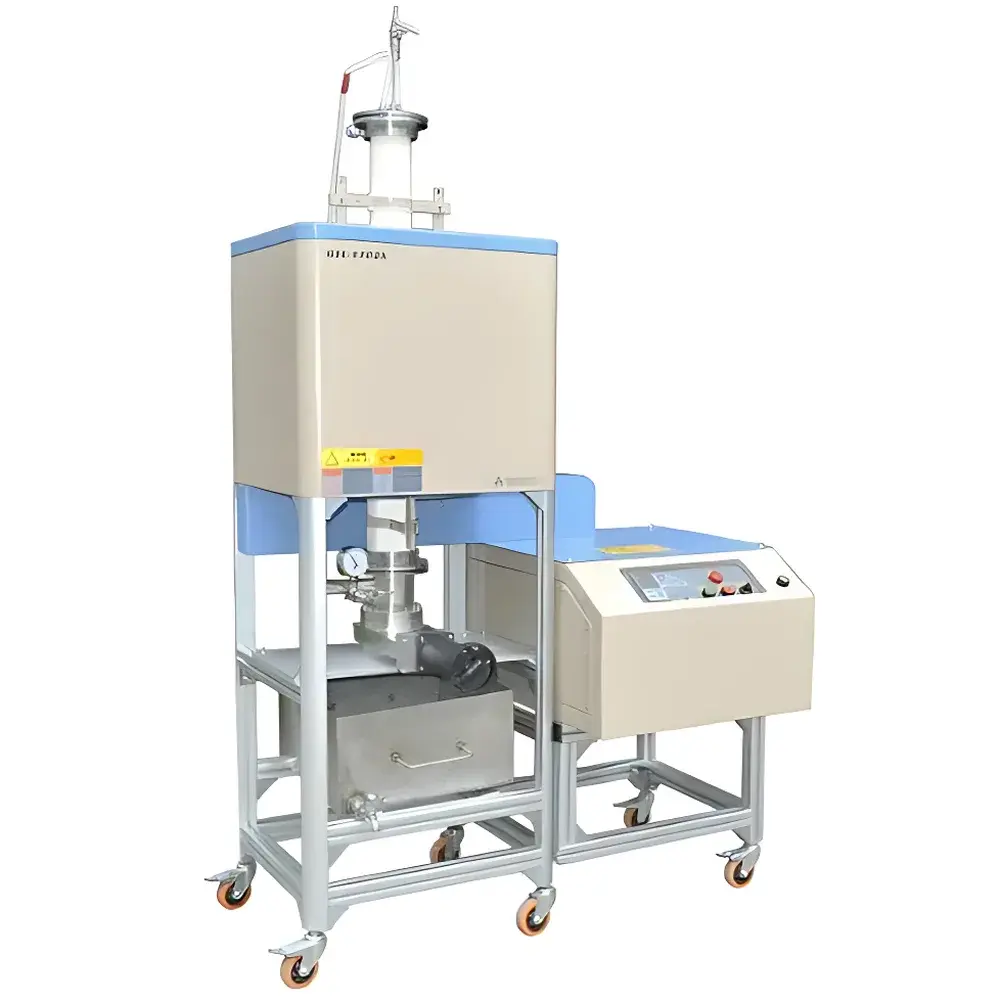
The KJ GROUP GSL-1700X-80VTQ Vertical Quenching Furnace is a precision-engineered thermal processing system designed for rapid, controlled quenching of materials directly from high-temperature environments (up to 1700 °C) into liquid media—typically water or oil. Its vertical orientation and bottom-mounted quench tank enable deterministic, gravity-driven sample drop timing, minimizing thermal lag between furnace exit and immersion onset. This architecture supports fundamental studies in phase transformation kinetics, martensitic nucleation, grain boundary evolution, and metastable microstructure stabilization under non-equilibrium cooling conditions. The furnace operates on the principle of resistive heating via four high-stability MoSi₂ U-type elements embedded in a dual-wall, fiber-insulated chamber, delivering exceptional thermal uniformity across a 65 mm isothermal zone (±5 °C). Its design conforms to standard laboratory-scale high-temperature metallurgical and ceramic research workflows requiring reproducible thermal shock response data.
Key Features
- Dual-layer 304 stainless steel outer shell with 1800 °C-rated high-purity alumina fiber insulation for low surface temperature and minimal heat loss.
- 99.8% purity Al₂O₃ tube (ID 74 mm, OD 80 mm, L 850 mm) optimized for vacuum integrity and thermal shock resistance up to 1500 °C under dynamic pressure cycling.
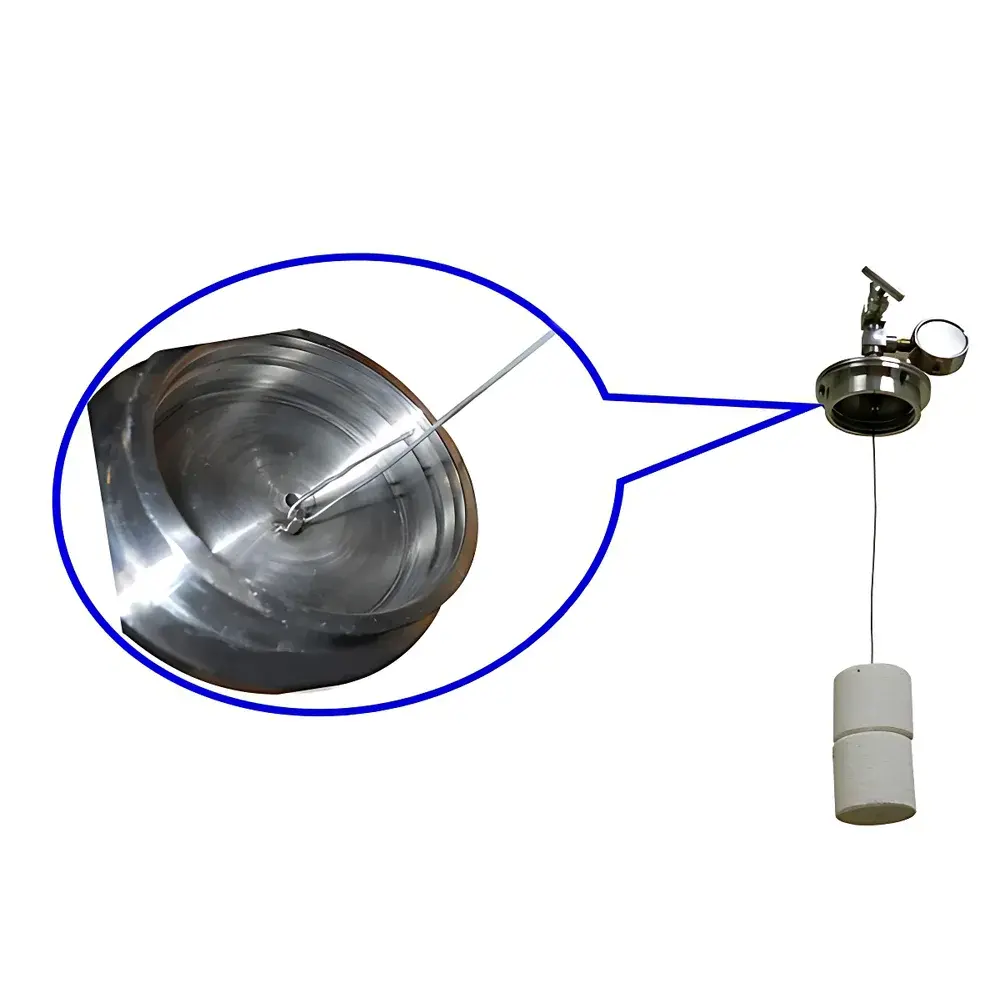
- Top-mounted electromagnetic sample holder capable of suspending specimens up to 500 g; synchronized release triggered via front-panel button for precise quench initiation.
- Integrated vacuum manifold featuring KF25 flange, capacitance manometer (0.1–1000 torr range), gate valve, and stainless steel sealing flange with adjustable needle valve for inert gas purging.
- Independent PID temperature controller with 30-segment programmable ramp/soak capability, real-time over-temperature cutoff, and RS485 serial interface for external monitoring or SCADA integration.
- CE-compliant construction with UL/MET/CSA-certified power components (>24 V), ensuring compatibility with international lab safety and regulatory audit requirements including ISO/IEC 17025 and GLP-aligned thermal validation protocols.
Sample Compatibility & Compliance
The GSL-1700X-80VTQ accommodates cylindrical or crucible-contained samples up to Ø70 mm × 100 mm in volume, compatible with metallic alloys (e.g., Fe–C, Ti–6Al–4V), oxide ceramics (Al₂O₃, ZrO₂), and refractory intermetallics. It supports both atmospheric, inert (Ar/N₂), and low-pressure (10⁻²–10⁻⁵ torr) processing environments. For CVD-compatible operation, users may retrofit the standard barbed fitting with optional double-ferrule stainless steel compression fittings. All gas lines require in-line pressure regulation (≤3 psi output) and mass flow control (max. 200 SCCM). The system meets EN 61000-6-3 (EMC emission) and EN 61000-6-2 (immunity) standards. Vacuum performance complies with ASTM E595 outgassing thresholds when operated within specified temperature–pressure envelopes.
Software & Data Management
While the base unit includes a standalone PID controller with local display and manual program entry, optional PC-based control software enables remote configuration, real-time temperature logging (≥1 Hz sampling), and CSV export for post-processing in MATLAB, Python (NumPy/Pandas), or statistical analysis platforms. The RS485 port supports Modbus RTU protocol, permitting integration into centralized facility monitoring systems compliant with FDA 21 CFR Part 11 when paired with validated audit-trail-enabled host software. All temperature profiles are timestamped and stored internally with non-volatile memory retention exceeding 10,000 cycles.
Applications
- Quench kinetics studies of shape-memory alloys (NiTi, Cu–Al–Mn) and high-entropy alloys (HEAs) under controlled cooling rates (0.1–10 °C/s equivalent).
- In-situ phase transformation analysis using ex-situ XRD or TEM of quenched specimens prepared under reproducible thermal histories.
- Thermal stress modeling validation via residual strain mapping (EBSD, synchrotron Laue diffraction) after rapid solid-state transitions.
- Development and qualification of novel quench media formulations (polymer solutions, molten salts) for aerospace-grade titanium and nickel superalloys.
- Materials qualification per AMS 2750E pyrometry requirements, supporting furnace classification as Class 2 (±1 °C tolerance at setpoint) when calibrated with NIST-traceable Type S thermocouples.
FAQ
What is the recommended operating sequence for safe quench initiation?
Always pre-purge the tube with ≥5 psi argon, verify gate valve closure, then open the valve only after electromagnetic release activation. Never initiate quench under vacuum or uncontrolled positive pressure.
Why must MoSi₂ heating elements avoid operation between 400 °C and 700 °C?
This temperature window promotes catastrophic oxidation of silicon molybdenum due to incomplete SiO₂ passivation layer formation, leading to rapid element embrittlement and failure.
Can the furnace be integrated into an automated sample-handling robot cell?
Yes—the RS485 interface and dry-contact I/O signals (quench trigger, ready status, fault alarm) support synchronization with third-party motion controllers meeting IEC 61131-3 ladder logic standards.
Is the alumina tube rated for repeated thermal cycling to 1700 °C?
The tube is qualified for intermittent 1700 °C exposure (<1 h), but long-term cyclic stability above 1500 °C requires periodic inspection for microcracking per ASTM C1161 guidelines.
What vacuum level is required for oxide-free annealing of reactive metals?
For Ti, Zr, or Nb processing, a base pressure ≤1×10⁻⁵ torr (with turbo-molecular pumping) is necessary to suppress interstitial oxygen uptake during hold periods.



