
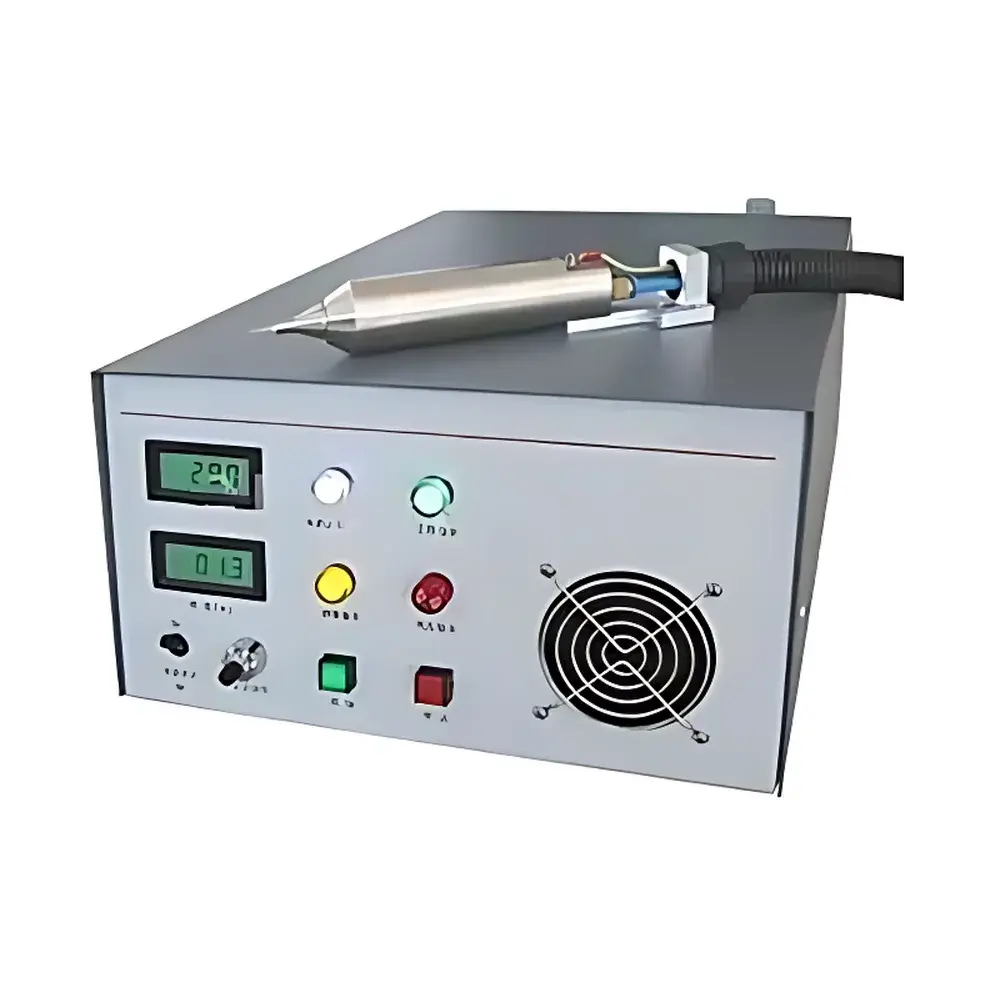
KJ GROUP GSL1100X-PJF Atmospheric Pressure Plasma Jet Surface Treater
| Brand | KJ GROUP |
|---|---|
| Origin | Liaoning, China |
| Manufacturer Type | Authorized Distributor |
| Country of Origin | China |
| Model | GSL1100X-PJF |
| Instrument Type | Atmospheric-Pressure Plasma Jet System |
| Input Voltage | 110/220 V, 50/60 Hz |
| Power Consumption | <1000 W |
| RF Output Frequency | 20–23 kHz |
| Gas Supply Pressure | ≥0.275 MPa |
| Operating Plasma Pressure | 0.048–0.068 MPa |
| Nozzle Options | Ø10–12 mm circular or 15–18 mm rectangular |
| Dimensions (W×D×H) | 500 × 380 × 210 mm |
| Weight | 10 kg |
| Ambient Operating Conditions | ≤42 °C, ≤40 % RH, non-flammable atmosphere |
| Certifications | CE compliant |
Overview
The KJ GROUP GSL1100X-PJF Atmospheric Pressure Plasma Jet Surface Treater is an engineered solution for rapid, non-thermal surface activation and cleaning under ambient atmospheric conditions—eliminating the need for vacuum chambers, high-temperature processing, or complex infrastructure. Unlike low-pressure plasma systems that rely on glow discharge in evacuated environments, this device operates via a radio-frequency (RF)-driven plasma jet generated directly at atmospheric pressure. The system ionizes process gases—including air, nitrogen, argon, or custom gas mixtures—into a directed, low-temperature plasma plume with high concentrations of reactive species (e.g., atomic oxygen, nitrogen radicals, metastable molecules, and UV photons). These species interact physically and chemically with substrate surfaces to remove organic contaminants, increase surface energy, enhance wettability, and introduce functional groups (e.g., –OH, –COOH) without bulk heating or material degradation. Designed specifically for pre-deposition surface conditioning, it enables improved adhesion of thin films—including epitaxial layers and optical coatings—on substrates such as single-crystal wafers, fused silica optics, polymeric films, and ceramic components.
Key Features
- Atmospheric-pressure operation: No vacuum pump, chamber, or evacuation cycle required—enabling immediate, on-demand treatment.
- Portable handheld design: Lightweight (10 kg) and compact (500 × 380 × 210 mm), suitable for benchtop use, inline integration, or field deployment in cleanrooms or production lines.
- Dual nozzle configuration: Interchangeable circular (Ø10–12 mm) and rectangular (15–18 mm) plasma nozzles support both localized spot treatment and uniform linear scanning across irregular or large-area surfaces.
- Low-thermal impact: Plasma plume temperature remains below 60 °C at the substrate interface—critical for heat-sensitive materials including PET, PI, PDMS, and photoresists.
- Gas-flexible architecture: Compatible with compressed air, N₂, Ar, and inert-rich blends; excludes flammable or explosive gases per IEC 60335-1 safety requirements.
- CE-certified RF generator: Integrated 20–23 kHz RF power supply delivers stable, repeatable plasma output with built-in over-current and thermal protection circuits.
Sample Compatibility & Compliance
The GSL1100X-PJF treats a broad range of solid substrates—including silicon wafers, sapphire, quartz optics, stainless steel, aluminum alloys, polyimide, polycarbonate, and glass slides—without requiring masking or fixturing. Its atmospheric operation avoids charging effects common in low-pressure plasma systems, making it especially suitable for insulating and delicate samples. All operational parameters adhere to CE Directive 2014/30/EU (EMC) and 2014/35/EU (LVD). While not classified as medical or GMP-grade equipment, its design supports GLP-aligned documentation practices when integrated into validated surface preparation workflows. Users must ensure gas purity meets ISO 8573-1 Class 4 standards and maintain ambient humidity ≤40 % RH to prevent arcing and ensure consistent plasma stability.
Software & Data Management
This model operates via manual analog controls—no embedded software, touchscreen interface, or digital data logging is included. Process repeatability relies on fixed RF power settings, regulated gas flow (via external mass flow controller or precision pressure regulator), and operator-defined dwell time and scan speed. For traceable operation in regulated environments, users may integrate external PLCs or DAQ systems to record gas pressure, RF forward/reflected power, and treatment duration. While native FDA 21 CFR Part 11 compliance is not implemented, audit-ready logs can be generated through third-party industrial control platforms meeting ALCOA+ principles (Attributable, Legible, Contemporaneous, Original, Accurate, Complete, Consistent, Enduring, Available).
Applications
- Pre-sputtering or pre-evaporation activation of semiconductor wafers to improve film nucleation density and reduce interfacial voids.
- Surface hydrophilization of microfluidic PDMS chips prior to bonding or protein immobilization.
- Cleaning and activation of optical lens mounts and mirror substrates before anti-reflective or high-reflectivity coating deposition.
- Adhesion promotion on thermoplastic composites prior to adhesive bonding or painting in aerospace prototyping.
- Removal of trace hydrocarbon contamination from TEM grids and AFM calibration samples.
- Rapid decontamination of labware surfaces in inert-atmosphere gloveboxes without introducing moisture or particulates.
FAQ
Can this system be used inside a nitrogen-purged glovebox?
Yes—provided internal oxygen levels are maintained below 10 ppm and gas supply lines are properly isolated from ambient air ingress.
Is ozone generation a concern during operation?
Minimal ozone is produced under air mode; operation in well-ventilated areas or with local exhaust is recommended per OSHA PEL guidelines (0.1 ppm TWA).
What maintenance intervals are recommended for the plasma nozzle?
Nozzle electrodes require visual inspection every 50 operating hours; cleaning with isopropanol and lint-free wipes is sufficient unless carbon buildup is observed.
Does the unit support automated motion integration?
Yes—the device includes TTL-compatible trigger input and analog 0–10 V control ports for synchronization with XYZ stages or robotic arms.
Can mixed gas ratios (e.g., Ar/O₂) be precisely controlled?
Not natively—the system requires externally regulated dual-gas mixing via MFCs or calibrated needle valves upstream of the inlet port.



