
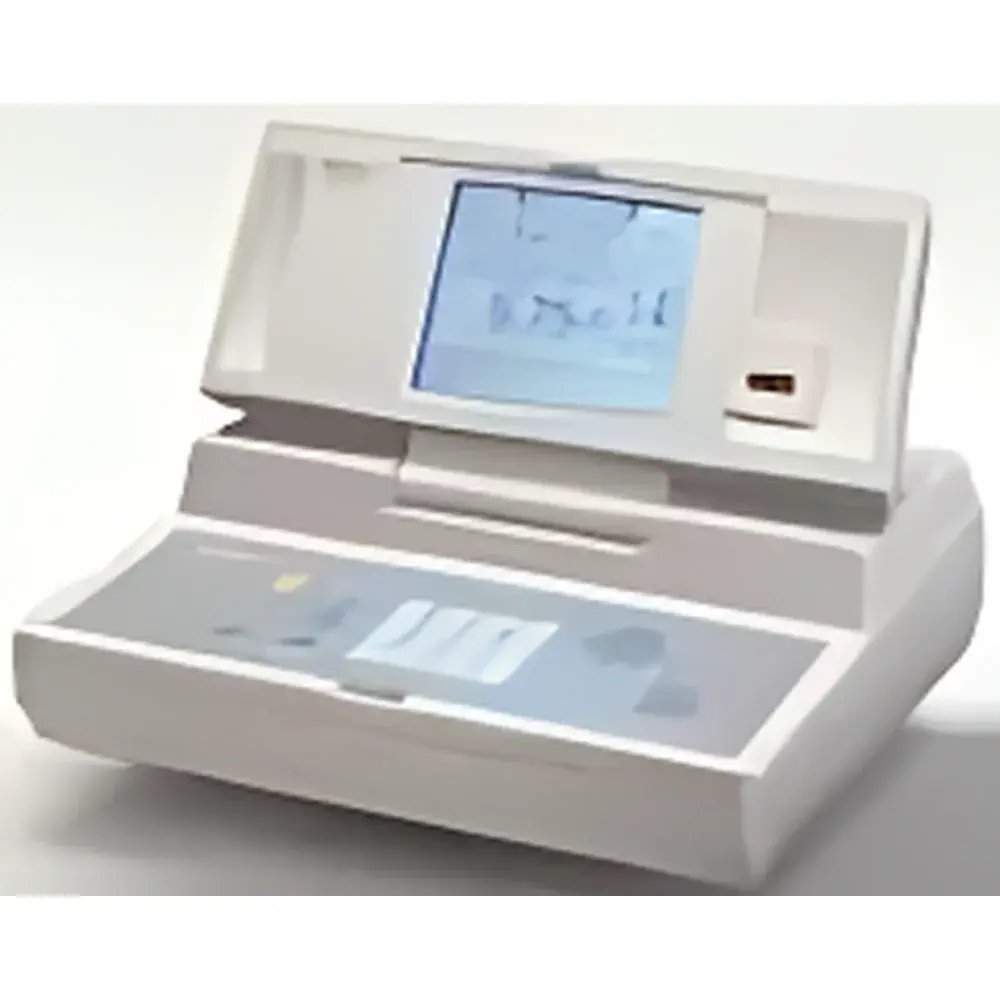
MCP-HT450 High-Resistance Analyzer
| Origin | Japan |
|---|---|
| Manufacturer Type | Authorized Distributor |
| Origin Category | Imported |
| Model | MCP-HT450 |
| Pricing | Upon Request |
Overview
The MCP-HT450 High-Resistance Analyzer is an engineered precision instrument designed for reliable, traceable surface and volume resistivity measurements across insulating and highly resistive materials. Based on the constant-voltage (DC bias) measurement principle, it applies calibrated DC test voltages—ranging from 10 V to 1,000 V—to generate stable current readings, enabling calculation of resistance (Ω), sheet resistance (Ω/sq), and bulk resistivity (Ω·cm) per IEC 62631-3-1, ASTM D257, and JIS K 6911 standards. Its architecture integrates high-input-impedance electrometer circuitry with guarded measurement pathways to minimize leakage current errors, ensuring reproducibility in environments where stray capacitance or humidity may affect ultra-high-resistance readings (>1012 Ω). The device is purpose-built for laboratories requiring compliance with GLP and ISO/IEC 17025 workflows, particularly in QC labs validating ESD-safe flooring, antistatic packaging, conductive coatings, and dielectric ceramics.
Key Features
- Wide measurement range: 104 Ω to 1013 Ω with voltage-dependent accuracy—±2% up to 1010 Ω at 10 V; ±3% at 1011 Ω (100–250 V); ±4% at 1012 Ω (500 V); ±5% at 1013 Ω (1,000 V)
- Five selectable test voltages: 10 V, 100 V, 250 V, 500 V, and 1,000 V—each optimized for specific material classes and safety-compliant operation
- 5.7-inch monochrome LCD display (320 × 240 pixels) with intuitive menu navigation and real-time parameter feedback
- Integrated data storage: retains up to 1,000 measurement records with timestamping; internal lithium backup supports ~3 years of non-volatile memory retention
- Dual-mode measurement capability: supports both surface resistivity (ρs) and volume resistivity (ρv) via U-type junction box (MCP-SWB02) and dedicated test stand (MCP-ST03)
- Auto-calibration support: probe-specific correction factors applied automatically based on selected MCP probe type
Sample Compatibility & Compliance
The MCP-HT450 accommodates heterogeneous sample geometries—including irregular solids, thin films, powders (with compression fixtures), fibers, and large-area substrates—without dimensional constraints. Its modular probe system includes the URS circular probe (MCP-HTP14, standard), UR-SS stainless-steel variant for corrosive environments, UR-100 for high-precision flat surfaces, UA for anisotropic materials, and specialized options such as the ring-type MCP-HTP12 (for micro-samples ≥5 mm diameter) and MCP-HTP15 (rated up to 1015 Ω/sq). All probes comply with JIS K 6911 mechanical and electrical interface specifications. Safety-critical operation is enforced via mandatory grounding protocols: users must wear insulating gloves and use foot-switch activation when operating above 250 V. The instrument meets IEC 61010-1 CAT II 1000 V overvoltage category requirements and carries CE marking for EMC and low-voltage directive conformance.
Software & Data Management
Data export is supported via RS-232C serial interface (DB9 male connector) for integration into LIMS or custom QA databases. ASCII-formatted output includes measurement ID, date/time stamp, applied voltage, raw resistance value, derived ρs/ρv, unit designation, and pass/fail status relative to user-defined upper/lower limits. While no proprietary PC software is bundled, the protocol is compatible with standard terminal emulators (e.g., Tera Term, PuTTY) and LabVIEW™ drivers (available upon request). Audit-trail functionality is enabled through manual logbook entries; for 21 CFR Part 11 compliance, integration with validated third-party electronic lab notebooks (ELN) or instrument control platforms is recommended.
Applications
The MCP-HT450 serves critical roles in R&D, incoming inspection, and production line testing across industries where electrostatic control and dielectric integrity are essential. Typical applications include: verification of ESD-safe work surfaces and flooring systems (ANSI/ESD S20.20); resistivity validation of antistatic additives in polymer films and molded plastics; quality assurance of conductive paints and printed electronics substrates; characterization of ceramic insulators and composite laminates; moisture-content correlation studies in paper and packaging board; and long-term stability assessment of concrete admixtures under controlled humidity conditions. It is routinely deployed in automotive interiors, semiconductor cleanroom construction, medical device packaging, and aerospace composite manufacturing.
FAQ
What safety precautions are required when operating the MCP-HT450 at 1,000 V?
Always use insulated gloves and a foot-switch activation system. Ensure the test area is dry, uncluttered, and isolated from grounded metal objects. Verify probe insulation integrity before each high-voltage session using the included MCP-TRURS calibration checker (500 MΩ reference).
Can the MCP-HT450 measure both surface and volume resistivity on the same sample without reconfiguration?
Yes—when used with the U-type junction box (MCP-SWB02) and measurement stand (MCP-ST03), the instrument switches between ρs and ρv modes via front-panel selection, eliminating manual wiring changes.
Is probe calibration traceable to national standards?
The MCP-TRURS verification tool provides a 500 MΩ reference resistor certified to ISO/IEC 17025-accredited calibration. Full probe calibration services (including guard-ring verification and contact resistance profiling) are available through authorized service centers.
Does the MCP-HT450 support automated pass/fail judgment against specification limits?
Yes—the comparator function allows setting independent upper and lower thresholds per test condition. Results display “PASS”, “FAIL”, or “OUT OF RANGE” directly on the LCD and in exported data streams.
What environmental conditions affect measurement accuracy above 1012 Ω?
Relative humidity >50% RH and ambient temperatures outside 15–30 °C introduce measurable drift due to surface conduction and dielectric absorption. For metrologically rigorous results, measurements should be performed in climate-controlled environments per ASTM D257 Annex A4.



