
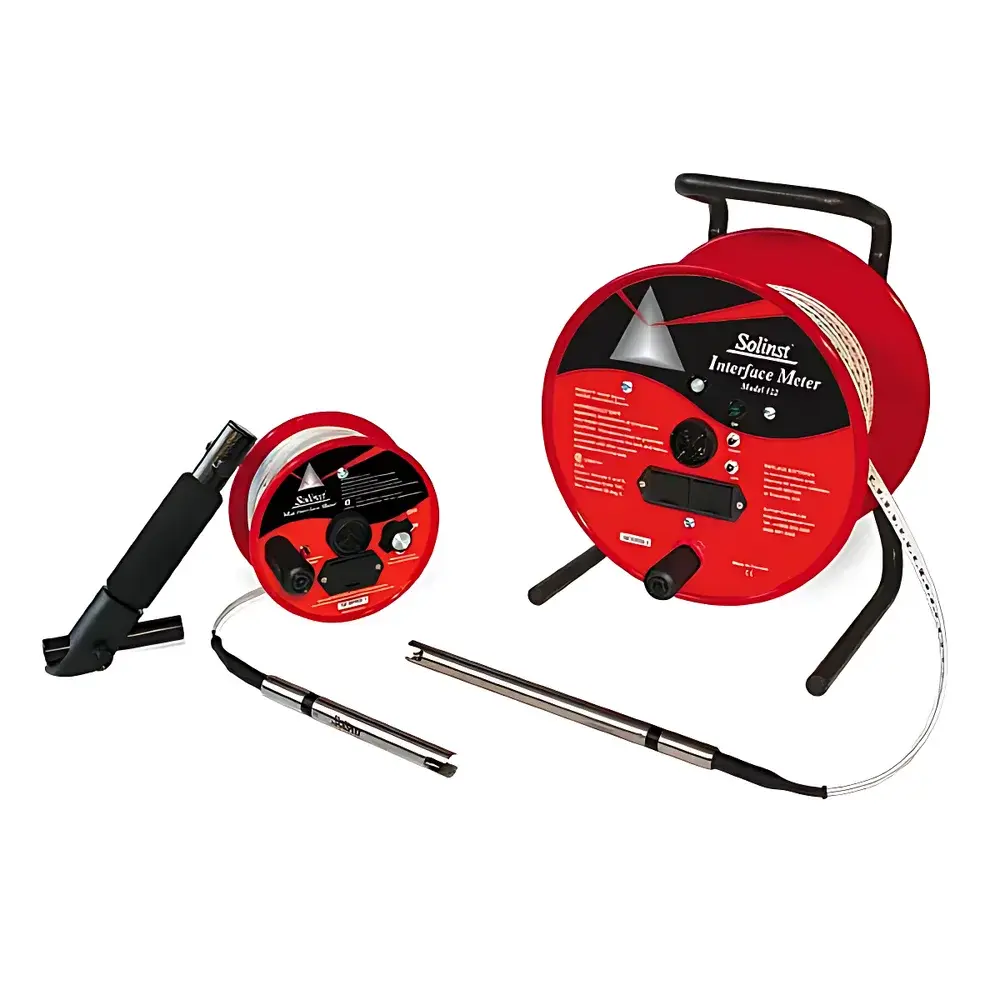
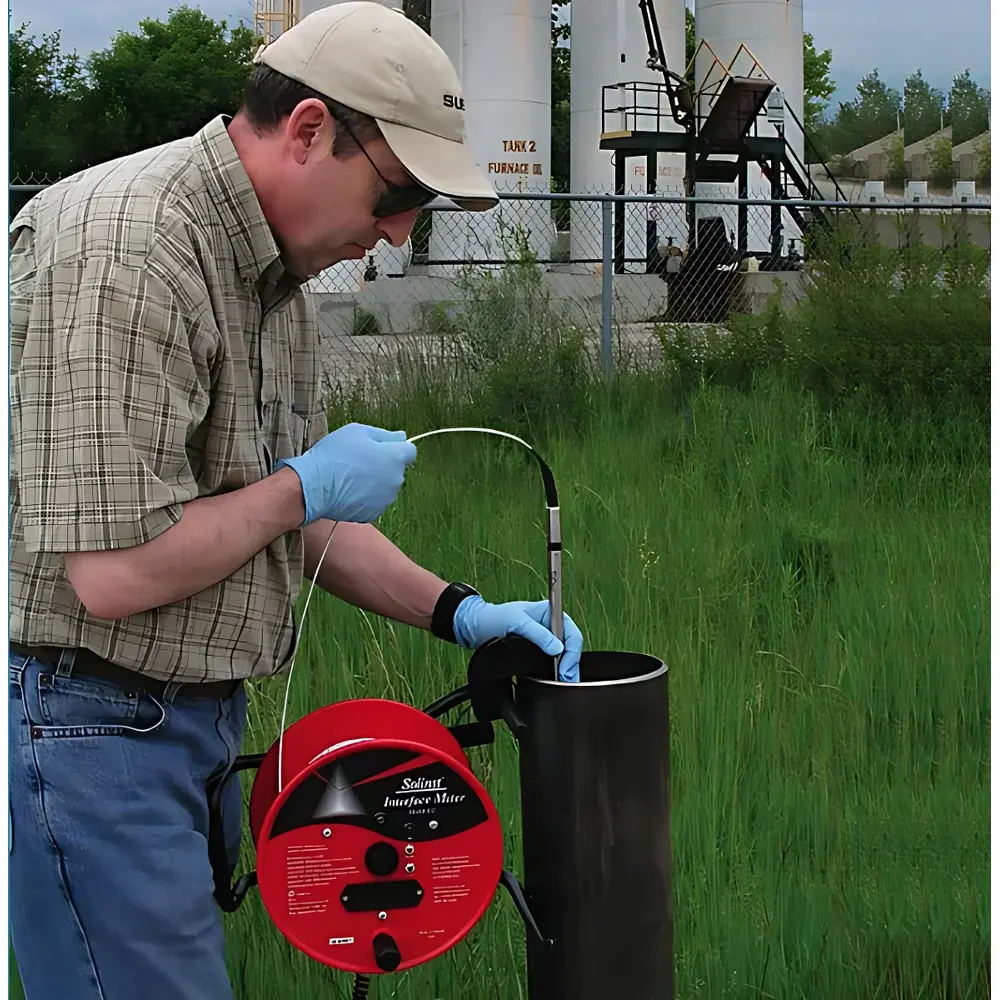
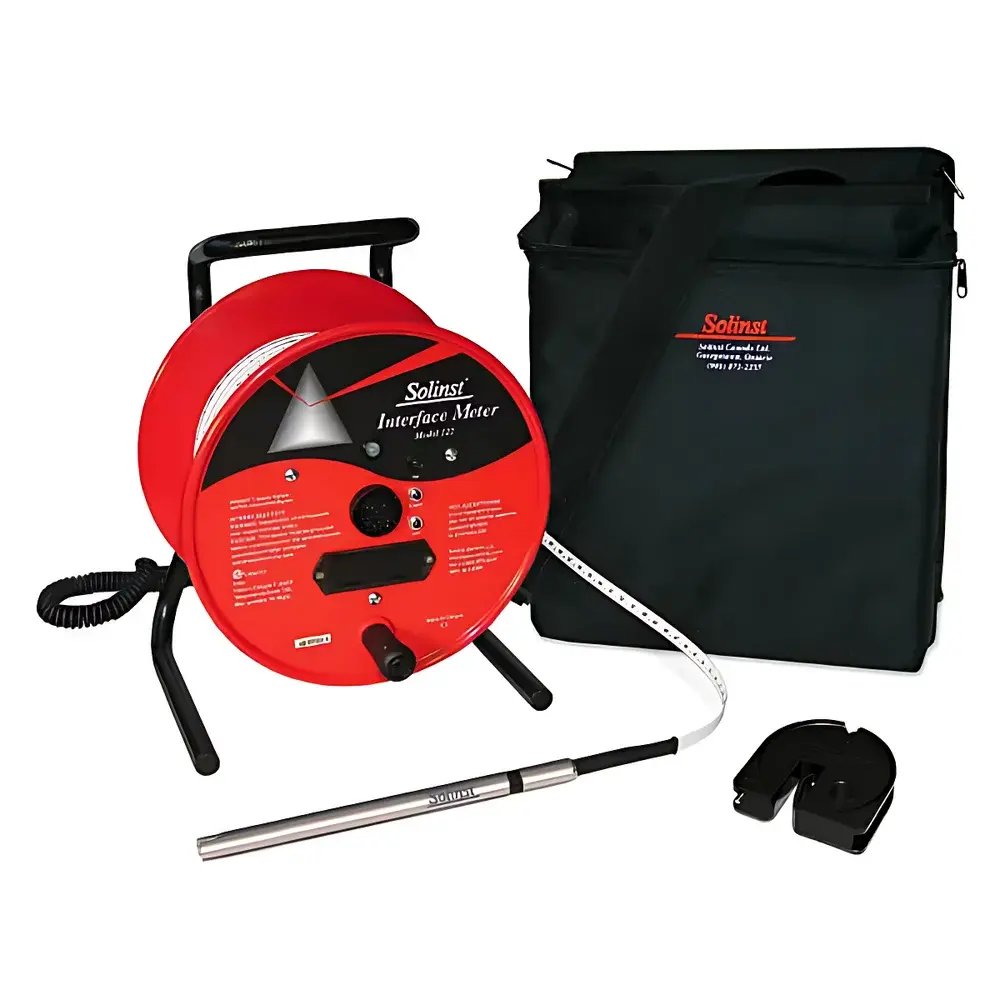
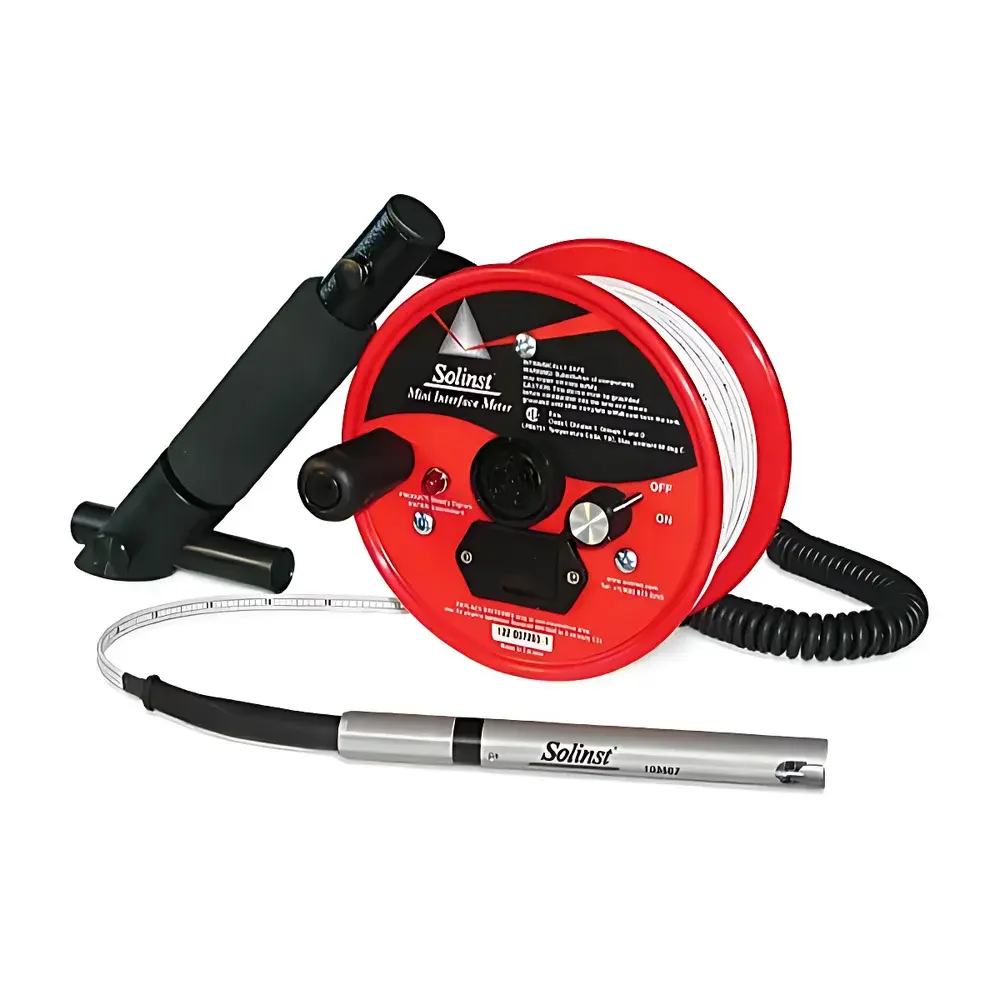
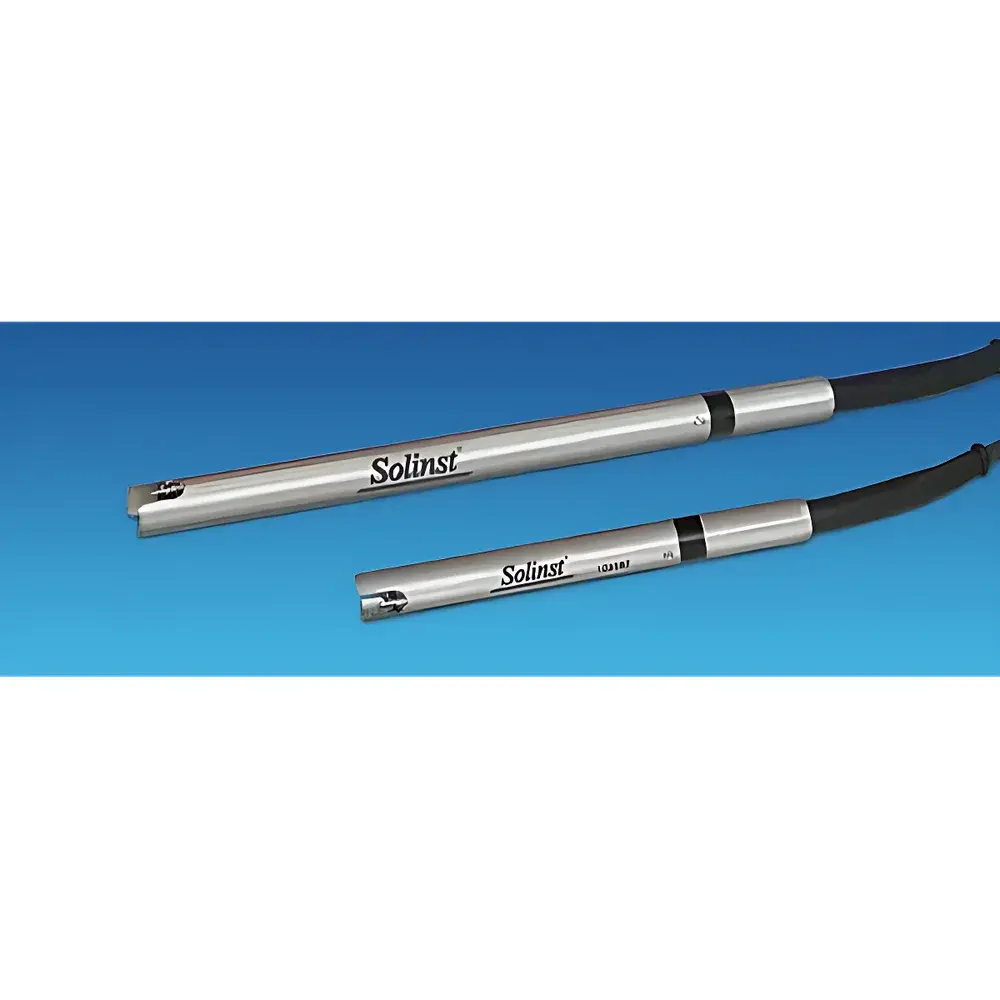
Solinst Model 122 Oil-Water Interface Meter
| Brand | Solinst |
|---|---|
| Origin | Canada |
| Model | 122 |
| Measurement Principle | Infrared Refractive Index Discrimination at Liquid-Liquid Interfaces |
| Depth Range | 20–450 m |
| Probe Diameter | 16 mm (5/8") |
| Probe Material | Stainless Steel |
| Maximum Pressure Rating | 500 psi |
| Accuracy | ±1 mm (±1/200 ft) |
| Power Source | Replaceable Batteries |
| Battery Life | ≥120 h |
| Auto-Shutoff | After 10 minutes of inactivity |
| Probe Tip Material | Hydex™ polymer with integrated stainless steel guard |
| Scale Options | LM2 (1/100 ft, black markings) or LM3 (mm/m, black markings) |
| Compliance | CSA Certified for hazardous locations |
Overview
The Solinst Model 122 Oil-Water Interface Meter is a field-deployable, direct-reading instrument engineered for precise detection and measurement of the thickness of Light Non-Aqueous Phase Liquids (LNAPLs)—such as gasoline, diesel, kerosene, and other hydrocarbon fuels—floating atop groundwater in saturated or unsaturated zones. It operates on the principle of infrared beam refraction: when the probe’s Hydex™ conical tip contacts the LNAPL-water interface, the differential refractive index between the two immiscible liquids alters the infrared signal path, triggering an audible tone and LED illumination to confirm interface contact. This optical discrimination method eliminates reliance on conductivity or capacitance, ensuring reliable performance in highly conductive, saline, or chemically aggressive groundwater matrices where conventional electrical sensors may fail or drift. Designed for long-term deployment in contaminated sites—including leaking underground storage tanks (USTs), petroleum refineries, fueling stations, landfills, and industrial brownfields—the Model 122 delivers repeatable, operator-independent measurements under variable temperature, pressure, and sediment-laden conditions.
Key Features
- Stainless steel P8 probe (16 mm diameter) with integrated Hydex™ optical tip and reinforced stainless guard—rated to 500 psi for deep-well applications up to 450 m.
- Two calibrated scale options: LM2 tape (graduated in 1/100-ft increments, black markings) for imperial reporting; LM3 tape (mm/m scale, black markings) for metric compliance and regulatory submissions.
- I-beam tape design minimizes wall contact during lowering, reducing drag, preventing fouling, and improving vertical alignment in narrow-diameter monitoring wells (≥2-inch ID).
- High-contrast, permanently embossed graduations resist abrasion, chemical exposure, and UV degradation—ensuring legibility after repeated field use.
- Low-power infrared optics with audible tone and dual-color LED feedback provide unambiguous interface confirmation without requiring real-time data logging equipment.
- Field-serviceable battery compartment enables rapid replacement using standard alkaline cells; verified operational life exceeds 120 hours under typical intermittent-use conditions.
- Automatic power-down after 10 minutes of inactivity conserves battery life and supports GLP-aligned instrument accountability protocols.
Sample Compatibility & Compliance
The Model 122 is validated for use across a broad spectrum of environmental media: fresh and brackish groundwater, hydrocarbon-contaminated aquifers, clay-rich sediments, and fractured bedrock formations. Its non-contact optical sensing mechanism remains unaffected by dissolved solids (TDS), redox conditions, or microbial biofilm accumulation—common sources of interference for resistivity-based probes. The device complies with CSA C22.2 No. 157 (Electrical Equipment for Use in Hazardous Locations) and meets Class I, Division 1, Group D requirements for safe operation in potentially explosive vapour environments associated with petroleum release sites. While not intrinsically calibrated to ASTM D5088 or ISO 22475-1, its measurement methodology aligns with EPA SW-846 Method 9065 (LNAPL Thickness Determination) and supports data defensibility under state-level site remediation frameworks (e.g., NJDEP Technical Requirements for Site Remediation, NYDEC Part 375).
Software & Data Management
The Model 122 is a standalone, analog-readout instrument with no embedded firmware, wireless connectivity, or proprietary software dependency. All measurements are recorded manually into field logs or digital forms (e.g., PDF inspection templates, GIS-integrated mobile data capture platforms). This architecture ensures full auditability, eliminates cybersecurity vulnerabilities, and satisfies FDA 21 CFR Part 11 requirements for handwritten or digitally signed field records when paired with validated electronic logbooks. For laboratories operating under ISO/IEC 17025 or NELAC-accredited quality systems, the absence of automated data transfer reduces validation burden while preserving chain-of-custody integrity through direct observer documentation.
Applications
- Quantification of LNAPL smear zone thickness during initial site assessment and plume delineation.
- Long-term monitoring of free-phase hydrocarbon recovery efficiency in pump-and-treat or passive recovery systems.
- Verification of LNAPL removal prior to closure or regulatory sign-off per state UST programs.
- Calibration and cross-validation of geophysical methods (e.g., GPR, ERT) used for subsurface LNAPL mapping.
- Supporting conceptual site model (CSM) development in complex multi-layered aquifer systems with perched water tables.
- Compliance-driven reporting for RCRA Corrective Action, CERCLA Remedial Investigations, and voluntary cleanup programs.
FAQ
Does the Model 122 require calibration before each use?
No—its optical interface detection mechanism is inherently stable and does not require field recalibration. However, annual verification against a certified depth standard (e.g., NIST-traceable tape measure) is recommended per ISO/IEC 17025 Clause 6.5.2.
Can the P8 probe be used in wells with high iron content or bacterial iron oxide deposits?
Yes—the stainless steel construction and smooth Hydex™ tip resist adhesion and scaling; routine cleaning with isopropyl alcohol is sufficient between deployments.
Is the LM3 metric tape compatible with Canadian federal reporting requirements?
Yes—LM3 conforms to Measurement Canada’s Weights and Measures Act for legal metrology in environmental monitoring contexts.
What well casing diameters support optimal probe guidance?
Minimum recommended internal diameter is 50 mm (2 inches); narrower casings may impede tape travel and increase friction-induced reading error.
How is measurement uncertainty quantified for regulatory submissions?
Combined standard uncertainty is ±1.2 mm (k=2), derived from probe resolution (±0.5 mm), tape stretch (±0.4 mm), and operator parallax (±0.3 mm), as documented in Solinst Technical Bulletin TB-122-EN.
Related Products







