Solinst AquaVent Ventilated Water Level Transducer
| Brand | Solinst |
|---|---|
| Origin | Canada |
| Model | AquaVent |
| Type | Ventilated Pressure-Based Water Level Transducer |
| Accuracy | ±0.05% FS |
| Temperature Range | −20 °C to 80 °C |
| Temperature Accuracy | ±0.05 °C |
| Data Storage | 40,000 full-resolution readings (expandable to 120,000 linearly compressed records) |
| Battery Life | 8 years (at 1-min logging interval) |
| Clock Accuracy | ±1 minute/year |
| Measurement Interval | 1/8 second to 99 hours |
| Housing Dimensions | 22 mm × 178 mm |
| Pressure Units | m, cm, ft, psi, kPa, bar |
| Temperature Units | °C, °F |
| Communication Protocols | RS-232, RS-485, SDI-12 |
| Environmental Rating (Wellhead Interface) | IP64 |
| Operating Temperature (Cable & Electronics) | −20 °C to 80 °C |
| Venting Cable Length | Customizable up to 152 m (500 ft) |
| Sensor Material | Hastelloy pressure element, 316 stainless steel housing, POM (polyoxymethylene), FKM (fluoroelastomer), and polyamide components |
Overview
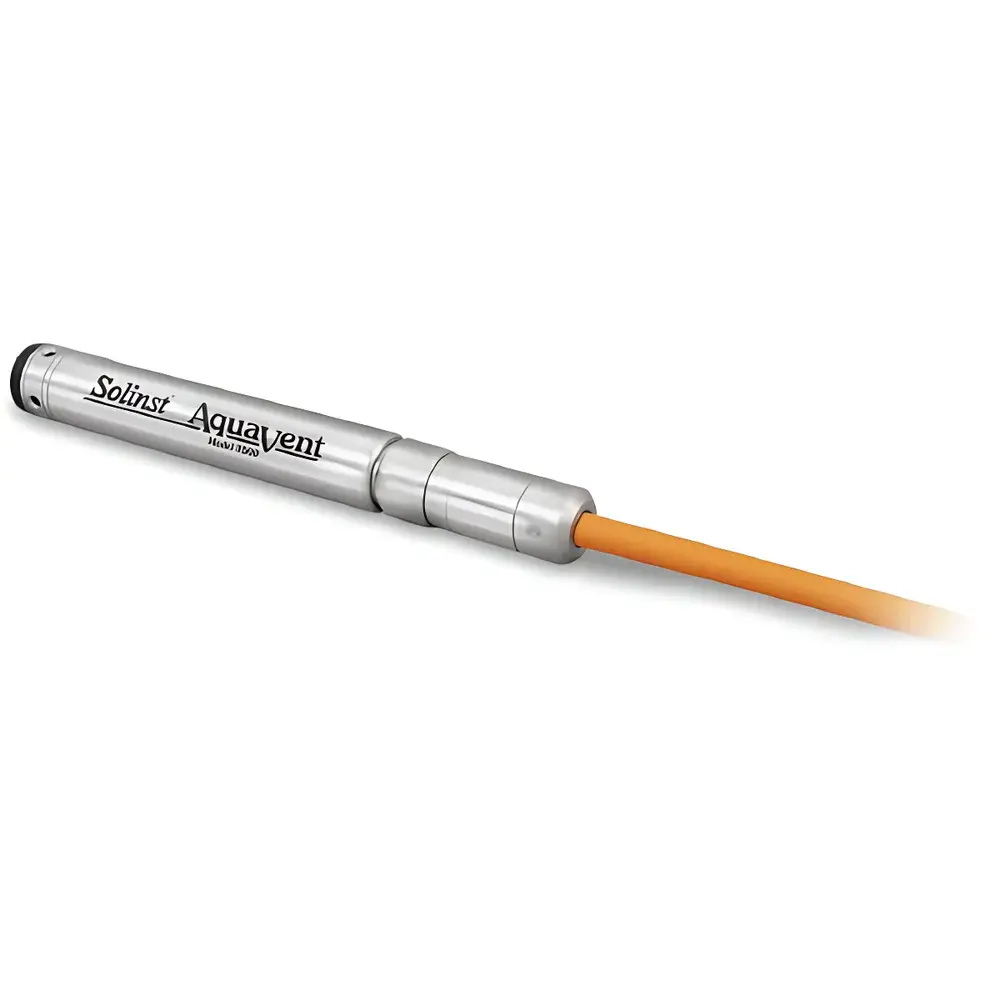
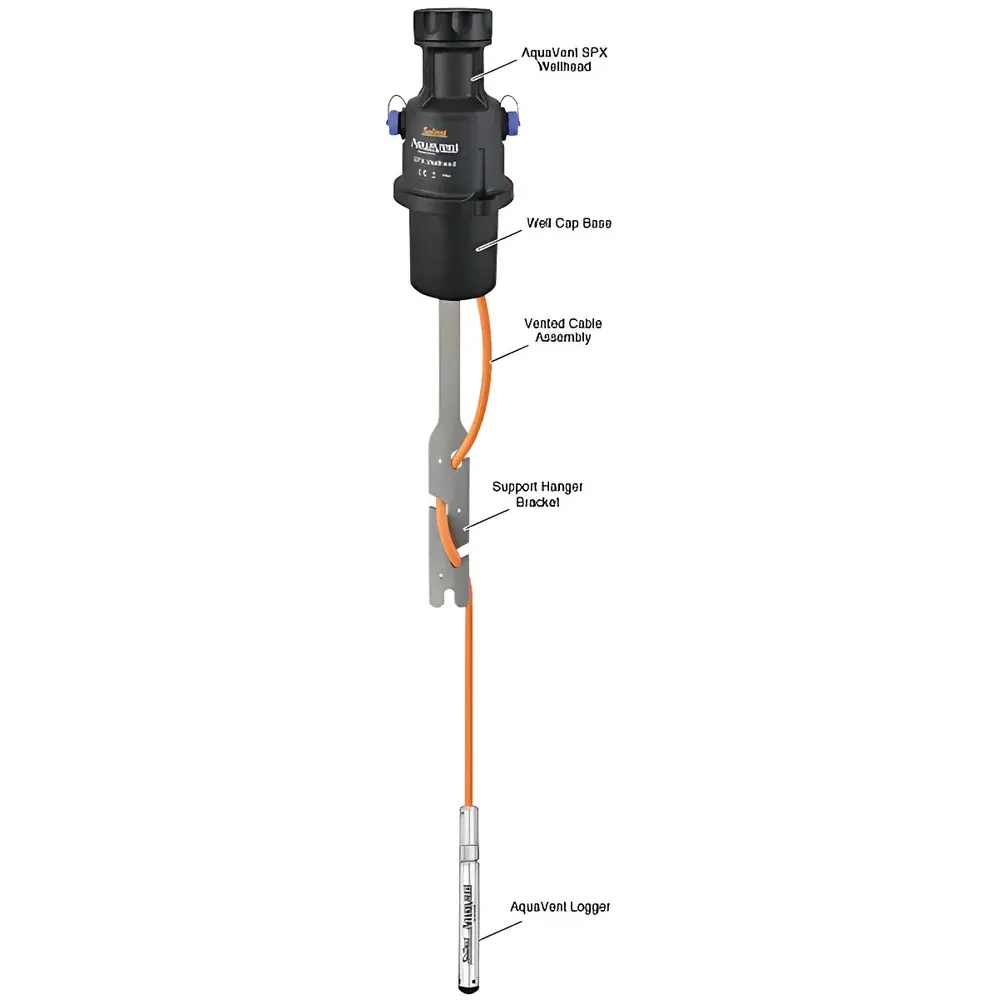
The Solinst AquaVent Ventilated Water Level Transducer is a high-stability, vented-pressure-based instrument engineered for long-term, autonomous monitoring of groundwater and surface water levels in shallow aquifers, wells, rivers, lakes, reservoirs, and stormwater systems. It operates on the principle of differential pressure measurement: a sealed, temperature-compensated piezoresistive pressure sensor—fabricated with Hastelloy alloy—is housed within a compact 22 mm × 178 mm 316 stainless steel body. An integrated vent tube connects the sensor’s reference side directly to ambient atmospheric pressure, enabling real-time compensation for barometric fluctuations. This eliminates the need for post-deployment barometric correction—a critical advantage for unattended, multi-year deployments where data integrity and processing efficiency are paramount. The transducer measures absolute hydrostatic pressure exerted by the water column above it; subtracting the continuously sampled atmospheric pressure yields net water depth with traceable metrological confidence. Designed for field robustness, the AquaVent withstands overpressure up to twice its full-scale rating and functions reliably across −20 °C to 80 °C, making it suitable for both arctic and tropical hydrogeological environments.
Key Features
- ±0.05% full-scale (FS) pressure measurement accuracy, traceable to NIST-calibrated standards
- Hastelloy C-276 pressure sensing element for superior corrosion resistance and thermal stability in aggressive groundwater chemistries
- Integrated hydrophobic vent filter and desiccant system—maintenance-free for ≥8 years under typical deployment conditions
- Non-volatile FRAM memory storing up to 40,000 high-resolution readings (or 120,000 linearly compressed records), eliminating data loss during power interruption
- Configurable sampling intervals from 125 ms to 99 hours, with programmable start/stop times and multiple logging modes (linear, event-triggered, scheduled)
- Multi-protocol digital interface supporting RS-232, RS-485, and SDI-12 for seamless integration into existing SCADA, telemetry, or datalogger networks (e.g., Campbell Scientific CR series, Onset HOBO, or Delta-T systems)
- Bluetooth 4.0 LE connectivity via Solinst’s proprietary mobile application for real-time field verification, configuration, and rapid data download without physical cable connection
- Replaceable AA lithium batteries (4×1.5 V) powering both transducer and wellhead interface—rated for 8 years at 1-minute logging frequency
Sample Compatibility & Compliance
The AquaVent is validated for continuous immersion in freshwater, brackish water, and low-conductivity groundwater (up to 10,000 µS/cm). Its materials—316 stainless steel, Hastelloy C-276, FKM elastomers, POM, and polyamide—are compliant with ASTM D4000 and ISO 10993-5 for prolonged contact with natural aqueous media. The device meets IEC 60529 IP64 requirements for dust-tight and splash-resistant operation at the wellhead interface unit. While not certified for explosive atmospheres (ATEX/IECEx), its intrinsically safe design (max. 12 V DC input, <100 mW power draw) aligns with Class I, Division 2 electrical safety guidelines. Data acquisition workflows support GLP/GMP-aligned audit trails when used with Solinst’s DataGrabber USB interface and AquaVent Configuration Software, which logs user actions, firmware versions, calibration timestamps, and parameter changes—facilitating compliance with US EPA Method 1300B, ISO 5555, and national groundwater monitoring protocols (e.g., Environment Canada’s National Groundwater Monitoring Network standards).
Software & Data Management
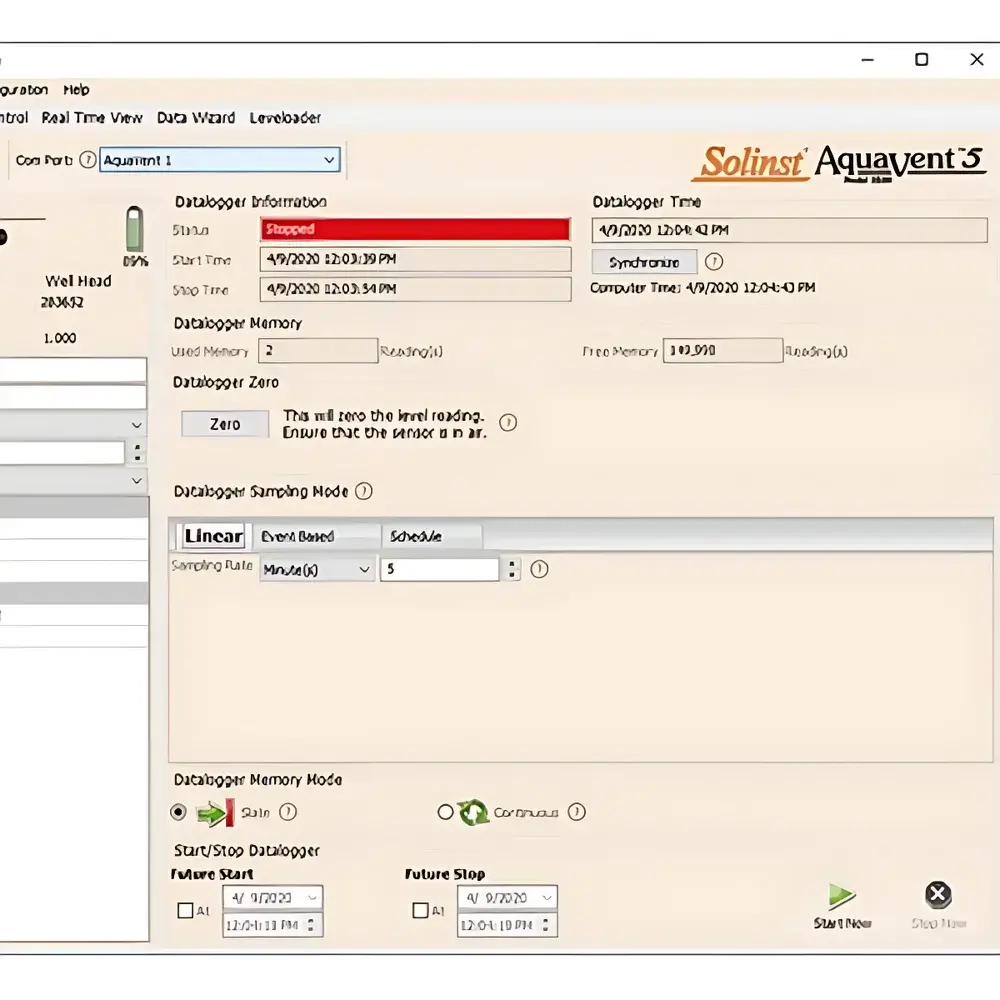
Solinst AquaVent Configuration Software (Windows/macOS compatible) provides intuitive, wizard-driven setup: automatic COM port detection, firmware version identification, and real-time parameter validation. Users define pressure/temperature units, sampling schemes, barometric compensation settings, and time-of-day synchronization (with onboard clock accuracy of ±1 minute per year). Raw binary data files are exportable in CSV, Excel (.xlsx), and SQL-compatible formats—including metadata headers (serial number, calibration date, sensor offset, barometric reference values) required for regulatory reporting. The software supports selective download (full dataset vs. incremental updates), gap-filling interpolation for missing intervals, and batch processing across multiple instruments. When deployed with the SPX Wellhead Interface, data can be streamed directly to cloud platforms via third-party RTU gateways using Modbus RTU over RS-485—enabling remote, near-real-time access without site visits. All Bluetooth and USB transfers employ encrypted handshake protocols to prevent unauthorized configuration changes.
Applications
- Long-term groundwater level monitoring in observation wells (≤20 m depth) for aquifer sustainability assessment
- Pre- and post-pumping test analysis in confined and unconfined aquifers (including recovery curve modeling)
- Managed aquifer recharge (MAR) and infiltration basin performance evaluation
- River stage and lake elevation tracking for flood forecasting and water balance studies
- Stormwater runoff quantification in urban catchments and green infrastructure monitoring
- Climate resilience projects requiring decadal-scale hydrologic trend analysis (e.g., sea-level rise impact on coastal aquifers)
- Regulatory compliance reporting under national frameworks such as the EU Water Framework Directive (WFD) Annex V or USGS NWIS requirements
FAQ
How does barometric compensation work in the AquaVent?
The vent tube delivers ambient atmospheric pressure directly to the sensor’s reference chamber. The microprocessor continuously samples both the water pressure and atmospheric pressure, computing net hydrostatic head in real time—eliminating manual post-processing corrections.
Can the AquaVent be deployed in saline or sulfide-rich groundwater?
Yes. The Hastelloy C-276 diaphragm and 316 stainless steel housing resist pitting and stress-corrosion cracking in chloride concentrations up to 50,000 mg/L and H₂S-saturated environments typical of anaerobic aquifers.
What is the maximum recommended cable length for reliable RS-485 communication?
Up to 1,200 meters (4,000 ft) at 9.6 kbps, provided twisted-pair shielded cable (AWG 22–24) and proper termination resistors (120 Ω) are used per EIA/TIA-485-A specifications.
Is firmware upgrade supported in the field?
Yes—via USB-connected DataGrabber or Bluetooth using Solinst’s signed firmware packages. Upgrade logs are stored in non-volatile memory and comply with FDA 21 CFR Part 11 electronic record requirements.
Does the AquaVent require annual recalibration?
No. Solinst specifies a 2-year calibration interval under normal operating conditions. Each unit ships with a NIST-traceable calibration certificate; drift remains ≤0.02% FS/year based on accelerated life testing per ISO/IEC 17025 procedures.