
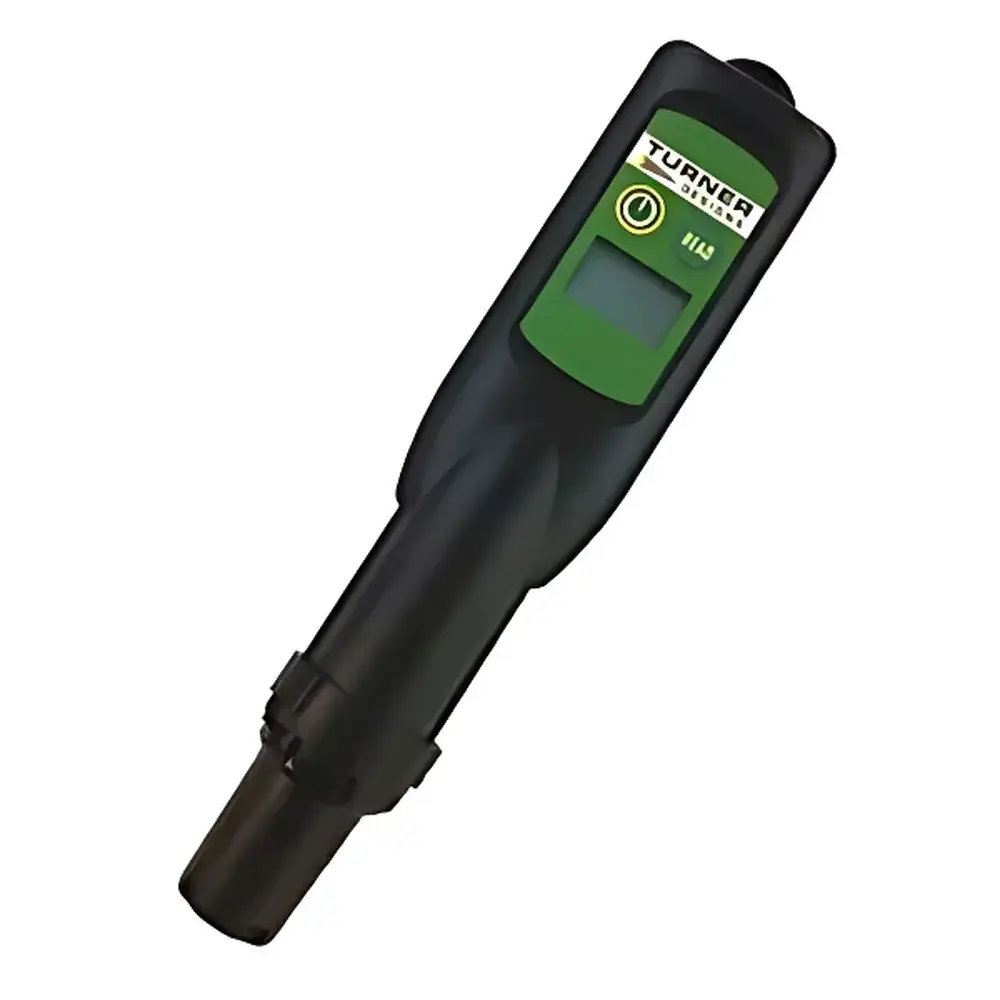
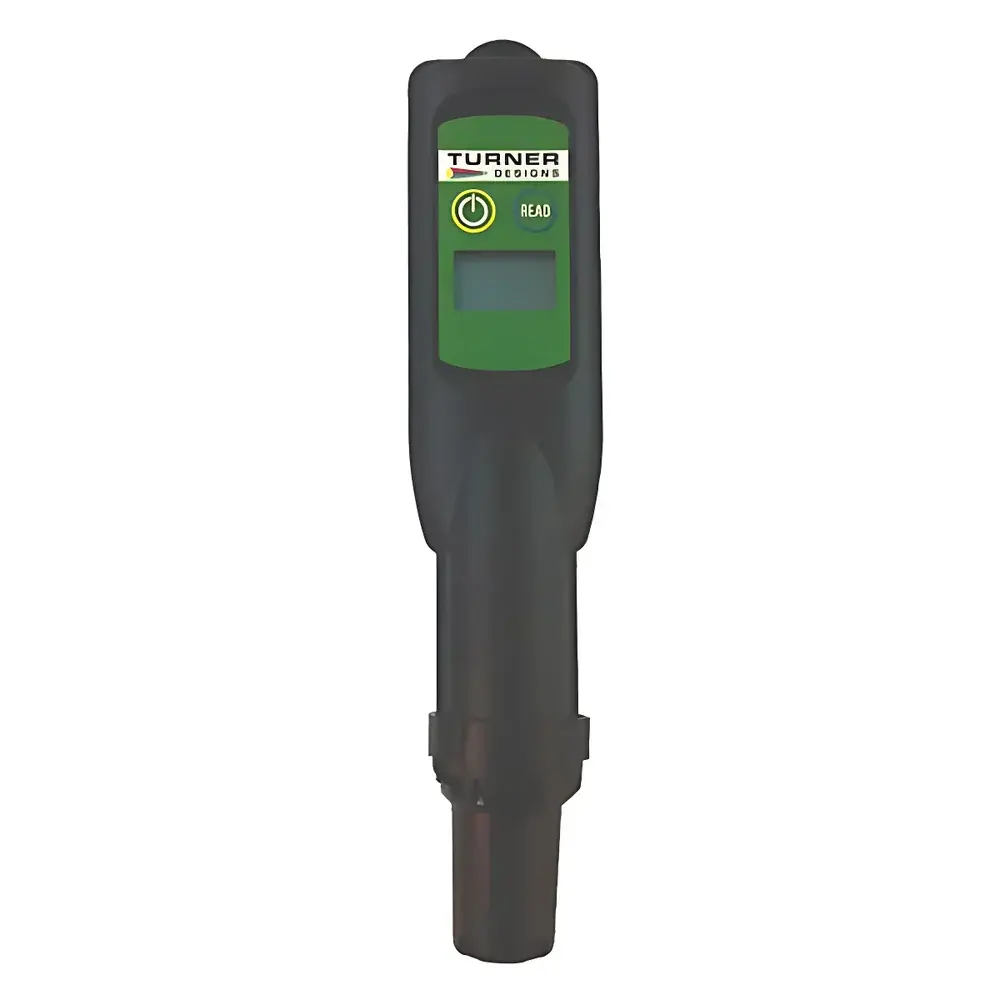
Turner Designs FluoroSense Handheld Chlorophyll a and Phycocyanin Fluorometer
| Brand | Turner Designs |
|---|---|
| Origin | USA |
| Model | FluoroSense |
| Detection Principle | In-situ LED-induced fluorescence |
| Linear Range | 0–199 µg/L for both chlorophyll a and phycocyanin |
| Resolution | 1 µg/L |
| Operating Temperature | 5–40 °C |
| Warm-up Time | None |
| Light Source | High-stability blue LED (λ~470 nm) |
| Detector | Silicon photodiode |
| Power Supply | Two AA batteries |
| Weight | 120 g |
| Dimensions | 22.6 × 5.1 × 4.5 cm |
| IP Rating | IP67 (dust-tight and submersible to 1 m for 30 min) |
| Sample Interface | Direct immersion probe with integrated optical path |
Overview
The Turner Designs FluoroSense Handheld Chlorophyll a and Phycocyanin Fluorometer is an in-situ, field-deployable fluorometric instrument engineered for rapid, quantitative estimation of photosynthetic pigment concentrations directly in aquatic environments. Unlike extractive or lab-based methods requiring solvent extraction and spectrophotometric analysis, FluoroSense employs calibrated, solid-state LED excitation (470 nm) and synchronous photodiode detection to measure the natural fluorescence yield of intact phytoplankton cells—principally chlorophyll a (Chl a) and phycocyanin (PC)—without sample collection or preparation. Its optical architecture is optimized for in vivo fluorescence quantification under ambient light conditions, minimizing interference from background scattering and enabling real-time assessment of algal biomass and functional community composition. Designed for environmental scientists, water utility operators, and regulatory field technicians, FluoroSense delivers traceable, reproducible data aligned with established fluorescence-based monitoring protocols used in EPA Region 10 guidance, ISO 10260:2021 (water quality—fluorometric determination of chlorophyll a), and ASTM D8087-22 (standard practice for field fluorometric screening of cyanobacterial pigments).
Key Features
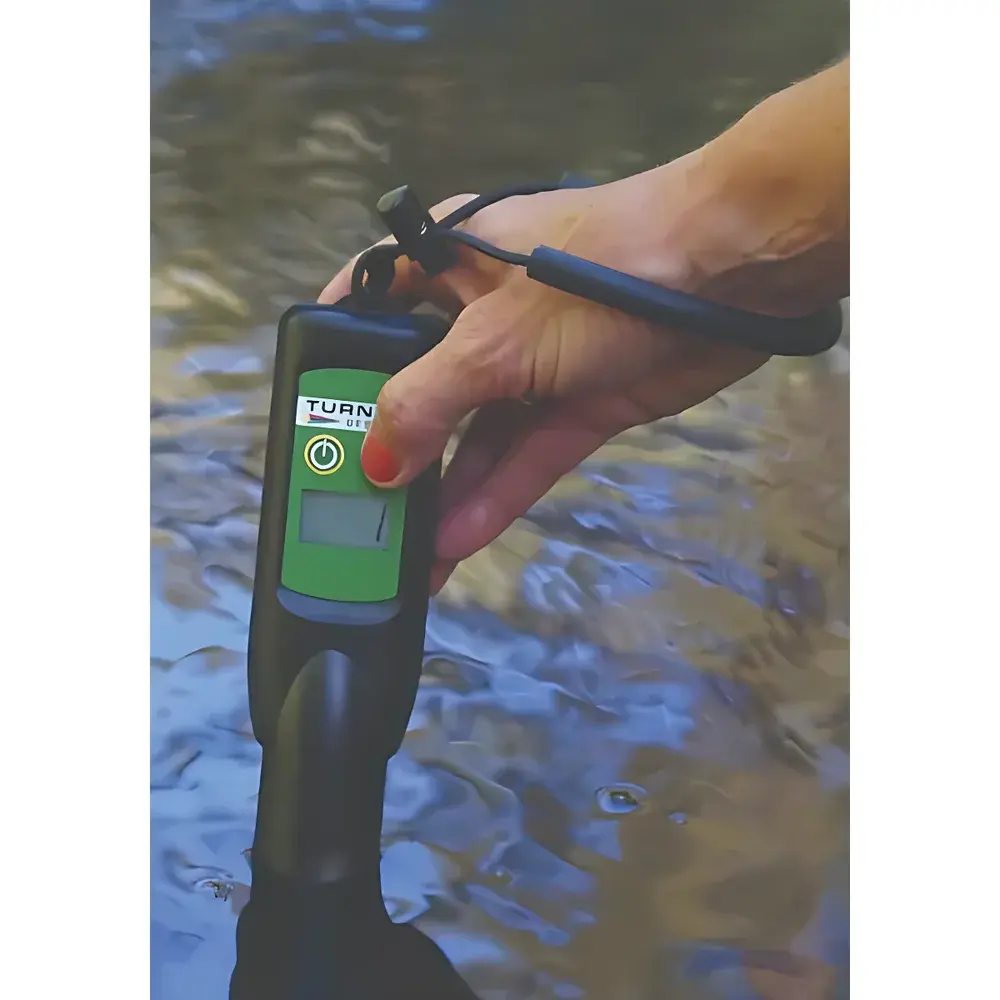
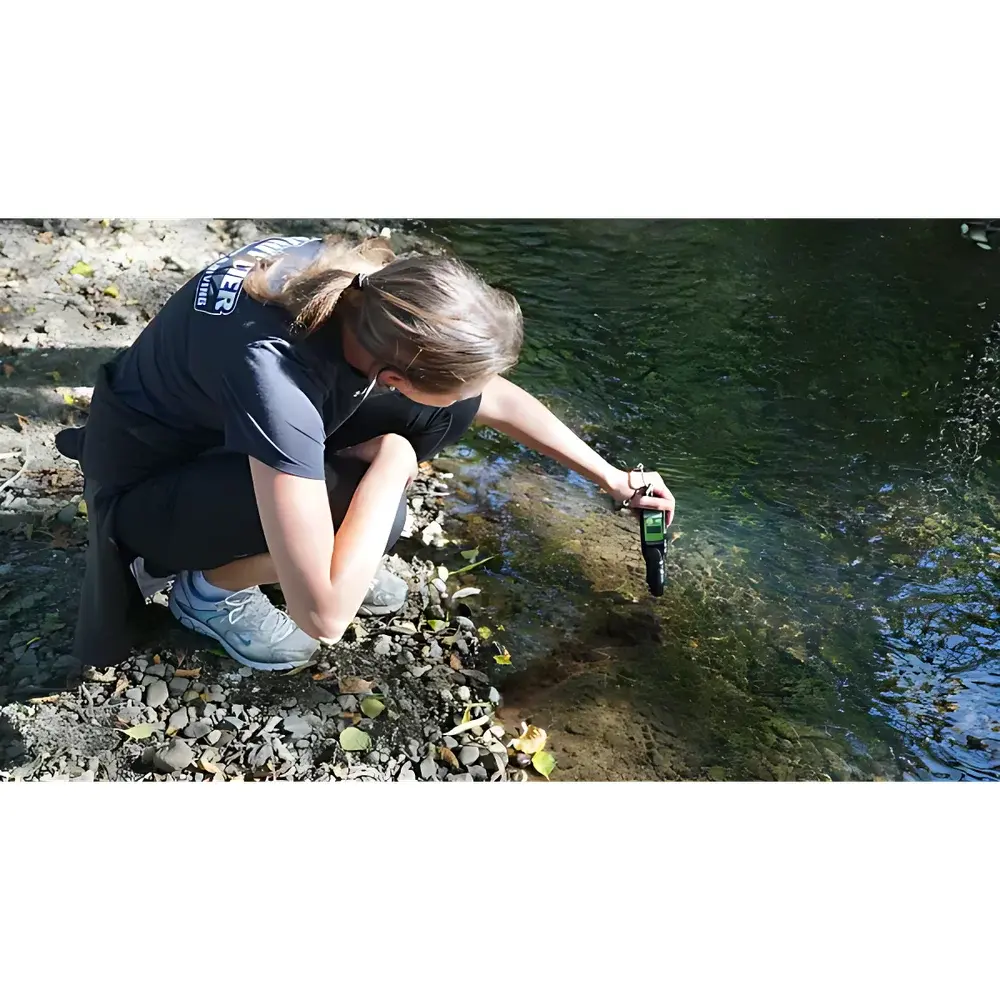
- True in-situ measurement: Integrated immersion probe allows direct insertion into water bodies; LCD display remains fully operational underwater up to 1 m depth (IP67-rated housing).
- Dual-pigment capability: Simultaneous selectable modes for chlorophyll a and phycocyanin enable discrimination between green algae/diatoms and cyanobacteria—critical for early identification of cyanobacterial harmful algal blooms (cyanoHABs).
- Zero warm-up requirement: Solid-state LED excitation and thermally stabilized detector provide immediate measurement readiness upon power-on.
- Field-robust design: Compact form factor (22.6 × 5.1 × 4.5 cm), 120 g mass, and pocket-portable geometry support extended survey deployments without fatigue or logistical overhead.
- Low operational burden: No calibration fluids, no consumables, no optical cleaning beyond freshwater rinse post-use; >10,000 measurements per set of AA batteries.
- Single-button operation: Intuitive interface minimizes operator training requirements and reduces procedural error in high-tempo monitoring scenarios.
Sample Compatibility & Compliance
FluoroSense is validated for use in fresh, brackish, and marine surface waters—including reservoirs, rivers, lakes, drinking water intakes, and aquaculture systems. It does not require filtration, centrifugation, or acidification. Its linear response (0–199 µg/L) covers typical Chl a ranges observed in oligotrophic to eutrophic systems and exceeds the threshold (≥20 µg/L PC) commonly associated with microcystin-producing Microcystis dominance. The instrument conforms to GLP-aligned field data acquisition practices: all measurements are timestamped and stored internally (non-volatile memory), supporting traceability under US EPA Method 445.0 (fluorometric chlorophyll a) and WHO/FAO guidelines for cyanobacterial risk assessment. While not a certified compliance device for regulatory reporting per se, its outputs serve as Tier-1 screening data admissible in pre-notification workflows under the US Harmful Algal Bloom and Hypoxia Research and Control Act (HABHRCA).
Software & Data Management
Data export is supported via optional USB-C adapter (sold separately), enabling transfer of measurement logs—including date/time stamps, pigment mode, raw fluorescence units, and calculated concentration—to CSV-compatible platforms. Firmware updates are delivered through Turner Designs’ secure FieldLink Utility software, ensuring alignment with evolving method validation standards. Audit trails, user-defined site tagging, and batch export functionality comply with basic 21 CFR Part 11 expectations for electronic records in non-GMP environmental monitoring contexts. No cloud dependency or proprietary subscription is required for core operation or data retrieval.
Applications
- Routine surveillance of phytoplankton dynamics across watershed management programs
- Early-warning monitoring for cyanobacterial HAB development in recreational and source waters
- Validation of remote sensing algal index products (e.g., Landsat OLI, Sentinel-3 OLCI)
- Operational verification of UV/oxidant dosing efficacy in drinking water treatment plants
- Long-term ecological studies tracking seasonal succession and nutrient-driven bloom phenology
- Emergency response triage during bloom events to prioritize laboratory toxin analysis
FAQ
Does FluoroSense require factory recalibration?
No—each unit is shipped with NIST-traceable factory calibration valid for 24 months under normal field use. Field verification using Turner Designs’ optional Chl a and PC reference standards is recommended quarterly.
Can FluoroSense distinguish between live and dead algal cells?
It measures in vivo fluorescence, which is strongly quenched in non-viable cells; thus, it inherently favors detection of metabolically active populations—but it is not a viability assay per ISO 14692.
Is the probe compatible with turbid or colored dissolved organic matter (CDOM)-rich waters?
Yes—the optical path length and excitation/emission bandpass are optimized to mitigate inner-filter effects; however, users should record concurrent Secchi depth or turbidity (NTU) for contextual interpretation.
What maintenance is required beyond rinsing?
None. No optical windows require polishing; no moving parts; no fluidic pathways to clog. Battery replacement is the sole scheduled maintenance item.
Can FluoroSense be used in ice-covered lakes?
Yes—provided a hole is drilled, the probe may be immersed through the ice; operating temperature range (5–40 °C) applies to the instrument electronics, not ambient air.







