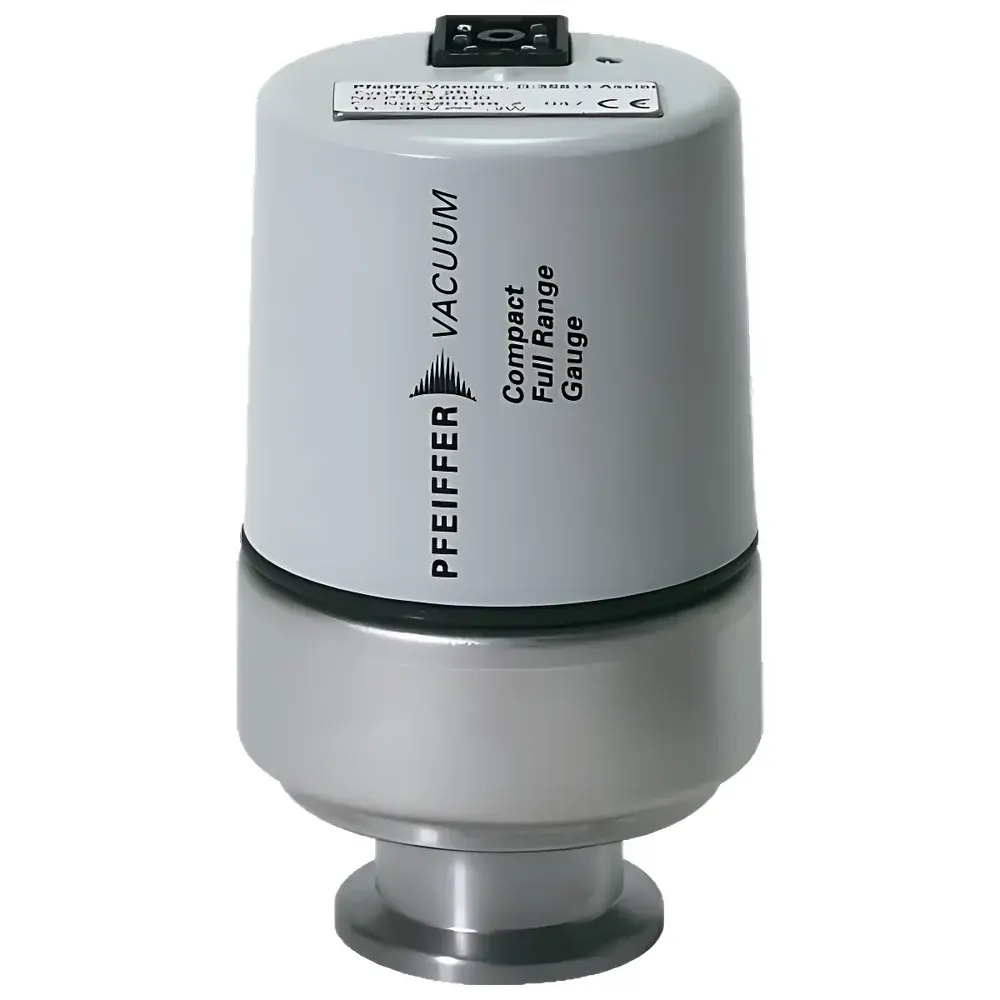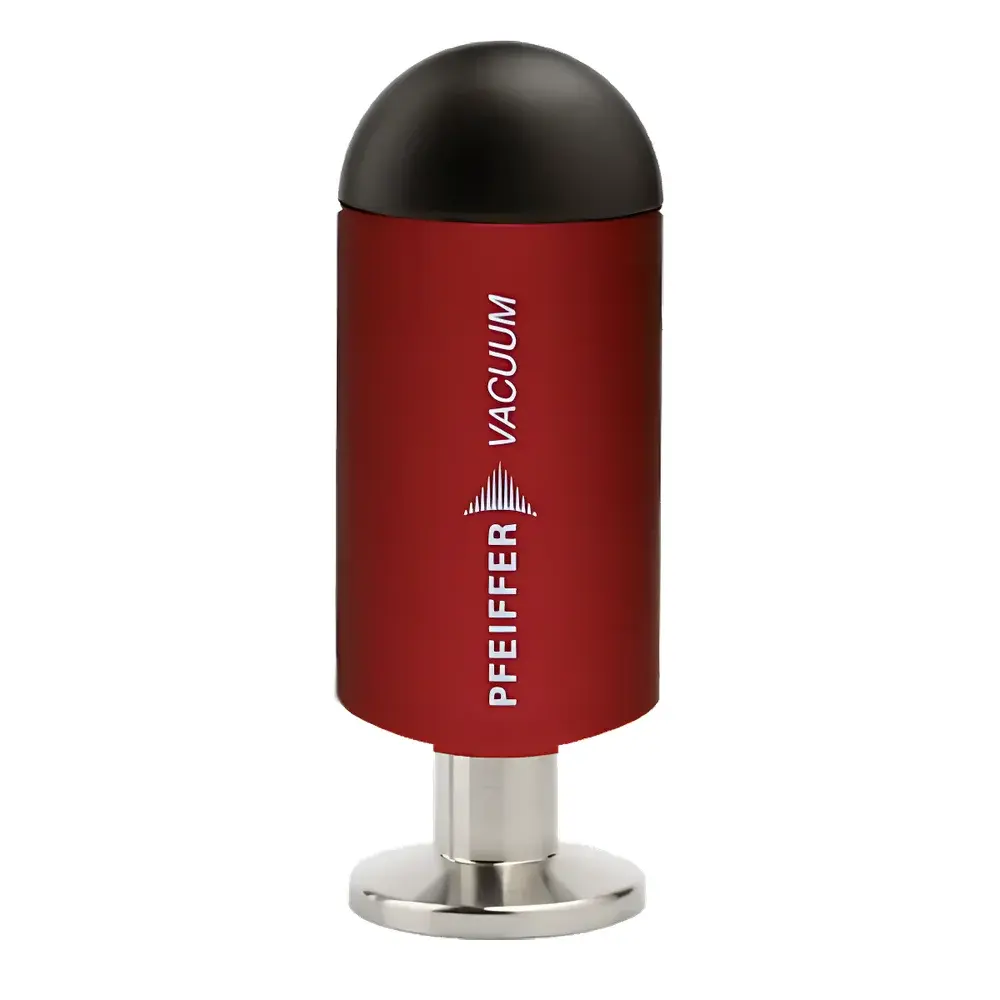
Pfeiffer Vacuum TPR 280 Pirani Vacuum Gauge
| Brand | Pfeiffer Vacuum |
|---|---|
| Origin | Germany |
| Model | TPR 280 |
| Measurement Principle | Pirani |
| Range | 5 × 10⁻⁴ to 1000 hPa |
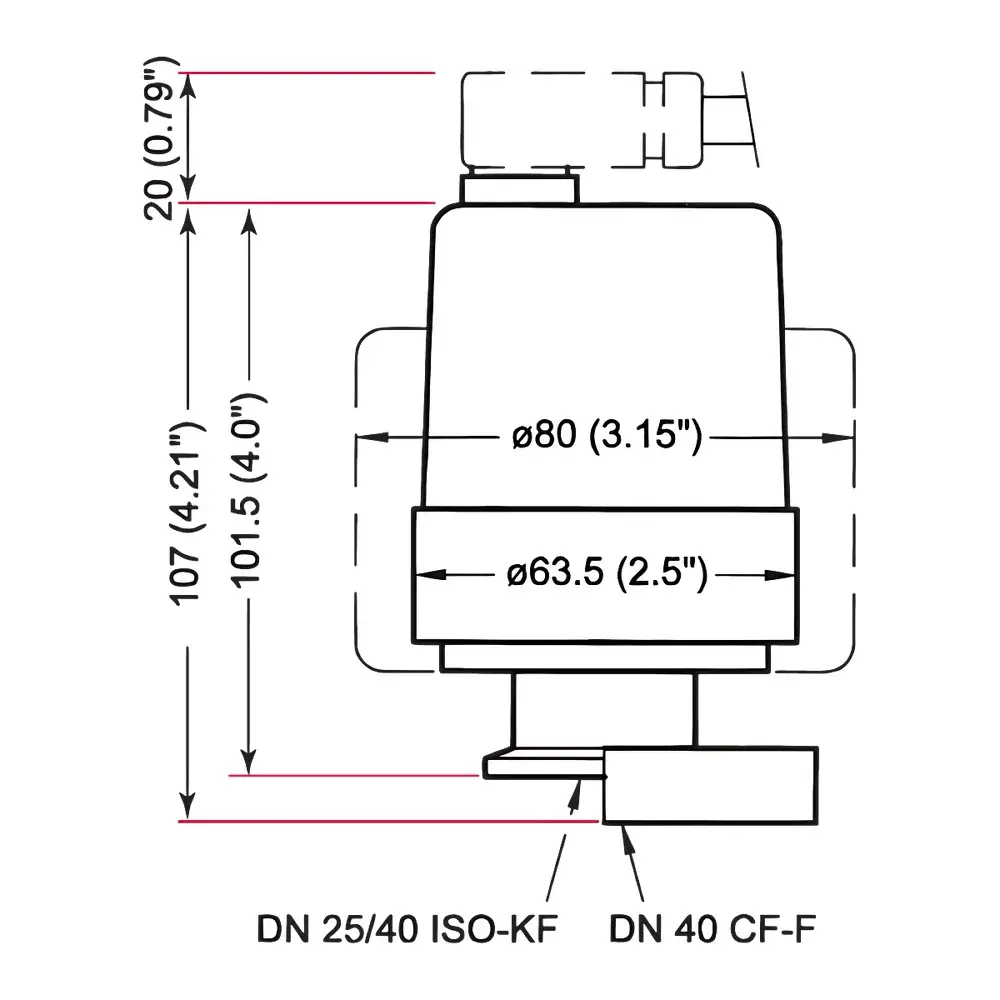
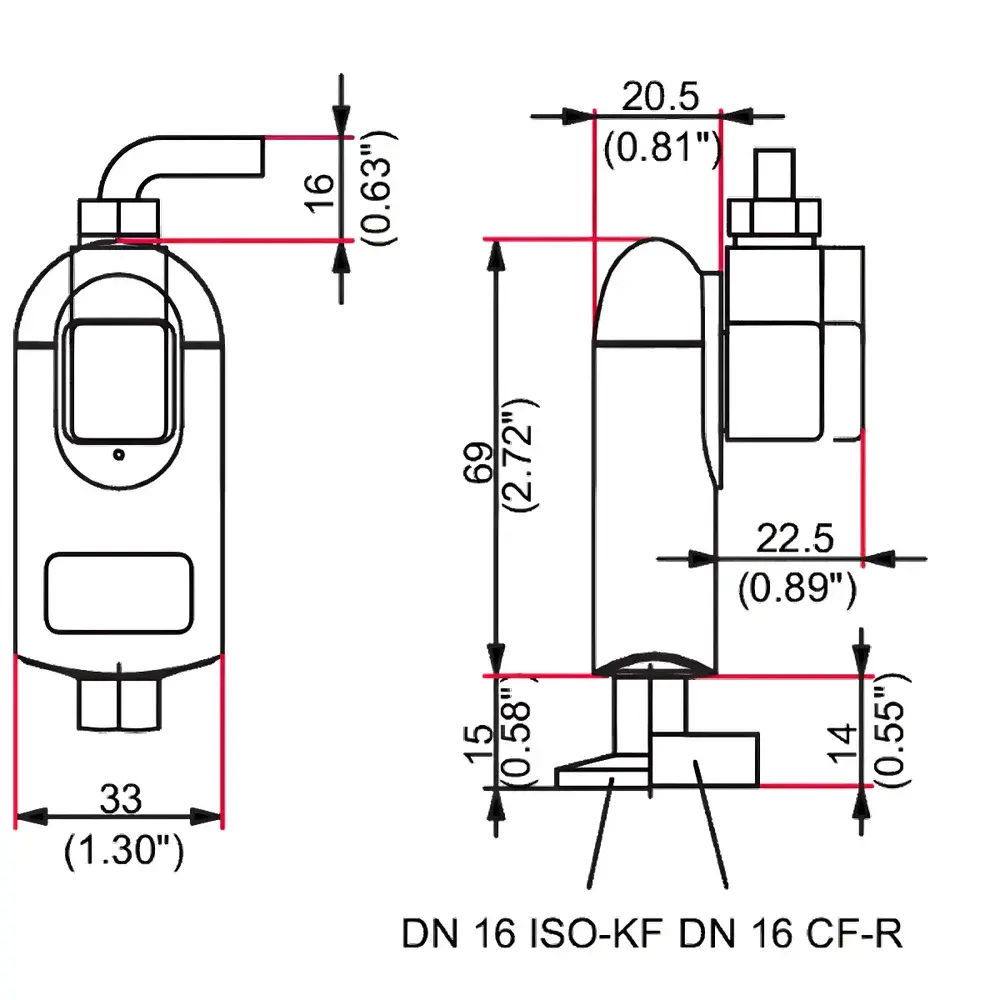
| Vacuum Interface | KF 16 (DN 16 ISO-KF) |
| Output Signal | 2.2–8.5 V DC |
| Supply Voltage | 14–30 V DC |
| Filament Material | Tungsten |
| Housing Material | Stainless Steel |
| Electrical Feedthrough | Glass |
| Operating Temperature | 5–60 °C |
| Bakeout Temperature | 80 °C (250 °C optional) |
| Accuracy | ±15% of reading (10⁻³–100 hPa) |
| Repeatability | ±2% of reading (10⁻³–100 hPa) |
Overview
The Pfeiffer Vacuum TPR 280 is a compact, robust thermal conductivity-based vacuum gauge engineered for reliable and stable pressure measurement in the medium and low vacuum range (5 × 10⁻⁴ to 1000 hPa). Operating on the classic Pirani principle, it measures pressure by detecting changes in the thermal conductivity of the surrounding gas—specifically, the rate at which heat dissipates from a heated tungsten filament into the ambient gas environment. As gas density decreases with falling pressure, heat loss diminishes, resulting in a measurable rise in filament temperature and resistance. The TPR 280 converts this resistance change into a linearized analog voltage output (2.2–8.5 V DC), proportional to the logarithmic pressure scale across its operational range. Designed for integration into vacuum systems requiring continuous, real-time monitoring—such as coating chambers, freeze dryers, vacuum furnaces, and R&D vacuum setups—the TPR 280 delivers consistent performance under dynamic process conditions without requiring active zeroing or frequent recalibration.
Key Features
- High-stability tungsten filament optimized for long-term resistance consistency and thermal response reproducibility
- Stainless steel sensor housing with integrated KF 16 (DN 16 ISO-KF) flange for rapid, leak-tight mounting and system compatibility
- Glass-metal electrical feedthrough ensuring hermetic sealing and dielectric integrity under vacuum and thermal cycling
- Wide operating temperature range (5–60 °C), supporting deployment in both laboratory and industrial environments
- Optional high-temperature bakeout capability up to 250 °C—enabling use in ultra-high purity applications where outgassing control is critical
- Low-power, wide-input DC supply (14–30 V DC) compatible with standard industrial power supplies and PLC interfaces
- No internal electronics or digital processing—minimizing electromagnetic interference (EMI) susceptibility and simplifying qualification in regulated environments
Sample Compatibility & Compliance
The TPR 280 is suitable for measuring total pressure in dry, non-corrosive gases including nitrogen, argon, helium, oxygen, and air. It is not recommended for use with condensable vapors, reactive gases (e.g., Cl₂, NH₃), or highly polymerizing process gases without protective filters or cold traps. While the gauge itself does not carry intrinsic certification, its mechanical construction and material selection comply with common vacuum system hygiene and safety requirements—including ISO 286-2 (geometric tolerances), ISO 10173 (vacuum component cleanliness), and EN 15091 (vacuum equipment safety). When integrated into larger systems subject to GLP, GMP, or FDA 21 CFR Part 11 compliance, the analog output supports traceable calibration via external reference standards (e.g., capacitance manometers traceable to NIST or PTB).
Software & Data Management
As an analog-only device, the TPR 280 does not incorporate embedded firmware, communication protocols (e.g., RS-485, Modbus, or Ethernet), or onboard data logging. Its 2.2–8.5 V DC output is designed for direct connection to programmable logic controllers (PLCs), data acquisition systems (DAQ), or analog input modules in supervisory control and data acquisition (SCADA) platforms. Users are responsible for implementing external signal conditioning, scaling, and calibration verification per IEC 61298-2 (measurement uncertainty) and ISO/IEC 17025 (calibration laboratory competence). For validation workflows, documented calibration certificates—traceable to national metrology institutes—must be maintained alongside system-level IQ/OQ records.
Applications
- Process monitoring in physical vapor deposition (PVD) and sputtering systems during chamber evacuation and base pressure stabilization
- Pressure feedback control in lyophilization (freeze-drying) cycles, particularly during primary drying phases
- Leak detection pre-scans and roughing stage supervision in high-vacuum systems equipped with turbomolecular pumps
- Environmental simulation chambers requiring stable mid-range vacuum maintenance (e.g., 1–100 hPa)
- Educational laboratories demonstrating thermal conductivity-based vacuum measurement principles
- Quality assurance in vacuum packaging lines where absolute pressure thresholds govern seal integrity verification
FAQ
What gases can the TPR 280 accurately measure?
It provides reliable total pressure readings for dry, inert, and non-reactive gases such as N₂, Ar, He, O₂, and air. Calibration factors differ significantly for light gases (e.g., H₂, He); correction curves must be applied for quantitative accuracy.
Is the TPR 280 compatible with vacuum systems requiring bakeout?
Yes—standard units support bakeout up to 80 °C; an optional version rated for 250 °C is available for UHV-adjacent applications requiring aggressive outgassing.
Does the TPR 280 require periodic recalibration?
While inherently stable, annual calibration against a certified reference standard is recommended for applications governed by ISO/IEC 17025 or internal QA protocols.
Can multiple TPR 280 gauges share a single power supply?
Yes—provided the supply meets minimum current requirements (max. 120 mA per unit) and maintains ripple < 50 mVpp, multiple sensors may be powered in parallel with individual signal routing.
How does filament aging affect long-term measurement stability?
Tungsten filament resistance gradually increases over time due to grain growth and surface oxidation; typical service life exceeds 20,000 hours under nominal operating conditions (≤100 hPa, <50 °C ambient).