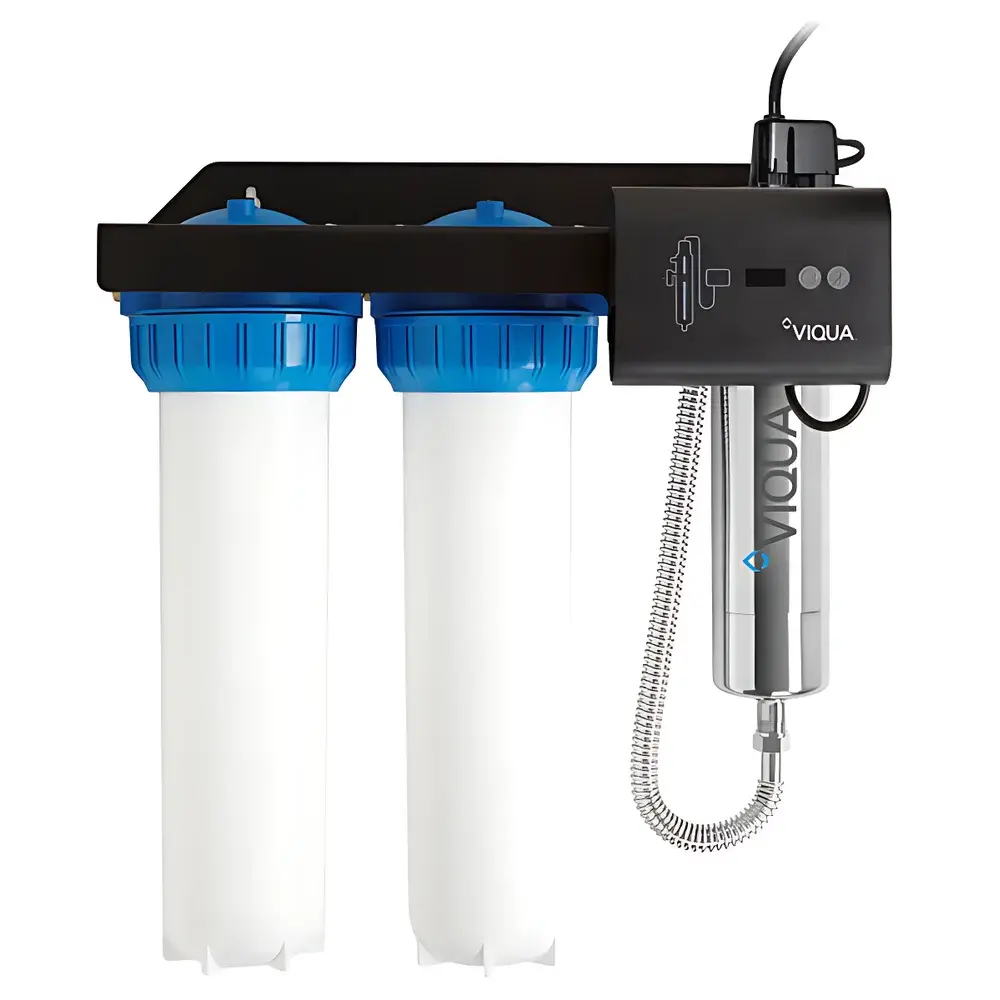
Viqua IHS22-D4 UV Disinfection System
| Brand | Viqua |
|---|---|
| Origin | Imported |
| Manufacturer Type | Authorized Distributor |
| Model | IHS22-D4 |
| Pricing | Available Upon Request |
Overview
The Viqua IHS22-D4 UV Disinfection System is an engineered, low-pressure, high-output ultraviolet (UV-C) water treatment device designed for point-of-entry (POE) applications in residential, commercial, and light institutional settings. It operates on the principle of germicidal irradiation—exposing flowing water to 254 nm UV-C light emitted by a mercury-vapor lamp housed within a quartz sleeve. This wavelength disrupts the DNA/RNA of microorganisms—including bacteria (e.g., E. coli, Legionella), viruses (e.g., rotavirus, norovirus), and protozoan cysts (e.g., Cryptosporidium, Giardia)—rendering them nonviable and unable to replicate. Unlike chemical disinfectants, UV treatment introduces no residual byproducts, alters no taste or odor, and requires no contact time beyond hydraulic residence within the reactor chamber. The IHS22-D4 is certified to NSF/ANSI Standard 55 Class A for microbiological reduction and complies with regulatory requirements for non-chemical disinfection in potable water systems.
Key Features
- High-intensity, low-pressure UV lamp delivering ≥30 mJ/cm² validated UV dose at rated flow—engineered for consistent performance across variable inlet water quality conditions.
- Stainless steel 304 reactor chamber with polished interior surface to maximize UV reflectivity and minimize biofilm accumulation.
- Integrated UV intensity sensor with real-time monitoring and automatic lamp output compensation to maintain dose integrity over lamp lifetime.
- Digital control panel with LED status indicators, lamp runtime counter, and audible/visual alarm for low UV intensity, lamp failure, or power interruption.
- Automatic wiper mechanism compatible with optional quartz sleeve cleaning kits—reducing manual maintenance frequency in hard-water or iron-rich feed sources.
- Flow-rated design supporting up to 22 GPM (83.3 L/min) at 40 psi (276 kPa) maximum operating pressure; suitable for whole-building protection in single-family homes, boutique hotels, clinics, and K–12 educational facilities.
Sample Compatibility & Compliance
The IHS22-D4 is intended for use with municipally treated or pre-filtered groundwater where influent water meets specified pretreatment criteria: turbidity ≤ 1 NTU, total suspended solids (TSS) ≤ 10 mg/L, UV transmittance (UVT) ≥ 75% at 254 nm, iron ≤ 0.3 ppm, manganese ≤ 0.05 ppm, and hardness ≤ 7 gpg. It is not designed to remove dissolved heavy metals, lead, chlorine, or color—these require upstream adsorption (e.g., activated carbon) or precipitation processes. As a Class A system per NSF/ANSI 55, it is validated for reduction of pathogenic microorganisms in water already deemed safe for distribution, and does not serve as a primary barrier for untreated surface water without additional filtration. Installation must comply with local plumbing codes and be performed by licensed professionals; annual lamp replacement and quartz sleeve inspection are required to maintain certification validity.
Software & Data Management
While the IHS22-D4 operates as a standalone electromechanical unit without cloud connectivity or proprietary software, its digital controller supports GLP-aligned operational logging through non-volatile memory storage of key event timestamps—including lamp ignition cycles, alarm triggers, and cumulative UV exposure duration. Data export is not supported via USB or network interface; however, the system provides audit-ready physical logs accessible via front-panel navigation. For facilities subject to FDA 21 CFR Part 11 or ISO 17025 compliance frameworks, third-party data loggers may be integrated using dry-contact relay outputs for remote monitoring of lamp status and fault conditions. All firmware updates are delivered via physical replacement modules verified against Viqua’s published revision history and traceable to UL-listed component certifications.
Applications
- Residential POE disinfection for homes relying on private wells or municipal supplies with intermittent microbial risk.
- Commercial foodservice operations—including restaurants, cafés, and catering facilities—where NSF-certified water safety is mandated for ice machines, beverage dispensers, and dishwashers.
- Healthcare support infrastructure in outpatient clinics, dental offices, and long-term care facilities requiring supplemental disinfection downstream of central sterilization systems.
- Education and recreation venues such as schools, daycares, and water parks, where continuous, chemical-free protection mitigates outbreak risks during peak occupancy periods.
- Office buildings and co-working spaces implementing WELL Building Standard v2 water quality prerequisites for occupant health certification.
FAQ
Does the IHS22-D4 remove lead, heavy metals, chlorine, or color from water?
No. UV disinfection targets microorganisms only. Removal of dissolved contaminants requires complementary treatment technologies—such as reverse osmosis, ion exchange, or granular activated carbon filtration—installed upstream of the UV unit.
What maintenance intervals are required to sustain NSF Class A certification?
The UV lamp must be replaced annually (or after 9,000 hours of operation), and the quartz sleeve must be inspected and cleaned quarterly. UVT verification testing of influent water is recommended semiannually.
Can this system be installed vertically or horizontally?
Yes—provided inlet/outlet orientation adheres to manufacturer-specified flow direction markings and minimum straight-pipe run requirements (5× pipe diameter upstream, 2× downstream) to ensure laminar flow and uniform UV exposure.
Is the IHS22-D4 suitable for untreated well water?
Only if the well water consistently meets NSF 55 pretreatment criteria. Unfiltered or high-turbidity well water will compromise UV transmission and invalidate performance claims; sediment and iron filters are mandatory upstream components.
Does the unit provide validation documentation for regulatory audits?
Yes—Viqua supplies a Certificate of Conformance, NSF test reports, and a commissioning checklist. End users are responsible for maintaining maintenance logs and third-party UVT verification records as part of their facility’s water safety plan.