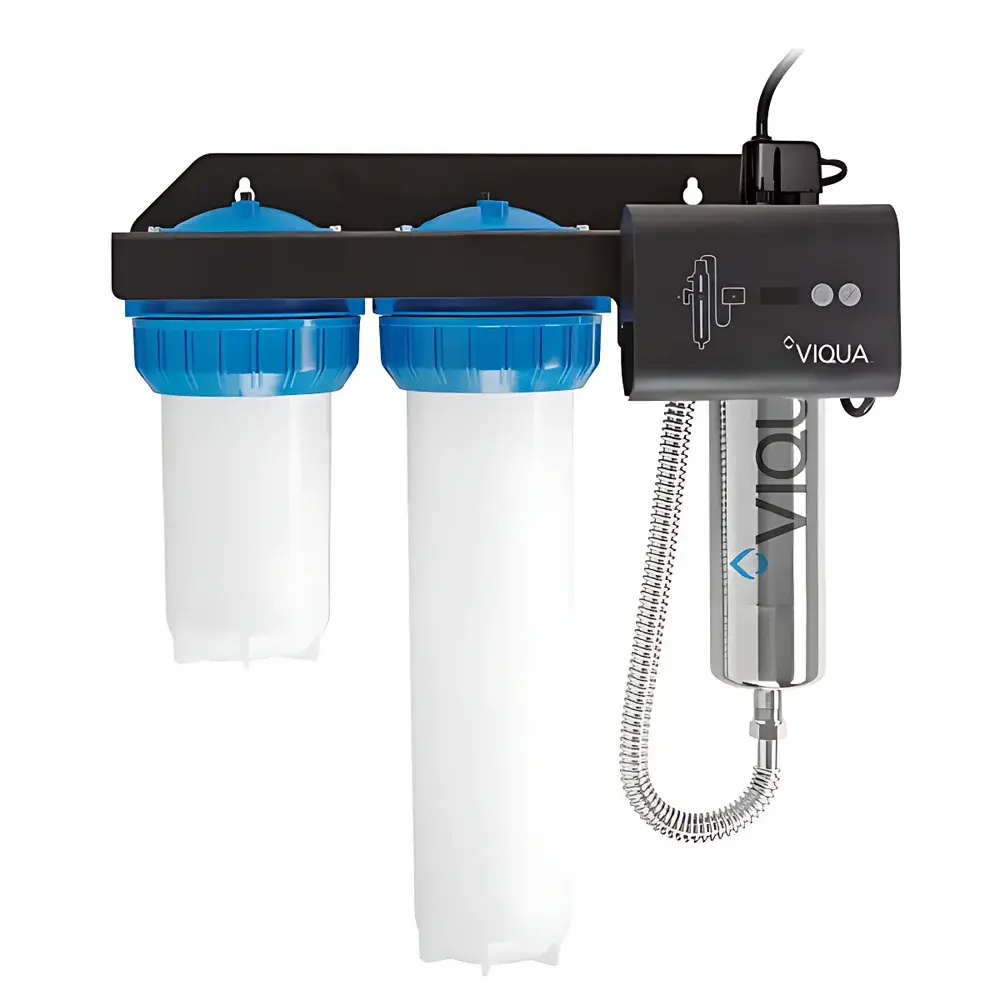
Viqua IHS12-D4 Ultraviolet Water Disinfection System
| Brand | Viqua |
|---|---|
| Origin | Imported |
| Manufacturer Type | Authorized Distributor |
| Model | IHS12-D4 |
| Pricing | Available Upon Request |
Overview
The Viqua IHS12-D4 Ultraviolet Water Disinfection System is an NSF/ANSI 55 Class A certified point-of-entry (POE) UV disinfection unit engineered for continuous, chemical-free microbial inactivation in potable water supplies. It operates on the principle of ultraviolet germicidal irradiation (UVGI), delivering a minimum validated UV dose of 40 mJ/cm² at the rated flow rate—sufficient to achieve ≥4-log (99.99%) inactivation of bacteria (e.g., E. coli, Legionella pneumophila), viruses (e.g., rotavirus, hepatitis A), and protozoan cysts (e.g., Cryptosporidium parvum, Giardia lamblia). Unlike filtration or chemical treatment, UV disinfection does not alter water chemistry, add residual substances, or generate disinfection by-products (DBPs). The system is designed for integration into municipal or private well-fed water distribution systems serving residential, commercial, and institutional facilities—including multi-family dwellings, restaurants, hotels, healthcare clinics, K–12 schools, higher education campuses, recreational facilities, and office buildings.
Key Features
- High-output, low-pressure mercury vapor lamp with quartz sleeve protection and automatic wiper mechanism to maintain optimal UV transmittance (UVT) under variable water quality conditions
- Real-time UV intensity monitoring via integrated sensor and microprocessor-controlled lamp output regulation to ensure consistent delivered dose across flow rates from 0.5 to 12 GPM (1.9 to 45.4 L/min)
- Self-diagnostic control panel with LED status indicators, audible alarm, and visual fault codes for lamp failure, low UV intensity, sensor drift, or power interruption
- Stainless steel 304 reactor chamber with NSF/ANSI 61-compliant internal surface finish and pressure-rated design (up to 125 psi / 8.6 bar)
- Automatic lamp runtime tracking with configurable replacement reminder (typical lamp life: 9,000 hours; annual replacement recommended per NSF/ANSI 55 and manufacturer guidelines)
- UL-listed electrical components and CE-marked construction compliant with IEC 61000-6-3 (EMC) and IEC 61000-6-2 (immunity) standards
Sample Compatibility & Compliance
The IHS12-D4 requires pretreatment to ensure influent water meets minimum UV transmittance (UVT ≥ 75% at 254 nm) and particulate limits (< 10 µm nominal filtration recommended). It is compatible with water sources exhibiting total iron ≤ 0.3 ppm, manganese ≤ 0.05 ppm, hardness ≤ 7 gpg, and turbidity ≤ 1 NTU. The system complies with NSF/ANSI Standard 55 Class A for microbiological reduction in water with known contamination risk, and its design supports adherence to EPA Guidance for UV Disinfection of Drinking Water, WHO Guidelines for Drinking-water Quality, and local public health codes governing non-municipal water systems. All wetted materials are certified to NSF/ANSI 61 for drinking water system components.
Software & Data Management
While the IHS12-D4 operates as a standalone electromechanical device without embedded networking or cloud connectivity, its control module supports audit-ready operational logging including cumulative lamp hours, number of fault events, and duration of low-dose incidents. Optional analog 4–20 mA output (with external transmitter) enables integration into building management systems (BMS) or SCADA platforms for remote status monitoring. For facilities operating under GLP, GMP, or ISO 17025 frameworks, the unit’s deterministic behavior, traceable lamp calibration certificates (NIST-traceable UV radiometer verification), and documented maintenance procedures support compliance with data integrity requirements under FDA 21 CFR Part 11 when paired with validated electronic log systems.
Applications
- Primary disinfection for private wells and small community water systems where chlorine resistance or DBP formation is a concern
- Final barrier treatment in hospitality venues requiring zero-taste/odor impact and regulatory compliance with local health department mandates
- Supplemental pathogen control in healthcare facility plumbing networks to mitigate Legionella colonization risks per ASHRAE Guideline 12 and CDC Toolkit recommendations
- Point-of-entry protection for school and university campuses drawing from surface or shallow groundwater sources
- Pre-chloramine removal support in foodservice operations where residual chlorine interferes with beverage quality or equipment longevity
FAQ
Does the IHS12-D4 remove lead, heavy metals, chlorine, or color from water?
No. UV disinfection targets microorganisms only. Removal of dissolved contaminants such as lead, heavy metals, chlorine, taste, odor, or color requires complementary treatment technologies—including activated carbon filtration, reverse osmosis, or ion exchange—and must be implemented upstream of the UV reactor.
Is prefiltration mandatory before installing the IHS12-D4?
Yes. Effective UV disinfection requires adequate UVT and particle-free water. A 5-micron sediment filter is standard; additional iron/manganese or hardness reduction may be required depending on source water analysis.
Can this system be used for wastewater or non-potable applications?
No. The IHS12-D4 is certified exclusively for potable water treatment under NSF/ANSI 55 Class A and is not rated for reclaimed water, greywater, or industrial process streams.
What maintenance intervals are recommended?
Lamp replacement annually or after 9,000 hours; quartz sleeve cleaning every 3–6 months depending on water quality; sensor calibration verification annually using a NIST-traceable UV radiometer.
Is professional installation required?
Yes. Installation must comply with local plumbing and electrical codes, include proper isolation valves, pressure relief, and grounding, and be performed by licensed personnel familiar with UV system commissioning protocols including UVT measurement and dose validation.