
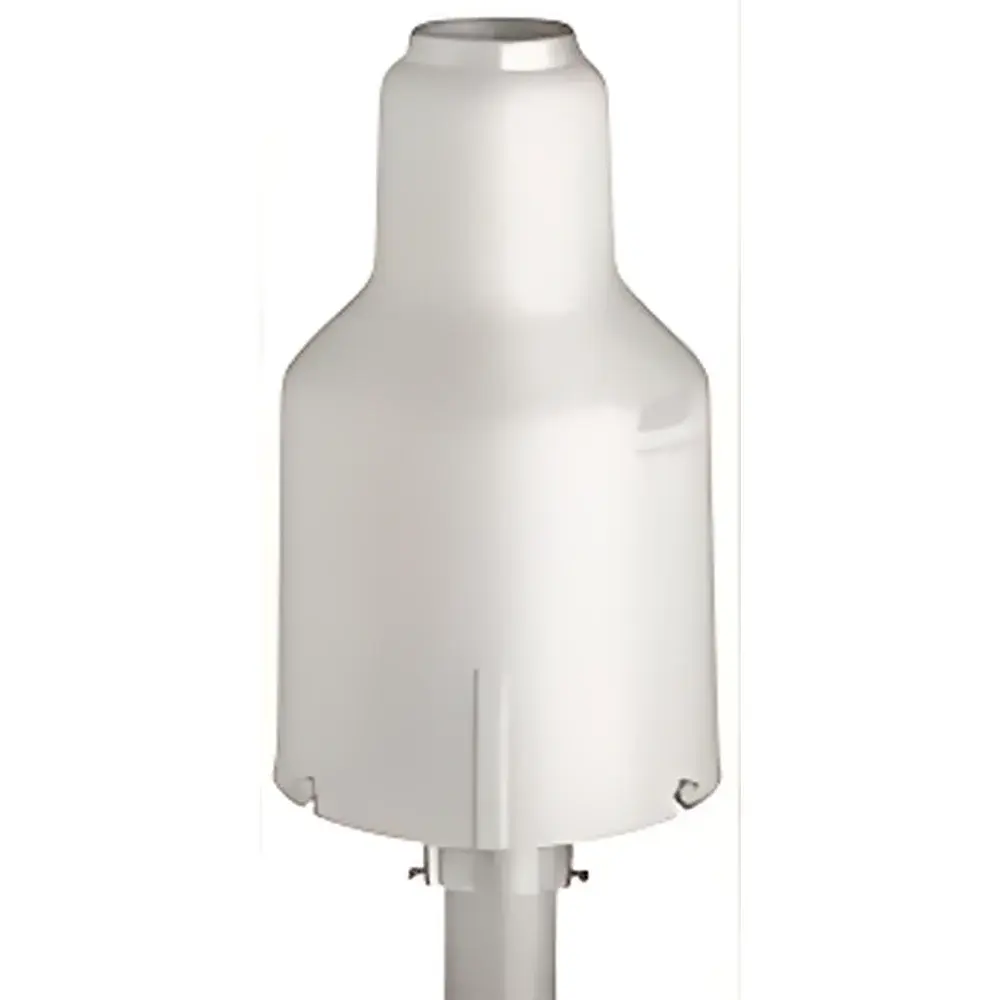
OTT Hydromet Pluvio2 High-Precision Weighing Rain Gauge
| Brand | OTT Hydromet |
|---|---|
| Origin | Germany |
| Model | Pluvio2 |
| Measurement Principle | Precision Weighing |
| Collection Area | 200 cm² or 400 cm² |
| Max. Real-Time Rain Intensity | 1800 mm/h |
| Resolution | 0.01 mm / 0.01 mm/h |
| Accuracy | ±0.1 mm |
| Operating Temperature | −40 °C to +60 °C |
| Heating Option | 24 VDC / 50 W |
| Power Consumption | 180 mW (15 mA @ 12 VDC) |
| Enclosure Rating | IP54 (housing), IP67 (pressure unit), IP64 (electronics) |
| Communication | USB (configuration), SDI-12, RS485, Pulse Output |
| Material | Stainless steel & aluminum housing, polyethylene collector bucket |
Overview
The OTT Hydromet Pluvio2 is a high-accuracy, all-season weighing rain gauge engineered for meteorological and hydrological monitoring where measurement integrity across extreme climatic conditions is non-negotiable. Unlike tipping-bucket or optical rain sensors, the Pluvio2 employs a calibrated electromagnetic force compensation (EMFC) weighing system — a primary-standard methodology endorsed by the World Meteorological Organization (WMO Guide to Instruments and Methods of Observation, No. 8) for precipitation measurement. This principle enables continuous, drift-free mass-based quantification of liquid, solid (snow, graupel, sleet), and mixed-phase precipitation without mechanical interruption. Its sealed, temperature-compensated load cell delivers long-term stability with factory calibration traceable to national metrology institutes — eliminating routine recalibration throughout its service life. The integrated thermal management system (optional 24 VDC heating) ensures uninterrupted operation under freezing conditions, while wind compensation algorithms and optional aerodynamic wind shields mitigate undercatch in high-wind environments typical of alpine, coastal, or arid-steppe sites.
Key Features
- WMO-compliant weighing measurement with ±0.1 mm absolute accuracy and 0.01 mm resolution for both cumulative precipitation and real-time intensity (up to 1800 mm/h)
- No moving parts: eliminates mechanical wear, jamming, or inertia-related errors inherent in tipping-bucket gauges — reducing maintenance to ≤1 intervention per year
- Dual-collection-area configurations: 200 cm² (1500 mm depth capacity) for high-intensity rainfall zones; 400 cm² (750 mm depth capacity) optimized for low-intensity, high-duration snow accumulation
- Integrated evaporation correction: onboard microprocessor calculates net precipitation by compensating for evaporative loss from the collector surface (resolution: 0.01 mm)
- Active wind compensation: real-time algorithm adjusts for dynamic pressure effects on collected mass, validated per WMO wind tunnel test protocols
- Low-power architecture: operates continuously on 10–28 VDC input (e.g., solar-charged 12 V battery), consuming only 180 mW at nominal voltage
- Robust environmental sealing: IP54-rated stainless steel/aluminum housing resists salt fog and UV degradation; pressure transducer rated IP67; electronics IP64
Sample Compatibility & Compliance
The Pluvio2 accepts all natural precipitation forms without phase-dependent bias — including drizzle, convective downbursts, wet snow (density 50–300 kg/m³), dry snow (<50 kg/m³ when used with antifreeze solution), rime, and mixed rain-snow events. Its open collector geometry and self-draining siphon system prevent overflow, icing, or sediment buildup. Compliance extends beyond WMO No. 8 to support regulatory reporting under ISO/IEC 17025-accredited hydrometric networks and national climate monitoring programs (e.g., NOAA’s COOP, DWD’s HYDRO-NET). Data logs meet GLP/GMP audit-trail requirements when paired with OTT’s certified firmware versions supporting time-stamped event logging and configuration change history.
Software & Data Management
Configuration and diagnostics are performed via native USB interface using OTT’s Windows-based PluvioConfig software — enabling parameterization of sampling intervals (1–60 minutes), output modes (instantaneous vs. accumulated), heating activation thresholds, and wind compensation sensitivity. Field data retrieval supports SDI-12 (multi-drop compatibility), RS485 (Modbus RTU), and TTL pulse outputs for integration into SCADA, telemetry gateways (e.g., Campbell Scientific CR1000X), or legacy PLC systems. All outputs deliver synchronized timestamped values for precipitation intensity (mm/h), cumulative totals (mm), and auxiliary parameters (heater status, internal temperature, bucket mass). Firmware updates preserve data continuity and include cryptographic signature verification to ensure traceability in regulated environments.
Applications
- High-resolution rainfall monitoring in flash-flood early-warning systems (e.g., urban drainage modeling, reservoir inflow forecasting)
- Long-term snow water equivalent (SWE) estimation in alpine and polar research stations
- Calibration reference for radar QPE (Quantitative Precipitation Estimation) and satellite precipitation products
- Climate benchmark networks requiring multi-decadal homogeneity (e.g., GCOS Reference Upper-Air Network)
- Industrial site runoff compliance monitoring under EPA NPDES or EU Water Framework Directive reporting
- Wind-exposed hydrological observatories in steppe, desert, or coastal regions — especially when deployed with OTT’s certified wind shield (Model WS-Pluvio)
FAQ
Does the Pluvio2 require periodic recalibration?
No. Its electromagnetic force compensation sensor is factory-calibrated against NIST-traceable mass standards and exhibits negligible long-term drift. WMO recommends verification only after physical impact or exposure to >10 g shock — not routine schedule.
How does it measure snow without melting hardware?
For dry snow, users add ethylene glycol-based antifreeze to the collector. Snow melts on contact, enabling precise mass-to-depth conversion. The 400 cm² variant increases capture efficiency for low-density snowfall.
Can it operate autonomously for one year on solar power?
Yes. With a 20 Ah 12 V battery and 10 W solar panel (minimum), the system sustains continuous operation — including heater cycling during sub-zero events — across all seasons per IEC 61215 photovoltaic durability standards.
Is SDI-12 output compatible with Campbell Scientific dataloggers?
Yes. It adheres strictly to SDI-12 v1.3 specification, supporting multiple sensors on a single bus with programmable address and measurement command syntax.
What is the maximum allowable wind speed for accurate measurement?
With the optional wind shield installed, field validation shows <5% undercatch up to 15 m/s (54 km/h) — meeting WMO’s “Class A” siting criteria for exposed locations.







