
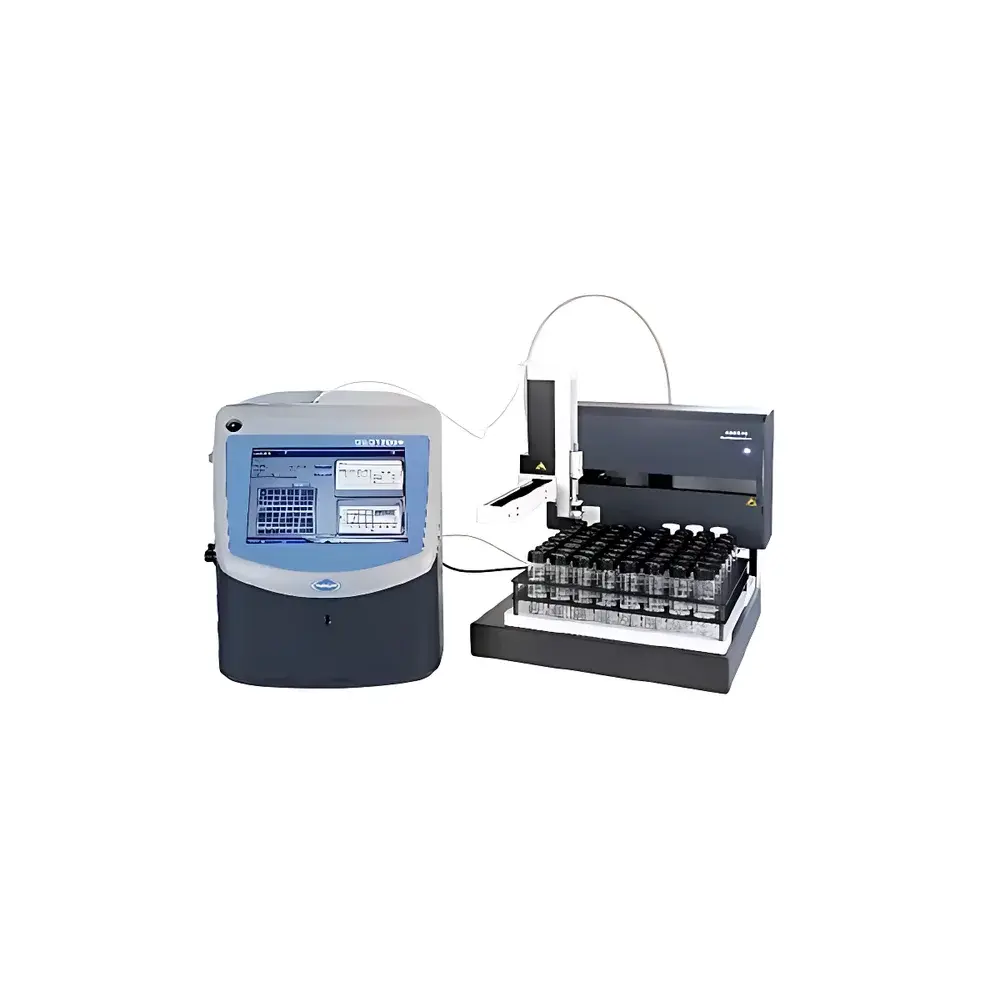
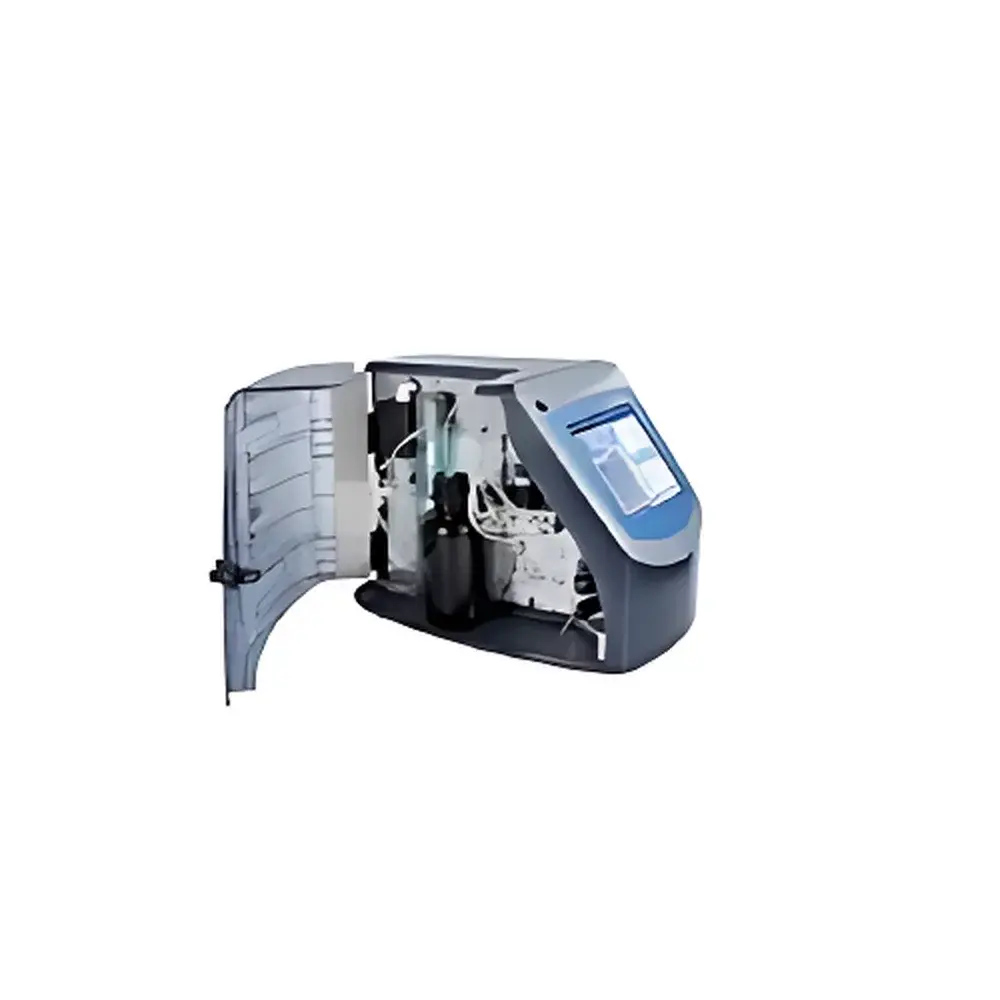
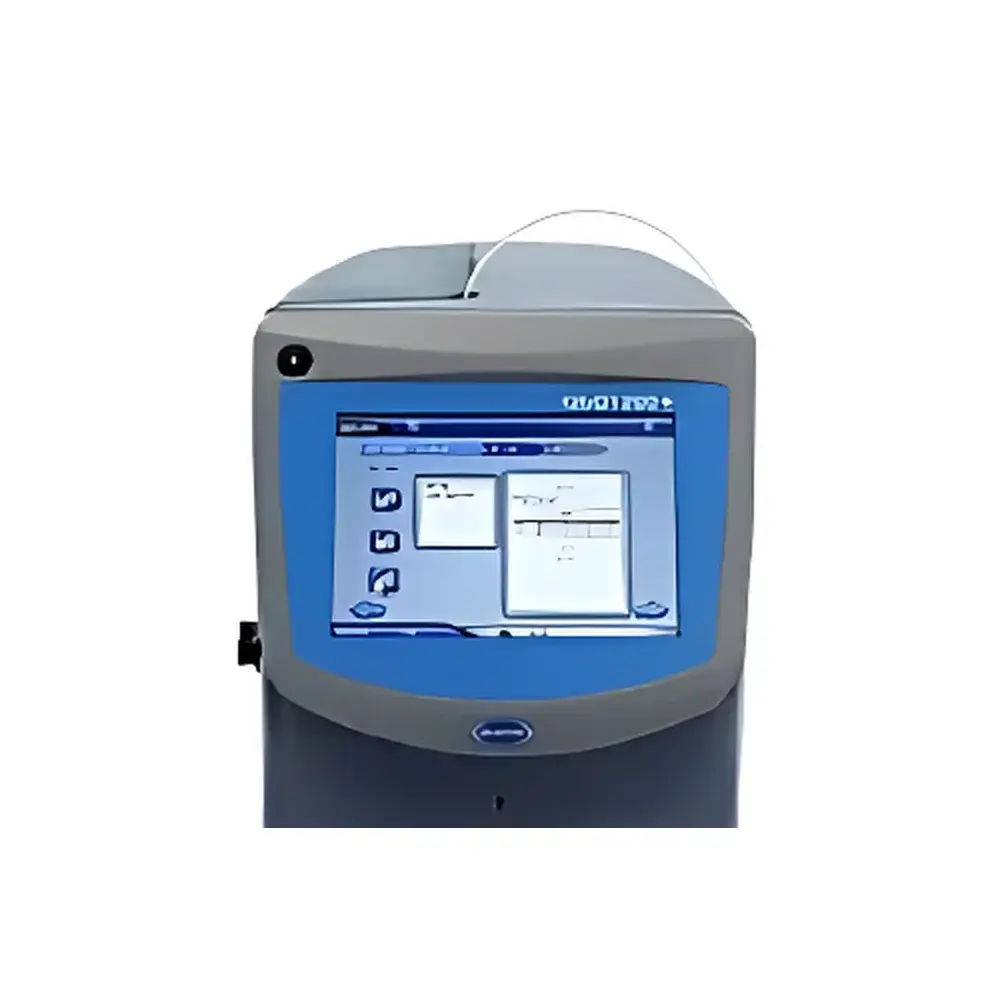
Hach QbD1200+ Laboratory Total Organic Carbon (TOC) Analyzer
| Brand | Hach |
|---|---|
| Origin | Imported |
| Manufacturer Type | Manufacturer |
| Instrument Type | Laboratory TOC Analyzer |
| Model | QbD1200+ |
| Detection Principle | Non-Dispersive Infrared (NDIR) Absorption |
| Oxidation Method | UV/Persulfate Oxidation |
| Measurement Range | 0–100 ppm |
| Accuracy | ±3% (≥500 ppb) |
| Repeatability | <2% |
| Detection Limit | <50 ppb (typical, per USP <643> and EP 2.2.44) |
| Resolution | 0.01 ppm |
| Compliance | USP <643>, EP 2.2.44, JP 2.49, ICH Q5A(R2), FDA 21 CFR Part 11, GLP/GMP-ready |
Overview
The Hach QbD1200+ Laboratory Total Organic Carbon (TOC) Analyzer is an engineered solution for high-integrity, regulatory-compliant organic carbon quantification in purified water, water for injection (WFI), clean-in-place (CIP) rinse solutions, and pharmaceutical process streams. It employs a dual-stage oxidation strategy—combining 185/254 nm ultraviolet irradiation with catalyzed persulfate—to fully mineralize non-purgeable organic carbon (NPOC) into CO2, which is then quantified via a digital non-dispersive infrared (NDIR) detector. Unlike conventional TOC analyzers requiring acid sparging or separate inorganic carbon (IC) removal modules, the QbD1200+ integrates dynamic endpoint detection: real-time monitoring of CO2 evolution ensures complete oxidation while simultaneously verifying IC elimination through pH-stabilized acidification and purge-free NDIR baseline correction. This eliminates cross-contamination risk and delivers true NPOC measurement without sample dilution or manual intervention.
Key Features
- 10.4-inch high-resolution color touchscreen interface with guided workflow navigation—no reference to printed manuals required
- Digital NDIR detector with automatic background compensation and thermal drift correction for long-term signal stability
- Dynamic endpoint detection algorithm ensures full oxidation of organics and quantitative removal of inorganic carbon in a single reaction chamber
- Auto-range selection and integrated auto-dilution capability (up to 10×) accommodate unknown sample concentrations without pre-assay estimation
- Self-health diagnostics at power-on and continuous real-time monitoring across 10 critical subsystems—including liquid flow rate, gas pressure, reactor temperature, UV lamp intensity, and NDIR signal integrity
- Single-reagent operation (acidified persulfate) reduces consumables complexity and lowers total cost of ownership
- Annual maintenance interval supported by robust fluidic architecture and corrosion-resistant wetted materials (e.g., PFA, quartz, sapphire)
Sample Compatibility & Compliance
The QbD1200+ is validated for use with low-conductivity aqueous matrices typical of pharmaceutical water systems, including Purified Water (PW), Water for Injection (WFI), and Sterile Water for Irrigation. Its measurement performance meets or exceeds requirements defined in major pharmacopoeias: USP , European Pharmacopoeia 2.2.44, Japanese Pharmacopoeia 2.49, Indian Pharmacopoeia, Korean Pharmacopoeia, and ICH Q5A(R2). The system supports IQ/OQ/PQ execution per ASTM E2500 and ICH Q9 principles, with preconfigured test protocols for USP/EP System Suitability Testing (SST) of bulk water, USP SST for sterile water, and JP SDBS validation. All hardware and firmware are designed to satisfy FDA 21 CFR Part 11 requirements for electronic records and signatures, including role-based user access control, audit trail generation with immutable timestamps, and cryptographic data encryption on the internal SSD.
Software & Data Management
- Fully embedded operating system with no external PC dependency—eliminates need for computer system validation (CSV)
- Automated calibration verification (ACV) and system suitability testing (SST) executed prior to each analytical run
- One-touch report generation with configurable templates compliant with ALCOA+ principles (Attributable, Legible, Contemporaneous, Original, Accurate, Complete, Consistent, Enduring, Available)
- Data export to network shares under Windows Active Directory security policies; all exported files retain embedded metadata and digital signatures
- Onboard encrypted solid-state drive provides >10 years of raw data storage at full acquisition rate (1 Hz), with automatic overwrite protection and retention policy enforcement
- Export formats include CSV, PDF, and XML—compatible with LIMS and ELN integration via standard RESTful API endpoints
Applications
The QbD1200+ serves as a primary analytical platform in quality control laboratories supporting pharmaceutical manufacturing, biotechnology process development, and medical device cleaning validation. It is routinely deployed for: routine PW/WFI release testing per cGMP Annex 1; TOC trending during purification system qualification (e.g., distillation, RO/EDI, ultrafiltration); cleaning verification of stainless-steel vessels and piping using rinse water analysis; stability-indicating method development for oxidant residuals; and environmental monitoring of ultrapure water loops in aseptic fill-finish facilities. Its ability to recover from over-range events (up to 10× full scale) without recalibration or service intervention ensures uninterrupted operation during unexpected excursions—critical for continuous monitoring programs aligned with ICH Q5C and Q9 risk management frameworks.
FAQ
Does the QbD1200+ require external calibration standards for daily operation?
No. The analyzer performs automated calibration verification using certified KHP (potassium hydrogen phthalate) standard solutions prior to each batch, with optional traceable CRM integration.
Is the instrument compatible with existing LIMS infrastructure?
Yes. Native support for ASTM E1384-compliant data exchange and configurable REST API enable seamless bidirectional communication with enterprise laboratory information management systems.
How is data integrity maintained during power loss or unexpected shutdown?
All measurement sessions are transactionally logged to non-volatile memory before write completion; the onboard SSD implements journaling file system with atomic write operations and hardware-level AES-256 encryption.
Can the QbD1200+ be used for wastewater or high-salinity samples?
It is optimized for low-conductivity, low-particulate pharmaceutical waters. For complex matrices (e.g., seawater, wastewater), method adaptation—including offline filtration and matrix-matched calibration—is required and falls outside factory validation scope.
What documentation is provided to support regulatory submissions?
The instrument ships with a comprehensive Validation Support Package including Design Qualification (DQ) summary, Factory Acceptance Test (FAT) reports, IQ/OQ/PQ protocol templates, 21 CFR Part 11 configuration guide, and pharmacopoeial compliance matrix.
Related Products







