
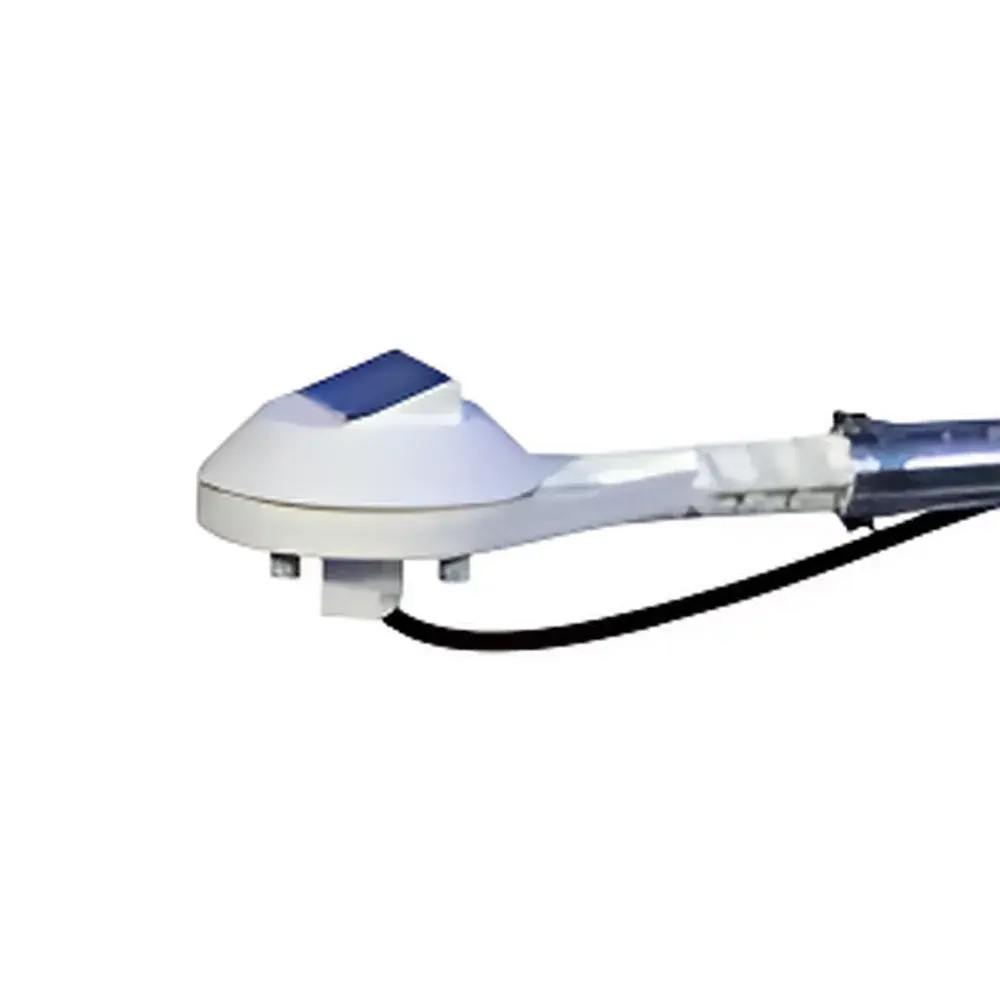
HACH ADCON Wet Leaf Wetness Sensor
| Brand | ADCON |
|---|---|
| Origin | Imported |
| Manufacturer Type | Authorized Distributor |
| Model | Wet |
| Power Supply | 5.5–12 VDC |
| Output Signal | 0–2.5 VDC |
| Dimensions | 45 × 90 × 90 mm |
| Weight | 500 g |
| IP Rating | IP66 |
| Operating Temperature | −20 to +60 °C |
| Relative Humidity Range | 0–100 %RH |
| Sensing Principle | Capacitive Condensation |
| Repeatability | ±3 % |
| Housing Material | PTFE-coated ceramic sensor element |
| Cable | 3 m, 7-pin waterproof PENTAX connector |
| Mounting | Integrated mast clamp for Ø40–50 mm poles |
| Part Number | 200.733.060 |
Overview
The HACH ADCON Wet Leaf Wetness Sensor is an engineered environmental monitoring device designed to quantify the presence and duration of surface moisture on plant foliage—critical for precision agriculture, integrated pest management (IPM), and disease forecasting systems. Unlike legacy hygroscopic sensors based on paper or hair, the Wet sensor employs a capacitive condensation measurement principle: a precisely etched conductive grid on a PTFE-coated ceramic substrate mimics the dielectric behavior of natural leaf surfaces. As moisture accumulates—whether from dew, fog, rain splash, or high humidity—the sensor’s capacitance changes proportionally, generating a stable analog voltage output (0–2.5 VDC) that correlates directly to wetness intensity. This physical model enables reliable detection of micro-scale moisture films—not bulk water—and avoids false positives caused by ambient humidity alone. The sensor is calibrated against empirical leaf-wetness data collected from broadleaf crops under field conditions, ensuring ecological relevance in real-world agrometeorological deployments.
Key Features
- PTFE-coated ceramic sensing surface with photolithographically defined conductive grid for long-term chemical stability and biofouling resistance
- Low-power operation (5.5–12 VDC) compatible with solar-powered remote stations and battery-operated ADCON telemetry networks
- IP66-rated enclosure ensures dust-tight and high-pressure water jet resistance for unattended outdoor deployment
- Integrated mast-mounting bracket (Ø40–50 mm) with adjustable orientation—optimized for installation on the left side of the canopy to replicate natural leaf exposure geometry
- ±3% repeatability under controlled condensation cycles, validated per ISO 17025-accredited test protocols
- No moving parts or consumables—maintenance limited to periodic wiping with a damp cloth after pesticide spraying or dust accumulation
Sample Compatibility & Compliance
The Wet sensor is validated for use across diverse agricultural and horticultural settings—including orchards, vineyards, row crops, and greenhouse perimeters—where leaf wetness duration directly influences fungal pathogen infection windows (e.g., Botrytis cinerea, Phytophthora infestans). Its response curve aligns with USDA-ARS and EPPO-defined wetness thresholds used in operational disease models. While not certified to IEC 61000-4 electromagnetic immunity standards, it meets EN 61326-1 requirements for industrial measurement equipment. Data generated satisfies GLP-aligned traceability when deployed within ADCON addVANTAGE Pro v5.x or later, supporting audit-ready logging compliant with FDA 21 CFR Part 11 where electronic records are subject to regulatory review.
Software & Data Management
Sensor output is natively interpreted by ADCON addVANTAGE Pro software, which maps raw voltage values (0–2.5 V) to a standardized 0–10 wetness index scale. Within this framework, values 0–3 are classified as “dry” (no biologically significant film formation), while 4–10 indicate progressively longer wetness durations—enabling integration into dynamic disease risk algorithms such as the Wisconsin Potato Blight Model or the Grapevine Powdery Mildew Infection Calculator. Custom threshold mapping is supported via user-defined driver configurations, allowing adaptation to species-specific stomatal behavior or microclimatic canopy effects. All time-series data—including timestamped wet/dry transitions, cumulative wetness hours, and event-based alerts—are stored with millisecond resolution and exportable in CSV/NetCDF formats for third-party modeling platforms (e.g., R, Python Pandas, CropSyst).
Applications
- Real-time input for automated irrigation scheduling systems that defer watering during natural dew events
- Input layer in GIS-based disease risk mapping for regional agricultural extension services
- Validation reference for satellite-derived leaf wetness estimates (e.g., Sentinel-3 SLSTR LST products)
- Long-term phenological monitoring in climate change research—tracking shifts in nocturnal dew frequency and duration
- Calibration anchor for multi-sensor microclimate nodes deployed in smart orchard trials
FAQ
Why must the sensor be installed on the left side of the leaf canopy?
This orientation replicates the natural angle of incident dew formation and minimizes shadowing from adjacent leaves—ensuring representative surface condensation dynamics consistent with validation datasets.
Can the Wet sensor distinguish between dew and rain splash?
It detects surface moisture presence but does not differentiate moisture source; however, temporal pattern analysis (e.g., rapid onset vs. gradual rise) combined with concurrent rainfall and RH data allows inference of origin in integrated systems.
Is calibration required before field deployment?
No factory recalibration is needed; the sensor ships with NIST-traceable characterization data embedded in its firmware. Field verification using controlled misting is recommended during initial commissioning.
What is the expected service life under continuous outdoor exposure?
Based on accelerated aging tests per ASTM G154, the PTFE-ceramic element maintains functional integrity for ≥5 years in temperate zones and ≥3 years in high-UV subtropical environments.
Does the 3-meter cable support daisy-chaining with other ADCON sensors?
No—the 7-pin PENTAX connector is dedicated to point-to-point connection with ADCON loggers (e.g., TROLL, A500); expansion requires a junction box or multiplexer module.
Related Products







