
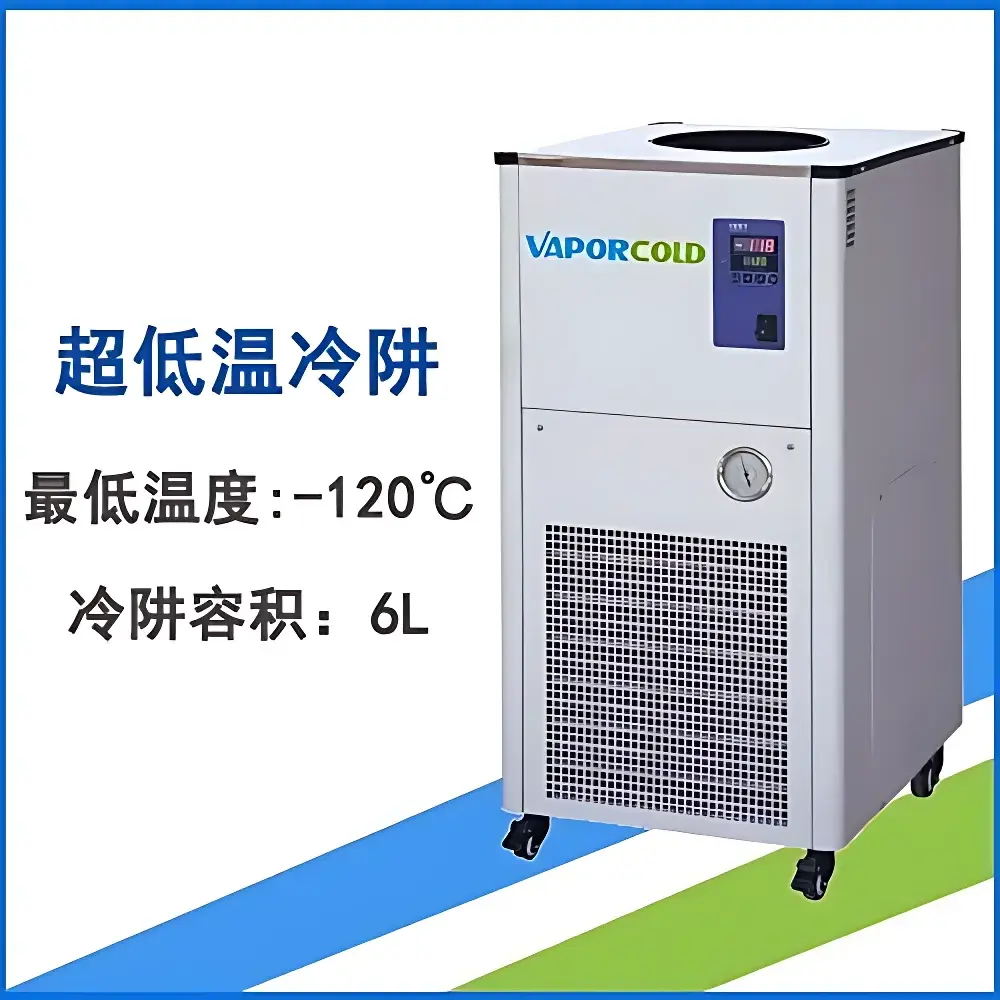
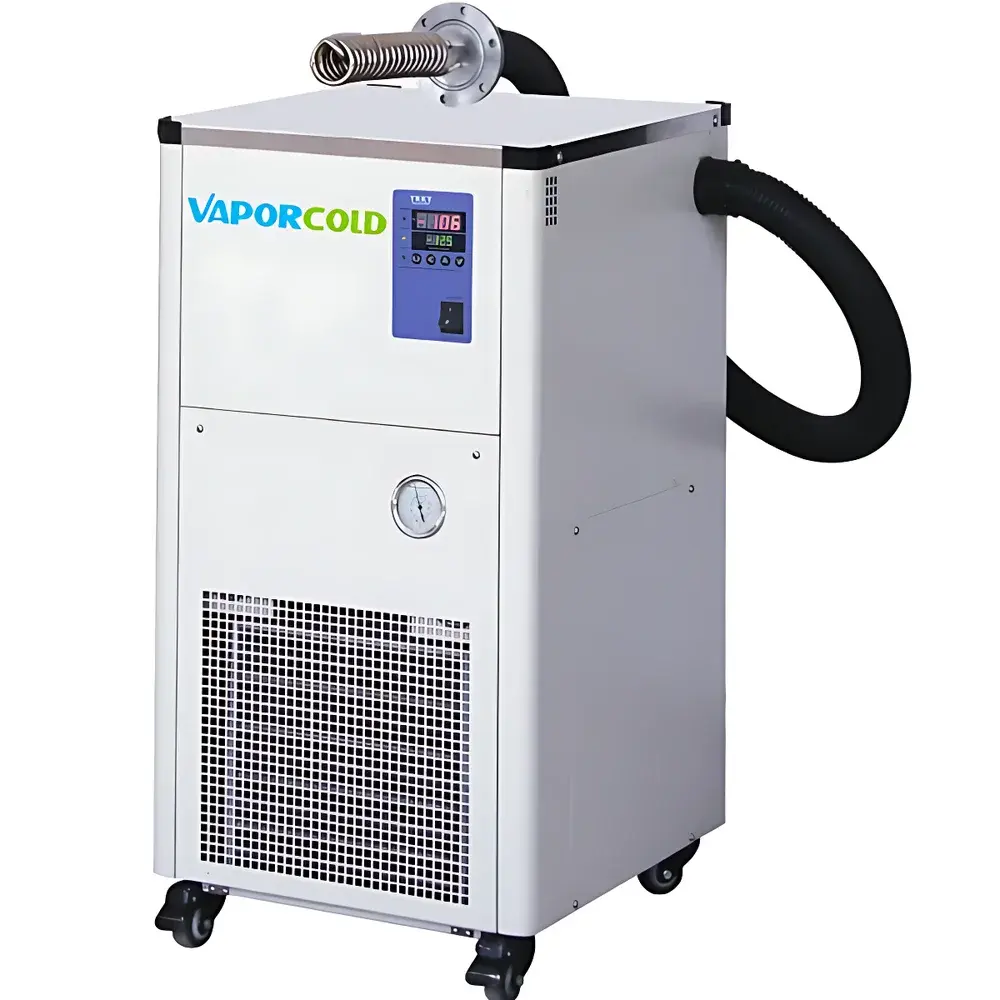
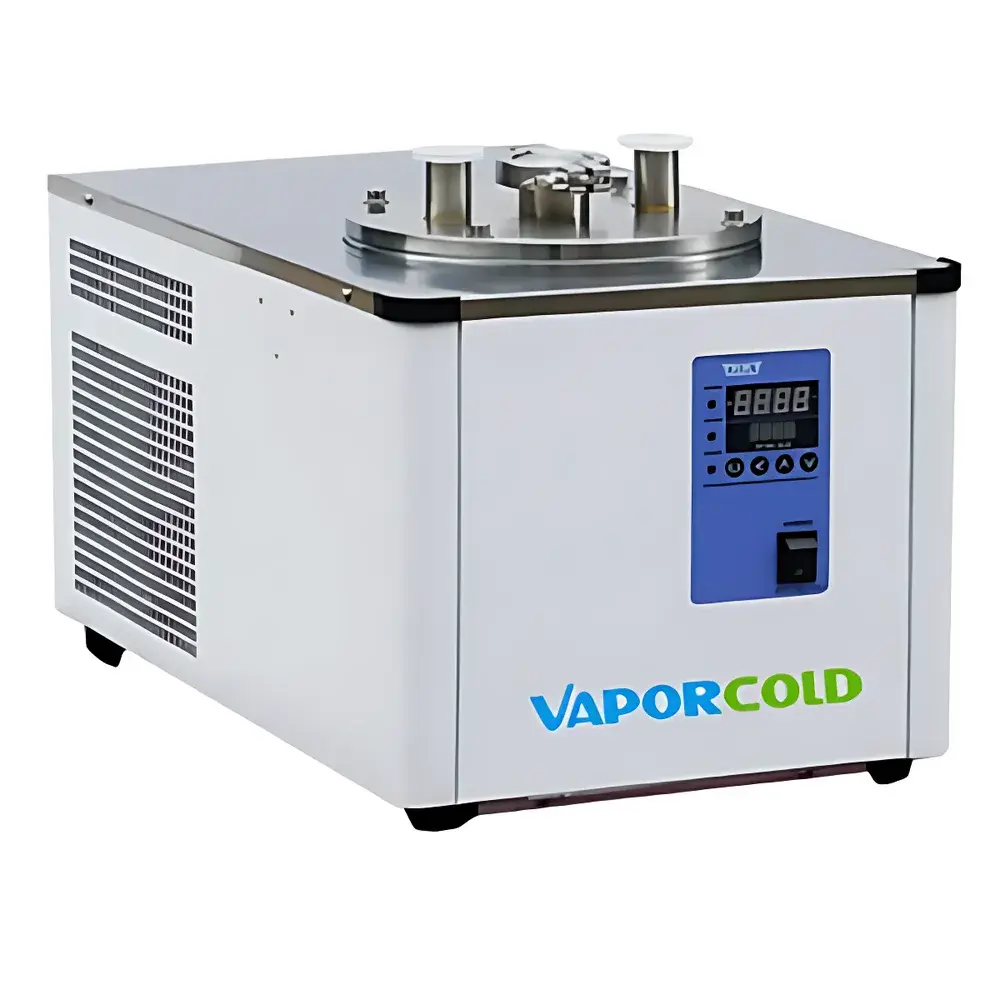
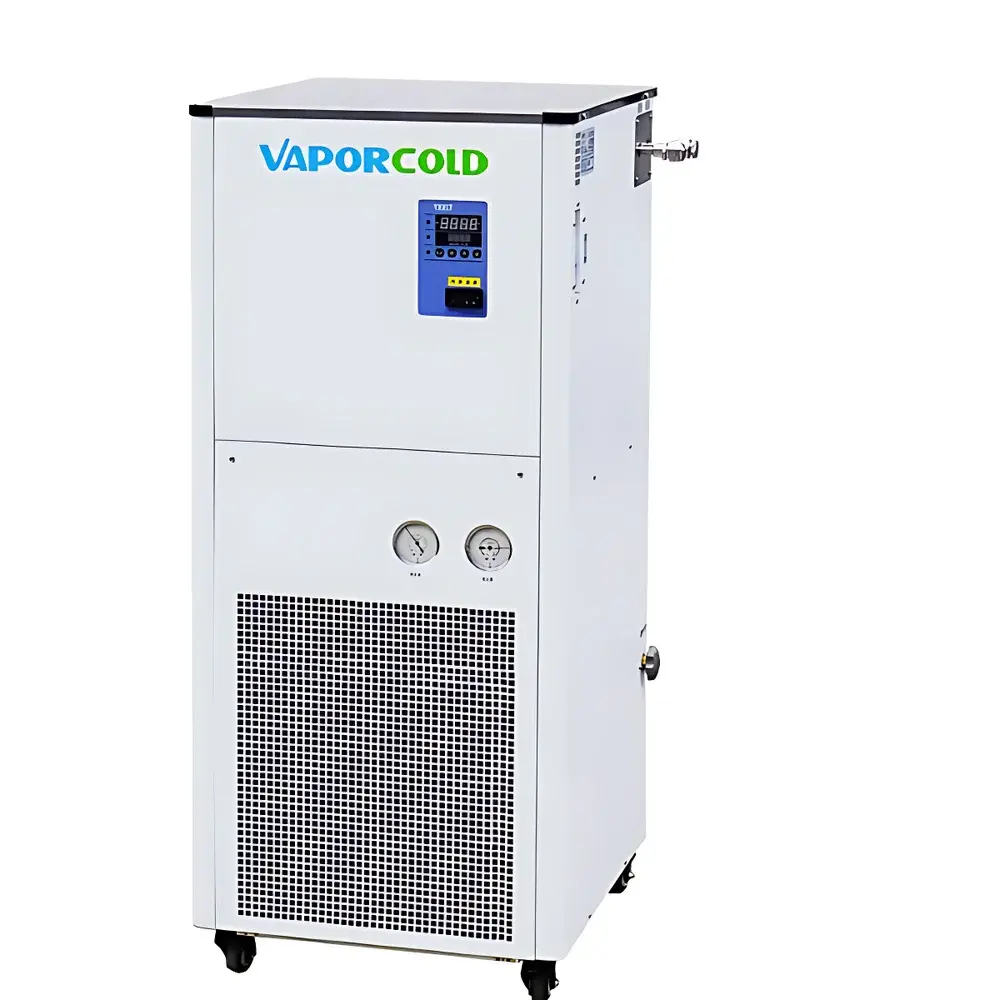
Coolium CT9-120 Cryogenic Thermostat
| Brand | Coolium |
|---|---|
| Origin | Beijing, China |
| Manufacturer Type | Authorized Distributor |
| Country of Origin | China |
| Model | CT9-120 |
| Instrument Type | Vertical |
| Temperature Uniformity | ≤ −120 °C |
| Setpoint Resolution | 0.1 °C |
| Minimum Operating Temperature | −120 °C |
| Bath Opening | Ø220 × 250 mm |
| Bath Volume | 9 L |
| External Dimensions | 440 W × 520 D × 880 H mm |
| Net Weight | 108 kg |
| Circulating Medium | Low-temperature heat transfer fluid (e.g., silicone oil or specialized cryogenic coolant) |
| Cooling Method | Air-cooled auto-cascade refrigeration system |
| Power Supply | 220 V / 50 Hz / 1.5 kW |
Overview
The Coolium CT9-120 Cryogenic Thermostat is a vertically configured, air-cooled auto-cascade refrigeration system engineered for stable, long-duration operation at ultra-low temperatures down to −120 °C. Unlike single-stage or liquid-nitrogen-dependent systems, the CT9-120 employs a multi-stage auto-cascade cycle using environmentally compliant HFC/HFO refrigerant blends to achieve deep cryogenic performance without consumables or external cryogen supply. Its design centers on thermal stability and spatial uniformity within the 9-liter bath chamber—critical for applications demanding precise low-temperature control over extended periods, such as condensate trapping in vacuum lines, cryogenic material characterization, or controlled freeze-drying process development. The unit integrates a high-efficiency copper-alloy cold finger assembly immersed in the circulating medium, enabling rapid thermal equilibration and minimizing temperature gradients across the bath volume.
Key Features
- Auto-cascade refrigeration architecture delivering consistent operation at −120 °C with no liquid nitrogen or dry ice dependency
- High-precision digital temperature controller with 0.1 °C setpoint resolution and ±0.3 °C stability over 24-hour continuous operation
- Stainless-steel insulated bath vessel (Ø220 × 250 mm opening; 9 L usable volume) optimized for minimal thermal leakage and uniform heat transfer
- Air-cooled condenser with intelligent fan speed modulation—eliminates need for chilled water infrastructure
- Modular interface design supporting custom flange configurations (CF, KF, ISO-K), vacuum-rated seals (optional), and interchangeable cold traps or condensation vessels
- Integrated safety architecture including overtemperature cut-off, low-level coolant alarm, compressor high-pressure shutdown, and ground-fault circuit interruption
- Compact vertical footprint (440 W × 520 D × 880 H mm) suitable for benchtop integration or under-bench installation in analytical labs and pilot-scale facilities
Sample Compatibility & Compliance
The CT9-120 accommodates a broad range of sample containment formats—including standard Dewar flasks, jacketed condensers, vacuum manifolds, and custom-fabricated cryo-chambers—via its standardized Ø220 mm bath opening. When equipped with optional vacuum-sealed lid assemblies, it complies with ISO 27867:2021 (vacuum system cold trap performance testing) and supports ASTM D5236-22 (standard test method for distillation of heavy hydrocarbons). The unit’s construction adheres to IEC 61010-1:2010 for electrical safety in laboratory equipment, and its temperature logging capability (via optional RS485/Modbus output) enables alignment with GLP/GMP documentation requirements, including audit-trail-ready data capture when interfaced with validated LIMS platforms.
Software & Data Management
While the CT9-120 operates autonomously via its embedded PID controller, optional communication modules support real-time monitoring and remote parameter adjustment through Modbus RTU or ASCII protocols. Third-party SCADA systems (e.g., Ignition, LabVIEW, or DeltaV) can integrate temperature setpoints, bath sensor readings, compressor status, and alarm logs at configurable intervals (1–60 s). All operational events—including power cycles, setpoint changes, and fault triggers—are timestamped and stored locally for ≥30 days. For regulated environments, the optional Coolium DataBridge module provides 21 CFR Part 11-compliant electronic signatures, user access tiers, and immutable audit trails—validated per IQ/OQ protocols upon installation.
Applications
- Cryogenic gas condensation and solvent recovery in rotary evaporation, distillation, and VOC abatement systems
- Low-temperature stabilization of optical components, superconducting sensors, and quantum device test fixtures
- Controlled-rate freezing and primary drying phase simulation in pharmaceutical lyophilization R&D
- Thermal cycling and embrittlement testing of polymers, composites, and battery electrolytes per ASTM D746 and ISO 8564
- Calibration reference source for cryogenic thermocouples (Type T, E, or Pt100) and infrared pyrometers
- Pre-cooling stage for cryo-milling, cryo-SEM sample preparation, and low-temperature XRD sample holders
FAQ
What refrigerants are used in the auto-cascade system?
The CT9-120 utilizes a proprietary blend of non-ozone-depleting HFC and HFO refrigerants (R245fa/R1234yf/R170), fully compliant with EU F-Gas Regulation (EU) No 517/2014 and EPA SNAP Program requirements.
Can the unit operate continuously at −120 °C?
Yes—rated for indefinite continuous operation at −120 °C under ambient conditions ≤30 °C and relative humidity ≤70 %, provided adequate ventilation (minimum 0.5 m² free area around condenser vents).
Is vacuum compatibility available as standard?
Vacuum-rated lid assemblies with metal gasket seals (CF40/CF63 or ISO-KF25/KF40) are optional accessories; base configuration includes atmospheric-pressure bath cover only.
What maintenance intervals are recommended?
Compressor oil and filter replacement every 12 months or 5,000 operating hours; annual calibration verification of PT100 bath sensor traceable to NIST standards.
Does the system support external temperature feedback control?
Yes—the optional external probe input allows dual-sensor PID control, enabling junction-point regulation (e.g., cold finger surface vs. bath fluid) for enhanced process fidelity.



