
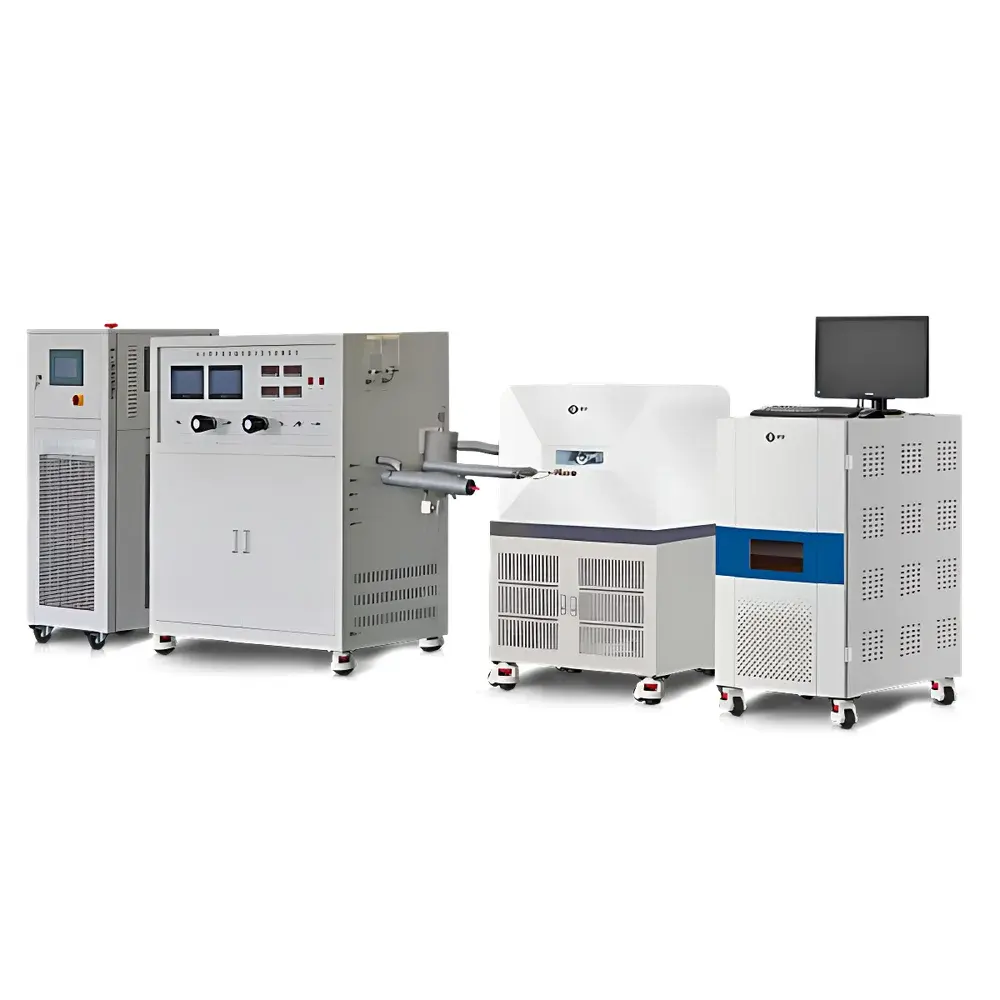
NIUMAG MesoMR Low-Field Nuclear Magnetic Resonance Analyzer for CO₂/H₂ Replacement of Methane Hydrates
| Brand | NIUMAG |
|---|---|
| Origin | Jiangsu, China |
| Manufacturer Type | Authorized Distributor |
| Country of Origin | China |
| Model | MesoMR- |
| Instrument Type | Low-Field NMR Spectrometer |
| Sample Form | Solid-Liquid Hybrid |
| Operating Frequency | 50 MHz |
| Excitation/Reception Mode | Continuous-Wave and Pulsed NMR (50 MHz Larmor Frequency) |
| Magnetic Field Strength | 0.3 ± 0.03 T or 0.5 ± 0.03 T |
| Sample Chamber Orientation | Transverse or Longitudinal |
| Max Sample Dimensions | Ø ≤ 25.4 mm × L ≤ 80 mm (for low-temp/high-pressure configuration) |
| Temperature Range | –20 °C to +80 °C (with optional modules) |
| Pressure Capability | Up to 30 MPa (with custom high-pressure cell) |
| Signal-to-Noise Ratio | Optimized for sub-ppm water-phase detection in hydrate systems |
Overview
The NIUMAG MesoMR Low-Field Nuclear Magnetic Resonance Analyzer is a purpose-built benchtop NMR platform engineered for quantitative, non-invasive, and time-resolved investigation of methane hydrate dissociation and replacement kinetics under geologically relevant thermo-baric conditions. Operating at a fixed Larmor frequency of 50 MHz (corresponding to a static magnetic field of either 0.3 T or 0.5 T), the system leverages pulsed spin-echo (CPMG) and inversion-recovery sequences to resolve hydrogen-containing species—primarily H₂O (in ice, clathrate, and liquid phases) and CH₄ (dissolved or trapped)—based on their distinct transverse relaxation times (T₂), longitudinal relaxation times (T₁), and diffusion coefficients. Unlike high-field NMR spectrometers optimized for molecular structure elucidation, the MesoMR is designed for process monitoring: it delivers robust, reproducible relaxometry and diffusion profiling in heterogeneous, opaque, and pressurized samples—including sediment cores, porous rock plugs, and synthetic hydrate-bearing media—without requiring sample extraction or destructive preparation.
Key Features
- Modular high-pressure & low-temperature sample environment: Integrated cryogenic stage supports stable operation from –20 °C to +80 °C; compatible with custom-built autoclaves rated up to 30 MPa for in-situ gas injection (CO₂, H₂, CH₄, N₂) and hydrate phase transition studies.
- Dual-field configuration: Selectable 0.3 T or 0.5 T permanent magnet systems, each calibrated to ±0.03 T homogeneity over the active volume, enabling optimization between signal sensitivity and T₂ resolution for hydrate-bound vs. free water discrimination.
- Flexible sample geometry support: Transverse (horizontal) and longitudinal (vertical) probe orientations accommodate both core-flooding experiments and batch-mode vial analysis; standard bore sizes support Ø25.4 mm × 80 mm (high-pressure) and Ø50.8 mm × 100 mm (ambient) sample dimensions.
- Real-time kinetic acquisition: High-duty-cycle CPMG echo trains enable second-level temporal resolution for tracking hydrate dissociation fronts, gas invasion pathways, and pore-scale water redistribution during CO₂/H₂ injection.
- Robust RF architecture: Digitally synthesized 50 MHz excitation/reception with 10 s), critical for resolving overlapping relaxation populations in multiphase hydrate systems.
Sample Compatibility & Compliance
The MesoMR accommodates solid–liquid hybrid samples including unconsolidated sediments, sandstone and shale core plugs, synthetic hydrate analogs (e.g., THF–H₂O), and frozen soil specimens. Its non-destructive nature preserves sample integrity throughout multi-step displacement experiments. The system complies with IEC 61000-6-3 (EMC emission standards) and meets mechanical safety requirements per ISO 12100. When configured with pressure-rated cells and temperature-controlled enclosures, experimental protocols align with ASTM D7900 (Standard Practice for NMR Core Analysis) and ISO 17892-12 (Geotechnical Investigation and Testing — Laboratory Testing of Soil — Part 12: Determination of Water Content by NMR). Data acquisition logs include full audit trails (timestamp, sequence parameters, hardware state) suitable for GLP-compliant reporting.
Software & Data Management
Control and analysis are performed via NIUMAG’s proprietary MesoMR Studio software suite, built on a Qt-based framework with Python scripting API. Key capabilities include automated CPMG/T₁ inversion using non-negative least-squares (NNLS) algorithms, T₂ distribution deconvolution with constrained regularization, and real-time overlay of relaxation spectra against pressure/temperature/time metadata. Raw FID and processed spectra are stored in HDF5 format with embedded MIAME-compliant metadata. Software supports 21 CFR Part 11–compliant user access control, electronic signatures, and immutable audit logs—enabling traceability for regulated research environments.
Applications
- In-situ monitoring of CO₂-induced CH₄ release from natural hydrate-bearing sediments under simulated reservoir conditions (≤10 MPa, 0–10 °C).
- Quantification of residual water saturation and pore-size distribution evolution during H₂-assisted hydrate destabilization.
- Time-resolved mapping of unfrozen water content and ice nucleation dynamics in permafrost analogs subjected to thermal cycling.
- Characterization of capillary trapping efficiency and relative permeability hysteresis in hydrate-bearing porous media.
- Diffusion-weighted imaging (DWI) of gas migration pathways within fractured rock under confining stress.
- Validation of thermodynamic and kinetic models (e.g., CSMGem, HyKoST) using experimentally derived T₂–T₁–D correlation manifolds.
FAQ
What is the primary measurement principle used in the MesoMR for hydrate studies?
It employs pulsed low-field NMR relaxometry—specifically multi-echo CPMG and inversion-recovery sequences—to quantify hydrogen nuclear spin relaxation behavior, enabling differentiation of water in hydrate cages, adsorbed layers, and bulk phases.
Can the system operate under true geological pressure conditions?
Yes—when equipped with optional high-pressure cells and pressure controllers, it supports static and dynamic experiments up to 30 MPa, simulating deep-sea or permafrost reservoir pressures.
Is the instrument suitable for regulatory-compliant data acquisition?
Yes—MesoMR Studio includes full 21 CFR Part 11 functionality, including role-based access, electronic signatures, and immutable audit trails for QA/QC and GxP workflows.
How does the MesoMR distinguish between methane hydrate and free water signals?
Through T₂ distribution analysis: hydrate-bound water exhibits significantly shorter T₂ (typically 100 ms), allowing spectral separation without chemical shift resolution.
What sample preparation is required prior to analysis?
Minimal preparation is needed—core plugs are sealed in pressure cells; powdered sediments are packed into NMR-compatible tubes; no drying, grinding, or solvent extraction is required, preserving native pore structure and fluid saturation.




