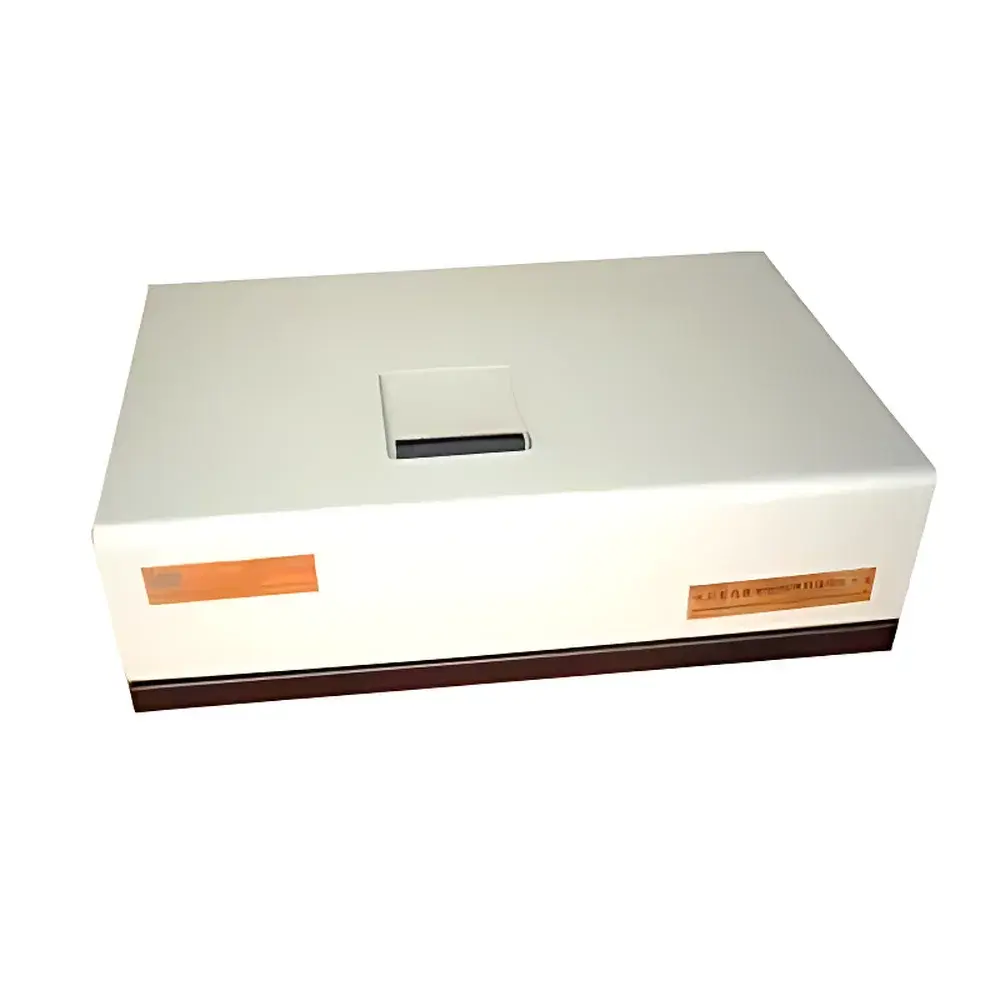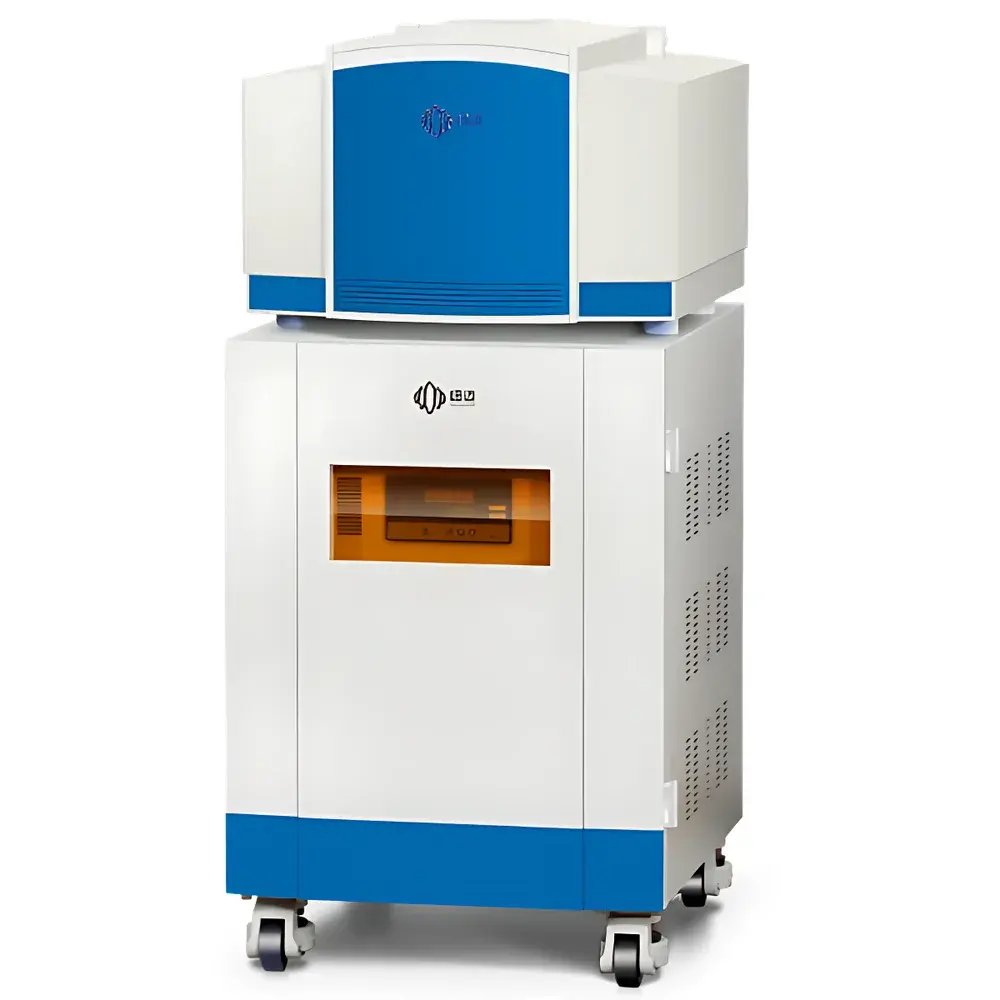
NIUMAG PQ001 Nuclear Magnetic Resonance (NMR) Silicion Nitride Slurry Affinity Analyzer
| Brand | NIUMAG |
|---|---|
| Origin | Jiangsu, China |
| Manufacturer Type | Authorized Distributor |
| Country of Origin | China |
| Model | PQ001 |
| Pricing | Available Upon Request |
Overview
The NIUMAG PQ001 Nuclear Magnetic Resonance (NMR) Silicion Nitride Slurry Affinity Analyzer is a benchtop low-field NMR instrument engineered for quantitative characterization of interfacial interactions in concentrated ceramic slurries—specifically silicon nitride (Si₃N₄) suspensions used in advanced ceramic processing. Unlike optical or light-scattering techniques, the PQ001 employs time-domain NMR (TD-NMR) to probe hydrogen proton relaxation dynamics (T₂ and T₁–T₂ correlation) in liquid phases surrounding solid particles. This enables direct, non-invasive assessment of particle–liquid affinity through differential relaxation behavior: strongly bound solvent molecules exhibit shortened transverse relaxation times (T₂), while free or weakly associated fluid displays longer T₂ components. The system operates at a fixed Larmor frequency of 23.5 MHz (0.55 T permanent magnet), delivering robust, temperature-stabilized measurements without sample dilution, vacuum drying, or hazardous solvents—making it suitable for routine QC and R&D labs handling high-viscosity, opaque, or thermally sensitive Si₃N₄ slurries containing organic binders, dispersants, and plasticizers.
Key Features
- Low-field TD-NMR platform optimized for slurry-phase interfacial analysis, with built-in temperature control (±0.5 °C) for reproducible relaxation measurements
- Automated T₂ distribution analysis via inverse Laplace transform (ILT), resolving multiple relaxation components corresponding to bound, intermediate, and bulk fluid states
- Integrated pulse sequence library including CPMG (for T₂), inversion-recovery (for T₁), and 2D T₁–T₂ correlation for mechanistic insight into surface hydration and binder adsorption kinetics
- Minimal sample preparation: direct measurement of as-received slurries (viscosity range: 10–5000 mPa·s); no centrifugation, filtration, or dilution required
- Self-calibrating hardware with real-time shimming and automatic RF gain optimization to ensure signal fidelity across varying solid loadings (15–60 vol% Si₃N₄)
- Compliant with ISO/IEC 17025 traceability requirements for instrument performance verification; includes NIST-traceable reference standards for T₂ calibration
Sample Compatibility & Compliance
The PQ001 accommodates standard 10 mm or 15 mm outer-diameter glass NMR tubes, supporting slurries with solids content up to 60 vol%, particle sizes from 50 nm to 5 µm, and viscosities exceeding 3000 mPa·s. It is validated for use with common Si₃N₄ processing media—including polyvinyl butyral (PVB), polyethylene glycol (PEG), and α-terpineol-based systems—as well as aqueous and mixed-solvent formulations. The analyzer meets electromagnetic compatibility (EMC) per IEC 61326-1 and safety standards per IEC 61010-1. Data integrity complies with ALCOA+ principles; audit trails, electronic signatures, and user access controls align with FDA 21 CFR Part 11 readiness when deployed in GLP/GMP environments.
Software & Data Management
The proprietary Niumag NMR Analysis Suite (v4.2+) provides a validated, menu-driven interface for method setup, acquisition, and multi-parameter quantification. Key modules include: (i) Affinity Index Calculator, which computes normalized bound-fluid fraction (BFF%) and interfacial relaxation slope (d(log T₂)/d(log t))—a quantitative proxy for particle–medium adhesion strength; (ii) Stability Profiler, generating time-series T₂ evolution maps to detect early-stage agglomeration or sedimentation; (iii) Dispersant Efficacy Dashboard, correlating BFF% with surfactant concentration and shear history. All raw FIDs and processed spectra are stored in HDF5 format with embedded metadata (operator, timestamp, temperature, pulse parameters). Export options include CSV, PDF reports, and direct integration with LIMS via ASTM E1469-compliant API.
Applications
- Ceramic manufacturing: Optimization of slurry rheology and green-body density in Si₃N₄ injection molding and tape-casting processes
- Nanomaterial R&D: Quantifying ligand grafting efficiency on nanoparticle surfaces and monitoring hydrolytic stability of silane coupling agents
- Electronics: Characterizing CMP slurry dispersion uniformity and predicting polishing rate consistency in Si₃N₄ wafer planarization
- Battery materials: Assessing carbon-black or SiO₂ additive wettability in anode slurries and correlating BFF% with electrode coating defect rates
- Pharmaceutical excipients: Measuring API–polymer affinity in wet-granulation suspensions to predict tablet disintegration profiles
- Quality assurance: Rapid release testing of incoming Si₃N₄ powder batches based on standardized affinity fingerprinting protocols
FAQ
What physical parameter does the PQ001 directly measure?
It measures proton spin–spin (T₂) and spin–lattice (T₁) relaxation times of hydrogen nuclei in the liquid phase of slurries, enabling quantification of fluid mobility gradients near particle surfaces.
Can the PQ001 distinguish between different types of organic binders in Si₃N₄ slurries?
Yes—through T₁–T₂ correlation spectroscopy, it resolves distinct relaxation signatures of PVB, acrylic resins, and cellulose derivatives based on their molecular mobility and hydrogen-bonding capacity.
Is calibration required before each test?
No—system self-calibration occurs automatically at startup; only periodic verification using supplied reference oil (T₂ = 128 ms @ 30 °C) is recommended per ISO 17025.
How does the PQ001 handle highly magnetic impurities?
Its permanent magnet design and optimized RF shielding suppress susceptibility artifacts; ferromagnetic contamination is flagged via anomalous T₂ shortening and line-broadening metrics in the diagnostic report.
Does the software support statistical process control (SPC) charting?
Yes—the Analysis Suite includes X-bar/R charts, capability indices (Cp/Cpk), and multivariate control limits for BFF%, slope, and T₂ mean, exportable to Minitab or JMP.