
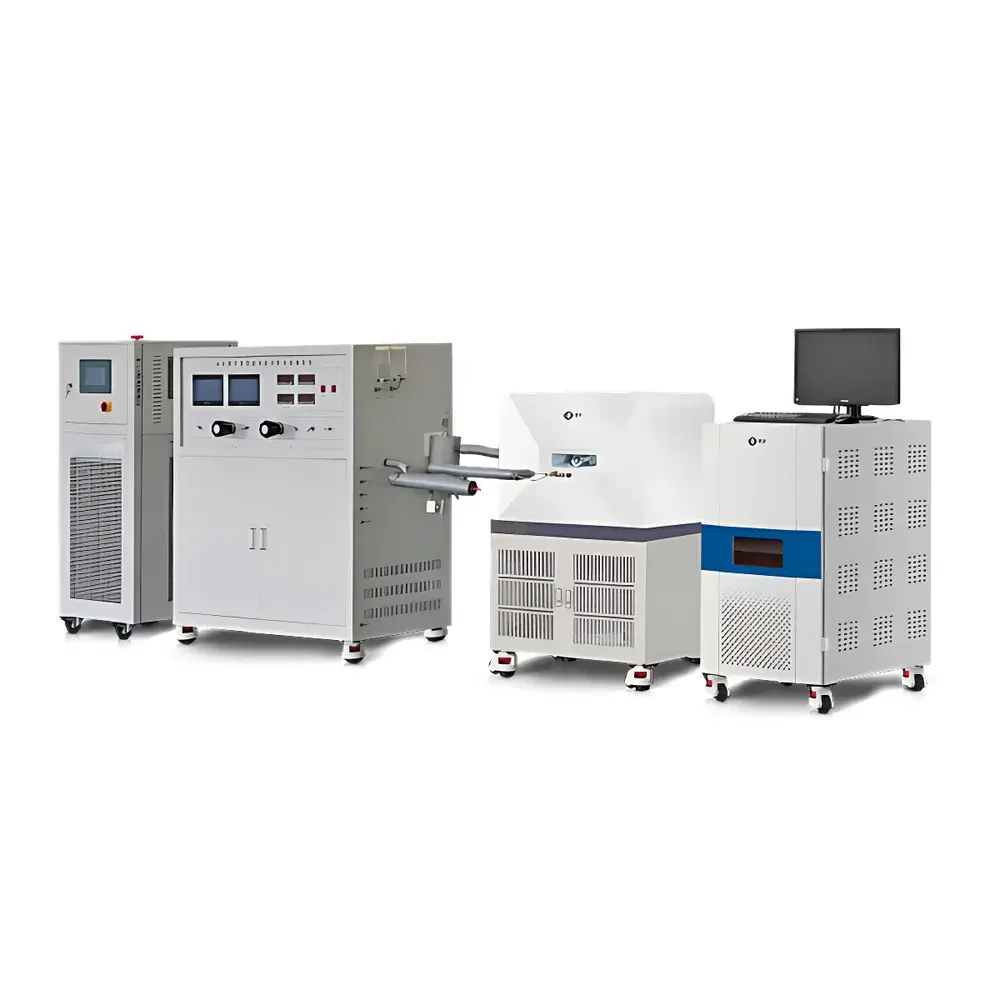
NIUMAG MesoMR Low-Field Nuclear Magnetic Resonance Imaging Analyzer for Gas Hydrate Formation and Dissociation
| Brand | NIUMAG |
|---|---|
| Origin | Jiangsu, China |
| Manufacturer Type | Authorized Distributor |
| Origin Category | Domestic |
| Model | MesoMR |
| Instrument Type | Low-Field NMR Spectrometer |
| Sample Type | Solid–Liquid Combined |
| Operating Mode | Pulsed Fourier Transform |
| Magnetic Field Strength | 0.3 ± 0.03 T or 0.5 ± 0.03 T |
| Sample Orientation | Transverse or Longitudinal |
| Max Sample Dimensions | Ø ≤ 25.4 mm × L ≤ 80 mm (low-temp/high-pressure) |
Overview
The NIUMAG MesoMR is a purpose-engineered low-field nuclear magnetic resonance (NMR) imaging and relaxometry platform designed specifically for in situ, non-invasive monitoring of gas hydrate formation and dissociation dynamics under controlled thermobaric conditions. Leveraging pulsed Fourier transform (PFT) methodology and time-domain NMR principles—primarily T2, T1, and diffusion-weighted signal acquisition—the system quantifies proton mobility, phase distribution, and pore-scale fluid confinement in heterogeneous geological and energy-related materials. Unlike high-field NMR spectrometers optimized for molecular structure elucidation, the MesoMR operates at fixed field strengths of either 0.3 ± 0.03 T or 0.5 ± 0.03 T, enabling robust, cost-effective, and maintenance-light operation while preserving sufficient sensitivity for hydrogen-bearing species (e.g., H2O, CH4·nH2O) in porous media. Its modular architecture supports integration with custom-built environmental chambers—including cryogenic (-20 °C minimum) and high-pressure (up to 30 MPa围压, 15 MPa气压) modules—making it suitable for simulating deep-sea sediment, permafrost, and subsurface reservoir conditions.
Key Features
- Modular thermobaric compatibility: Interchangeable transverse/longitudinal probe configurations support flexible sample insertion and coil geometry optimization for varying core dimensions and experimental constraints.
- Dual-field option: Selectable 0.3 T or 0.5 T permanent magnet systems balance signal-to-noise ratio (SNR), measurement speed, and spatial resolution for hydrate-phase discrimination and kinetic profiling.
- Integrated environmental control: Precision temperature regulation (–20 °C to +80 °C) and pressure management (confining and pore pressures up to specified limits) enable true in situ simulation of natural hydrate stability zones.
- High-fidelity time-domain NMR: Optimized pulse sequences—including CPMG, IR, and stimulated echo—deliver reproducible T2 distributions, saturation recovery curves, and diffusion coefficients critical for distinguishing bound vs. mobile water fractions during freeze–thaw or hydrate cycling.
- Rugged industrial design: All-metal RF shielding, vibration-damped magnet housing, and EMC-compliant electronics ensure stable operation in laboratory and field-deployable settings without superconducting infrastructure.
Sample Compatibility & Compliance
The MesoMR accommodates solid–liquid composite samples typical of geoscience and energy research: intact rock cores (sandstone, shale, siltstone), synthetic sediments, frozen soils, and hydrate-bearing analogs. Sample diameters range from ≤25.4 mm (for low-temperature/high-pressure cells) to ≤50.8 mm (ambient configurations), with maximum lengths of 80 mm and 100 mm respectively. The system adheres to ISO/IEC 17025 general requirements for calibration traceability of NMR signal intensity and relaxation time measurements. While not certified for GLP or FDA 21 CFR Part 11 compliance out-of-the-box, its audit-ready data logging architecture—including timestamped raw FID files, metadata-tagged parameter sets, and user-accessible sequence scripts—supports implementation of laboratory-specific validation protocols aligned with ASTM D7643 (Standard Practice for Low-Field NMR Analysis of Porous Media) and ISO 10156 (Gas Hydrate Characterization).
Software & Data Management
Control and analysis are performed via NIUMAG’s proprietary MesoMR Studio software suite, built on a modular Qt-based framework. Core capabilities include real-time acquisition monitoring, automated multi-parameter sequence scheduling (e.g., sequential T2 mapping at 5 °C intervals across –15 °C to +5 °C), and batch processing of relaxation spectra using regularized non-negative least-squares (NNLS) inversion. Export formats include ASCII, HDF5, and MATLAB .mat—ensuring interoperability with third-party modeling tools (e.g., TOUGH+HYDRATE, CMG-STARS). Audit trails record operator ID, instrument state, environmental setpoints, and raw data checksums. Optional add-ons provide DICOM export for cross-platform MRI visualization and Python API access for custom algorithm integration.
Applications
- In situ monitoring of methane/CO2 hydrate nucleation, growth, and dissociation kinetics under simulated seafloor or permafrost conditions.
- Quantification of unfrozen water content and its spatial redistribution during soil freezing and thawing cycles.
- Pore-size distribution analysis in tight and unconventional reservoir rocks via T2 cutoff calibration against mercury intrusion porosimetry (MIP).
- Evaluation of fracture propagation and microstructural evolution in ice-cemented rock under thermal stress.
- Time-resolved assessment of hydrate saturation heterogeneity within sediment columns using 1D/2D NMR imaging sequences.
- Correlation of NMR-derived permeability estimates with Darcy flow measurements under confining pressure.
FAQ
What distinguishes the MesoMR from conventional high-field NMR spectrometers?
The MesoMR prioritizes quantitative relaxometry and imaging over spectral resolution; its low-field design enables direct correlation between T2 relaxation times and pore geometry or phase state—without requiring complex shimming or cryogenics.
Can the system be upgraded to support higher magnetic fields or MRI gradients?
No—field strength and gradient performance are fixed by the permanent magnet configuration. However, hardware modules (e.g., RF coils, pressure vessels, thermal jackets) are field-upgradeable via NIUMAG’s modular interface standard.
Is remote operation supported for long-duration hydrate experiments?
Yes—MesoMR Studio includes secure SSH-enabled remote access, scheduled shutdown/restart triggers, and email/SMS alerts for temperature/pressure excursions or acquisition failures.
Does the system comply with international safety standards for electromagnetic emissions?
It meets IEC 61000-6-3 (Emission) and IEC 61000-6-2 (Immunity) for industrial environments, and carries CE marking for EMC and LVD directives.
How is calibration maintained across extended operational periods?
NIUMAG provides annual recalibration services traceable to NIST-certified reference standards for RF amplitude, pulse width, and temperature sensor accuracy—documented per ISO/IEC 17025 requirements.
Related Products






