
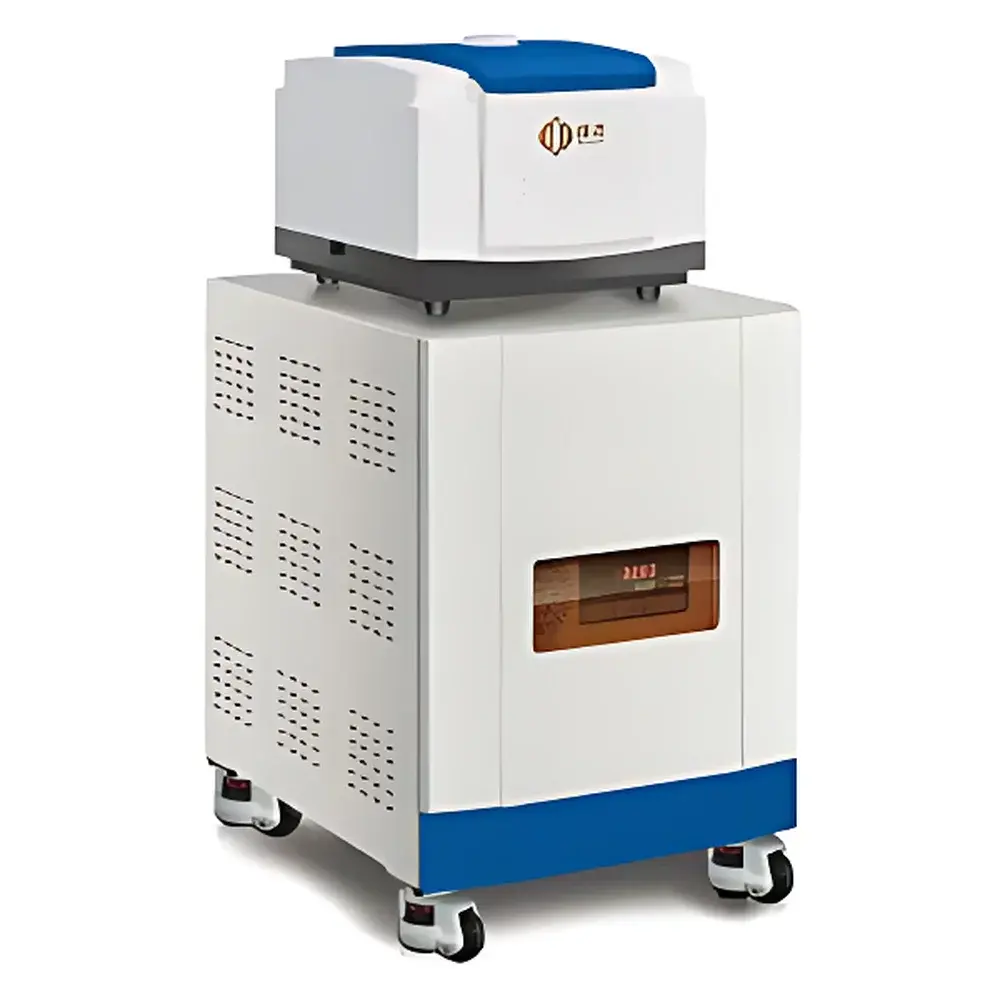
NIUMAG PQ001 Low-Field Nuclear Magnetic Resonance (LF-NMR) Oil Content Analyzer
| Brand | NIUMAG |
|---|---|
| Origin | Jiangsu, China |
| Manufacturer Type | Authorized Distributor |
| Country of Origin | China |
| Model | PQ001 |
| Instrument Category | Seed Moisture and Oil Content Analyzer |
| Moisture Measurement Range | 0.1–14% (w/w) |
| Magnet Type | Permanent Magnet |
| Static Magnetic Field Strength | 0.5 ± 0.08 T |
| Probe Coil Diameter | 25 mm |
Overview
The NIUMAG PQ001 Low-Field Nuclear Magnetic Resonance (LF-NMR) Oil Content Analyzer is a dedicated benchtop instrument engineered for non-invasive, quantitative determination of oil and moisture content in intact oilseed samples. Operating on the physical principle of proton spin relaxation in low-field magnetic environments, the system exploits differential transverse relaxation times (T2) to distinguish between hydrogen nuclei bound in triglyceride molecules (oil phase) and those associated with free or bound water. Unlike destructive extraction or gravimetric methods, LF-NMR requires no solvent, no sample grinding, and induces no chemical alteration—preserving seed viability for downstream germination or breeding trials. The instrument’s 0.5 T permanent magnet generates a stable, homogeneous field optimized for robust signal-to-noise ratio in heterogeneous biological matrices, enabling rapid (<90 s per sample), operator-independent measurements compliant with fundamental NMR spectroscopy principles.
Key Features
- Non-destructive, non-contact analysis preserving seed integrity and germination potential
- Dual-parameter quantification: simultaneous oil content (%) and moisture content (%) from a single T2 decay acquisition
- Permanent magnet architecture ensuring zero cryogen consumption, minimal maintenance, and operational stability across ambient laboratory conditions
- 25 mm diameter radiofrequency probe coil optimized for standard seed batches (e.g., 5–20 g of whole peanuts, soybeans, or corn kernels)
- Embedded pulse sequence library including CPMG (Carr–Purcell–Meiboom–Gill) for high-fidelity T2 mapping and robust baseline correction
- Pre-calibrated calibration models available for major oilseeds (peanut, soybean, rapeseed, sunflower, olive) traceable to reference gravimetric and Soxhlet extraction data
Sample Compatibility & Compliance
The PQ001 accommodates whole, unshelled, or shelled seeds without preprocessing—ideal for routine QC in seed certification labs, breeding programs, and agricultural cooperatives. Sample throughput exceeds 40 samples per 8-hour shift with automated batch loading support. Method validation aligns with ISO 10565:1998 (oilseeds — determination of oil and moisture contents — reference method) and ASTM D7420-22 (standard practice for low-field NMR analysis of oilseeds). Data integrity protocols support GLP-compliant workflows, including user access control, electronic signatures, and audit-trail-enabled measurement logs. While not FDA 21 CFR Part 11-certified out-of-the-box, the system architecture permits integration with validated LIMS platforms meeting regulatory documentation requirements for seed quality assurance.
Software & Data Management
Control and analysis are performed via NIUMAG’s proprietary MesoMR software suite (v4.2+), running on Windows-based industrial PCs. The interface provides real-time spectral visualization, automated peak deconvolution of multi-exponential T2 distributions, and statistical reporting (mean, SD, CV%) across sample sets. Calibration models are stored as encrypted, version-controlled files with metadata tracking (date, operator, instrument ID, reference method). Raw FID and processed T2 data export to CSV, ASCII, or HDF5 formats; integrated PDF report generation includes measurement parameters, calibration status, and pass/fail flags against user-defined specification limits. Software updates follow ISO/IEC 17025-aligned change control procedures.
Applications
- Rapid screening of oil content variation across breeding lines during early-generation selection
- Moisture distribution profiling to assess drying uniformity and detect internal condensation or localized hydration gradients
- Quantitative assessment of lipid oxidation state via changes in T2 shortening kinetics—correlating with peroxide value trends
- Supporting varietal registration by generating reproducible, inter-laboratory comparable datasets per national seed testing guidelines (e.g., ISTA, AOSA)
- Process monitoring in seed conditioning and storage facilities to verify moisture thresholds preventing rancidity or fungal growth
FAQ
Does the PQ001 require liquid helium or cryogenic cooling?
No—the system employs a temperature-stabilized permanent magnet, eliminating cryogen dependency and reducing total cost of ownership.
Can it differentiate between free water and bound water in seeds?
Yes—multi-component T2 analysis resolves at least three relaxation populations, enabling semi-quantitative assignment to bulk water, interstitial water, and macromolecular-bound protons.
Is method transfer possible between different PQ001 units?
Yes—hardware standardization and factory-installed calibration verification ensure <±2% RSD in oil content results across instruments when using identical pulse sequences and processing algorithms.
What sample preparation is required for peanut kernels?
None beyond representative sub-sampling; whole or halved kernels may be loaded directly into the 25 mm tube without grinding, sieving, or drying.
How frequently must the system be recalibrated?
Primary calibration is performed at factory acceptance; users perform daily performance verification using a supplied reference seed standard, with full recalibration recommended every 12 months or after magnet re-shimming.






