
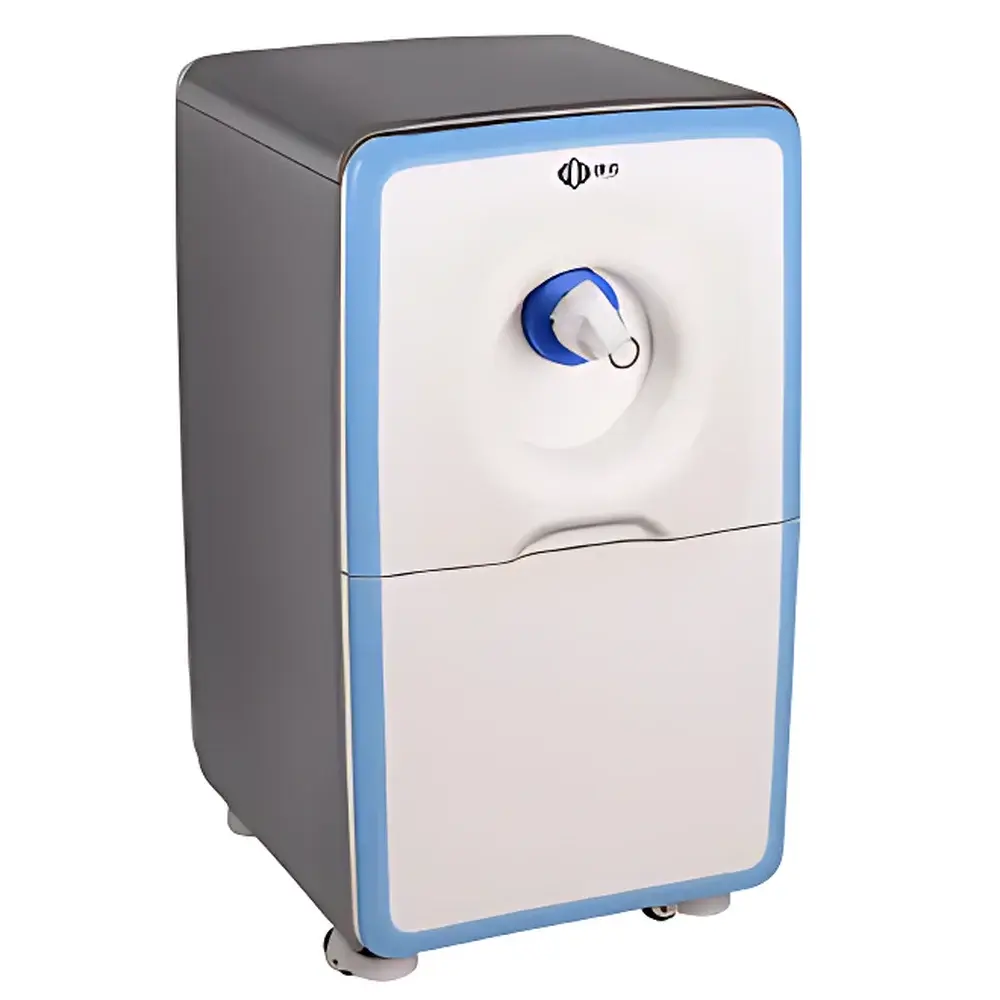
NIUMAG QMR-06 Low-Field Quantitative Magnetic Resonance Analyzer for Small Animal Body Composition
| Brand | NIUMAG |
|---|---|
| Origin | Jiangsu, China |
| Instrument Type | Research-Grade Small Animal (Mouse/Rat) Body Composition Analyzer |
| Sample Capacity | Live Mice and Rats |
| Primary Measurement | Fat Mass, Lean Body Mass, Free Water Content |
| Magnet Type | Permanent Magnet |
| Test Duration | ≤ 60 s per animal |
| Sample Preparation | None (Non-invasive, Non-anesthetized, Non-terminal) |
| Compliance Context | Designed for GLP-aligned preclinical metabolic phenotyping workflows |
Overview
The NIUMAG QMR-06 is a dedicated low-field quantitative magnetic resonance (QMR) analyzer engineered for non-invasive, rapid, and reproducible body composition assessment in live small laboratory animals—primarily mice and rats. Unlike dual-energy X-ray absorptiometry (DEXA) or chemical carcass analysis, the QMR-06 employs time-domain nuclear magnetic resonance (TD-NMR) based on the differential relaxation behavior of protons in fat versus lean tissue. Specifically, it exploits the distinct transverse relaxation times (T₂) of hydrogen nuclei in triglyceride-rich adipose tissue (short T₂) and water-bound lean mass (longer T₂), enabling robust separation and quantification without ionizing radiation or surgical intervention. The system utilizes a stable, self-shielded permanent magnet operating at ~0.055 T (2.3 MHz ¹H Larmor frequency), optimized for high signal-to-noise ratio in small-volume samples while maintaining operational simplicity and minimal infrastructure requirements. Its design targets longitudinal metabolic studies—such as obesity, diabetes, aging, and pharmacological intervention models—where repeated, stress-free measurements across the same cohort are essential for statistical power and ethical compliance.
Key Features
- Non-invasive, non-terminal measurement: Enables serial monitoring of individual animals over time without anesthesia, fasting, or euthanasia—reducing inter-subject variability and aligning with the 3Rs (Replacement, Reduction, Refinement) principles.
- Single-animal throughput ≤ 60 seconds: Automated positioning and sequence execution support high-volume screening in large-scale phenotyping pipelines.
- Dual-component quantification: Simultaneously reports absolute and relative masses (g or %) of total fat mass and lean body mass; optional free water estimation available via multi-echo T₂ fitting.
- Permanent magnet architecture: Zero cryogen consumption, no quench risk, low maintenance, and stable field homogeneity (< 100 ppm over 30 mm DSV) suitable for routine lab environments.
- Integrated hardware-software synchronization: RF coil, gradient subsystem, and digital signal processor are co-designed to minimize eddy current artifacts and maximize repeatability (CV < 2.5% for fat mass across repeated scans of same animal).
Sample Compatibility & Compliance
The QMR-06 accommodates live, unrestrained mice (15–45 g) and rats (80–300 g) placed in standardized acrylic restraint tubes. Tube geometry ensures consistent animal positioning and minimizes motion-induced signal loss. While not FDA-cleared or CE-marked as an IVD device, the instrument is routinely deployed in academic and contract research organization (CRO) settings conducting preclinical studies compliant with OECD Test Guidelines, NIH OLAW standards, and institutional animal care and use committee (IACUC) protocols. Data output formats (CSV, XML) support traceability in GLP-regulated studies when paired with audit-trail-enabled LIMS integration. The absence of ionizing radiation eliminates regulatory hurdles associated with X-ray-based alternatives.
Software & Data Management
The proprietary QMR Analysis Suite v3.2 provides a streamlined, menu-driven interface with role-based access control (administrator/operator modes). All acquisition parameters—including pulse sequence type (e.g., CPMG), echo spacing, number of echoes, and gain—are pre-configured per species/strain and locked during routine operation to ensure method consistency. Raw FID data and processed T₂ decay curves are archived with timestamp, operator ID, and instrument calibration log. Export options include batch-reporting templates compliant with NIH MODS (Minimum Outcome Data Standards) for metabolic phenotyping. Audit trail functionality records all parameter modifications, user logins, and result exports—supporting 21 CFR Part 11 readiness when deployed with validated electronic signature modules.
Applications
- Longitudinal tracking of adiposity changes in diet-induced obesity (DIO) models and genetic knockouts (e.g., ob/ob, db/db).
- Assessment of lean mass preservation during cancer cachexia or sarcopenia interventions.
- Pharmacodynamic evaluation of anti-obesity therapeutics (e.g., GLP-1 analogs, PPARγ modulators) with endpoint discrimination between fat loss and lean catabolism.
- Metabolic phenotyping in circadian rhythm or microbiome transplantation studies requiring frequent, low-stress sampling.
- Validation benchmark for emerging imaging modalities (e.g., micro-CT segmentation, MRI-based segmentation) due to its high precision and reference-method status in rodent QMR literature.
FAQ
Is anesthesia required for scanning?
No. Animals remain fully conscious and unrestrained within the tube; no sedation, analgesia, or fasting is necessary.
Can the system differentiate brown adipose tissue (BAT) from white adipose tissue (WAT)?
Not directly. The QMR-06 quantifies total fat mass based on bulk proton density and relaxation kinetics; BAT-specific characterization requires complementary techniques such as PET-CT or histology.
What is the minimum recommended interval between repeated scans on the same animal?
Scans can be performed hourly if needed; thermal and physiological recovery is immediate, with no cumulative biological effect observed in published multi-scan validation studies.
Does the system require external cooling or specialized power conditioning?
No. It operates on standard 100–240 V AC, 50/60 Hz input with passive air cooling; no chiller, helium, or voltage stabilizer is required.
How is calibration maintained over time?
A daily automated shimming and reference phantom scan (provided with system) verifies field homogeneity and signal stability; full calibration verification is recommended quarterly using traceable NIST-matched phantoms.






