
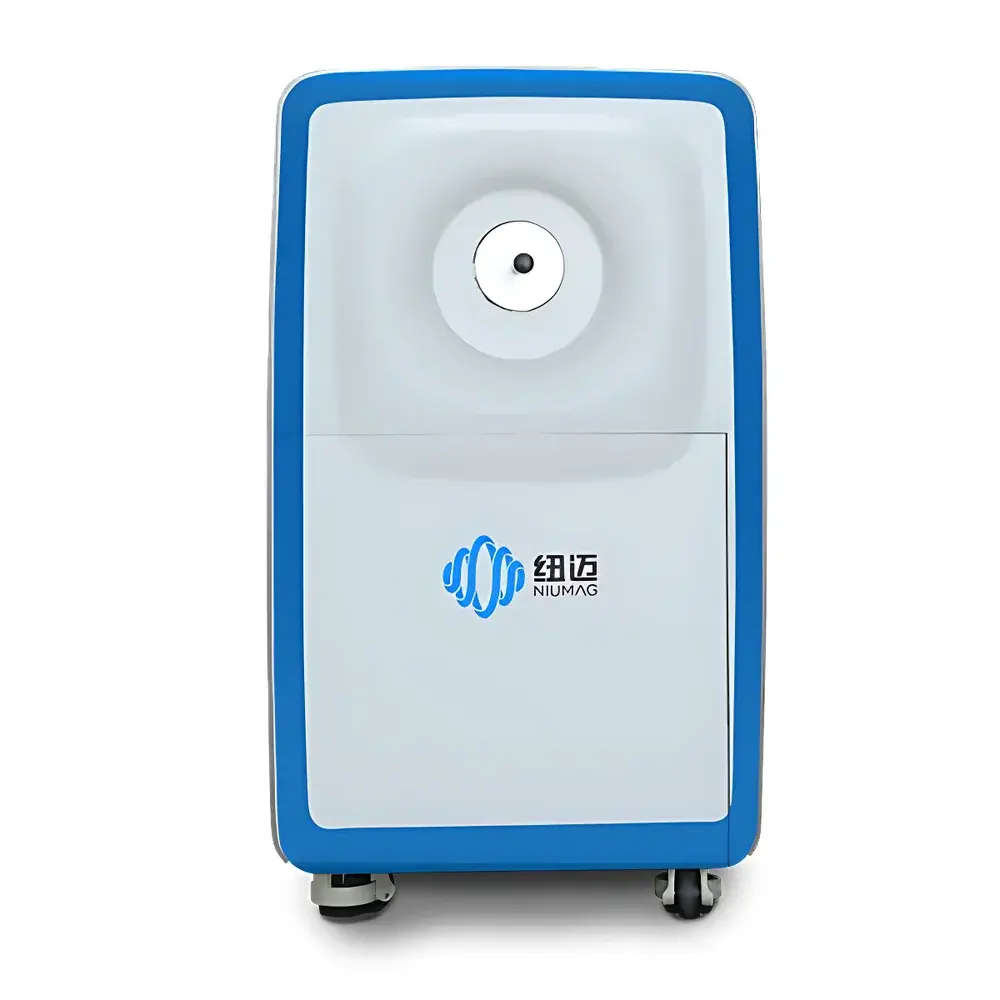
NIUMAG QMR Series Low-Field Nuclear Magnetic Resonance Analyzer for In Vivo Fat Quantification in TCM Syndrome Animal Models
| Brand | NIUMAG |
|---|---|
| Origin | Jiangsu, China |
| Manufacturer Type | Authorized Distributor |
| Regional Classification | Domestic (PRC) |
| Model | QMR Series |
| Instrument Type | Low-Field NMR Analyzer |
| Sample Compatibility | Solid-Liquid Dual-Phase (In Vivo Rodent Models) |
| Measurement Principle | Proton (¹H) Transverse Relaxation Time (T₂) Discrimination |
Overview
The NIUMAG QMR Series Low-Field Nuclear Magnetic Resonance Analyzer is a purpose-engineered benchtop instrument designed for non-invasive, quantitative fat fraction assessment in live rodent models of Traditional Chinese Medicine (TCM) syndromes—particularly those modeling non-alcoholic fatty liver disease (NAFLD), obesity, and metabolic dysfunction. Unlike high-field MRI systems requiring cryogenic magnets and shielded rooms, this analyzer operates at a stable, homogeneous static magnetic field of 0.3–0.5 T (typical for LF-NMR), enabling robust detection of proton signal decay dynamics in biological tissues. Its core measurement principle relies on the differential transverse relaxation behavior (T₂) of hydrogen nuclei in triglyceride-bound protons (shorter T₂, ~10–100 ms) versus water-bound protons (longer T₂, ~100–300 ms). By acquiring multi-echo Carr–Purcell–Meiboom–Gill (CPMG) decay curves and applying inverse Laplace transformation (ILT), the system resolves distinct T₂ components and calculates fat volume fraction (FVF) with high reproducibility across longitudinal studies.
Key Features
- Non-invasive in vivo quantification: Eliminates terminal sacrifice; enables repeated measurements on the same animal over time—critical for evaluating time-dependent pharmacodynamic responses to herbal formulations or compound interventions.
- Rapid acquisition protocol: Single-scan measurement completed within 90–180 seconds per animal (mouse or rat), minimizing stress-induced physiological artifacts and supporting high-throughput screening workflows.
- No ionizing radiation or anesthesia requirement: Operates using radiofrequency pulses in a static magnetic field only; animals remain conscious and unrestrained during scanning, preserving natural metabolic state and reducing confounding variables.
- Robust solid-liquid dual-phase calibration: Pre-configured calibration curves validated against gravimetric reference standards (e.g., Soxhlet extraction) and validated across tissue homogenates, intact livers, and whole-body scans.
- Modular RF coil design: Interchangeable solenoid coils optimized for mouse (diameter: 35 mm) and rat (diameter: 60 mm) body sizes ensure optimal signal-to-noise ratio (SNR) and spatial uniformity.
Sample Compatibility & Compliance
The QMR Series supports live, conscious rodents (C57BL/6, SD, Wistar strains) weighing 15–500 g, accommodating both localized organ-level (e.g., liver-targeted positioning) and whole-body fat composition analysis. It complies with ISO/IEC 17025:2017 general requirements for competence of testing and calibration laboratories, and its data acquisition and processing protocols align with GLP principles for preclinical research. While not FDA-cleared as a diagnostic device, its methodology is referenced in ASTM E2948–14 (Standard Guide for Quantitative Fat Analysis in Biological Tissues Using Low-Field NMR) and supports compliance with ICH S5(R3) guidelines for reproductive toxicity studies requiring longitudinal body composition monitoring.
Software & Data Management
The proprietary QMR Analysis Suite v4.2 provides automated T₂ distribution fitting, fat/water peak deconvolution, and batch processing for up to 48 samples per session. All raw FID data, processed T₂ spectra, and derived fat fraction reports are stored in vendor-neutral HDF5 format with embedded metadata (animal ID, weight, scan date/time, coil type, pulse sequence parameters). Audit trails record user logins, parameter modifications, and report exports—fully traceable for 21 CFR Part 11-compliant environments when deployed with optional electronic signature modules and networked server storage.
Applications
- Longitudinal evaluation of TCM syndrome-specific models (e.g., liver-qi stagnation/spleen deficiency, phlegm-blood stasis) under herbal intervention, tracking hepatic fat reduction kinetics without euthanasia.
- Preclinical pharmacodynamics of anti-steatotic compounds, including PPARα/γ modulators, AMPK activators, and gut-microbiota-targeting therapeutics.
- Body composition phenotyping in genetically modified murine models (e.g., ob/ob, db/db, MCD-diet-fed) for obesity and insulin resistance research.
- Validation of imaging biomarkers against histopathology (Oil Red O staining) and biochemical assays (TG enzymatic kits), supporting translational bridge development.
- Quality control of experimental diets and feedstock lipid content via rapid ex vivo tissue or food matrix analysis.
FAQ
Can this system quantify fat in isolated organs post-mortem?
Yes—ex vivo liver, muscle, or adipose tissue specimens can be scanned using dedicated sample holders; calibration remains consistent with in vivo protocols.
Is temperature control integrated into the measurement chamber?
The system includes ambient-temperature stabilization (±0.5 °C) via passive thermal shielding; optional Peltier-cooled sample stage available for temperature-sensitive relaxation studies.
Does the software support custom pulse sequence programming?
No—pulse sequences are factory-optimized for CPMG-based T₂ mapping; advanced users may export raw FID data for offline processing in MATLAB or Python.
What is the minimum detectable fat fraction change in longitudinal studies?
Based on inter-day repeatability studies (n=12 mice, 3 scans/day over 5 days), the coefficient of variation (CV) for hepatic fat fraction is ≤3.2%, enabling detection of ≥5% absolute changes with 90% statistical power.
Is remote operation supported for facility-shared instruments?
Yes—the QMR Analysis Suite supports secure RDP and VNC access; instrument control and data review are fully functional over institutional LAN/WAN networks with TLS 1.2 encryption.




