
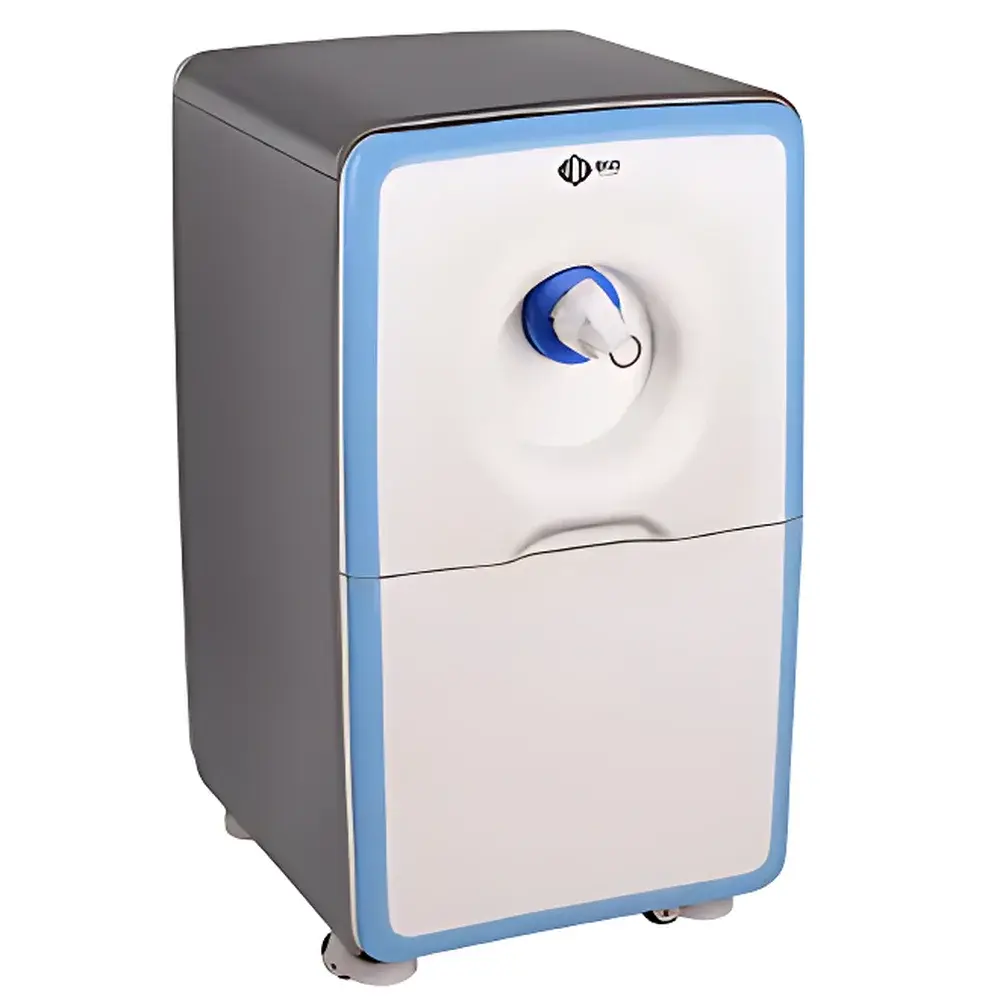
NIUMAG QMR06-060H-PRO Low-Field Quantitative Magnetic Resonance Analyzer for Small Animal Body Composition
| Brand | NIUMAG |
|---|---|
| Origin | Jiangsu, China |
| Magnet Type | Permanent Magnet |
| Sample Type | Live Rodents (Mice, Rats, Rabbits) |
| Measurement Time | < 60 s per sample |
| Measured Parameters | Fat Mass, Lean Mass, Free Water Content |
| Software | Integrated QMR Analysis Suite with GLP-Compliant Audit Trail |
| Regulatory Compliance | Designed to support ISO/IEC 17025-aligned workflows and FDA 21 CFR Part 11–ready data integrity architecture |
| Application Scope | Preclinical metabolic phenotyping, longitudinal obesity/diabetes studies, pharmacological intervention monitoring |
Overview
The NIUMAG QMR06-060H-PRO is a dedicated low-field quantitative magnetic resonance (QMR) analyzer engineered for non-invasive, in vivo assessment of body composition in small laboratory animals. Unlike destructive or radiation-based methods, this system leverages the intrinsic nuclear magnetic resonance signal of hydrogen protons in adipose tissue and lean mass—exploiting differences in transverse relaxation times (T2) between lipid-bound and water-bound protons. Operating at a stable, homogeneous permanent magnet field (typically 0.047 T), the instrument delivers rapid, operator-independent quantification of fat mass, lean tissue mass, and free water content without requiring anesthesia, fasting, sedation, or terminal procedures. Its design adheres to the fundamental principles of time-domain NMR (TD-NMR), where signal decay curves are acquired via CPMG (Carr–Purcell–Meiboom–Gill) pulse sequences and deconvoluted using multi-exponential fitting algorithms calibrated against reference phantoms and validated biological standards.
Key Features
- Non-invasive, live-animal measurement: Enables repeated longitudinal assessments on the same subject across weeks or months—critical for chronic disease modeling and therapeutic efficacy studies.
- Sub-60-second acquisition cycle: Full-body composition analysis completed in under one minute, minimizing animal handling stress and maximizing throughput in high-volume preclinical facilities.
- No sample preparation required: Animals are placed gently into the ergonomic cradle; no shaving, injection, contrast agents, or physiological stabilization protocols are needed.
- Robust permanent magnet architecture: Eliminates cryogen dependency, reduces facility infrastructure requirements (no RF-shielded room or liquid helium supply), and ensures long-term field stability with minimal maintenance.
- Calibration traceability: Factory-calibrated using NIST-traceable oil–water emulsion phantoms; optional user-initiated recalibration with standardized reference samples supports ongoing measurement validity.
- Temperature-controlled sample chamber: Maintains consistent thermal environment (±0.5 °C) during acquisition to mitigate T2 drift from physiological variability.
Sample Compatibility & Compliance
The QMR06-060H-PRO accommodates live rodents within standard IACUC-approved weight ranges: mice (15–45 g), rats (80–500 g), and dwarf rabbits (< 1.2 kg). The cylindrical bore (60 mm inner diameter) and adjustable cradle system ensure reproducible positioning and minimize motion artifact. All hardware and software components comply with electromagnetic compatibility (EMC) directives (IEC 61326-1) and electrical safety standards (IEC 61010-1). Data handling workflows align with Good Laboratory Practice (GLP) requirements, including electronic signature support, audit trail logging of all parameter changes and result exports, and role-based access control. While not a medical device, its analytical outputs are routinely accepted in peer-reviewed publications and regulatory submissions (e.g., NIH grant applications, EMA preclinical dossiers) when used in conjunction with documented SOPs.
Software & Data Management
The integrated QMR Analysis Suite provides a Windows-based interface with dual-panel layout: left-side configuration pane (pulse sequence selection, scan parameters, animal ID entry) and right-side real-time results dashboard (fat %, lean mass g, free water g, total body mass g, coefficient of variation %). Raw FID and CPMG decay data are stored in HDF5 format with embedded metadata (timestamp, operator ID, instrument serial, calibration status). Export options include CSV (for Excel/GraphPad Prism), PDF reports (with embedded spectral plots and statistical summaries), and direct API integration with LIMS platforms via RESTful endpoints. Audit trails record every action—including manual overrides, recalibrations, and report generation—with immutable timestamps and user attribution, satisfying FDA 21 CFR Part 11 requirements for electronic records and signatures.
Applications
- Longitudinal monitoring of diet-induced obesity models: Tracking fat accumulation kinetics in C57BL/6 mice fed high-fat diets over 12+ weeks.
- Metabolic phenotyping of genetically modified strains: Quantifying lean/fat partitioning in leptin-deficient (ob/ob) or UCP1-knockout models.
- Pharmacodynamic evaluation of anti-obesity therapeutics: Assessing dose-dependent reductions in adiposity following GLP-1 receptor agonist administration.
- Age-related sarcopenia studies: Differentiating lean mass loss from fluid shifts in aging rat cohorts.
- Toxicology screening: Detecting early ectopic lipid deposition in liver or muscle prior to histopathological manifestation.
- Validation of imaging modalities: Serving as a reference standard for calibrating micro-CT or MRI-derived fat fraction estimates.
FAQ
Is anesthesia required for scanning?
No. The QMR06-060H-PRO is designed for conscious, unrestrained measurements. Animals remain awake and unstressed throughout the brief acquisition.
Can the system differentiate intramuscular fat from subcutaneous fat?
No. As a whole-body TD-NMR analyzer, it reports total fat mass and total lean mass. Regional fat distribution requires complementary imaging (e.g., MRI or micro-CT).
What is the minimum interval between repeat scans on the same animal?
There is no mandatory recovery period—the technique imposes no cumulative dose or physiological burden. Scans may be performed multiple times per day if experimentally justified.
How is system performance verified between calibrations?
Daily system suitability tests using a QC phantom (provided) assess signal-to-noise ratio, T2 consistency, and mass accuracy deviation; results are logged automatically in the audit trail.
Does the software support automated batch processing of multiple animals?
Yes. The queue manager allows sequential ID entry, auto-scheduling of acquisitions, and consolidated reporting for up to 99 subjects per session.




