
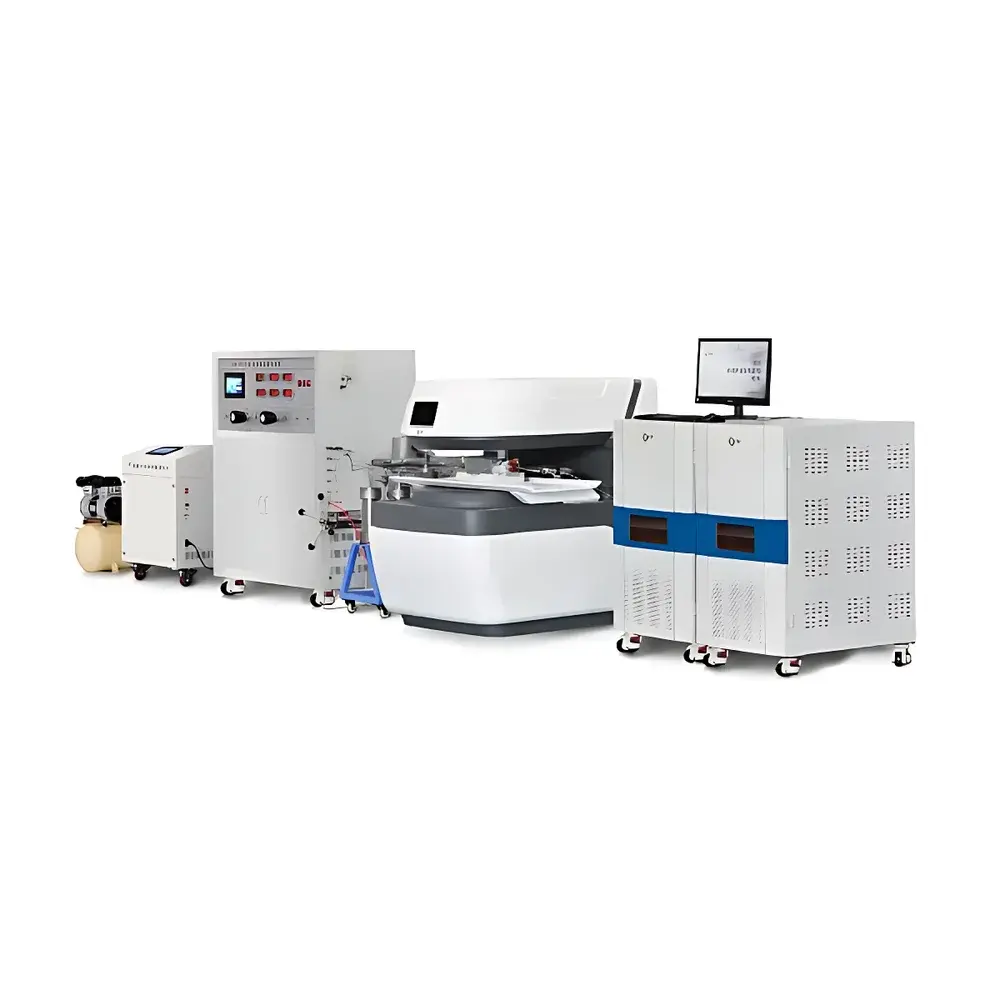
NIUMAG MacroMR-3 Low-Field Nuclear Magnetic Resonance Core Analyzer
| Brand | NIUMAG |
|---|---|
| Origin | Jiangsu, China |
| Instrument Type | Low-Field NMR Analyzer |
| Sample Type | Solid-Liquid Dual-Mode |
| Magnetic Field Strength | 0.3 T ± 0.03 T |
| Magnet Homogeneity | ≤50 ppm |
| Magnet Configuration | C-Type Open Bore |
| Sample Chamber Diameter | Up to 6 inches (152 mm) |
| Maximum Sample Length | 250 mm |
| Standard Operating Environment | 100 °C / 40 MPa |
| Optional Extended Environment | Up to 200 °C / 100 MPa |
| Low-Temperature Capability | Down to −30 °C |
| Gradient Selection | Fixed-Gradient Slice-Selective Imaging |
| Pulse Sequences | Fully User-Accessible 1D/2D Relaxometry & Imaging Sequences |
| Software Platform | Proprietary Core Analysis Suite with GLP-Compliant Audit Trail |
Overview
The NIUMAG MacroMR-3 is a purpose-engineered low-field nuclear magnetic resonance (LF-NMR) core analyzer designed for quantitative petrophysical characterization of reservoir rocks under controlled thermo-mechanical conditions. Operating at a static magnetic field of 0.3 T, the system leverages the fundamental principles of spin relaxation—specifically transverse (T₂) and longitudinal (T₁) relaxation—to non-invasively probe hydrogen-bearing fluid distribution, pore geometry, and dynamic transport properties within geological samples. Unlike destructive or empirically calibrated methods, LF-NMR provides direct physical insight into pore-scale fluid behavior without sample alteration, enabling high-reproducibility measurements of porosity, pore-size distribution, fluid saturation (oil/water), movable vs. bound fluid fractions, permeability proxies, and wettability indicators. The MacroMR-3 integrates a C-type open-bore permanent magnet with a large-diameter sample cavity (up to Ø152 mm), supporting full-diameter core plugs (1–6 inch) and extended-length specimens (up to 250 mm), thereby accommodating industry-standard core configurations used in petroleum geoscience and unconventional resource evaluation.
Key Features
- C-type open-bore magnet architecture with ≤50 ppm homogeneity over a 60 mm DSV, optimized for robust signal-to-noise ratio and thermal stability across extended acquisition periods.
- Modular environmental chamber supporting standard operation at 100 °C and 40 MPa; optionally configurable for extreme reservoir simulation up to 200 °C and 100 MPa, including cryogenic capability down to −30 °C for freeze-thaw and hydrate studies.
- Pseudo-triaxial mechanical coupling interface enables concurrent application of confining pressure, pore pressure, and axial load—facilitating real-time NMR monitoring of microstructural evolution during triaxial deformation, fracture propagation, and stress-induced pore collapse.
- Fixed-gradient slice-selective excitation permits spatially resolved T₁/T₂ mapping across stratified or heterogeneous core sections, supporting layered porosity profiling and zonal fluid saturation analysis.
- Fully open pulse sequence architecture with native support for inversion-recovery, CPMG, IR-CPMG, diffusion-weighted, and 2D T₁–T₂ correlation experiments—enabling method development aligned with ASTM D7264, ISO 17892-12, and USP analytical instrument qualification guidelines.
Sample Compatibility & Compliance
The MacroMR-3 accommodates cylindrical rock cores ranging from 1 inch (25.4 mm) to 6 inches (152 mm) in diameter and up to 250 mm in length—including whole-round cores, sidewall plugs, and fractured or composite specimens. Its solid–liquid dual-mode detection capability allows simultaneous interrogation of immobile mineral-bound water, capillary-trapped hydrocarbons, and mobile phase distributions. All hardware and software modules comply with IEC 61000-6-3 (EMC) and IEC 61010-1 (safety). Data acquisition and processing workflows are structured to meet GLP and GMP requirements, including electronic signatures, audit trail logging per FDA 21 CFR Part 11, and version-controlled calibration records traceable to NIST-certified reference standards.
Software & Data Management
The proprietary CoreAnalyze™ software suite provides an integrated environment for acquisition control, spectral inversion (non-negative least squares, SVD-based), multi-exponential fitting, and parametric image reconstruction. It includes preconfigured templates for routine petrophysical reporting (e.g., porosity vs. depth, saturation height modeling, permeability estimation via Timur-Coates or SDR correlations), as well as customizable scripting interfaces (Python API) for advanced statistical modeling and machine learning integration. Raw FID data, processed spectra, and DICOM-compliant image stacks are stored in vendor-neutral HDF5 format with embedded metadata (sample ID, temperature, pressure, gradient strength, sequence parameters), ensuring long-term interoperability with third-party visualization and analysis platforms.
Applications
- Reservoir Characterization: Quantitative porosity, pore-throat size distribution (via T₂ cutoff calibration), irreducible water saturation, movable fluid index, and pseudo-permeability derived from relaxation time distributions.
- Enhanced Oil Recovery (EOR) Monitoring: Real-time tracking of polymer flood front progression, surfactant adsorption kinetics, and oil displacement efficiency under dynamic pressure/temperature conditions.
- Unconventional Resource Evaluation: CO₂–CH₄ competitive adsorption isotherms in shale/matrix systems; methane hydrate nucleation/growth kinetics; supercritical CO₂–brine displacement in tight sandstones.
- Mechano-Petrophysical Coupling: In situ observation of microcrack initiation, pore network connectivity loss, and clay swelling under triaxial loading—correlated with acoustic emission and strain gauge data.
- Low-Temperature Geochemistry: Ice–water phase transitions in permafrost analogs, pore ice morphology, and unfrozen water content quantification below 0 °C.
FAQ
What sample dimensions does the MacroMR-3 support?
Standard configuration accepts cylindrical cores up to 6 inches (152 mm) in diameter and 250 mm in length. Custom probe inserts enable compatibility with smaller-diameter samples (1–4 inch) without sacrificing field homogeneity.
Can the system perform T₁–T₂ two-dimensional correlation experiments?
Yes—the instrument supports fully user-defined 2D NMR sequences, including T₁–T₂, D–T₂, and T₁–D correlation maps, accessible via the command-line interface or graphical sequence builder.
Is the software compliant with regulatory data integrity requirements?
CoreAnalyze™ implements full 21 CFR Part 11 compliance: role-based access control, electronic signatures, immutable audit trails, and automated backup of raw and processed datasets.
How is temperature and pressure controlled during measurement?
Integrated PID-regulated heating jackets and hydraulic pressure manifolds deliver stable, programmable profiles; all environmental parameters are logged synchronously with NMR data acquisition at 1 Hz resolution.
Does the system support external sensor integration?
Yes—digital I/O ports and TCP/IP APIs allow synchronized acquisition with strain gauges, acoustic emission sensors, differential pressure transducers, and flow meters for multiphysics experimental setups.
Related Products





