
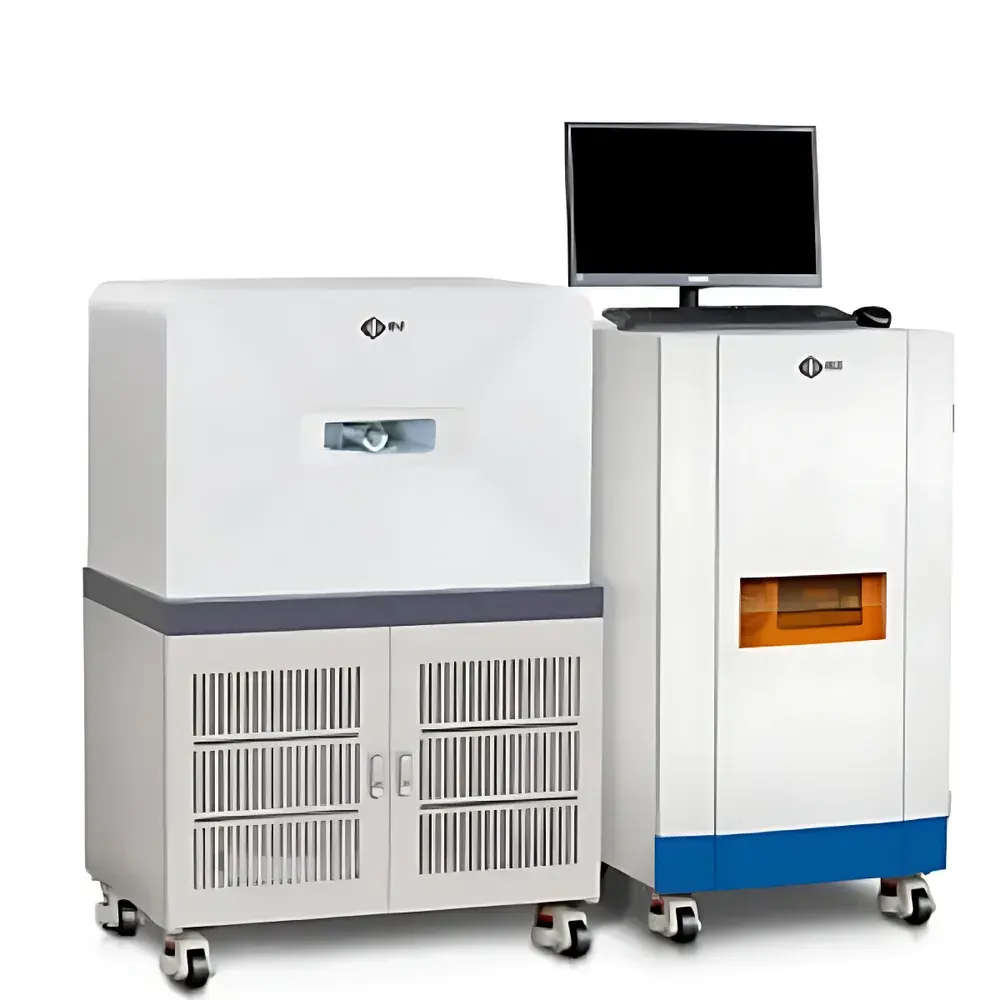
NIUMAG MesoMR12-60H-I Low-Field Nuclear Magnetic Resonance Analyzer and Imaging System
| Brand | NIUMAG |
|---|---|
| Origin | Jiangsu, China |
| Manufacturer Type | Authorized Distributor |
| Origin Category | Domestic |
| Model | MesoMR12-60H-I |
| Instrument Type | Low-Field NMR Analyzer |
| Sample Type | Solid-Liquid Dual-Mode |
| Operating Frequencies | 12 MHz / 21 MHz |
| Acquisition Mode | Pulsed Fourier Transform |
| Magnet Type | Permanent Magnet |
| Magnetic Field Strength | 0.3 ± 0.03 T (12 MHz) / 0.5 ± 0.03 T (21 MHz) |
| Probe Coil Diameter | 60 mm |
Overview
The NIUMAG MesoMR12-60H-I is a benchtop low-field nuclear magnetic resonance (NMR) analyzer and imaging system engineered for quantitative characterization of porous media and multiphase fluid distributions in geological and energy-related samples. Based on the principles of pulsed Fourier transform NMR, it measures transverse relaxation time (T₂), longitudinal relaxation time (T₁), diffusion-relaxation (D–T₂), and multi-dimensional correlation spectra to derive pore structure parameters—including porosity, pore size distribution, fluid saturation states, and flow dynamics—without destructive sample preparation. Its permanent magnet architecture delivers stable, drift-free field homogeneity suitable for long-duration experiments under controlled environmental conditions. Designed specifically for core analysis in reservoir evaluation, the MesoMR12-60H-I supports both spectroscopic quantification and spatially resolved imaging (MRI), enabling simultaneous assessment of bulk properties and internal heterogeneity in rock cores, shales, coal, hydrate-bearing sediments, and engineered porous materials.
Key Features
- Dual-frequency operation at 12 MHz (0.3 T) and 21 MHz (0.5 T), allowing flexible trade-offs between signal-to-noise ratio, relaxation contrast resolution, and sample penetration depth.
- 60 mm diameter radiofrequency probe optimized for standard cylindrical rock core specimens (up to Ø60 × H100 mm), with interchangeable coil configurations for enhanced sensitivity or specialized applications.
- Modular hardware integration capability: compatible with NIUMAG-developed temperature-controlled stages (−40 °C to +200 °C), high-pressure cells (up to 70 MPa), and custom-built flow-through modules for dynamic saturation/drainage experiments.
- Robust permanent magnet design requiring no cryogens or external cooling infrastructure—ideal for continuous operation in laboratory, field-deployable, or teaching environments.
- Integrated pulse sequence library compliant with standard NMR methodologies including CPMG, IR, STIR, and diffusion-weighted sequences, fully programmable via graphical user interface.
Sample Compatibility & Compliance
The MesoMR12-60H-I accommodates solid, liquid, and solid–liquid composite samples—including intact rock cores, powdered geological specimens, polymer gels, catalyst supports, and frozen or hydrate-saturated sediments. It meets essential functional requirements for ISO 17025-accredited laboratories performing routine petrophysical analysis. Data acquisition and processing workflows support audit-ready documentation aligned with GLP and GMP principles. While not classified as a medical device, its MRI mode adheres to IEC 62464-1 guidelines for non-clinical low-field imaging systems. All firmware and software modules are validated for repeatability and traceability per ASTM D7171 (Standard Test Method for Determining Porosity of Rocks by NMR) and API RP 40 recommendations.
Software & Data Management
Control and analysis are performed using NIUMAG’s proprietary NMIView™ software suite, which provides real-time spectrum visualization, automated T₂/T₁ inversion, pore-size distribution modeling (using SDR, Coates, or Timur-Coates models), and 2D/3D image reconstruction (filtered back-projection and iterative algorithms). Raw FID data are stored in vendor-neutral formats (e.g., HDF5) with embedded metadata including pulse sequence parameters, temperature/pressure logs, and calibration records. The software supports export to CSV, MATLAB .mat, and Paraview-compatible VTK formats for third-party statistical modeling. Audit trail functionality records all user actions, parameter changes, and processing steps—enabling full compliance with FDA 21 CFR Part 11 requirements when configured with electronic signature modules.
Applications
- Reservoir characterization: porosity, permeability estimation, movable vs. bound fluid saturation, wettability index determination, and capillary pressure curve derivation.
- Enhanced oil recovery (EOR) studies: monitoring surfactant flooding, polymer injection, and CO₂ miscible displacement in real time.
- Gas hydrate research: quantifying phase transitions during formation/dissociation under subzero temperatures and elevated pressures.
- Geomechanical behavior: correlating freeze–thaw cycles, thermal cracking, and stress-induced pore collapse with relaxation time shifts.
- Material science: evaluating pore network evolution in cementitious systems, battery electrode microstructures, and membrane filtration media.
FAQ
What is the typical measurement time for a full T₂ spectrum on a standard sandstone core?
Measurement duration ranges from 2 to 15 minutes depending on signal averaging requirements, echo spacing, and desired SNR—typically 5–8 minutes for routine porosity and T₂ cutoff analysis.
Can the system be upgraded to support higher magnetic field strengths?
No—the MesoMR12-60H-I uses a fixed permanent magnet assembly; field strength is not adjustable. For higher-frequency operation, NIUMAG offers the MacroMR series (60 MHz) and MicroMR series (100+ MHz) platforms.
Is remote operation supported?
Yes, NMIView™ includes secure TCP/IP-based remote access and scripting APIs (Python/LabVIEW) for integration into automated testing workflows and centralized lab management systems.
Does the instrument require regular shimming or field calibration?
Permanent magnet stability eliminates the need for daily shimming; field homogeneity is maintained within ±0.03 T over ambient temperature fluctuations (15–30 °C), with annual verification recommended using reference standards.
Are application-specific method templates available?
NIUMAG provides pre-validated method libraries for common workflows—including ASTM D7171-compliant porosity, USP –aligned excipient characterization, and ISO 15792-2–referenced hydrate dissociation kinetics—available upon request with technical documentation.



