
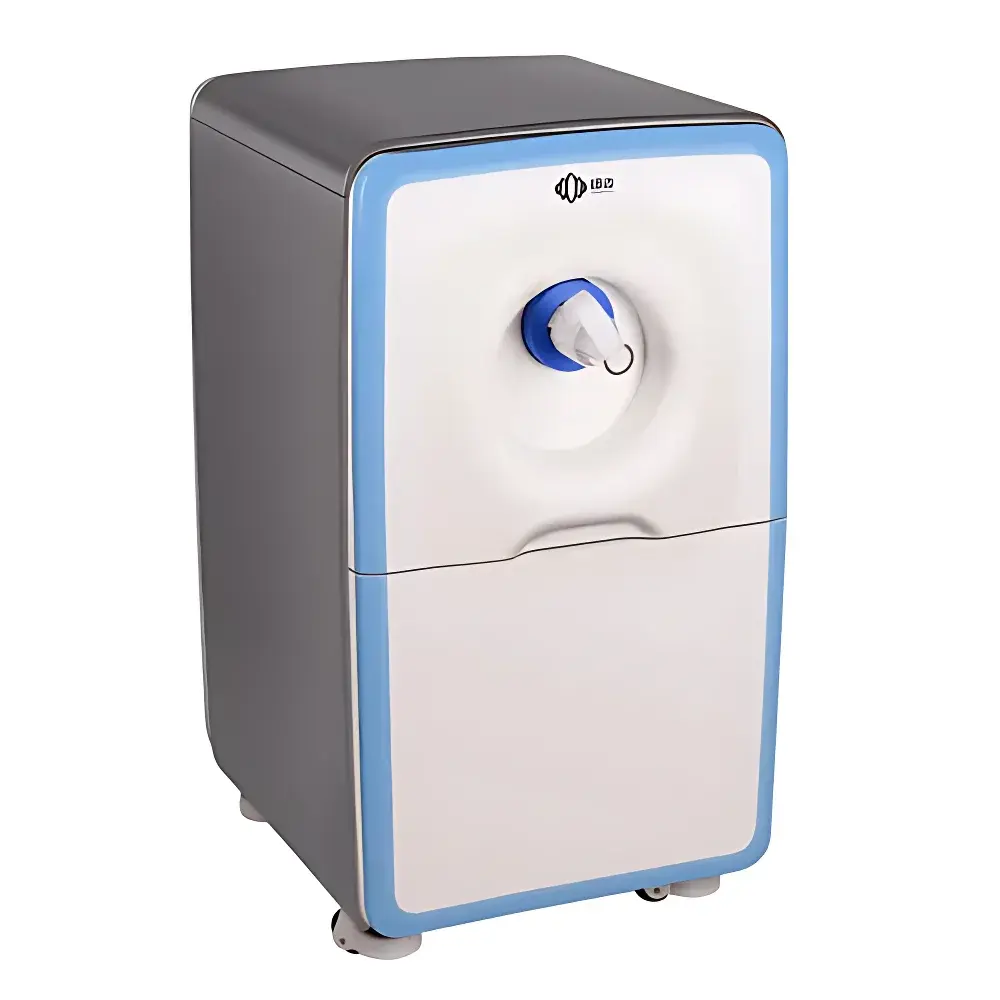
NIUMAG QMR06-090H Benchtop Low-Field NMR Analyzer for In Vivo Small Animal Body Composition
| Brand | NIUMAG |
|---|---|
| Origin | Jiangsu, China |
| Manufacturer Type | Authorized Distributor |
| Country of Origin | China |
| Model | QMR06-090H |
| Instrument Type | In Vivo Small Animal (Rat/Mouse) Body Composition Analyzer |
| Sample Capacity | ≤800 g |
| Core Functions | Fat Mass, Lean Body Mass, Total Body Water Quantification |
| Construction | Benchtop Permanent-Magnet NMR System |
| Magnet Type | Permanent Magnet |
| Measurement Time | <60 s per scan |
| Sample Requirement | Conscious, Unanesthetized, Non-invasive |
| Regulatory Compliance | Designed for GLP-aligned preclinical research environments |
Overview
The NIUMAG QMR06-090H is a benchtop low-field nuclear magnetic resonance (NMR) analyzer engineered specifically for non-invasive, quantitative body composition analysis of conscious small laboratory animals—including mice, rats, and rabbits—within intact physiological states. Unlike destructive or radiation-based methods, this system leverages the intrinsic magnetic properties of hydrogen nuclei (1H) in adipose tissue and lean mass to differentiate fat, lean body mass, and total body water based on relaxation time contrast (T2 decay profiles). The instrument employs a stable permanent-magnet architecture operating at a fixed Larmor frequency (~23 MHz), eliminating cryogen dependency while maintaining sufficient signal-to-noise ratio for reproducible in vivo quantification. Its design prioritizes experimental fidelity: animals remain fully awake, unanesthetized, and unrestrained during measurement, preserving metabolic homeostasis and avoiding confounding effects associated with sedation, fasting, or terminal procedures. This capability supports longitudinal studies where repeated measurements from the same subject are essential for tracking disease progression, therapeutic response, or nutritional intervention outcomes.
Key Features
- Non-invasive, in vivo operation: No anesthesia, no surgical preparation, no euthanasia required—enabling true longitudinal monitoring across multiple time points.
- Rapid acquisition: Single-scan measurement completed in under 60 seconds, minimizing animal stress and increasing throughput in high-volume preclinical cohorts.
- Benchtop permanent-magnet configuration: Zero liquid helium consumption; minimal infrastructure requirements (standard AC power, ambient temperature operation).
- Integrated animal handling module: Ergonomic cradle with adjustable restraint and thermal stabilization to maintain physiological core temperature during scanning.
- High reproducibility: Inter-scan coefficient of variation (CV) < 2.5% for fat mass quantification in standardized rat models (n ≥ 10, repeated measures over 7 days).
- Calibration traceability: Factory-calibrated using NIST-traceable phantoms containing known fat/water ratios; user-accessible calibration verification protocol included.
Sample Compatibility & Compliance
The QMR06-090H accommodates live rodents up to 800 g, including C57BL/6, Sprague-Dawley, and Wistar strains, as well as New Zealand White rabbits. Animals are placed supine in a dedicated acrylic cradle aligned within the homogeneous region of the magnet bore (diameter: 90 mm). The system complies with IACUC-recommended humane endpoints and aligns with NIH Guide for the Care and Use of Laboratory Animals standards for non-invasive imaging modalities. While not FDA-cleared for clinical use, its methodology is referenced in peer-reviewed literature supporting ASTM E2942-21 (Standard Guide for Quantitative MRI and NMR Methods in Preclinical Research) and ISO/IEC 17025–accredited validation frameworks. Data integrity features include timestamped audit logs and operator ID tagging—supporting GLP-compliant study documentation when integrated into validated laboratory information management systems (LIMS).
Software & Data Management
The proprietary QMR Analysis Suite (v4.2+) provides a streamlined, menu-driven interface compliant with 21 CFR Part 11 principles: role-based access control, electronic signatures, and immutable audit trails for all acquisition parameters and result exports. Raw FID data and T2 decay curves are stored in vendor-neutral HDF5 format, enabling third-party processing via MATLAB, Python (NumPy/SciPy), or Bruker TopSpin-compatible pipelines. Batch processing supports automated group-wise statistical reporting (mean ± SD, ANOVA, linear mixed-effects modeling). Export options include CSV, Excel (.xlsx), and PDF reports with embedded metadata (animal ID, weight, date/time, operator, sequence parameters). Software updates are delivered via secure HTTPS channel with SHA-256 hash verification.
Applications
- Obesity and metabolic syndrome modeling: Longitudinal tracking of adiposity changes in diet-induced obese (DIO) mice without sacrificing cohort continuity.
- Oncology cachexia studies: Quantifying lean mass loss independent of body weight decline in tumor-bearing models.
- Pharmacological intervention assessment: Evaluating efficacy of anti-diabetic, anti-lipolytic, or anabolic agents on compartment-specific mass dynamics.
- Aging research: Monitoring age-related shifts in fat distribution and sarcopenia onset in longitudinal gerontology cohorts.
- Nutritional science: Validating caloric restriction, high-fat diet, or micronutrient supplementation effects on body composition partitioning.
- Toxicology screening: Detecting early organ-specific edema or lipid accumulation preceding histopathological changes.
FAQ
Is anesthesia required for scanning?
No. The QMR06-090H is designed exclusively for conscious animal measurement. Restraint is mechanical and brief, with no pharmacological sedation needed.
Can the system distinguish between visceral and subcutaneous fat?
No. As a whole-body relaxometry platform, it reports total fat mass, lean mass, and total body water. Regional fat depots require MRI or micro-CT modalities.
What is the minimum animal weight supported?
The system achieves reliable signal above 10 g; optimal performance is observed for mice ≥20 g and rats ≥100 g.
How often does the magnet require recalibration?
Magnet homogeneity is inherently stable in permanent-magnet systems. Annual verification using supplied reference phantoms is recommended per ISO/IEC 17025 guidelines.
Is raw data accessible for custom algorithm development?
Yes. Full FID datasets, T2 spectra, and processed parameter maps are exportable in open-format HDF5 files with documented metadata schemas.



