
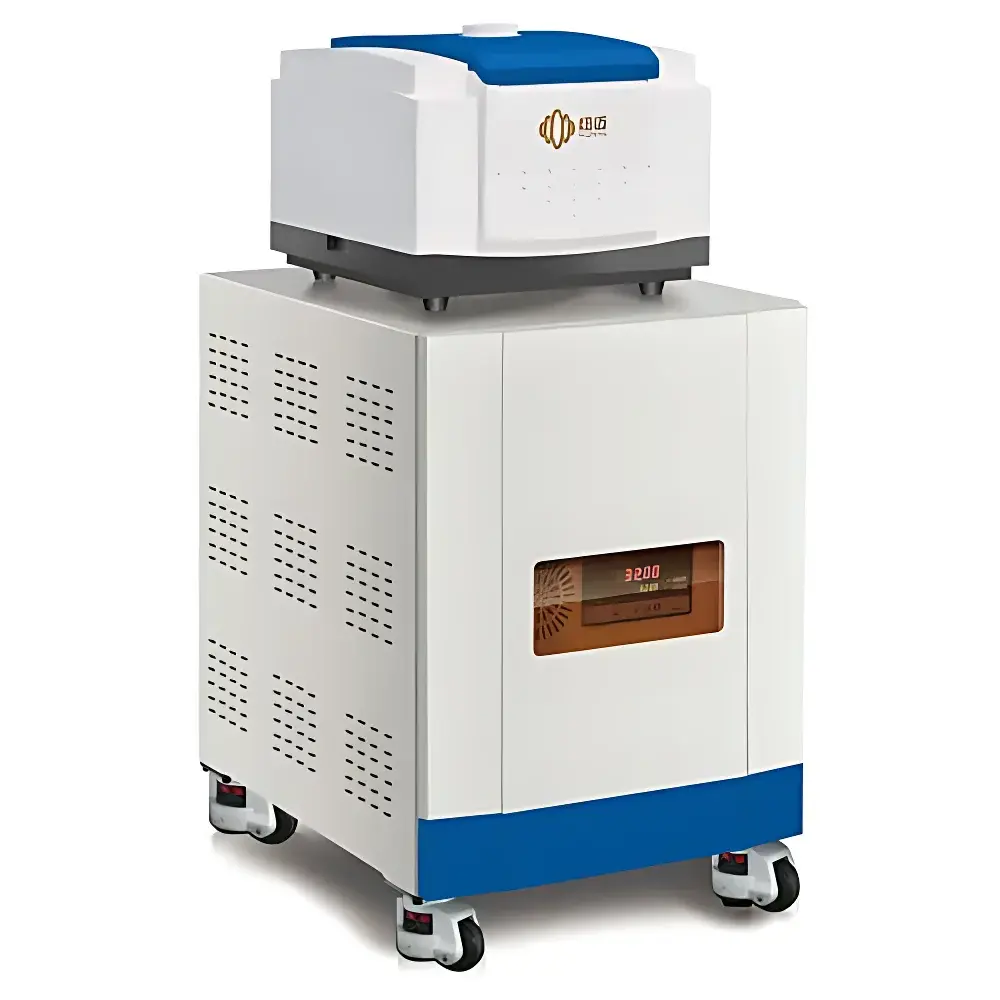
NIUMAG PQ001-20-025V Benchtop Low-Field NMR Analyzer for Seed Oil and Moisture Content
| Brand | NIUMAG |
|---|---|
| Origin | Shanghai, China |
| Manufacturer Type | Authorized Distributor |
| Product Origin | Domestic (China) |
| Model | PQ001-20-025V |
| Pricing | Available Upon Request |
| Magnet Type | Permanent Magnet |
| Magnetic Field Strength | 0.5 ± 0.08 T |
| Probe Coil Diameter | 25 mm |
Overview
The NIUMAG PQ001-20-025V is a compact, single-unit benchtop low-field nuclear magnetic resonance (NMR) analyzer engineered specifically for rapid, non-destructive quantification of oil and moisture content in agricultural seeds. Operating at a static magnetic field of 0.5 ± 0.08 T generated by a high-stability permanent magnet system, the instrument leverages the fundamental principles of spin relaxation (T₂ and T₁–T₂ correlation) to differentiate between mobile oil protons and bound/free water protons within intact seed samples. Unlike destructive extraction or solvent-based methods (e.g., Soxhlet), this NMR approach requires no sample grinding, chemical reagents, or calibration curves—enabling true in-situ analysis while preserving sample integrity. Designed for routine quality control and research applications, the PQ001-20-025V delivers high reproducibility (<1.5% RSD for repeated oil measurements on homogenous soybean lots) and measurement throughput of ≤90 seconds per sample under standard acquisition protocols.
Key Features
- Integrated all-in-one benchtop architecture with embedded magnet, RF probe, console, and touchscreen interface—no external chillers, cryogens, or shielding rooms required.
- 25 mm diameter RF probe optimized for heterogeneous seed geometries, supporting sample masses from 1–15 g (whole or halved kernels) without signal saturation or coil detuning.
- Modular hardware configuration: optional upgrades include temperature-controlled sample stage (±0.1 °C stability), automated sample loader, and dual-frequency excitation capability for enhanced phase discrimination.
- Pre-installed pulse sequences: CPMG (for T₂ distribution mapping), inversion recovery (for T₁ quantification), and stimulated echo (for diffusion-weighted contrast), all compliant with ASTM D7426 and ISO 17272-2 for polymer and biological material characterization.
- Robust mechanical design rated for continuous operation in industrial environments (IP20 enclosure, 15–35 °C ambient, <80% RH non-condensing).
Sample Compatibility & Compliance
The PQ001-20-025V accepts whole, split, or ground seeds—including peanut, soybean, rapeseed, sunflower, corn, sesame, and olive—without pre-treatment. Its 25 mm probe accommodates irregular shapes and variable density distributions typical of agricultural commodities. The system complies with IEC 61000-6-3 (EMC emissions) and IEC 61000-6-2 (immunity). Data acquisition workflows support 21 CFR Part 11-compliant electronic signatures and audit trails when deployed with NIUMAG’s optional NMR-Lab Suite v4.2 software package. All measurement protocols align with AOAC Official Method 991.36 (NMR for oil in oilseeds) and GB/T 14488.1–2008 (Chinese national standard for oilseed oil content determination by NMR).
Software & Data Management
Controlled via NIUMAG’s NMR-Lab Suite, the system provides intuitive graphical workflow configuration, real-time FID visualization, and automated T₂ decay fitting using mono- and bi-exponential models. Raw data (FID, spectra, relaxation maps) are stored in vendor-neutral HDF5 format with embedded metadata (timestamp, operator ID, pulse sequence parameters, temperature). Batch processing supports CSV export of quantitative results (oil % w/w, moisture % w/w, bound/free water ratio) directly into LIMS or ERP systems. Software validation documentation (IQ/OQ/PQ templates) and GxP-ready reporting modules are available for regulated food safety and QC laboratories operating under HACCP, ISO 22000, or BRCGS frameworks.
Applications
- Routine oil content screening of incoming seed lots at crushing plants and edible oil refineries—replacing wet chemistry methods with <30 s/sample turnaround.
- Moisture phase analysis: distinguishing surface-adsorbed, capillary-bound, and crystalline water fractions via T₂ relaxation time distribution—critical for storage stability prediction and drying process optimization.
- Research on lipid oxidation kinetics: monitoring changes in T₂ shortening rates as proxy for peroxide formation in stored oilseeds.
- Correlation studies between NMR-derived oil/moisture ratios and downstream pressing yield or biodiesel conversion efficiency.
- Method transfer validation for regulatory submissions requiring orthogonal analytical techniques (e.g., cross-validation against GC-FID or NIR).
FAQ
Does the PQ001-20-025V require liquid helium or external cooling?
No. It employs a passively stabilized permanent magnet system with zero cryogen consumption and no active cooling infrastructure.
Can it quantify oil and moisture simultaneously in a single scan?
Yes. Dual-parameter acquisition protocols resolve overlapping proton signals using multi-echo train analysis and constrained inverse Laplace transformation.
Is method validation support provided for food safety audits?
Yes. NIUMAG supplies full validation kits—including system suitability tests, precision/repeatability reports, and traceable reference standards—for ISO/IEC 17025-accredited labs.
What sample preparation is needed for corn kernels?
None beyond size reduction to fit the 25 mm coil; whole kernels, halves, or coarse grits均可 be analyzed directly without drying or homogenization.
How often does the magnet require recalibration?
The permanent magnet is factory-shimmed and drift-compensated; annual field homogeneity verification (via built-in shimming routines) is recommended but not mandatory for routine QC use.





