
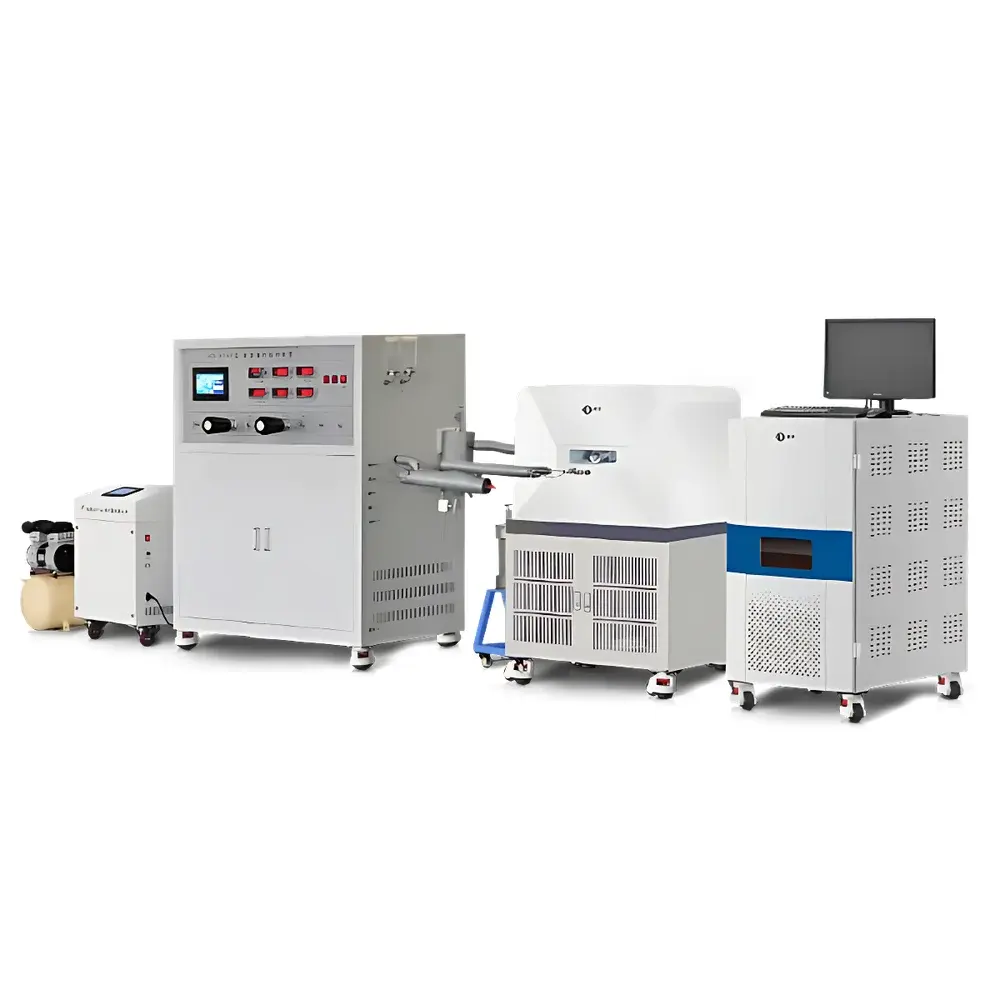
NIUMAG MesoMR-2 Low-Field Nuclear Magnetic Resonance Analyzer for Permafrost Studies
| Brand | NIUMAG |
|---|---|
| Origin | Jiangsu, China |
| Instrument Type | Low-Field NMR Analyzer |
| Sample Type | Solid-Liquid Dual-Phase |
| Magnetic Field Strength | 0.3 T ± 0.03 T |
| Magnet Geometry | Closed “Square” Bore |
| Field Homogeneity | ≤30 ppm |
| Maximum Sample Dimensions | Ø60 mm × H100 mm (Cylindrical) |
| Probe Orientation | Transverse/Longitudinal |
| Optional Modules | Low-Temperature/High-Pressure (up to 40 MPa), High-Temperature/High-Pressure (up to 25 MPa) |
| Measurement Modes | T₁/T₂ Relaxometry, T₁/T₂/Proton Density-Weighted Imaging |
| Environmental Simulation Support | Temperature, Pressure, Fluid Flow, Gas Saturation (with accessories) |
Overview
The NIUMAG MesoMR-2 is a purpose-engineered low-field nuclear magnetic resonance (LF-NMR) analyzer designed specifically for in situ, non-invasive characterization of permafrost and frozen geomaterials. Operating at a stable 0.3 T permanent magnetic field, it leverages the fundamental NMR principle—detection of hydrogen proton spin relaxation in water and ice phases—to quantitatively resolve water distribution, phase state (frozen vs. unfrozen), mobility, and pore-scale dynamics without sample destruction. Unlike destructive gravimetric or thermogravimetric methods, the MesoMR-2 enables continuous, time-resolved monitoring of freeze-thaw cycles, moisture migration under thermal gradients, and microstructural evolution during cryogenic stress. Its square-bore closed magnet architecture provides optimal field uniformity (≤30 ppm) across mid-scale cylindrical samples (up to Ø60 mm × 100 mm), making it uniquely suited for intact soil cores, rock-soil composites, and simulated periglacial specimens. The system is not a general-purpose spectrometer but a dedicated geophysical NMR platform engineered for reproducible, quantitative relaxometry and imaging under controlled environmental conditions.
Key Features
- Square-bore permanent magnet design optimized for geometric compatibility with standard geological core samples (Ø25–60 mm), ensuring homogeneous excitation and signal reception across heterogeneous frozen media.
- High-stability temperature-controlled RF probe enabling robust T₁ and T₂ relaxation time acquisition under sub-zero conditions, minimizing thermal drift-induced artifacts in longitudinal and transverse decay measurements.
- Modular environmental simulation interface supporting integration of certified accessory units: low-temperature control modules (–40 °C to +80 °C), high-pressure cells (up to 40 MPa), and fluid/gas saturation manifolds—each calibrated to ASTM D4546 and ISO 17892-12 standards for geotechnical testing.
- Dual-mode acquisition capability: quantitative multi-exponential T₁/T₂ inversion for pore-size distribution and bound/free water fraction analysis; plus T₁-, T₂-, and proton density-weighted imaging for spatial mapping of ice lens formation, segregation zones, and thaw front propagation.
- Embedded pulse sequence library compliant with standard NMR methodologies including CPMG, IR, and STIR, with user-configurable echo spacing, repetition time, and flip angles—fully traceable for GLP-aligned experimental protocols.
Sample Compatibility & Compliance
The MesoMR-2 accepts intact cylindrical specimens up to Ø60 mm × 100 mm height, accommodating undisturbed permafrost cores, reconstituted loess-ice mixtures, and engineered frost-susceptible soils. It supports solid-liquid biphasic systems inherently—no sample drying, sectioning, or chemical treatment required. All hardware interfaces meet IEC 61000-6-3 (EMC) and IEC 61010-1 (safety) requirements. Data acquisition workflows are structured to support audit-ready documentation per FDA 21 CFR Part 11 when paired with optional electronic lab notebook (ELN) integration. The system adheres to ISO/IEC 17025 principles for measurement uncertainty estimation in T₂-based water content calibration curves, with traceability to NIST SRM 1921b (water in quartz sand standards).
Software & Data Management
Control and analysis are performed via NIUMAG’s proprietary MesoMR Studio v4.x software suite—a validated, password-protected platform featuring role-based access control, full audit trail logging (user actions, parameter changes, processing steps), and automated metadata embedding (temperature setpoint, pressure reading, sequence ID). Raw FID and echo train data are stored in vendor-neutral HDF5 format. T₂ spectra are deconvoluted using non-negative least squares (NNLS) with L-curve regularization; pore-size distributions are derived via empirical calibration against mercury intrusion porosimetry (MIP) and cryo-SEM validation datasets. Export options include CSV, MATLAB .mat, and DICOM-compliant image stacks for third-party visualization (e.g., Avizo, ImageJ). Software updates follow a documented change control process aligned with ISO 13485 Annex C.
Applications
- Permafrost Hydrology: Quantification of unfrozen water content below 0 °C, temperature-dependent T₂ shift analysis for ice nucleation kinetics, and real-time tracking of solute transport in partially frozen pores.
- Cryogenic Geomechanics: Correlation of T₂ relaxation time shifts with tensile strength loss during freeze-thaw cycling; detection of microcrack initiation via anomalous short-T₂ components.
- Climate Model Validation: Generation of benchmark datasets for simulating latent heat flux, thermal conductivity, and hydraulic conductivity in land-surface models (e.g., CLM, JULES).
- Infrastructure Resilience: Assessment of frost heave potential in roadbed subgrades and pipeline backfill materials under simulated seasonal loading and thermal boundary conditions.
- Ecological Soil Physics: Mapping rhizosphere water retention in alpine tundra soils during active-layer thaw, distinguishing microbial-bound water from capillary water via multi-echo T₁ρ dispersion analysis.
FAQ
What distinguishes the MesoMR-2 from conventional high-field NMR spectrometers?
The MesoMR-2 employs a permanent 0.3 T magnet optimized for signal-to-noise efficiency in hydrogen-rich geomaterials—not molecular structure elucidation. Its hardware and pulse sequences prioritize quantitative relaxometry over spectral resolution, with direct calibration pathways to geotechnical parameters (e.g., water content, pore geometry) rather than chemical shift assignment.
Can the system operate continuously during freeze-thaw experiments lasting >72 hours?
Yes. The magnet and probe are thermally stabilized for unattended operation across –30 °C to +60 °C ambient ranges. Internal temperature logging and automatic gain adjustment maintain consistent SNR throughout long-duration dynamic studies.
Is third-party software integration supported for custom modeling pipelines?
Raw data export in HDF5 and ASCII formats enables seamless ingestion into Python (NumPy/SciPy), MATLAB, or R environments. API documentation for remote instrument control (TCP/IP) is provided under NDA for academic and industrial collaborators.
How is measurement traceability ensured for regulatory reporting?
Each system ships with a factory calibration certificate referencing NIST-traceable phantoms. Users receive SOP templates compliant with ISO 17025 clause 7.7 for method validation, including repeatability (RSD < 2.5% for T₂ mean), intermediate precision, and limit of quantitation for unfrozen water fractions.
Does NIUMAG provide application-specific method development support?
Yes. NIUMAG’s Application Science Team offers collaborative protocol development—including sequence optimization, phantom design, and uncertainty budgeting—for peer-reviewed publication and grant-funded projects, with documented SLAs for turnaround time and deliverables.




