
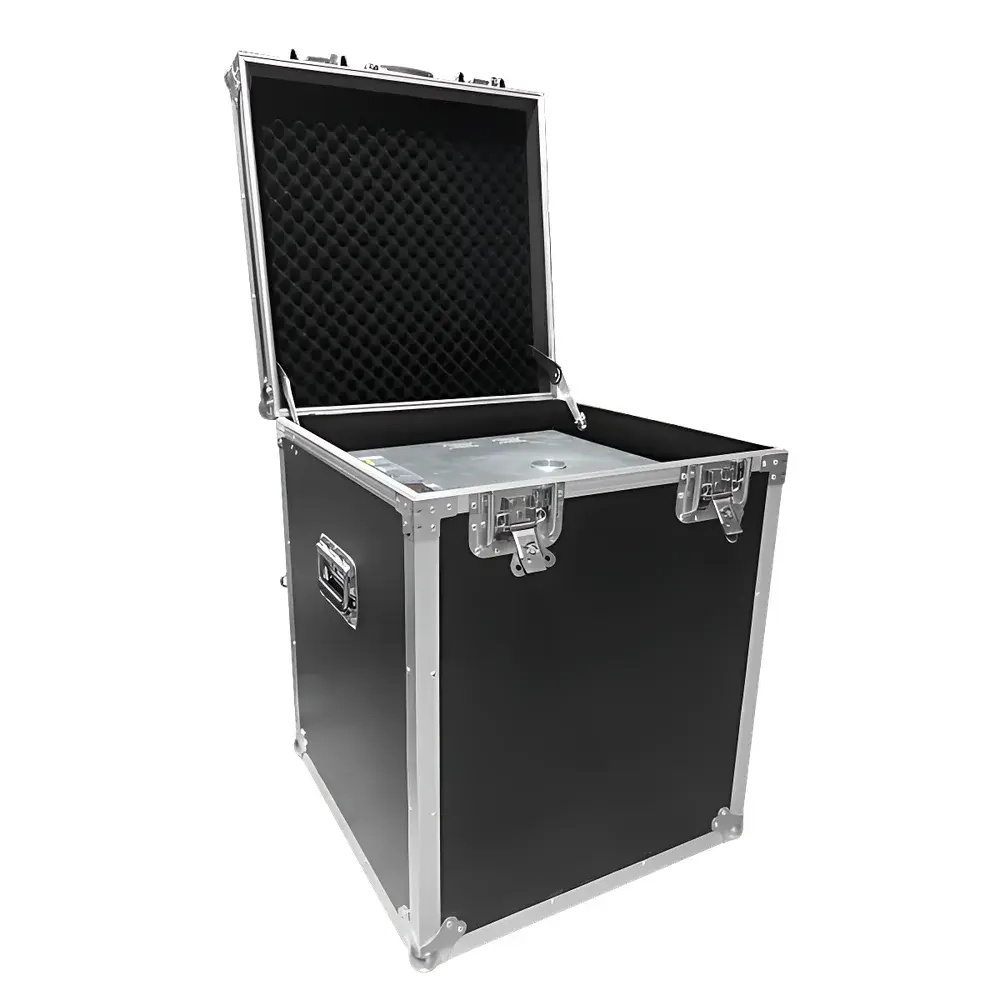
NIUMAG MicroMR06-040V-P-2 Portable Low-Field Nuclear Magnetic Resonance Analyzer
| Brand | NIUMAG |
|---|---|
| Origin | Jiangsu, China |
| Model | MicroMR06-040V-P-2 |
| Instrument Type | Low-Field NMR Analyzer |
| Sample Type | Solid-Liquid Dual-Mode |
| Magnet Type | Permanent Magnet |
| Larmor Frequency | 6.17 MHz ± 0.2 MHz |
| Sample Cavity Dimensions | 550 mm (L) × 550 mm (D) × 700 mm (H) |
| Homogeneity Region | Ø38.1 mm × H80 mm |
| Max Core Diameter | 1.5 inches |
Overview
The NIUMAG MicroMR06-040V-P-2 is a purpose-engineered portable low-field nuclear magnetic resonance (LF-NMR) analyzer designed for on-site and laboratory-based petrophysical characterization of geological samples. Operating at a Larmor frequency of 6.17 MHz—corresponding to a static magnetic field strength of approximately 0.14 T—the system leverages pulsed NMR principles to non-invasively probe hydrogen-bearing fluid and solid phases within porous media. Unlike high-field NMR spectrometers requiring cryogenic magnets and shielded rooms, this instrument employs a permanent magnet architecture optimized for field deployment, delivering robust signal-to-noise performance in demanding industrial environments. Its core measurement capability centers on spin relaxation time analysis (T1, T2, and diffusion-relaxation correlation), enabling quantitative determination of porosity, permeability, fluid saturation, movable fluid fraction, and pore-size distribution without sample destruction or chemical alteration. The system adheres to fundamental NMR physics frameworks defined in ASTM D7264 (standard test method for flexural properties of polymer matrix composites) and ISO 10427 (petroleum and natural gas industries — rock characterization by NMR), with methodology traceable to established petrophysical interpretation models including Timur-Coates and SDR.
Key Features
- True Field Portability: Integrated “Lightweight Magic-Ring” permanent magnet design and modular aviation-case packaging enable rapid deployment in mobile labs, drilling rigs, core logging units, or remote field stations—no external power conditioning or magnetic shielding required.
- Dual-Mode Sample Handling: Supports both intact cylindrical rock cores (up to 1.5-inch diameter) and disaggregated cuttings via interchangeable RF probes and optimized pulse sequences, eliminating the need for sample reshaping or consolidation.
- High-Fidelity 2D NMR Spectroscopy: Delivers T1–T2 correlation maps with sub-10 ms temporal resolution, resolving distinct fluid components (e.g., bound water, capillary-bound hydrocarbons, free oil/gas) based on relaxation contrast—critical for unconventional reservoir evaluation.
- Thermally Stable Architecture: Fourth-generation digital spectrometer platform with active thermal management ensures consistent RF calibration and spectral reproducibility across ambient temperatures ranging from 5 °C to 40 °C—validated per IEC 61000-4-2 (electromagnetic compatibility) and IP54 environmental rating.
- Robust Data Acquisition: Supports CPMG, IR, and stimulated echo sequences with variable echo spacing (0.1–20 ms), customizable repetition times (0.1–10 s), and up to 65,536 data points per FID—enabling adaptive acquisition strategies for heterogeneous samples.
Sample Compatibility & Compliance
The MicroMR06-040V-P-2 is validated for use with sedimentary rock matrices including sandstone, carbonate, shale, and tight gas sands. Its Ø38.1 mm × 80 mm homogeneous zone accommodates standard API core plugs and fragmented cuttings mounted in non-magnetic holders. All measurement protocols comply with industry-standard reporting conventions outlined in API RP 40 and ISO 14689 (geotechnical investigation and testing — identification and classification of rocks). For regulated environments—including GMP-aligned core analysis laboratories—the software supports audit-trail-enabled operation with user authentication, electronic signatures, and data integrity features aligned with FDA 21 CFR Part 11 requirements when deployed with optional secure server configuration.
Software & Data Management
Bundled with NIUMAG’s proprietary NMR AnalyzePro v4.2 software suite, the system provides end-to-end workflow automation: from sequence setup and real-time signal monitoring to automated T2 inversion (using non-negative least squares with regularization), multi-exponential fitting, and T1–T2 joint inversion via singular value decomposition. Raw FID data are stored in vendor-neutral HDF5 format with embedded metadata (pulse sequence parameters, temperature logs, operator ID). Export options include CSV, MATLAB .mat, and ASCII-compatible formats compatible with third-party reservoir simulation platforms (e.g., CMG, PETREL). Data security is reinforced through role-based access control, encrypted local storage, and optional integration with enterprise LIMS systems via RESTful API.
Applications
- Real-Time Drilling Support: On-rig cuttings analysis for lithology typing, fluid identification, and preliminary saturation assessment during directional drilling operations.
- Core Screening & Prioritization: High-throughput pre-selection of core intervals for advanced testing (e.g., SCAL, MICP), reducing lab backlog and capital expenditure on redundant analyses.
- Enhanced Oil Recovery Monitoring: In-situ tracking of fluid redistribution during waterflood or polymer injection experiments using time-resolved T2 distributions.
- Unconventional Resource Evaluation: Quantitative kerogen maturity estimation, organic porosity partitioning, and nanopore confinement effects in shale via combined T1/T2 and diffusion-weighted measurements.
- Educational & Method Development: Platform for teaching NMR fundamentals, petrophysical modeling, and inverse problem solving in geoscience curricula.
FAQ
What is the minimum detectable porosity range for this instrument?
The system achieves reliable porosity quantification down to 0.5% in consolidated sandstones and 1.2% in shales, subject to sample geometry, surface relaxation effects, and acquisition parameter optimization.
Does the instrument require liquid nitrogen or helium cooling?
No—this is a permanent magnet-based low-field system; no cryogens or vacuum systems are involved.
Can it be used for brine-saturated core analysis under elevated pressure?
Yes—when paired with NIUMAG’s optional high-pressure core holder (up to 10 MPa), the system maintains measurement fidelity under simulated reservoir conditions.
Is T2 cutoff calibration supported out-of-the-box?
Yes—preloaded calibration curves for common rock types (sandstone, limestone, dolomite) are included, with tools for user-defined cutoff derivation using centrifuge or mercury intrusion data.
How is data integrity ensured during extended field deployments?
All acquisitions include hardware timestamping, checksum validation, and automatic backup to redundant SD cards and network-attached storage—meeting GLP documentation standards for field-generated analytical data.






