
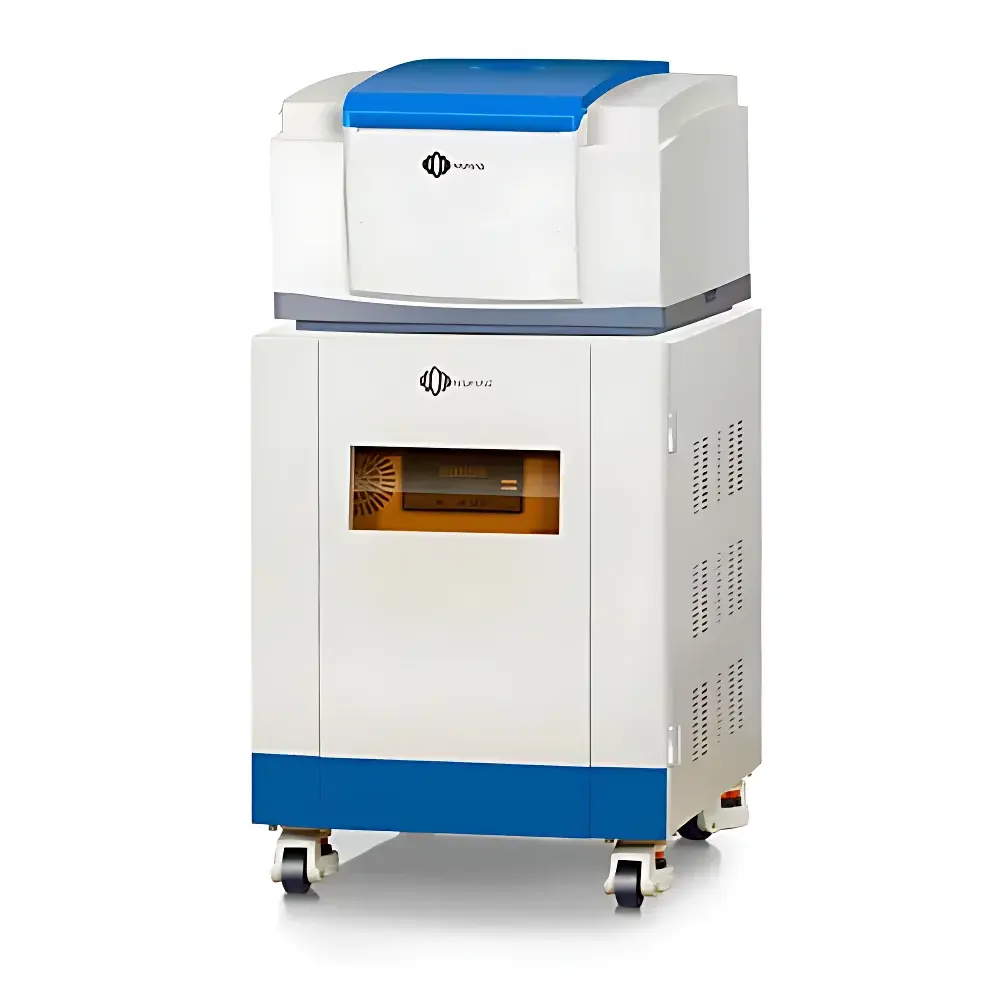
NIUMAG PQ001-H1 Low-Field Pulse NMR Hydrogen Content Analyzer for Fuels
| Brand | NIUMAG |
|---|---|
| Origin | Jiangsu, China |
| Manufacturer Type | Authorized Distributor |
| Country of Origin | China |
| Model | PQ001-H1 |
| Pricing | Available Upon Request |
| Magnet Type | Permanent Magnet |
| Magnetic Field Strength | 0.5 ± 0.08 T |
| Probe Coil Diameter | 18 mm |
| Compliant Standards | ASTM D7171, ASTM D3701, ASTM D4808 |
Overview
The NIUMAG PQ001-H1 is a dedicated low-field pulse nuclear magnetic resonance (NMR) analyzer engineered for rapid, non-destructive quantification of hydrogen content in liquid and semi-solid hydrocarbon fuels—including aviation turbine fuel, diesel, kerosene, and residual oils. Unlike high-field NMR systems designed for molecular structure elucidation, the PQ001-H1 operates on the principle of time-domain NMR (TD-NMR), measuring the transverse relaxation decay (T₂) of 1H nuclei under a stable permanent magnetic field. This physical measurement correlates directly with total mobile hydrogen concentration, enabling precise determination of mass-based hydrogen weight percent (wt%) without chemical reagents or sample combustion. Its design adheres to ASTM D7171—Standard Test Method for Hydrogen Content of Fuel Oils by Low-Resolution Nuclear Magnetic Resonance Spectroscopy—making it suitable for routine QC/QA in refinery laboratories, fuel blending facilities, and third-party testing centers operating under ISO/IEC 17025 or ASTM-compliant workflows.
Key Features
- Permanent magnet system delivering stable 0.5 ± 0.08 T field strength—no cryogens, no power consumption for magnet maintenance
- 18 mm diameter radiofrequency probe optimized for standard 10–15 mL fuel samples in disposable glass tubes
- Two calibration protocols supported: (1) primary calibration using certified pure hydrocarbons (e.g., n-dodecane), per ASTM D7171 recommendation; (2) secondary calibration using user-provided reference materials with certified H-content
- Non-invasive, non-destructive analysis: same sample can be measured repeatedly without degradation or preparation artifacts
- Insensitive to sample color, opacity, or physical morphology—valid for clear distillates, dark residuals, emulsions, and heterogeneous blends
- Minimal sample handling: no digestion, no catalysts, no ash residue—reducing analyst exposure and waste disposal requirements
- Built-in temperature stabilization (±0.5 °C) to minimize thermal drift during multi-sample batches
- Robust mechanical architecture rated for continuous operation in industrial environments (IP20 enclosure)
Sample Compatibility & Compliance
The PQ001-H1 accommodates a broad range of petroleum-derived and synthetic fuel matrices. Validated applications include aviation turbine fuels (ASTM D3701), light and middle distillates (ASTM D4808), and residual fuel oils. It also supports hydrogen quantification in feedstocks such as cracked naphthas, hydrotreated fractions, and bio-blendstocks (e.g., FAME, HVO). The instrument meets functional requirements for GLP-compliant laboratories and supports audit-ready data integrity through timestamped raw FID acquisition, operator ID logging, and electronic signature-capable reporting. While not a regulated medical device, its software architecture aligns with FDA 21 CFR Part 11 principles for electronic records and signatures where required by internal SOPs.
Software & Data Management
The proprietary NMIView™ software provides intuitive workflow-driven operation—from sample loading and parameter selection to automatic T₂ inversion, calibration application, and report generation. All raw free induction decay (FID) data are stored in vendor-neutral binary format with embedded metadata (field strength, temperature, pulse sequence parameters, operator ID). Batch processing mode enables unattended analysis of up to 96 samples with configurable pass/fail thresholds and auto-flagging of outliers. Export options include CSV, PDF, and XML formats compatible with LIMS integration. Audit trail functionality logs all user actions, method modifications, and calibration events with immutable timestamps—supporting traceability for ISO 17025 accreditation or internal quality audits.
Applications
- Hydrogen content verification in finished fuel batches prior to dispatch
- Real-time monitoring of hydrotreating unit performance via feedstock/product H-content differentials
- Quality screening of biodiesel blends and renewable diesel components
- Supporting ASTM D7171 compliance for regulatory submissions and contract specifications
- Hydrogen-to-carbon (H/C) ratio estimation when combined with carbon content data from elemental analyzers
- Supplementary water/oil phase quantification in emulsified fuels using multi-exponential T₂ analysis
- Routine calibration verification using reference materials traceable to NIST SRMs
FAQ
Does the PQ001-H1 require helium or other cryogenic cooling?
No—its permanent magnet design eliminates the need for liquid helium, nitrogen, or active cooling systems.
Can the instrument measure hydrogen in solid or viscous samples?
Yes—samples including heavy fuel oil, asphaltene suspensions, and wax-containing distillates are compatible if loaded within the 18 mm probe’s geometric constraints and relaxation time limits.
Is method validation support available?
NIUMAG provides IQ/OQ documentation templates, ASTM D7171 implementation guides, and optional on-site qualification services.
How often must the system be recalibrated?
Calibration stability is verified daily using a sealed reference standard; full recalibration is recommended every 6 months or after major hardware service.
Is the software compliant with 21 CFR Part 11?
While the base software is not pre-certified, it includes all technical controls required for Part 11 compliance—including role-based access, electronic signatures, and audit trails—when configured per customer SOPs.






