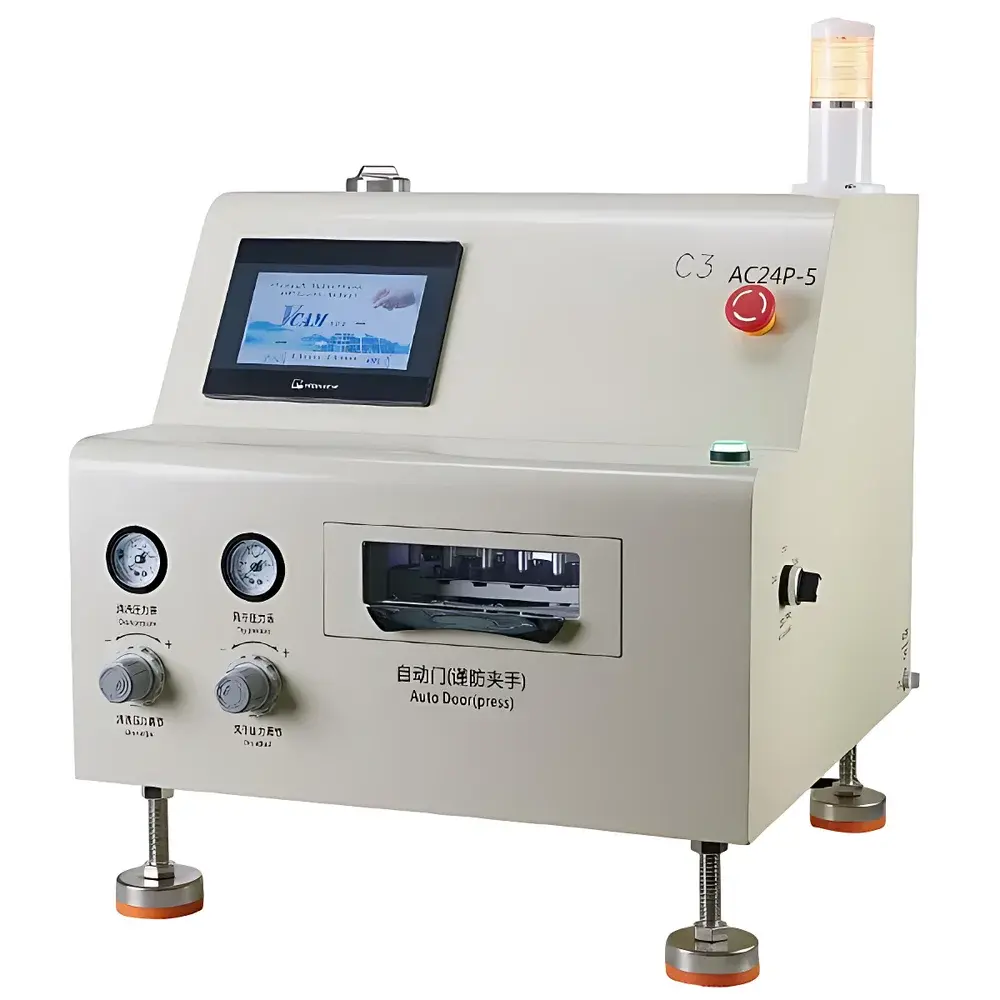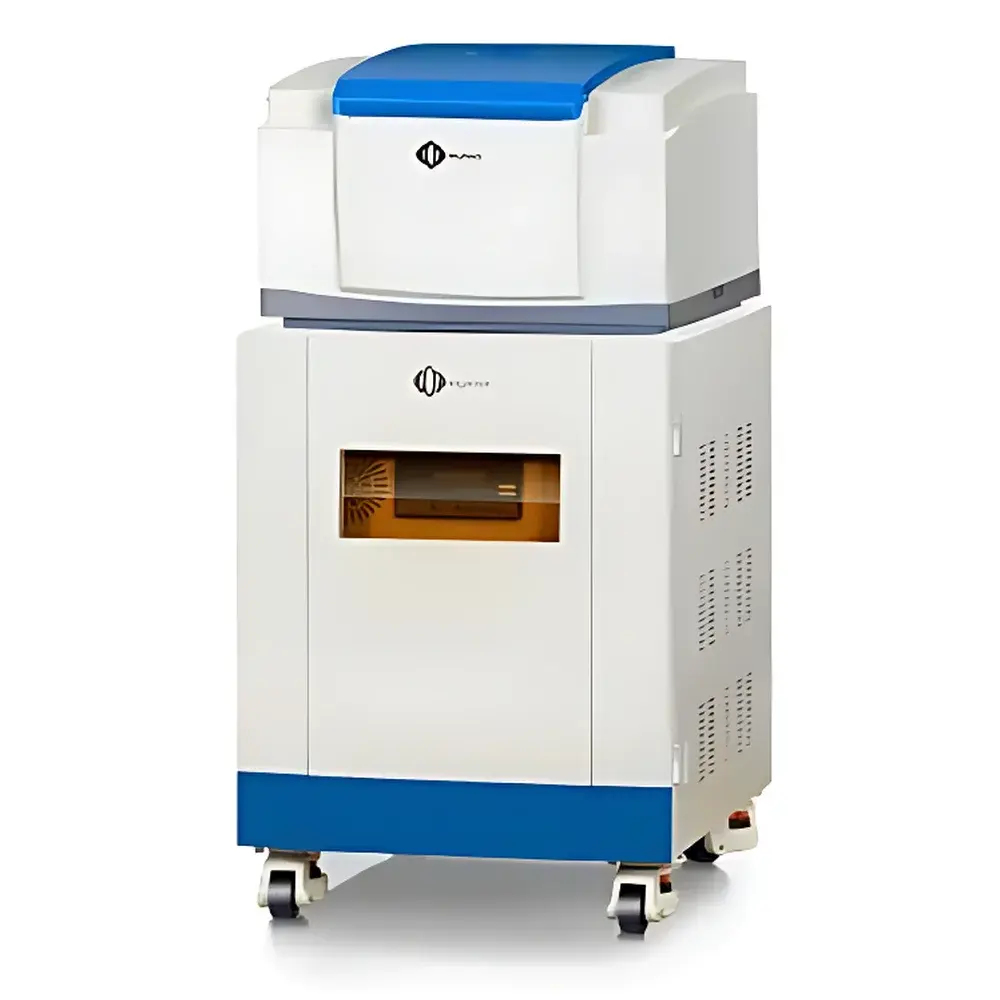
NIUMAG PQ001-seeds Benchtop Low-Field NMR Analyzer for Seed Oil and Moisture Content
| Brand | NIUMAG |
|---|---|
| Origin | Jiangsu, China |
| Manufacturer Type | Authorized Distributor |
| Country of Origin | China |
| Model | PQ001-seeds |
| Instrument Category | Seed Moisture and Oil Content Analyzer |
| Moisture Measurement Range (%) | 0–100% |
| Magnet Type | Permanent Magnet |
| Magnetic Field Strength | 0.5 ± 0.08 T |
| Larmor Frequency | 21.3 MHz |
| Probe Coil Diameter | 25 mm |
Overview
The NIUMAG PQ001-seeds is a benchtop low-field nuclear magnetic resonance (NMR) analyzer engineered specifically for rapid, non-destructive quantification of oil and moisture content in intact seeds. Based on the physical principle of proton spin relaxation—specifically transverse relaxation time (T2) decay analysis—the instrument detects hydrogen-bearing compounds (e.g., triglycerides in oil and bound/free water molecules) without chemical extraction or sample destruction. Unlike conventional gravimetric or solvent-based methods, this system operates on intact, unprocessed seed samples, preserving biological integrity while delivering quantitative data within minutes. Introduced in 2008 and continuously refined through field deployment across agricultural research institutes, seed certification labs, and breeding programs, the PQ001-seeds integrates a compact permanent magnet system with a dedicated 25 mm diameter radiofrequency probe, optimized for heterogeneous biological matrices. Its 21.3 MHz operating frequency ensures robust signal-to-noise performance under ambient laboratory conditions, and its modular architecture supports configurable acquisition protocols for species-specific calibration.
Key Features
- Non-invasive, non-destructive measurement: No grinding, drying, or solvent extraction required—samples remain fully recoverable post-analysis.
- Simultaneous dual-parameter output: Independent quantification of total oil content (wt%) and total moisture content (wt%), with optional T2 distribution analysis to distinguish between immobilized, capillary, and free water phases.
- High reproducibility: Intra- and inter-laboratory repeatability ≤ ±0.3% (RSD) for oil and ≤ ±0.2% (RSD) for moisture across standardized seed batches (e.g., soybean, peanut, rapeseed).
- Automated frequency lock and shimming: Proprietary auto-tuning algorithm eliminates manual probe tuning; self-locking resonance frequency adjustment ensures stable operation even under minor temperature drift or electromagnetic fluctuations.
- Benchtop one-box design: Integrated magnet, console, and control PC reduce footprint (< 600 × 450 × 380 mm) and eliminate external cryogens or RF shielding requirements.
- Flexible calibration framework: Supports user-defined calibration models via linear or multi-parameter regression using reference datasets from AOAC 992.17, ISO 10565, or internal lab-validated standards.
Sample Compatibility & Compliance
The PQ001-seeds accommodates whole, halved, or lightly cracked seeds up to 25 mm in maximum dimension—including peanut, soybean, corn, sesame, sunflower, cottonseed, olive, and flax—without preprocessing. Sample mass range: 2–15 g per measurement. The system complies with core principles of Good Laboratory Practice (GLP) and supports audit-ready workflows: all acquisitions are timestamped, operator-logged, and stored with full metadata (pulse sequence parameters, temperature, coil loading status). While not FDA 21 CFR Part 11–certified out-of-the-box, the software architecture permits integration with validated LIMS environments and enables electronic signature capability when deployed with institutional IT governance controls. Method validation documentation aligns with ISO/IEC 17025 requirements for testing laboratories.
Software & Data Management
The embedded Windows-based acquisition and analysis suite includes real-time spectrum preview, automated T2 inversion (non-negative least squares), and batch processing for up to 96 samples. Raw FID data and processed T2 distributions are exportable in ASCII or HDF5 format. Calibration curves can be saved as encrypted .nmc files; report templates support customizable fields (sample ID, operator, date, method version) and PDF/CSV export. Data backup is supported via USB 3.0 interface or network-mapped drive. Firmware updates are delivered via secure HTTPS channel with SHA-256 integrity verification.
Applications
- Routine quality control in seed conditioning and oilseed processing facilities—monitoring lot-to-lot oil yield consistency pre-pressing.
- Breeding program phenotyping: high-throughput screening of oil/moisture traits across segregating populations under controlled-environment trials.
- Post-harvest physiology studies: tracking water phase transitions during drying, storage, or priming treatments via T2 component analysis.
- Regulatory compliance testing: supporting ISO 659 (oil content in oilseeds) and ISO 665 (moisture content in oilseeds) with documented traceability to NIST-traceable reference materials.
- Cross-sector extension: validated use cases in cereal grain dormancy assessment, nut roasting optimization, and biofuel feedstock characterization.
FAQ
Does the PQ001-seeds require cryogenic cooling or external power conditioning?
No. It uses a passively stabilized permanent magnet and operates on standard 100–240 V AC, 50/60 Hz input without voltage regulation or uninterruptible power supply requirements.
Can it differentiate between surface moisture and internal seed moisture?
Yes—via multi-exponential T2 decay analysis, the system resolves at least three relaxation components corresponding to immobile (cell wall-bound), intermediate (capillary), and bulk (free) water pools.
Is method validation support available for regulatory submissions?
NIUMAG provides application notes, SOP templates, and IQ/OQ documentation packages aligned with ISO/IEC 17025 and ASTM D8137 guidance for instrument qualification.
What maintenance is required beyond routine calibration?
Annual magnet homogeneity check and probe tuning verification are recommended; no consumables or scheduled part replacements are specified within the first five years of operation.
How does it compare to Soxhlet extraction for oil content?
Unlike Soxhlet (AOAC 920.39), which measures extractable lipid mass and may underestimate structurally bound oils, NMR detects all mobile protons in triglycerides—yielding higher correlation with pressing yield and metabolic oil potential.