
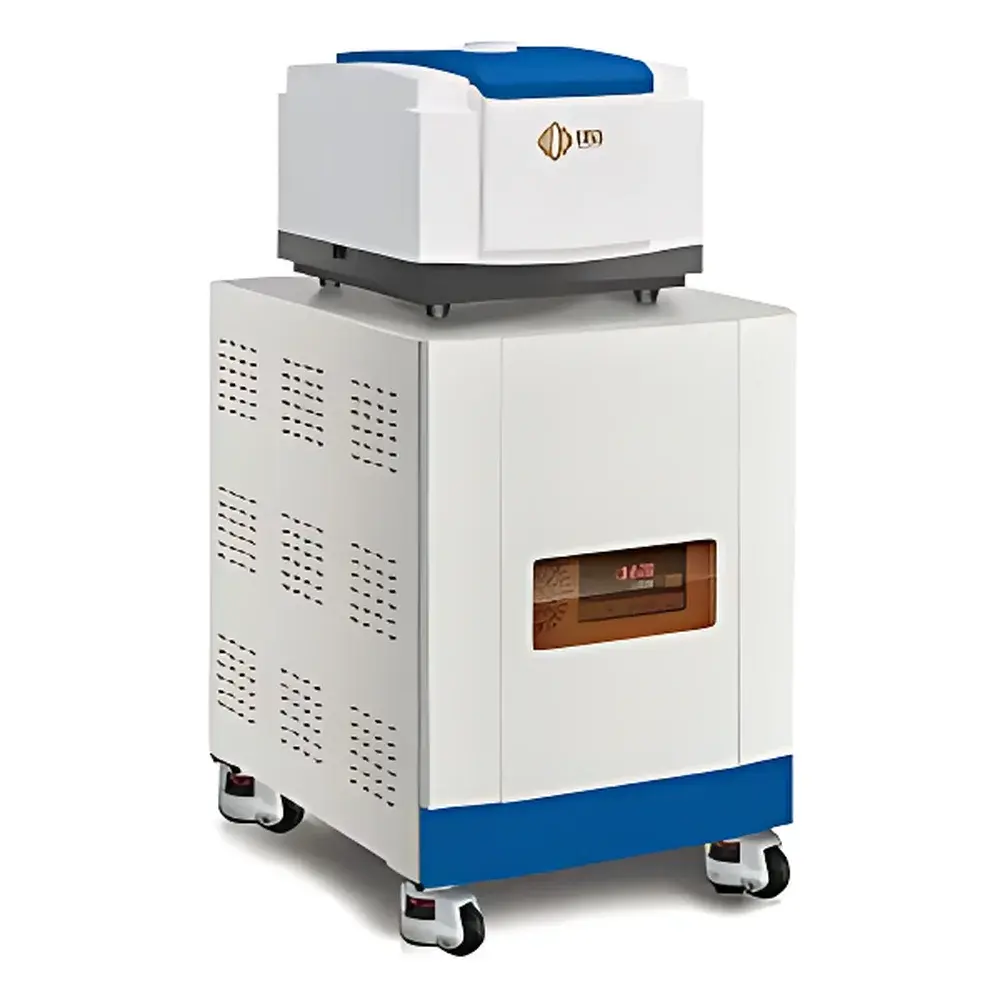
NIUMAG PQ001 Benchtop NMR Oil and Moisture Analyzer for Seed Testing
| Brand | NIUMAG |
|---|---|
| Origin | Jiangsu, China |
| Manufacturer Type | Authorized Distributor |
| Country of Origin | China |
| Model | PQ001 |
| Instrument Type | Seed Oil & Moisture Analyzer (NMR-based) |
| Magnet Type | Permanent Magnet |
| Magnetic Field Strength | 0.5 ± 0.08 T |
| Probe Coil Diameter | 25 mm |
| Measurement Principle | Time-Domain Nuclear Magnetic Resonance (TD-NMR) |
Overview
The NIUMAG PQ001 is a benchtop time-domain nuclear magnetic resonance (TD-NMR) analyzer engineered specifically for non-destructive, quantitative determination of oil content and moisture in agricultural seeds. Unlike conventional extraction- or spectroscopy-based methods, the PQ001 leverages the intrinsic magnetic properties of hydrogen nuclei (1H) in triglycerides and water molecules. When subjected to a stable 0.5 T permanent magnetic field, these protons undergo spin alignment and subsequent relaxation—generating detectable free induction decay (FID) signals. The amplitude and decay characteristics of the FID are directly correlated with oil concentration (via mobile proton density in lipid chains) and water content (via bound vs. free water relaxation components). This physics-based approach eliminates reliance on calibration curves derived from reference standards alone, enabling robust quantification across diverse seed matrices—including peanut, soybean, corn, sunflower, rapeseed, and olive—without sample grinding, solvent extraction, or thermal treatment.
Key Features
- Non-invasive and non-destructive analysis: intact seeds can be measured repeatedly without physical or chemical alteration.
- Simultaneous dual-parameter output: independent quantification of oil content (wt%) and moisture content (wt%) in a single 60–90 second measurement cycle.
- Permanent magnet architecture: zero cryogen consumption, minimal maintenance, and stable field homogeneity suitable for routine laboratory and field-deployable QC environments.
- 25 mm diameter RF probe optimized for heterogeneous seed samples—accommodates whole kernels or small batches (typically 5–20 g) with reproducible positioning.
- Integrated temperature stabilization: maintains probe ambient within ±0.5 °C to minimize relaxation time drift during sequential measurements.
- Compliance-ready firmware: supports audit trails, user access levels, and electronic signature functionality aligned with GLP and internal quality system requirements.
Sample Compatibility & Compliance
The PQ001 is validated for use with raw, roasted, and hulled seeds commonly processed in oilseed breeding programs, grain trading, and feed formulation facilities. It accepts irregularly shaped samples—including whole peanuts, soybeans, sesame, flax, and mustard seeds—without mandatory size reduction. For regulatory alignment, measurement protocols are compatible with ASTM D7420–22 (Standard Practice for Determining Oil Content in Oilseeds by Low-Field NMR) and ISO 10565:1993 (Oilseeds — Simultaneous Determination of Oil and Water Contents — Method Using Pulsed NMR). While not FDA-cleared as a medical device, its data integrity features—including timestamped raw FID storage, parameter lockout, and operator log—support traceability under ISO/IEC 17025-accredited testing laboratories and GMP-aligned seed processing operations.
Software & Data Management
The instrument operates via NIUMAG’s proprietary NMI-Studio software (v4.2+), delivered with full English UI and configurable reporting templates. Raw FID data, T2 relaxation spectra, and multi-exponential fitting results are stored in HDF5 format for long-term archival and third-party analysis (e.g., MATLAB, Python SciPy). Software modules include batch mode operation, statistical process control (SPC) charting, outlier detection based on signal-to-noise ratio (SNR) thresholds, and automated pass/fail flagging against user-defined specification limits. All measurement parameters—including pulse sequence timing, gain settings, and number of scans—are logged with each result. Export options include CSV, PDF, and XML, with optional integration into LIMS via RESTful API (requires enterprise license).
Applications
- High-throughput screening of oil content in breeding lines during early-generation selection.
- Real-time moisture mapping to assess drying uniformity and predict storage stability in silo management.
- Distinguishing between free water (T2 > 50 ms) and bound water (T2 < 10 ms) phases—critical for evaluating seed viability and germination potential.
- Verification of oil yield predictions prior to mechanical pressing or solvent extraction in oil mill QA/QC labs.
- Supporting ISO 5502-compliant oilseed trade settlements where rapid, arbitration-grade results are contractually required.
FAQ
Does the PQ001 require daily calibration with reference standards?
No. The instrument uses absolute signal amplitude referencing against an internal noise baseline and hardware-stabilized RF gain. Routine verification with a single certified oil standard (e.g., sunflower oil phantom) is recommended weekly.
Can it differentiate between oil and protein-bound water?
Yes—through T2 relaxometry. Protein-associated protons exhibit distinct relaxation kinetics compared to bulk oil or free water, enabling deconvolution of three-phase composition (oil, free water, bound water) when using multi-exponential fitting algorithms.
Is the magnet sensitive to ambient temperature fluctuations?
The permanent magnet is housed in a thermally insulated chamber with active air circulation; performance remains stable across 15–30 °C ambient operating range.
What sample preparation is required?
None beyond representative sub-sampling. Whole, unshelled seeds may be measured directly. For improved precision in heterogeneous lots, homogenization (e.g., coarse grinding) is optional but not mandatory.
Does the system comply with 21 CFR Part 11?
The base configuration meets core requirements (audit trail, electronic signatures, role-based access); full Part 11 compliance requires optional validation package and documented IQ/OQ/PQ protocols.





