
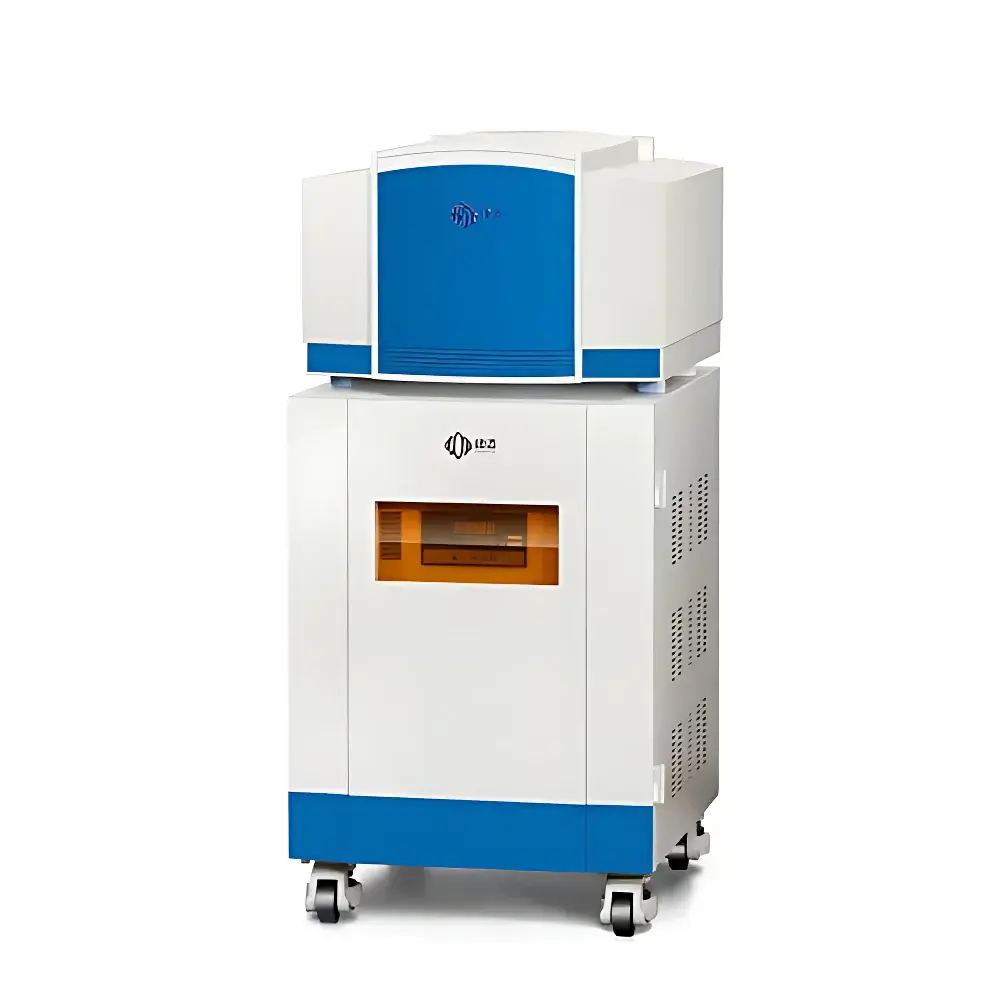
NIUMAG NMI20 Benchtop Low-Field Nuclear Magnetic Resonance Relaxometer and Imaging Analyzer
| Brand | NIUMAG |
|---|---|
| Origin | Jiangsu, China |
| Manufacturer Type | Authorized Distributor |
| Product Category | Domestic |
| Model | NMI20 |
| Instrument Type | Low-Field NMR Relaxometer & Imager |
| Sample Compatibility | Solid-Liquid Dual-Phase |
| Magnet Type | Permanent Magnet |
| Magnetic Field Strength | 0.5 ± 0.08 T |
| Larmor Frequency | 21.3 MHz |
| Probe Coil Diameter | 15 mm |
| Effective Sample Volume | Ø12.5 mm × H30 mm |
| Relaxation Analysis | T₁, T₂, T₂* quantification |
| Imaging Modes | Proton Density, T₁-weighted, T₂-weighted |
| Contrast Agent Analysis | r₁ and r₂ relaxivity determination |
Overview
The NIUMAG NMI20 is a compact, benchtop low-field nuclear magnetic resonance (LF-NMR) relaxometer and imaging analyzer engineered for quantitative relaxation time analysis and non-invasive spatial mapping in research and quality control environments. Operating at a static magnetic field of 0.5 ± 0.08 T (Larmor frequency: 21.3 MHz), the system leverages permanent magnet architecture to deliver stable, drift-free field homogeneity suitable for longitudinal (T₁), transverse (T₂), and effective transverse (T₂*) relaxation measurements. Unlike high-field superconducting NMR systems, the NMI20 is optimized for routine, robust characterization of heterogeneous, opaque, or moisture-rich samples—particularly relevant in pharmaceutical formulation development, polymer science, food texture analysis, and contrast agent evaluation. Its integrated design supports both spectroscopic relaxation quantification and 2D slice-selective spin-echo imaging without cryogens or RF shielding rooms, enabling deployment in standard laboratory settings under ambient conditions.
Key Features
- Simultaneous relaxation time analysis (T₁, T₂, T₂*) with customizable pulse sequences including inversion recovery, CPMG, and gradient echo
- Dual-mode operation: quantitative relaxometry and multi-contrast MRI (proton density, T₁-weighted, T₂-weighted)
- Optimized 15-mm-diameter RF probe coil with homogeneous B₁ field over Ø12.5 mm × 30 mm cylindrical sample volume
- Permanent magnet system ensuring long-term field stability (<0.01% drift/24 h) and zero cryogen consumption
- Integrated temperature-controlled sample chamber (optional) supporting studies from 0 °C to 60 °C
- Compliance-ready architecture with audit trail logging, user access levels, and electronic signature support for GLP/GMP-aligned workflows
Sample Compatibility & Compliance
The NMI20 accommodates solid, liquid, semi-solid, and multiphase samples—including gels, emulsions, porous media, hydrogels, and contrast agent suspensions—without requiring sample dissolution or labeling. Its low-field configuration eliminates susceptibility artifacts common in high-field MRI, making it especially suitable for paramagnetic contrast agents (e.g., Gd-based, Mn-based, or iron oxide nanoparticles). The system supports standardized relaxivity (r₁, r₂) determination per ISO/TS 10993-17 and ASTM E2917 guidelines. Data acquisition and processing comply with FDA 21 CFR Part 11 requirements when configured with validated software modules and role-based authentication. All measurement protocols are traceable to internal reference standards (e.g., doped water phantoms) and support inter-laboratory reproducibility studies aligned with ISO/IEC 17025 principles.
Software & Data Management
Control and analysis are performed via NIUMAG’s proprietary MesoMR software suite, built on a modular, scriptable platform compatible with Windows 10/11. The interface provides real-time spectrum preview, automated peak fitting for multi-exponential T₂ decay analysis, and ROI-based image quantification. Raw FID and k-space data are stored in vendor-neutral HDF5 format, facilitating third-party integration with MATLAB, Python (via PyNMR), or commercial statistical packages. Audit logs record operator ID, timestamp, parameter sets, and data modifications. Software validation documentation (IQ/OQ/PQ templates) and CSV export with metadata headers (including pulse sequence, TE/TR, SNR, and temperature) are included to support regulatory submissions and method transfer.
Applications
- Pharmaceutical R&D: Quantifying water mobility in lyophilized formulations, monitoring gelation kinetics, and evaluating r₁/r₂ relaxivities of novel MRI contrast agents
- Materials science: Characterizing pore-size distribution in catalysts, cementitious materials, and battery electrolytes via T₂ distribution analysis
- Food science: Assessing oil binding capacity in meat analogs, measuring moisture migration in baked goods, and detecting adulteration in edible oils
- Life sciences: In vitro assessment of cell-laden hydrogel degradation, myofibrillar protein denaturation, and tissue-mimetic phantom validation
- Quality assurance: Batch-to-batch consistency testing of polymer dispersions, emulsion stability screening, and coating thickness estimation in laminated films
FAQ
What is the minimum sample volume required for reliable T₂ measurement?
A minimum volume of 0.5 mL (within the Ø12.5 mm × 30 mm detection zone) is recommended to ensure sufficient signal-to-noise ratio for mono- and bi-exponential T₂ fitting.
Can the NMI20 be used for in vivo small-animal imaging?
No—the NMI20 is designed exclusively for ex vivo sample analysis; its field strength and gradient performance do not meet resolution or penetration depth requirements for live animal imaging.
Is external calibration required before each experiment?
No—factory-calibrated RF power, receiver gain, and timing parameters are retained across sessions; users perform only routine signal-to-noise verification using a reference phantom.
Does the system support diffusion-weighted measurements (e.g., PFG-NMR)?
Not natively; the standard configuration lacks programmable pulsed field gradients. Diffusion analysis requires optional hardware upgrade and corresponding sequence licensing.
How is data integrity maintained during long-term storage?
All raw and processed data include embedded timestamps, instrument serial number, operator ID, and acquisition parameters; HDF5 files are checksum-verified upon import/export to prevent silent corruption.







