
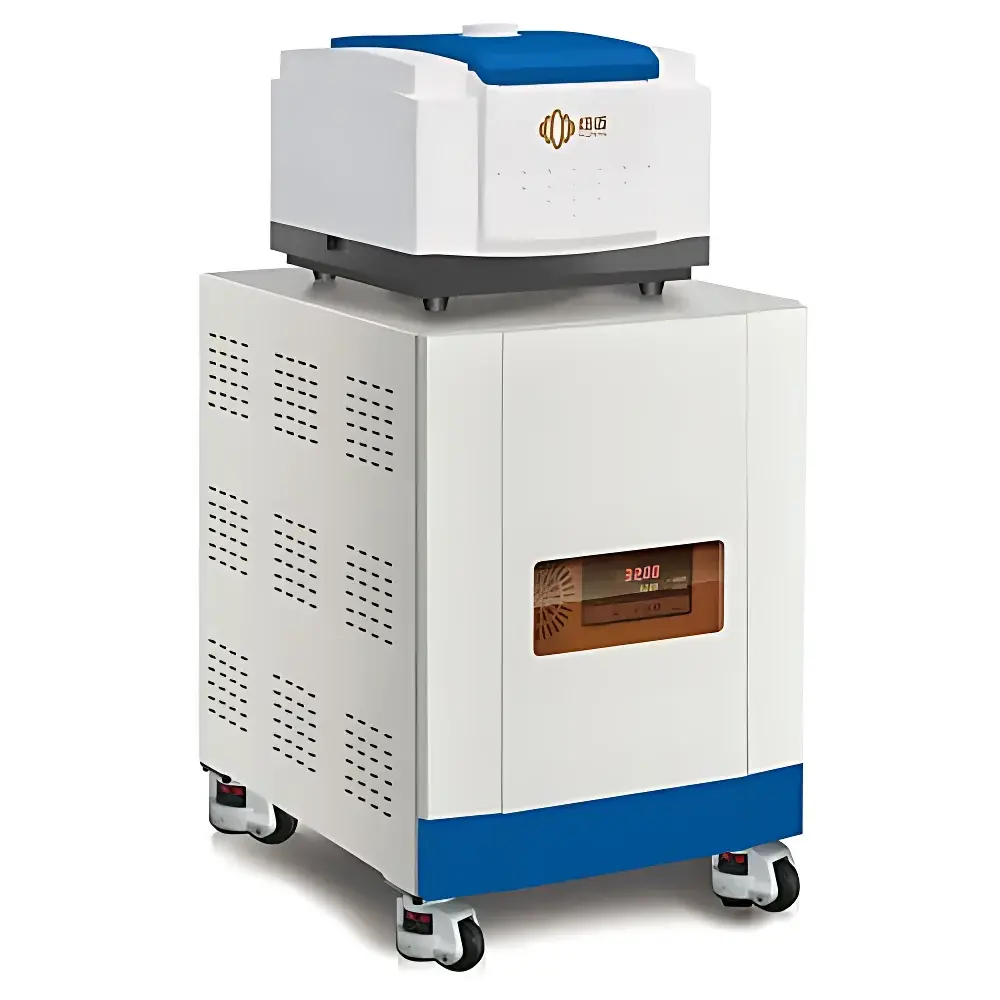
NIUMAG PQ001-20-015V Low-Field Nuclear Magnetic Resonance Relaxometry Analyzer for MRI Contrast Agents
| Brand | NIUMAG |
|---|---|
| Origin | Shanghai, China |
| Manufacturer Type | Authorized Distributor |
| Regional Classification | Domestic (PRC) |
| Model | PQ001-20-015V |
| Instrument Type | Low-Field NMR Relaxometer |
| Sample Form | Liquid |
| Software | Dedicated Contrast Agent Relaxivity Analysis Suite (T₁/T₂, R₁/R₂, r₁/r₂) |
| System Architecture | Integrated Single-Board Spectrometer (RF + Temperature Control + Industrial PC) |
| Probe Design | Fixed-Tune RF Coil Assembly |
Overview
The NIUMAG PQ001-20-015V is a purpose-built low-field nuclear magnetic resonance (LF-NMR) relaxometry analyzer engineered specifically for quantitative characterization of MRI contrast agents. Operating at a static magnetic field strength of 0.5 T (21.3 MHz for 1H), it leverages pulsed spin-echo and inversion-recovery methodologies to deliver high-reproducibility measurements of longitudinal (T₁) and transverse (T₂) relaxation times in liquid-phase samples. Unlike high-field NMR spectrometers optimized for structural elucidation, this system is calibrated and validated for relaxivity quantification—enabling direct calculation of R₁ (s⁻¹·mM⁻¹), R₂ (s⁻¹·mM⁻¹), and intrinsic relaxivities r₁ and r₂ under standardized temperature-controlled conditions (±0.1 °C). Its compact footprint (W × D × H: 420 × 380 × 290 mm), integrated single-board architecture, and coil-integrated probe design minimize setup variability and maximize signal stability—critical for inter-laboratory comparability in preclinical contrast agent development and QC workflows.
Key Features
- Integrated single-board NMR spectrometer housing RF transmitter/receiver, digital pulse programmer, temperature controller, and industrial-grade embedded PC—eliminating external cabling and synchronization drift.
- Dedicated contrast agent analysis software with dual-language UI (English/Chinese), automated concentration-series acquisition, and ISO/IEC 17025-aligned data processing pipelines.
- Fixed-tune, high-Q solenoid RF coil optimized for aqueous solutions (inner diameter: 15 mm; sample volume: 0.3–0.8 mL), enabling rapid tuning/matching without manual capacitive adjustment.
- Onboard Peltier-based temperature regulation (range: 10–40 °C; stability: ±0.1 °C), traceable to NIST-certified reference sensors, ensuring compliance with USP and ICH Q5C thermal consistency requirements.
- Automated relaxation time fitting using non-linear least-squares algorithms (Levenberg–Marquardt), with residual diagnostics and confidence interval reporting for each T₁/T₂ decay curve.
Sample Compatibility & Compliance
The PQ001-20-015V accepts standard 10-mm or 15-mm OD glass NMR tubes containing aqueous suspensions or solutions of paramagnetic contrast agents—including Gd³⁺-based chelates (e.g., Gd-DTPA, Gd-DOTA), iron oxide nanoparticles (SPIONs), Mn²⁺ complexes, and emerging manganese-based alternatives. It supports measurement of both purified formulations and biologically relevant matrices such as cell lysates, tumor homogenates, and plasma-diluted samples—provided viscosity remains below 20 cP and particulate content is <5 µm to avoid coil loading artifacts. All hardware and firmware comply with IEC 61000-6-3 (EMC emission limits) and IEC 61010-1 (safety for laboratory equipment). Data audit trails, user access logs, and electronic signature support align with FDA 21 CFR Part 11 and EU Annex 11 expectations for regulated environments.
Software & Data Management
The proprietary RelaxAgent™ software provides full workflow control—from method definition (pulse sequence selection, TR/TE optimization, number of scans) to raw FID/echo train export in Bruker-compatible binary format (.fid) and CSV. Built-in relaxivity modules compute R₁ and R₂ via linear regression of 1/T₁ and 1/T₂ versus molar metal concentration, automatically flagging outliers beyond ±2σ. Calibration curves are saved with metadata (date/time, operator ID, instrument serial, temperature log), and reports export in PDF/A-1b format for long-term archival. Optional integration with LIMS via HL7 v2.5 or RESTful API enables seamless data ingestion into enterprise quality systems.
Applications
- Preclinical relaxivity benchmarking of novel Gd-, Fe-, and Mn-based contrast candidates against clinical references (e.g., Magnevist®, Feridex®).
- Stability assessment of nanoparticle colloids under accelerated aging (temperature, pH, ionic strength variation).
- Quantitative T₁/T₂ mapping of ex vivo tissue specimens for correlation with histopathology.
- QC release testing of commercial contrast agent batches per pharmacopoeial monographs (EP 2.2.47, JP 6.07).
- Structure–relaxivity relationship studies during chelate ligand optimization campaigns.
FAQ
What magnetic field strength does the PQ001-20-015V operate at?
It utilizes a permanent magnet delivering a homogeneous 0.5 T field (21.3 MHz for 1H), optimized for relaxivity rather than spectral resolution.
Can the system measure solid or semi-solid samples?
No—it is validated exclusively for low-viscosity liquid samples (≤20 cP); gel-phase or tissue sections require dedicated imaging-mode LF-NMR platforms.
Is temperature control mandatory for relaxivity testing?
Yes. Per ISO/TS 10968 and ACR MR Safety Guidelines, relaxivity values must be reported at defined temperatures (typically 37 °C); the integrated Peltier system ensures metrological traceability.
Does the software support GLP-compliant audit trails?
Yes. All acquisitions, parameter edits, and report generations are timestamped, user-attributed, and immutably logged with SHA-256 hash integrity verification.
What file formats are supported for data export?
Raw time-domain data (.fid), processed relaxation parameters (.csv), and regulatory-ready PDF reports with embedded metadata and digital signatures.
Related Products




