
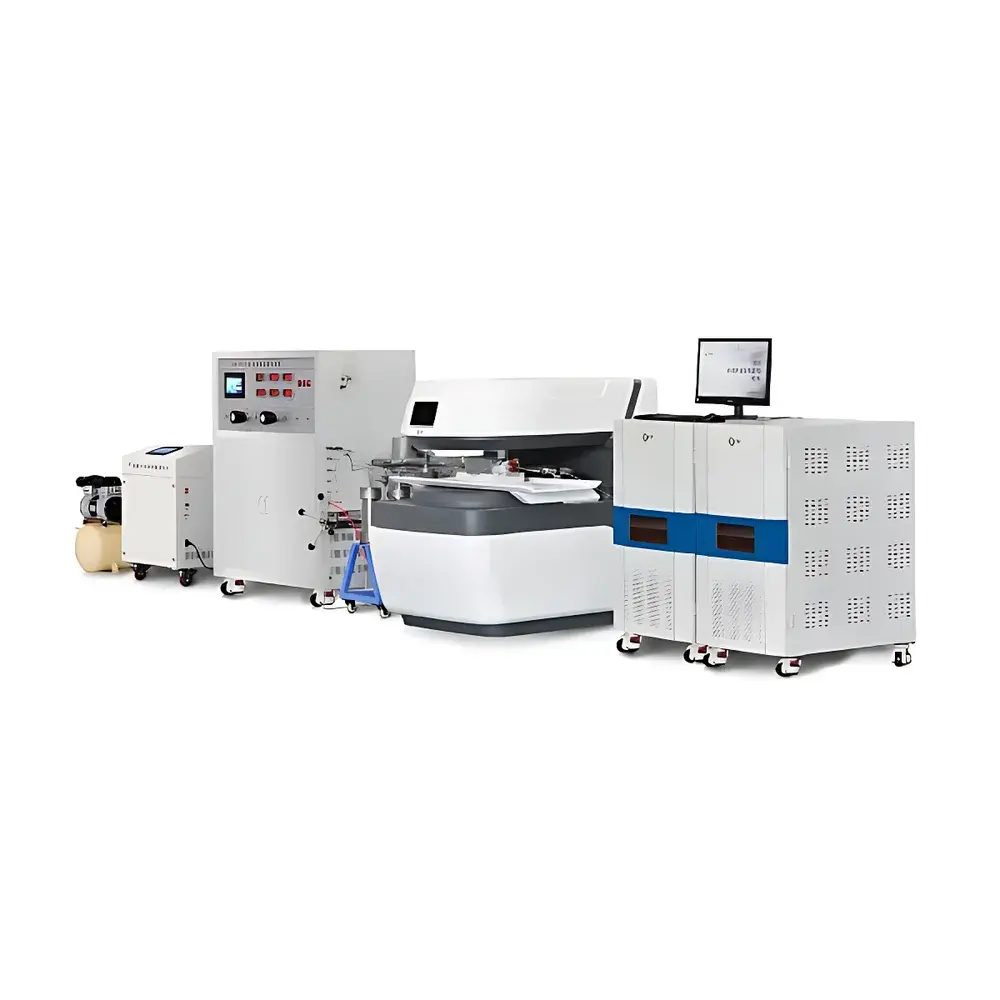
NIUMAG MacroMR-5 Core Flooding Online NMR Analyzer
| Brand | NIUMAG |
|---|---|
| Origin | Jiangsu, China |
| Manufacturer Type | Authorized Distributor |
| Product Category | Domestic |
| Model | MacroMR-5 |
| Instrument Type | Low-Field Nuclear Magnetic Resonance Analyzer |
| Sample Type | Solid-Liquid Dual-Phase |
Overview
The NIUMAG MacroMR-5 Core Flooding Online NMR Analyzer is a purpose-built low-field nuclear magnetic resonance (NMR) system engineered for real-time, non-invasive monitoring of multiphase fluid displacement in reservoir rock cores under simulated subsurface conditions. It integrates a high-stability permanent magnet platform with a modular core flooding apparatus to enable concurrent control of temperature (up to 150 °C), confining pressure (up to 70 MPa), and pore-fluid injection rates. The system operates on the physical principle of proton spin relaxation in hydrogen-bearing fluids (e.g., brine, oil, CO₂-saturated water), where transverse (T₂) and longitudinal (T₁) relaxation times are directly correlated with pore geometry, fluid saturation, wettability, and flow dynamics. Unlike destructive or indirect methods (e.g., resistivity logging or effluent sampling), this NMR-based approach delivers quantitative, spatially resolved data without altering sample integrity—making it indispensable for reservoir characterization, enhanced oil recovery (EOR) evaluation, and unconventional resource assessment.
Key Features
- Configurable high-fidelity magnet system: C-frame open design with field strength of 0.3 T ± 0.03 T and homogeneity ≤50 ppm over a 60 mm DSV; optional 0.5 T variant available for improved signal-to-noise ratio in low-permeability shales.
- Dual-directional sample loading: Supports both horizontal and vertical insertion paths to accommodate standard cylindrical core plugs (Ø25–60 mm × up to 100 mm H) and custom-shaped specimens.
- Integrated environmental simulation: Standard configuration enables operation at 100 °C / 40 MPa; high-temperature–high-pressure (HTHP) variants support 150 °C / 70 MPa via certified pressure vessels and thermally insulated probe housings compliant with ASME BPVC Section VIII Div. 1.
- Multi-dimensional NMR acquisition: Simultaneous acquisition of 1D T₁/T₂ distributions, 2D T₁–T₂ correlation maps, and T₁/T₂-weighted MRI slices with sub-second temporal resolution during active flooding.
- Real-time data synchronization: Hardware-triggered acquisition aligns NMR pulse sequences with pressure transducer outputs, flowmeter readings, and back-pressure regulator status—ensuring traceable time-series correlation across all physical domains.
- Fourth-generation digital spectrometer architecture: FPGA-based pulse programmer with <10 ns timing resolution, 16-bit ADC digitization, and on-board FFT processing for immediate spectral reconstruction and baseline correction.
Sample Compatibility & Compliance
The MacroMR-5 accepts intact or sectioned core samples from sandstone, carbonate, shale, and coal matrices—including partially saturated, clay-rich, or bitumen-impregnated specimens. Its solid–liquid dual-phase capability supports simultaneous detection of mobile water, immobile bound water, hydrocarbon phases, and supercritical CO₂. All hardware modules conform to IEC 61000-6-2 (immunity) and IEC 61000-6-4 (emission) standards. Data acquisition workflows comply with GLP principles, supporting audit trails, electronic signatures, and user-access-level controls. Optional FDA 21 CFR Part 11 compliance packages include encrypted raw data storage, immutable metadata logging, and role-based permission management for regulated EOR validation studies.
Software & Data Management
NIUMAG’s proprietary MultiQ™ software suite provides an integrated environment for experiment orchestration, real-time visualization, and quantitative analysis. Key modules include FloodingSync™ (for synchronized parameter logging), RelaxoMap™ (for T₁–T₂ inversion using non-negative least squares with regularization), and SaturationFlow™ (for dynamic saturation profiling and relative permeability derivation). Processed datasets export to HDF5, CSV, and DICOM formats for interoperability with Petrel®, CMG STARS™, and MATLAB®. All software versions undergo annual regression testing against ASTM D7171 (Standard Test Method for Determination of Pore Size Distribution in Porous Media by Low-Field NMR) and ISO 17892-12 (Geotechnical investigation and testing — Laboratory testing of soil — Part 12: Determination of water content and density).
Applications
- Reservoir rock physics: Quantitative porosity mapping, movable/irreducible fluid saturation, capillary pressure curve derivation, and wettability index calculation via spontaneous imbibition NMR.
- EOR process evaluation: Real-time tracking of polymer slug front propagation, surfactant-induced wettability alteration, and low-salinity waterflooding efficiency under reservoir-relevant stress states.
- Unconventional resource dynamics: In situ monitoring of CH₄/CO₂ competitive adsorption in coal matrix, hydrate nucleation/growth kinetics in porous analogs, and supercritical CO₂ fracturing-induced microcrack evolution.
- Mechanical–chemical coupling: Concurrent triaxial compression and NMR imaging to correlate acoustic emission events with localized pore collapse or fracture aperture changes.
- Acidizing and stimulation diagnostics: Time-resolved quantification of pore throat enlargement, fines migration, and near-wellbore damage removal during HCl or organic acid treatments.
FAQ
What sample dimensions are supported?
Standard cylindrical cores up to Ø60 mm × 100 mm height; custom fixtures available for irregular geometries.
Is the system compatible with live crude oil or corrosive brines?
Yes—fluid-handling components are constructed from Hastelloy C-276 and sapphire tubing; all wetted surfaces meet NACE MR0175/ISO 15156 requirements.
Can T₁–T₂ maps be acquired during continuous flow?
Yes—using segmented CPMG with interleaved inversion recovery, enabling dynamic 2D spectrum acquisition at intervals as short as 30 seconds.
Does the system support automated long-duration experiments?
Yes—scheduled run protocols with auto-recovery after power interruption; maximum unattended runtime exceeds 168 hours.
How is temperature uniformity maintained across the core during HTHP tests?
Via dual-zone PID-controlled heating jackets with embedded Pt100 sensors and real-time thermal gradient compensation in the pulse sequence timing engine.
Related Products




