
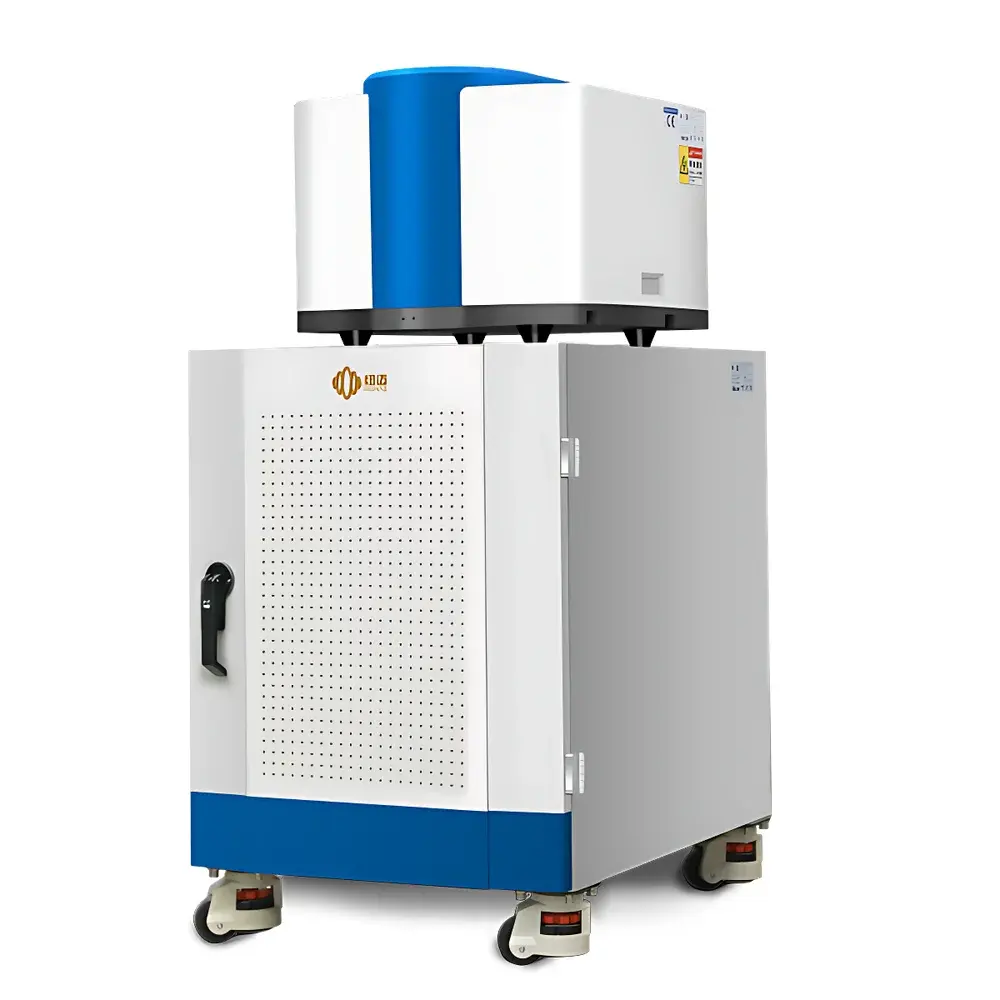
NIUMAG PQ001-11 Low-Field Nuclear Magnetic Resonance Analyzer for Wastewater Treatment and Sludge Characterization
| Brand | NIUMAG |
|---|---|
| Origin | Jiangsu, China |
| Model | PQ001-11 |
| Instrument Type | Low-Field NMR Analyzer |
| Sample Compatibility | Solid-Liquid Dual-Phase Samples |
| Magnet Type | Permanent Magnet |
| Static Magnetic Field Strength | 0.5 ± 0.03 T |
| Measurement Principle | Proton (¹H) Transverse Relaxation Time (T₂) Spectroscopy |
Overview
The NIUMAG PQ001-11 is a benchtop low-field nuclear magnetic resonance (LF-NMR) analyzer engineered for quantitative, non-invasive characterization of water distribution, phase composition, and microstructural properties in heterogeneous sludge and wastewater treatment matrices. Unlike high-field NMR systems requiring cryogenic magnets and RF-shielded rooms, the PQ001-11 employs a stable permanent magnet operating at 0.5 ± 0.03 T (approximately 21.3 MHz proton Larmor frequency), enabling robust, field-deployable operation in municipal wastewater laboratories, sludge dewatering pilot plants, and industrial QC environments. Its core measurement principle relies on spin-echo-based T₂ relaxation time distribution analysis of hydrogen nuclei (¹H) in water and hydrocarbon phases. This provides direct, calibration-dependent quantification of bound vs. free water fractions, oil–water partitioning, and pore-scale fluid mobility—parameters critical to optimizing mechanical dewatering, thermal drying, and anaerobic digestion processes.
Key Features
- Permanent magnet architecture with passive temperature stabilization, eliminating cryogen dependency and reducing total cost of ownership
- Integrated pulse sequence library supporting CPMG (Carr–Purcell–Meiboom–Gill) acquisition for high-fidelity T₂ decay curve generation
- Standard 15 mm diameter sample tube compatibility; optional custom probe configurations available for semi-solid sludge slurries and filter-cake specimens
- Real-time signal-to-noise optimization via automatic gain control and adaptive echo train length adjustment
- Ruggedized enclosure rated IP54 for operation in humid, chemically exposed laboratory and plant-floor environments
- Compliance-ready firmware architecture supporting audit trails, user role management, and electronic signature protocols aligned with GLP and ISO/IEC 17025 requirements
Sample Compatibility & Compliance
The PQ001-11 is validated for direct analysis of raw, conditioned, and dewatered sewage sludge—including activated, anaerobically digested, and thermally treated variants—without drying, grinding, or solvent extraction. It accommodates samples with solids content ranging from 2% to 35% w/w and handles viscosities up to 50,000 mPa·s. The system supports dual-phase quantification of water and hydrocarbons (e.g., residual oils in oily sludge) via multi-exponential T₂ spectral deconvolution, referenced against matrix-matched calibration standards traceable to NIST SRM 1921b (water in oil). All measurement protocols adhere to ASTM D8296–22 (Standard Practice for Low-Field NMR Analysis of Water-in-Oil Emulsions) and ISO 17892-12 (Geotechnical Investigation and Testing — Laboratory Testing of Soil — Part 12: Determination of Water Content by NMR). Full compliance documentation—including IQ/OQ/PQ templates and 21 CFR Part 11 readiness reports—is provided upon installation.
Software & Data Management
Acquisition and analysis are performed using NIUMAG’s proprietary MesoMR Studio v4.2 software suite. The platform delivers automated T₂ inversion via non-negative least-squares (NNLS) algorithms with regularization parameter tuning, generating reproducible relaxation spectra (T₂ distribution curves) with ≤ 0.5% inter-run coefficient of variation (CV) for standardized sludge reference materials. Data export supports CSV, HDF5, and XML formats compatible with LIMS integration. The software includes built-in statistical process control (SPC) dashboards for trending moisture retention index (MRI), dewaterability coefficient (DC), and capillary suction time (CST)-equivalent parameters across batch campaigns. Audit logs record all user actions, parameter modifications, and calibration events with timestamped digital signatures, satisfying FDA 21 CFR Part 11 and EU Annex 11 requirements for regulated environments.
Applications
- Quantitative determination of total water content and water state distribution (bound, capillary, free) in municipal and industrial sludges
- Optimization of polymer conditioning dosage by correlating T₂ peak shifts with floc strength and filterability indices
- In-process monitoring of centrifuge and belt-press dewatering efficiency through real-time T₂ spectral evolution
- Characterization of pore structure in biochar-amended sludge and constructed wetland filter media via T₂–porosity correlations
- Dual-quantification of water and hydrocarbon phases in refinery oily sludges for waste classification per EPA Method 9071B
- Supporting R&D of novel dewatering aids (e.g., nanocellulose, MOFs) by resolving changes in water mobility at sub-micron scale
FAQ
Does the PQ001-11 require liquid helium or external cooling?
No. It utilizes a passively stabilized permanent magnet and air-cooled gradient coils, eliminating cryogen consumption and associated infrastructure.
Can it measure sludge directly without sample preparation?
Yes—homogenized sludge slurries (≤ 35% solids) can be loaded into standard 15 mm tubes; no filtration, drying, or dilution is required for routine moisture profiling.
How is calibration performed for water/oil quantification?
Calibration uses matrix-matched standards prepared from representative sludge blanks spiked with known masses of water and mineral oil; T₂ spectra are inverted and linear regression applied to peak area ratios.
Is the system compatible with existing LIMS or MES platforms?
Yes—via OPC UA and RESTful API interfaces; raw FID data, T₂ distributions, and derived parameters are exportable in machine-readable formats.
What regulatory standards does the software support?
MesoMR Studio v4.2 includes full 21 CFR Part 11 functionality (electronic signatures, audit trail, role-based access), and complies with ISO/IEC 17025:2017 clause 7.7 on data integrity and traceability.
Related Products






