
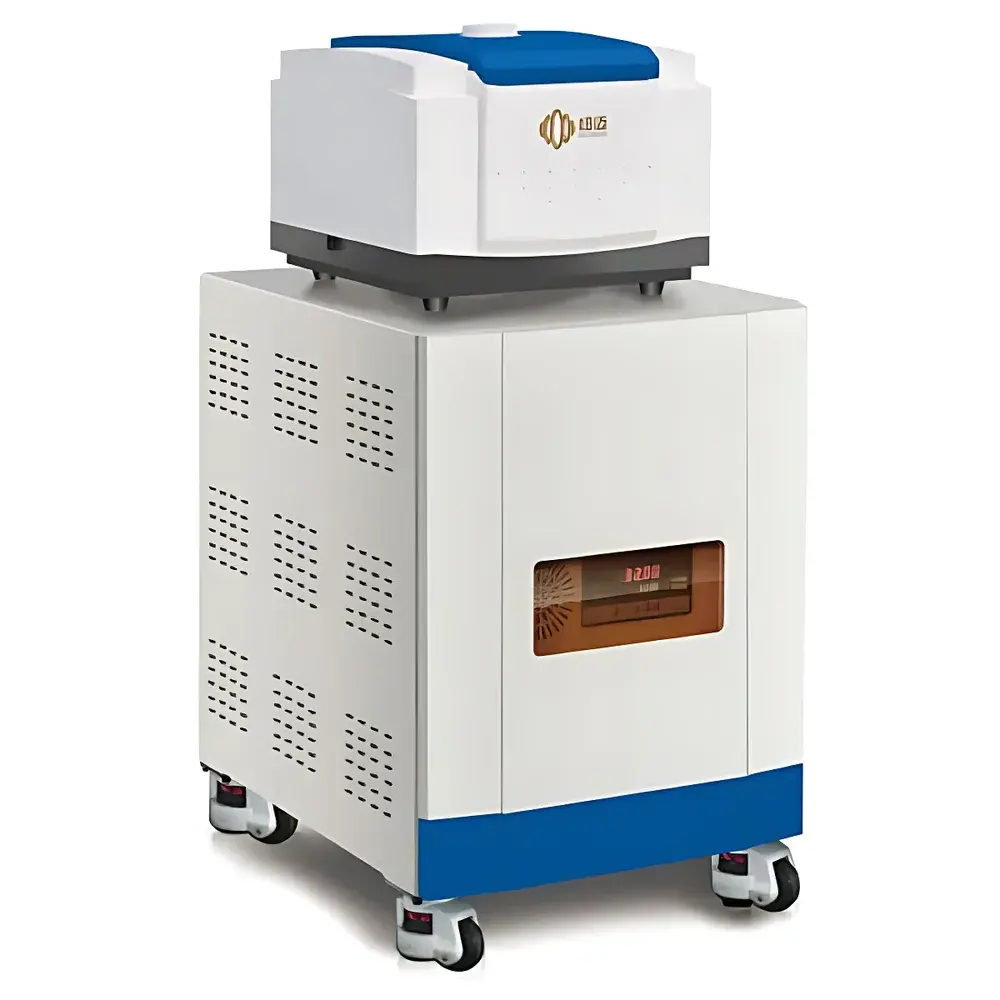
NIUMAG NMI20 Series Low-Field Nuclear Magnetic Resonance Analyzer
| Brand | NIUMAG |
|---|---|
| Origin | Jiangsu, China |
| Manufacturer Type | Authorized Distributor |
| Product Category | Domestic |
| Model | NMI20 Series |
| Instrument Type | Low-Field NMR Analyzer |
| Sample Type | Solid-Liquid Dual-Compatible |
| Operating Mode | Pulsed Fourier Transform |
| Minimum Sample Volume | ≥1 mL |
| Sample Mass Range | 1–120 g |
Overview
The NIUMAG NMI20 Series is a benchtop low-field nuclear magnetic resonance (LF-NMR) analyzer engineered for quantitative relaxation analysis and non-invasive magnetic resonance imaging (MRI) in industrial R&D and quality control laboratories. Unlike high-field superconducting NMR spectrometers, the NMI20 employs a permanent rare-earth magnet (typically NdFeB) operating at ~0.5 T (21.3 MHz for 1H), delivering robust signal-to-noise performance optimized for proton (1H) detection in complex, heterogeneous samples. Its core measurement principle relies on pulsed Fourier transform NMR—specifically spin-echo (SE) and Carr–Purcell–Meiboom–Gill (CPMG) sequences—to extract transverse relaxation time (T2) distributions, longitudinal relaxation time (T1) spectra, and diffusion-weighted signals. These parameters serve as intrinsic physical fingerprints of molecular mobility, phase composition, and spatial heterogeneity—enabling label-free, non-destructive characterization of water/oil binding states, moisture migration kinetics, and microstructural integrity without chemical derivatization or sample destruction.
Key Features
- 60 mm internal probe diameter accommodates diverse sample geometries—from intact fruits and meat cuts to powders, emulsions, and packed seeds—within a single platform.
- Rare-earth permanent magnet architecture eliminates cryogen consumption, helium refills, and associated infrastructure; zero ongoing magnet maintenance cost.
- Integrated pulse sequence library includes FID, SE, CPMG, SEG-CPMG, and IR—supporting both quantitative relaxation spectroscopy and multi-contrast MRI acquisition.
- Automated hardware optimization: real-time center frequency search, auto-calibration of 90°/180° RF pulse widths, and adaptive shimming reduce operator dependency and improve inter-user reproducibility.
- Three-step imaging workflow enables routine T2-weighted, T1-weighted, and proton density mapping with adjustable slice thickness, field-of-view, and matrix resolution.
- Modular design supports optional accessories including temperature-controlled sample stages (–40 °C to +80 °C), custom RF coils, and gradient amplifiers for diffusion tensor imaging (DTI) extensions.
Sample Compatibility & Compliance
The NMI20 series accepts solid, semi-solid, liquid, and multiphase samples weighing 1–120 g with minimum fluid volume ≥1 mL. No chemical fixation, dehydration, staining, or sectioning is required. Sample containers are standard 15–50 mm OD glass or plastic tubes compatible with ISO 7089 and ASTM D445 protocols for viscosity-correlated NMR calibration. The system complies with IEC 61000-6-3 (EMC emission limits) and IEC 61000-6-2 (immunity requirements). Data acquisition workflows support audit trails and electronic signatures aligned with GLP and GMP documentation practices. While not FDA 21 CFR Part 11–certified out-of-the-box, raw FID and image data export formats (e.g., .fid, .dcm, .nii.gz) are interoperable with third-party validation-ready software platforms used in regulated food safety labs.
Software & Data Management
Two dedicated software suites operate under Windows 10/11: (1) NMI Analysis Suite for relaxation spectrum deconvolution (e.g., CONTIN, NNLS, SVD), moisture/oil quantification via calibration curves, and T2 distribution modeling; and (2) NMI Imaging Suite for 2D multi-slice, arbitrary-angle MRI reconstruction, noise suppression (non-local means filtering), pseudo-color mapping, region-of-interest (ROI) intensity profiling, and spatial distribution analysis of water/oil phases. Both applications generate timestamped, metadata-embedded reports compliant with ISO/IEC 17025 documentation standards. Raw datasets are stored in vendor-neutral formats enabling integration with LIMS systems and MATLAB/Python-based custom analysis pipelines.
Applications
- Food science: shelf-life prediction via T2 decay kinetics during storage; optimization of drying/frying/rehydration processes; detection of bruising or freeze-thaw damage in fruits/vegetables; quantification of free/bound water in dairy, meat, and cereal matrices.
- Agricultural research: oil content profiling in oilseeds (soybean, rapeseed, sunflower); moisture distribution mapping in tobacco leaves and wood cross-sections; starch gelatinization monitoring in grain-based products.
- Materials science: pore-size distribution analysis in hydrogels and porous polymers; polymer cross-link density estimation; solvent uptake dynamics in coatings and membranes.
- Pharmaceutical development: excipient compatibility screening; tablet coating uniformity assessment; lyophilized cake structure evaluation via T1/T2 contrast.
FAQ
What is the magnetic field strength of the NMI20 system?
The NMI20 operates at a static magnetic field of approximately 0.5 Tesla (21.3 MHz for 1H), generated by a passively stabilized permanent magnet assembly.
Can the NMI20 perform true 3D imaging?
Yes—the system supports 3D gradient-echo and spin-echo acquisitions with isotropic voxel resolution down to 0.5 × 0.5 × 0.5 mm³, depending on sample signal-to-noise and acquisition time constraints.
Is external RF shielding required?
A standard 3 m × 3 m × 2.5 m room with ≤30 dB ambient RF noise (measured at 21 MHz) is sufficient; no Faraday cage installation is mandatory for routine operation.
How is calibration performed for moisture/oil quantification?
Calibration uses reference standards traceable to gravimetric or Karl Fischer titration methods; linear regression models are built in the Analysis Suite using user-supplied standards across the expected concentration range.
Does the system support multi-nuclear capability?
The base configuration is optimized for 1H detection; 19F and 31P capability requires optional broadband RF amplifier and tuned probes—available upon request with engineering validation.




